



Delirium in the Hospital Setting: Recognition, Risks, and Management
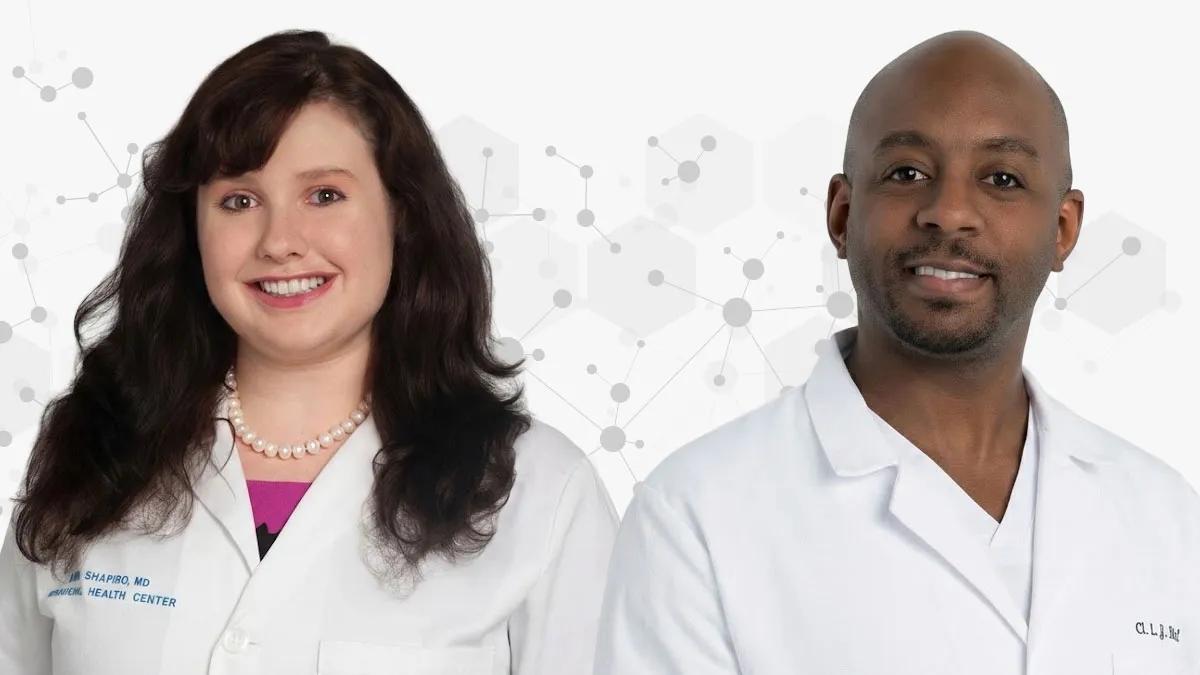
Anna Shapiro Krew, MD, and Christopher Strayhan, BSN, RN, explain how multidisciplinary care and environmental design can help reduce delirium and support recovery in hospitalized patients.
Advertisement
Cleveland Clinic is a non-profit academic medical center. Advertising on our site helps support our mission. We do not endorse non-Cleveland Clinic products or services. Policy
Recent Episodes
Learnings of having Embedded Psychiatrists in Neurological Clinics
Drew Cumming, MD, reviews the impact of embedded psychiatry in neurology and the benefits of integrating behavioral health expertise into th…
Behavioral Health Protocols for Suicidal Ideation
Brianne Markley, PhD, explains how screening tools, risk assessment and safety planning can help clinicians recognize and respond to suicida…
Transforming Epilepsy Diagnosis and Treatment Through AI-Enabled Infrastructure
Imad Najm, MD, discusses how AI-enabled infrastructure and advanced EEG analysis are transforming epilepsy diagnosis.
Video content: This video is available to watch online.
View video online (https://cdnapisec.kaltura.com/p/2207941/sp/220794100/playManifest/entryId/1_b9muy47b/flavorId/1_5f3sgelj/format/url/protocol/https/a.mp4)
Transcript
Neuro Pathways Podcast Series
Advertisement
Cleveland Clinic is a non-profit academic medical center. Advertising on our site helps support our mission. We do not endorse non-Cleveland Clinic products or services. Policy
Release Date:August 15, 2026
Expiration Date:August 14, 2027
Estimated Time of Completion: 30 minutes
Delirium in the Hospital Setting: Recognition, Risks, and Management
Anna Shapiro Krew, MD and Christopher Strayhan, BSN, RN
Description
Each podcast in the Neurological Institute series provides a brief, review of management strategies related to the topic.
Learning Objectives
- Review up to date and clinically pertinent topics related to neurological disease
- Discuss advances in the field of neurological diseases
- Describe options for the treatment and care of various neurological disease
Target Audience
Physicians and Advanced Practice providers in Family Practice, Internal Medicine & Subspecialties, Neurology, Nursing, Pediatrics, Psychology/Psychiatry, Radiology as well as Professors, Researchers, and Students.
ACCREDITATION
In support of improving patient care, Cleveland Clinic Center for Continuing Education is jointly accredited by the Accreditation Council for Continuing Medical Education (ACCME), the Accreditation Council for Pharmacy Education (ACPE), and the American Nurses Credentialing Center (ANCC), to provide continuing education for the healthcare team.
CREDIT DESIGNATION
- American Medical Association (AMA)
Cleveland Clinic Center for Continuing Education designates this enduring material for a maximum of 0.50 AMA PRA Category 1 Credits™. Physicians should claim only the credit commensurate with the extent of their participation in the activity.
Participants claiming CME credit from this activity may submit the credit hours to the American Osteopathic Association for Category 2 credit. - American Nurses Credentialing Center (ANCC)
Cleveland Clinic Center for Continuing Education designates this enduring material for a maximum of 0.50 ANCC contact hours. - Certificate of Participation
A certificate of participation will be provided to other health care professionals for requesting credits in accordance with their professional boards and/or associations. - American Board of Surgery (ABS)
Successful completion of this CME activity enables the learner to earn credit toward the CME requirements of the American Board of Surgery’s Continuous Certification program. It is the CME activity provider's responsibility to submit learner completion information to ACCME for the purpose of granting ABS credit.
Credit will be reported within 30 days of claiming credit.
Advertisement
Podcast Series Director
Andreas Alexopoulos, MD, MPH
Epilepsy Center
Additional Planner/Reviewer
Ari Newman, BSN
Faculty
Anna Shapiro Krew, MD
Center for Adult Behavioral Health
Christopher Strayhan, BSN, RN
Neurointensive Care Unit
Host
Glen Stevens, DO, PhD
Cleveland Clinic Brain Tumor and Neuro-Oncology Center
Agenda
Delirium in the Hospital Setting: Recognition, Risks, and Management
Anna Shapiro Krew, MD and Christopher Strayhan, BSN, RN
Disclosures
In accordance with the Standards for Integrity and Independence issued by the Accreditation Council for Continuing Medical Education (ACCME), The Cleveland Clinic Center for Continuing Education mitigates all relevant conflicts of interest to ensure CME activities are free of commercial bias.
The following faculty have indicated that they may have a relationship, which in the context of their presentation(s), could be perceived as a potential conflict of interest:
Glen Stevens, DO, PhD
| Company | Relationship |
|---|---|
| DynaMed | Consulting |
| Company | |
| DynaMed | |
| Relationship | |
| Consulting |
All other individuals have indicated no relationship which, in the context of their involvement, could be perceived as a potential conflict of interest.
CME Disclaimer
The information in this educational activity is provided for general medical education purposes only and is not meant to substitute for the independent medical judgment of a physician relative to diagnostic and treatment options of a specific patient's medical condition. The viewpoints expressed in this CME activity are those of the authors/faculty. They do not represent an endorsement by The Cleveland Clinic Foundation. In no event will The Cleveland Clinic Foundation be liable for any decision made or action taken in reliance upon the information provided through this CME activity.
HOW TO OBTAIN AMA PRA Category 1 Credits™, ANCC Contact Hours, OR CERTIFICATE OF PARTICIPATION:
Go to: Neuro Pathways Podcast August 15, 2026 to log into myCME and begin the activity evaluation and print your certificate If you need assistance, contact the CME office at myCME@ccf.org.
Copyright ©2026 The Cleveland Clinic Foundation. All Rights Reserved.
Introduction: Neuro Pathways, a Cleveland Clinic podcast exploring the latest research discoveries and clinical advances in the fields of neurology, neurosurgery, neurorehab, and psychiatry.
Glen Stevens, DO, PhD: Delirium in the hospital setting is a common yet complex condition characterized by acute fluctuating changes in cognition that can significantly impact patient outcomes. Innovative approaches to prevention and care are shaping how we address delirium, including in Cleveland Clinic's new Neurological Institute Building opening in 2027. In this episode of Neuro Pathways, we explore delirium in the inpatient setting and how Cleveland Clinic is addressing these challenges through thoughtful design and multidisciplinary care.
I'm your host, Glen Stevens, DO, PhD, neurologist and neuro-oncologist in Cleveland Clinic's Neurological Institute. And joining me today is Dr. Anna Shaprio Krew, MD, Director of Epilepsy Psychiatry at Cleveland Clinic's Neurological Institute, and Christopher Strayhan, BSN, RN, Nurse Manager in the Neuro Intensive Care Unit at Cleveland Clinic Main Campus. Anna and Christopher, welcome to Neuro Pathways.
Advertisement
Christopher Strayhan, BSN, RN: Thank you for having me.
Anna Shaprio Krew, MD: Thank you so much.
Glen Stevens, DO, PhD: So let's start by having you both introduce yourselves to our listeners. Where did you train? A little bit about your background, how you made it to the Cleveland Clinic? So, Anna, why don't we start with you?
Anna Shaprio Krew, MD: Thank you so much, Dr. Stevens. So, I am what I like to call Cleveland Clinic born and bred. I did my residency and fellowship training here, my residency in adult psychiatry and a fellowship at consultation-liaison psychiatry, which if you don't know what that is, you're in the majority, basically looking at the interplay of medicine and psychiatric care. From there, I did a lot of work collaborating with my colleagues in neurology, and I'm so lucky to be working directly with our epilepsy center, providing psychiatric care for our patients.
Glen Stevens, DO, PhD: Excellent. Chris?
Christopher Strayhan, BSN, RN: Yes, actually pretty much the same. I started here in the surgical ICU as a bedside nurse about 12 years ago. Worked there for a couple years, went on to do some travel nursing, so I've been pretty much all over the United States. And missed the Cleveland Clinic so much, I came back in 2024 to take over the nurse manager role here in the neuro ICU.
Advertisement
Glen Stevens, DO, PhD: Excellent. Well, we appreciate all you both do. So, Anna, why don't we start with you? Why don't you define delirium for us?
Anna Shaprio Krew, MD: Delirium is a complex syndrome. Really what it is, and the way I explain it to patients, is the body becomes ill, the mind becomes ill, the brain becomes ill. Other words for delirium include things like encephalopathy, ICU psychosis, sundowning, and really what it is, it's a waxing and waning in cognition and attention that can be accompanied by changes in circadian rhythm, hallucinations, paranoia, agitation, and mood lability. It is incredibly common, but it's not normal. And I think that's the most important thing for us to keep in mind.
Glen Stevens, DO, PhD: It disturbs me when you say it's not normal because I was in Calgary on the weekend at my grandson's basketball tournament and flying back through Chicago, there was tremendous weather problems, so significant delays, let's just say that, and very little sleep and a long time delay. And maybe I was getting a little delirious because I was irritated and anxious and all those types of things. So, I think what she's saying, I was not normal, Chris, as I went through there. And I think my wife would agree with that as it goes through. But how common is delirium in the population?
Advertisement
Anna Shaprio Krew, MD: It's very-
Glen Stevens, DO, PhD: In the hospital?
Anna Shaprio Krew, MD: In the hospital setting, yeah. The literature estimates delirium at about 30% in the regular nursing floors and up to 60% in the intensive care units. And frankly, there's a variety of reasons for that. People are sicker in the ICUs. And frankly, if you've ever spent time in an ICU, it sort of mimics a casino. It's loud at all times. It's bright at all times. It can be difficult to have access to natural light. It can be difficult to find a clock. So again, it's an incredibly common syndrome that we see very prevalently in our most sick patients.
Glen Stevens, DO, PhD: Well, it concerns me that you're spending that much time in a casino. But it's apparently field work. Is that what it is?
Anna Shaprio Krew, MD: It's anthropologic study, Dr. Stevens.
Glen Stevens, DO, PhD: Common underlying triggers for delirium?
Anna Shaprio Krew, MD: So frankly, any patient can become delirious the sicker they become, but we see it primarily in the elderly patients who may have neurocognitive impairments at baseline, that include severe mental illness, dementias, history of traumatic brain injury. Other causes could be severe illnesses, fractures. And one thing I also like to keep reminding my colleagues is that a risk factor for delirium are people who have sensory input disorders. And that can be as basic as needing glasses, so like myself. So when we don't have glasses or hearing aids for the people who need it, they're in trouble. They could become delirious.
Glen Stevens, DO, PhD: So sometimes patients will say dementia, delirium, they start with D, they sound a little bit familiar. What's the difference?
Anna Shaprio Krew, MD: That's a great question. So, I always tell people, go to the baseline. Delirium is not baseline. Delirium is occurring acutely in the hospital setting and it's a deviation from where the patient was. At baseline, someone who struggles with dementia may only be oriented to say person and place, but add delirium on that and they may not have any orientation whatsoever. And it's that acute change that makes us aware that there's a delirium superimposed.
Glen Stevens, DO, PhD: Yeah. So Chris, I'll just bring you into this for a second. What I would always teach the residents was talk to the nurses at the bedside. Don't just go see a patient. Always find the nurse. If the nurse isn't right there, ask who the nurse is and go see them. Because Chris, who's ever there, they're the ones that are interacting with the patient for a long period of time. And as you defined earlier, it's a wax and a wane. And it's the classic thing where the resident goes and examines, someone gets a finding, and then the staff comes in later and the exam's completely different and then the resident feels terrible. So, tell us what you're seeing with the delirium.
Christopher Strayhan, BSN, RN: Yeah. So delirium in our patient population, we see it quite frequently, unfortunately, in the ICU. Delirium depends on the patient presentation as well. Most of the time, sometimes we see impulsivity, agitation, restlessness, and all of those factors not only affect the patient and it has emotional impact on the families as well. So we do see it a lot. We try to recognize it early or try to prevent some of those things by turning on lights and reorienting our patients.
Glen Stevens, DO, PhD: Well, again, we appreciate all you do with the patients because it's got to be difficult for you dealing with someone who's changing every 20 minutes. Very difficult to go alone. So Anna, as we go through and talk about some of the things that can be done, and Chris, you can jump in a sec too, but talk about lighting, talk about what we do to try and augment, or if you're familiar with what's going on in the new building, what's going to happen in the new building to help with decreased delirium.
Anna Shaprio Krew, MD: And I'm hoping Chris can help me with a little bit of what's going on in the new building for sure. Oftentimes when we decrease delirium, people want to hear from me, what's the treatment? What's the treatment? And I'm going to bum everybody out here and tell you, besides treating the underlying cause, we don't have pharmacological treatments for delirium. Really, all of our pharmacological ammunition is going to treating symptomatology. So, the utilization of antipsychotics, mood stabilizers, alpha-2 agonists, all of that is treating agitation. It's not affecting the delirium necessarily.
The best treatments that we have to date for delirium are behavioral. So early mobilization, light control, making sure that patients are in a dark, quiet environment at night and are in a bright, sunshiny daytime environment during the day. Making sure that patients minimize the amount of sleep they get during the day and having families interact with them. There have been studies that the utilization of behavioral modifications, including family involvement, can reduce the amount of days delirious in patient populations.
Glen Stevens, DO, PhD: Yeah, I think it's all important, right? And then treating the underlying cause if it's outside of that realm, right? They have a urinary tract infection, they were a drinker and nobody knew they're a drinker because nobody asked the question and they're going through withdrawal from it. It's again, being a good detective. And the advantage that Chris has is that you have the family around for a long period of time and you can determine what their baseline is. And if the family says, "Perfectly fine at home, never seen this before," then it's probably some... Are they infected? Do they have some other process going on?
Christopher Strayhan, BSN, RN: Dr. Shapiro brought up a great point. I try to educate our nurses to make sure on day shift, turn those lights on. Physical therapy is great in the neuro ICU with ambulating of all of our patients. Every single patient gets either up to the chair, whether they're intubated or not, walking around the unit. And I just think that the early mobilization is huge in our unit. We really push early mobilization and then family involvement as well. We engage them in our nurse-led rounds within our unit.
Glen Stevens, DO, PhD: Yeah, I think it's the old ounce of prevention. Once they get delirious, you're working twice as hard to get them out of the delirium. If you can prevent them from going in, you're doing half the work going in. So as you say, if you do those types things, I always talk out of school, so I could probably get in trouble from my wife, but she had a joint replaced, so was in the hospital recently and had a shared room. And of course you can't control the roommate that's there and the roommate was up quite late at night. So there's things that you can't control. But any ideas about the new building and the rooms in the new building that could help with that?
Christopher Strayhan, BSN, RN: Absolutely. I think that is one of the best parts about the new build. So when they were designing this, they were keeping patient experience as well as caregiver workflow in mind. So current state, especially in our med-surg rooms, they're double rooms. The new building will have all single rooms, especially-
Glen Stevens, DO, PhD: See, I like it already, Chris.
Christopher Strayhan, BSN, RN: Yeah. Yeah, it gets all single rooms, state-of-the-art technology. And then in our ICUs, something that we are really excited for is floor to ceiling windows.
Anna Shaprio Krew, MD: I knew you were going to say the windows, and I am thrilled.
Christopher Strayhan, BSN, RN: Yes.
Anna Shaprio Krew, MD: As a psychiatrist, I am thrilled because I'm going in there all the time and opening shades.
Christopher Strayhan, BSN, RN: Yes.
Anna Shaprio Krew, MD: Floor to ceiling windows are going to help so much.
Glen Stevens, DO, PhD: I wonder who was doing that.
Anna Shaprio Krew, MD: It's me.
Christopher Strayhan, BSN, RN: So yeah, we'll have all floor to ceiling windows. And one of the unique things about the new ICUs is that we will be able to turn the patients to face the window. So we have capability to turn the patient completely around to get that natural sunlight directly on them.
Anna Shaprio Krew, MD: Yes. And that's great because honestly, when we're delirious, I mean, the pathways that we take for granted, our ability to do things like make melatonin, it gets all out of whack. There's inflammation. Things are kind of not working the way they should. Tryptophan isn't going to the production of melatonin. We have to put our patients... We have to give them best chance because they're working from a handicap that we don't appreciate necessarily. So, the fact that we got that natural light is amazing.
Glen Stevens, DO, PhD: So, Chris, with every opportunity, there's always some cost. And I guess my concern is that if the patient is then moved to look out the window, then you don't have eyes on the patient. You do to the back of their head. So how do we enable them to do that, but still be able to see what they're doing?
Christopher Strayhan, BSN, RN: So yeah. So eventually all of our rooms will be capable to have videos on the patients at all times. And we would only turn our stable patients around if need be, but we also will have computers inside of each room with medication scanners so the nurse can stay at the bedside with the patient should they just want to turn them for even if it's 15 minutes. So the design also comes with the workflows for all caregivers involved.
Glen Stevens, DO, PhD: Yeah, I'm glad to hear you say that. I assume that they must be doing some type of video so that you could see the patient because there would be so much advantage to allow the patient to look outside, that they would like to do that and it would seem to be so beneficial. Bathrooms in the new building, is each room going to... The medical floors, are they going to have bathrooms in each one and how to get to the bathroom? Is there a design difference or what you're doing there?
Christopher Strayhan, BSN, RN: Absolutely. So when they designed the new neurological institute, all of our med-surg and step-down floors, they built the bathrooms, all have single occupancy bathrooms. The way that they built them is so that we can always have eyes on the patient even when they're in the restroom.
Glen Stevens, DO, PhD: Which would be good for a delirious patient, right?
Christopher Strayhan, BSN, RN: Yes.
Glen Stevens, DO, PhD: Not that you'd want them to be alone.
Christopher Strayhan, BSN, RN: Yeah, right. Because we can still provide privacy, but also can still see their feet within the bathroom. Also, one of the unique things is we have touchdown spaces in between every single room throughout all floors, ICU, step down. So the nurse can actually sit outside of the patient room with windows so they can visually see the patient at all times.
Glen Stevens, DO, PhD: So, Chris, tell me how, if a patient is delirious, it could affect their care when they're in the intensive care unit.
Christopher Strayhan, BSN, RN: Yeah. So, when they are delirium, obviously it will prolong their ICU stay within the unit as well as delays sometimes rehab. The patient has to be able to participate in that rehab. So, delirium definitely has downsides to that.
Anna Shaprio Krew, MD: And it's expensive too. I mean, the reality is that you see an increase in days in the hospital. Some studies have shown people go from five days post-surgically to 12 when they become delirious. Current costings of delirium in the United States have gone up from 154 billion to 254 billion a year. So it's expensive. And then we need sitters, especially if there's agitation or falls risk. And you touched on before just the emotional cost to families and caregivers. We want to take care of our patients. We don't want to be afraid they're going to become violent or agitated. And it's very difficult for the families to see their loved one kind of flip on a dime.
Glen Stevens, DO, PhD: So, I think they have monitors on the beds if the patient is getting up because obviously delirious patients might want to get out of the bed.
Anna Shaprio Krew, MD: They seem to like that.
Glen Stevens, DO, PhD: Yeah, unfortunately they seem to like that. Any new technology coming in that regard or we use the same technology currently?
Christopher Strayhan, BSN, RN: So all of our new beds within the entire institute will be connected to call lights. So we've actually embedded the bed exit alarm to our call light that will sound across the entire unit. So we have that model, every patient is our patient, right? So it allows any caregiver that is on the unit to enter that room to prevent that. Additionally, like I mentioned before, we will have cameras in all of the rooms, and so we're going to utilize AI and then virtual sitters as well to monitor these patients.
Glen Stevens, DO, PhD: So I historically see quite a few sitters in the hospital. Is that number going to decrease or change?
Christopher Strayhan, BSN, RN: We're hoping that that will decrease with the use of virtual sitters and the capability of being able to see directly into patient rooms from our touchdown spaces. So yeah, so hopefully that will decrease the amount of sitters.
Glen Stevens, DO, PhD: So how does a virtual sitter work?
Christopher Strayhan, BSN, RN: At an offsite, we'll have caregivers that will be assigned. Instead of using an in-person sitter, there is just an office space at one of our satellite-
Glen Stevens, DO, PhD: So they'll have a bank of screens that they're looking at-
Christopher Strayhan, BSN, RN: Yeah. And they can monitor up to four patients.
Glen Stevens, DO, PhD: 12 patients, or four. Okay.
Christopher Strayhan, BSN, RN: Yeah, yep. Four patients.
Glen Stevens, DO, PhD: I guess not 12, 4.
Christopher Strayhan, BSN, RN: And they can actually speak to the patient as well from the satellite.
Anna Shaprio Krew, MD: And these rooms are going to be a bit bigger too, so family can be present and also act really not only as patient advocates, but frankly as our sitters too.
Christopher Strayhan, BSN, RN: Yes.
Anna Shaprio Krew, MD: I love when family's at bedside because I give them jobs like, "You're going to orient your loved one. You're going to tell them what's going on and where they are and keep them awake."
Glen Stevens, DO, PhD: Yeah. And the nice thing about having just one person in a room is you don't have another family that's there and then-
Anna Shaprio Krew, MD: Exactly.
Glen Stevens, DO, PhD: It just makes everything more awkward, right? More difficult to manage and look after. Maybe you're not involved with this, but I think that in the new building, they also are trying to do some of those positive things in the infusion suites. My understanding is they'll also have the good lighting. They have some greenery that's around so that if patients look out, they can see some greenery or those types of things against it to try and help. You would like to believe that those patients would be at less risk of delirium, but again, the more the better. I mean, I know there's a lot of infusion suites around the hospital that are just, it's like being in a closet.
Anna Shaprio Krew, MD: Oh yeah, absolutely.
Glen Stevens, DO, PhD: There's no window at all. You're just in a closet. At least over in the cancer center where I am, I think all of them, but they all have a window. The design of the cancer center, which I think is similar to the design of the new building, is that it's all sort of windows on the outside so that all the natural light comes in. Rooms where you see patients, it's more on the inside. So hopefully they'll get some of the light from the outside as well, but you want when people are walking around or people are being taken in a stretcher to the OR, they're still having sunlight or seeing the outside as they're going in that direction. The psychiatry's going to the new building as well, correct?
Anna Shaprio Krew, MD: We absolutely are and we are thrilled. We're so excited. So primarily ambulatory psychiatry will be at the new building.
Glen Stevens, DO, PhD: But the nice thing about it is we'll reconnect you with all the rest of the NI.
Anna Shaprio Krew, MD: It will.
Glen Stevens, DO, PhD: Once again.
Anna Shaprio Krew, MD: It'll be really wonderful because a lot of my colleagues and myself, we embed a lot within different specialties in the NI. And so now we'll be all co-located. It's going to be really fabulous.
Glen Stevens, DO, PhD: So what excites you otherwise about the new building, the new environment, your ability to take care of patients?
Anna Shaprio Krew, MD: I mean, I'm really thrilled because it brings a lot of opportunities psychiatrically. We've currently been working to develop a neuropsychiatric service line that's dedicated to our patients with complex neurologic needs. That level of specialization is just so classically Cleveland Clinic. It's really, really cool to see develop. And the NI is just a great way for us to do that. I mean, I love learning from my colleagues across the Neurologic Institute. And so now I get to bother them much easier. It'll be so much more easy to come up to you, Dr. Stevens, and say, "Can you tell me about this cancer? What's going on here?"
Glen Stevens, DO, PhD: Well, when I came here many, many year, in the early '90s, the first person I met was Kathy Franco.
Anna Shaprio Krew, MD: Kathy Franco.
Glen Stevens, DO, PhD: And Kathy was really sort of developing the consult-liaison psychiatric service. So I became good friends with Kathy and she's since retired, but through all her work at the medical school as well. I've always had a soft spot for the psychiatrist in the group. And I think that we've already identified how common delirium is, so you definitely need to be there.
Anna Shaprio Krew, MD: We do. And I think one of the things though that's important for us with delirium is that we all own it. So it's not just nursing, it's not just psychiatry, it's not just intensive care. Everybody, every specialty owns delirium, and it's up to all of us to advocate for our patients.
Glen Stevens, DO, PhD: I seem to recall in days of pass that we would just write delirium precautions.
Anna Shaprio Krew, MD: Yeah. And it wouldn't mean anything.
Glen Stevens, DO, PhD: And something magical would happen. And maybe Chris was going, "Oh, I guess that means that's me."
Christopher Strayhan, BSN, RN: Yeah, you just read that order and keep going.
Anna Shaprio Krew, MD: And then I would magically appear. I'd pull up the blinds and that would be it.
Glen Stevens, DO, PhD: Chris, do you want to comment on use of restraints these days?
Christopher Strayhan, BSN, RN: Yes. So use of restraints, especially within the intensive care unit, it's very high. And that can also lead to delirium. So we've had a huge push trying to get away from using restraints just because that is a contributor. So we're hoping with the use of this new virtual AI sitters that we can prevent using restraints in the new building.
Glen Stevens, DO, PhD: Any comments on restraint use?
Anna Shaprio Krew, MD: I mean, I think that if we can minimize it the best that we can, it's important. I mean, at the end of the day, we have to keep people safe is what I say. Our priority is to keep the patient and our team safe. But Chris is exactly right. Restraints worsen delirium because it's very disturbing to be in restraints. And so, the more we can minimize, the better. And the use of technology in the new building to do that is going to be phenomenal.
Christopher Strayhan, BSN, RN: Yeah, I'm really excited.
Glen Stevens, DO, PhD: So as we're coming towards a close here, things I haven't discussed or brought up that you think are important? Anna, you?
Anna Shaprio Krew, MD: Again, I just think the biggest thing is that we all are in charge of delirium and working together is really the key. And I'm so excited for 2027.
Christopher Strayhan, BSN, RN: Me too. I'm so excited.
Glen Stevens, DO, PhD: Yeah, I'm disappointed to hear you say that. I thought you were in charge of delirium. Now it sounds like you've shifted the responsibility to me. So I guess-
Anna Shaprio Krew, MD: To all of us.
Christopher Strayhan, BSN, RN: All of us.
Anna Shaprio Krew, MD: All of us.
Christopher Strayhan, BSN, RN: All of us.
Glen Stevens, DO, PhD: Well, listen, we appreciate all you both do, and we're all looking forward to the new building. And I think that we just need to be proactive because these things are so difficult to make better. And I'm a proceduralist, so I do a lot of procedures and it's difficult to do... Then we have to intubate patients and do things intubated. It's much safer and better for everybody if we don't have to intubate patients for certain procedures. So less delirium, less better for everybody as it goes through. So I look forward to seeing numbers decreasing in somebody's accountability somewhere. It should be a metric that we're looking at and-
Anna Shaprio Krew, MD: Oh, and we are.
Glen Stevens, DO, PhD: ... Having less of that.
Anna Shaprio Krew, MD: Yep, we do. So we do track delirium diagnoses throughout the enterprise. We track length of stay, nursing home referrals, and we do have a multidisciplinary delirium council that also looks to promote innovative ways to treat and address delirium.
Glen Stevens, DO, PhD: Would you like to share anything that has come from the council that would be helpful?
Anna Shaprio Krew, MD: Sure. Absolutely. So this is the third iteration of the council, and we've just released the new delirium protocol-
Anna Shaprio Krew, MD: For the institution, including the new delirium care path for the institution that also keeps in mind best practices for our older adult patients. And coming soon, we'll have a delirium order set, which we design to be 3:00 AM exhaustion proof to address agitation and delirium and promote the utilization of occupational therapy and physical therapy in these patients.
Glen Stevens, DO, PhD: Well, this is very useful information and I appreciate your time today. We're all looking forward to the new building and appreciate all your expertise on a daily basis.
Christopher Strayhan, BSN, RN: Absolutely.
Anna Shaprio Krew, MD: Thank you. Thank you so much for having us.
Glen Stevens, DO, PhD: Thank you.
Christopher Strayhan, BSN, RN: Yeah, thank you for having me.
Conclusion: This concludes this episode of Neuro Pathways, and you can find additional podcast episodes on our website, clevelandclinic.org/neuropodcast, or subscribe to the podcast on iTunes, Google Play, Spotify, or wherever you get your podcasts. And for further learning, you can access real-time updates from experts in Cleveland Clinic's Neurological Institute on our Consult QD website. That's consultqd.clevelandclinic.org/neuro, or follow the Cleveland Clinic Neurological Institute on LinkedIn. And thank you for listening.
Recent Episodes
Learnings of having Embedded Psychiatrists in Neurological Clinics
Drew Cumming, MD, reviews the impact of embedded psychiatry in neurology and the benefits of integrating behavioral health expertise into th…
Behavioral Health Protocols for Suicidal Ideation
Brianne Markley, PhD, explains how screening tools, risk assessment and safety planning can help clinicians recognize and respond to suicida…
Transforming Epilepsy Diagnosis and Treatment Through AI-Enabled Infrastructure
Imad Najm, MD, discusses how AI-enabled infrastructure and advanced EEG analysis are transforming epilepsy diagnosis.
Never miss a moment - subscribe now.
Listen to the Health Essentials Podcast on your favorite streaming platform.
Other Podcasts You May Love
Beyond Leadership
Hosts Jim Pae and Elizabeth Pugel escort you through a network of thought leaders, sharing world-cla…

Beyond the Pages: CCJM Podcast
Beyond the Pages: CCJM Podcast takes the listener more in-depth into Cleveland Clinic Journal of Med…
Butts & Guts
A Cleveland Clinic podcast exploring your digestive and surgical health from end to end. You’ll lear…
Cancer Advances
A Cleveland Clinic podcast for medical professionals exploring the latest innovative research and cl…