



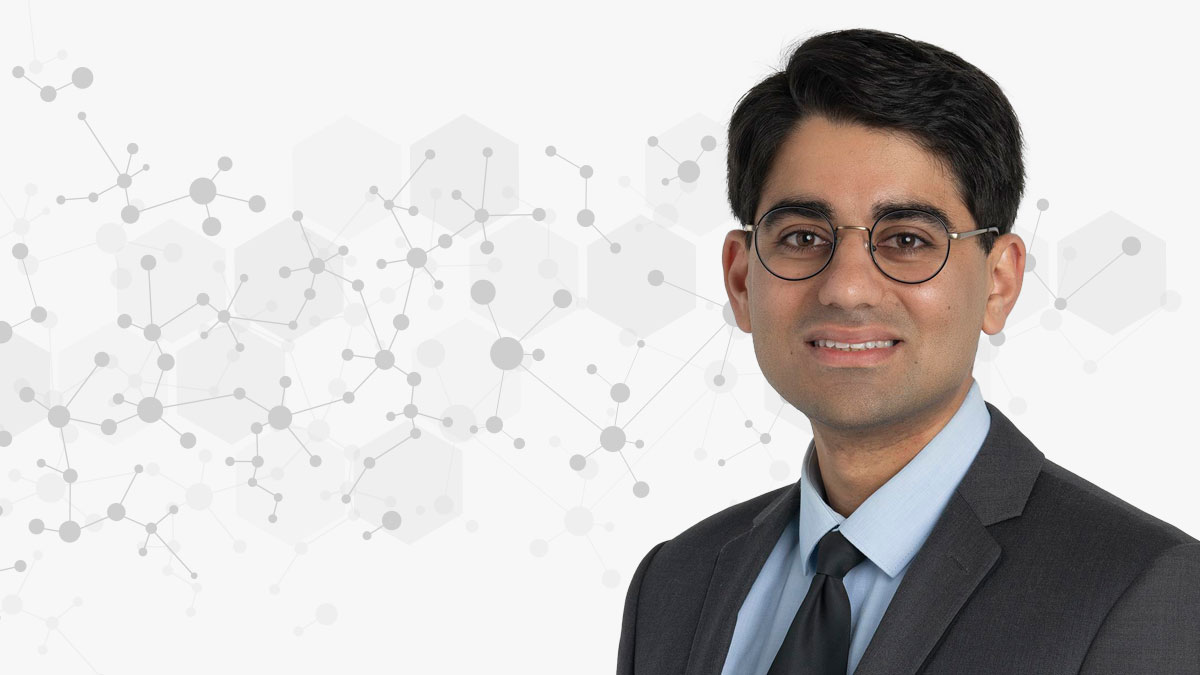
Latest Technologies in Brain Tumor Treatment
Andrew Dhawan, MD, discusses how advanced technologies are transforming the diagnosis and treatment of brain tumor patients.
Advertisement
Cleveland Clinic is a non-profit academic medical center. Advertising on our site helps support our mission. We do not endorse non-Cleveland Clinic products or services. Policy
Recent Episodes
Advancing Recovery Through Early Mobilization in Neuro Care
Adam Barron, MD, and Natalie Lilly, PT, DPT, explore the evolving evidence behind early mobilization in neurocritical care.
Learnings of having Embedded Psychiatrists in Neurological Clinics
Drew Cumming, MD, reviews the impact of embedded psychiatry in neurology and the benefits of integrating behavioral health expertise into th…
Behavioral Health Protocols for Suicidal Ideation
Brianne Markley, PhD, explains how screening tools, risk assessment and safety planning can help clinicians recognize and respond to suicida…
Video content: This video is available to watch online.
View video online (https://cdnapisec.kaltura.com/p/2207941/sp/220794100/playManifest/entryId/1_0d9y9dup/flavorId/1_5f3sgelj/format/url/protocol/https/a.mp4)
Transcript
Neuro Pathways Podcast Series
Release Date: December 15, 2025
Expiration Date: December 14, 2026
Advertisement
Cleveland Clinic is a non-profit academic medical center. Advertising on our site helps support our mission. We do not endorse non-Cleveland Clinic products or services. Policy
Estimated Time of Completion: 30 minutes
Latest Technologies in Brain Tumor Treatment Andrew Dhawan, MD
Description
Each podcast in the Neurological Institute series provides a brief, review of management strategies related to the topic.
Learning Objectives
- Review up to date and clinically pertinent topics related to neurological disease
- Discuss advances in the field of neurological diseases
- Describe options for the treatment and care of various neurological disease
Target Audience
Physicians and Advanced Practice providers in Family Practice, Internal Medicine & Subspecialties, Neurology, Nursing, Pediatrics, Psychology/Psychiatry, Radiology as well as Professors, Researchers, and Students.
ACCREDITATION
In support of improving patient care, Cleveland Clinic Center for Continuing Education is jointly accredited by the Accreditation Council for Continuing Medical Education (ACCME), the Accreditation Council for Pharmacy Education (ACPE), and the American Nurses Credentialing Center (ANCC), to provide continuing education for the healthcare team.
CREDIT DESIGNATION
- American Medical Association (AMA)
Cleveland Clinic Center for Continuing Education designates this enduring material for a maximum of 0.50 AMA PRA Category 1 Credits™. Physicians should claim only the credit commensurate with the extent of their participation in the activity. Participants claiming CME credit from this activity may submit the credit hours to the American Osteopathic Association for Category 2 credit. - American Nurses Credentialing Center (ANCC)
Cleveland Clinic Center for Continuing Education designates this enduring material for a maximum of 0.50 ANCC contact hours. - Certificate of Participation
A certificate of participation will be provided to other health care professionals for requesting credits in accordance with their professional boards and/or associations. - American Board of Surgery (ABS)
Successful completion of this CME activity enables the learner to earn credit toward the CME requirements of the American Board of Surgery’s Continuous Certification program. It is the CME activity provider's responsibility to submit learner completion information to ACCME for the purpose of granting ABS credit.
Advertisement
Credit will be reported within 30 days of claiming credit.
Podcast Series Director
Andreas Alexopoulos, MD, MPH Epilepsy Center
Additional Planner/Reviewer
Cindy Willis, DNP
Faculty
Andrew Dhawan, MD Brain Tumor and Neuro-Oncology Center
Host
Glen Stevens, DO, PhD Cleveland Clinic Brain Tumor and Neuro-Oncology Center
Agenda
Latest Technologies in Brain Tumor Treatment Andrew Dhawan, MD
Disclosures
In accordance with the Standards for Integrity and Independence issued by the Accreditation Council for Continuing Medical Education (ACCME), The Cleveland Clinic Center for Continuing Education mitigates all relevant conflicts of interest to ensure CME activities are free of commercial bias.
The following faculty have indicated that they may have a relationship, which in the context of their presentation(s), could be perceived as a potential conflict of interest:
| Glen Stevens, DO, PhD | DynaMed | Consulting |
|---|---|---|
| Glen Stevens, DO, PhD |
All other individuals have indicated no relationship which, in the context of their involvement, could be perceived as a potential conflict of interest.
CME Disclaimer
The information in this educational activity is provided for general medical education purposes only and is not meant to substitute for the independent medical judgment of a physician relative to diagnostic and treatment options of a specific patient's medical condition. The viewpoints expressed in this CME activity are those of the authors/faculty. They do not represent an endorsement by The Cleveland Clinic Foundation. In no event will The Cleveland Clinic Foundation be liable for any decision made or action taken in reliance upon the information provided through this CME activity.
HOW TO OBTAIN AMA PRA Category 1 Credits™, ANCC Contact Hours, OR CERTIFICATE OF PARTICIPATION:
Go to: Neuro Pathways Podcast December 15, 2025 to log into myCME and begin the activity evaluation and print your certificate If you need assistance, contact the CME office at myCME@ccf.org.
Copyright ©2025 The Cleveland Clinic Foundation. All Rights Reserved.
Introduction:
Neuro Pathways, a Cleveland Clinic podcast exploring the latest research discoveries and clinical advances in the fields of neurology, neurosurgery, neuro rehab, and psychiatry.
Glen Stevens, DO, PhD:
Advances in brain tumor treatment are rapidly reshaping the field of neuro-oncology, bringing new hope and precision to patient care. In this episode, we'll explore the latest technologies in brain tumor diagnostics and therapy, highlighting innovations like genomics, spinal fluid analysis, and wearable devices, and discuss how research and collaboration are driving better outcomes for patients facing these complex conditions.
I'm your host Glen Stevens, neurologist neuro oncologist in Cleveland Clinic's Neurological Institute. And joining me for today's conversation is Dr. Andrew Dhawan. Dr. Dhawan is a neuro oncologist in Cleveland Clinic's brain tumor and neuro-Oncology Center. Andrew, welcome to neuropathways.
Andrew Dhawan, MD, PhD:
Thank you. It's a pleasure to be here.
Advertisement
Glen Stevens, DO, PhD:
So, it's always great to have a colleague on the podcast and as I always say, always even better to have a Canadian with me on the podcast. So welcome. So let's start by having you introduce yourself to your listeners. Where'd you come to find yourself at the Cleveland Clinic and what do you do here on a regular basis?
Andrew Dhawan, MD, PhD:
Sure. So I grew up outside of Toronto in Mississauga, Ontario. I went to my undergrad at Waterloo. I studied math and I then did medicine at Queens University in Canada. After that, I went to England and I did a PhD at the University of Oxford and I came to the Cleveland Clinic for my neurology residency and I stayed on for my neuro-oncology fellowship and now I work here.
Glen Stevens, DO, PhD:
And we're happy to have you. Thank you. So we're going to go through some of the technologies, but I thought that we should first, since we're primarily I guess going to talk about glioblastoma, tell us a little bit about what glioblastoma is and why it's difficult to treat.
Andrew Dhawan, MD, PhD:
Sure. Glioblastoma is the most common primary malignant brain tumor in adults. It's a very aggressive growth within the brain. It's diffuse, so it can't be all cut out surgically, and it affects people between the ages of 40 and 60 primarily, but can affect at any age. And unfortunately, our standard of care treatments haven't changed in about 20 years.
Advertisement
Glen Stevens, DO, PhD:
So much so that I think that the NCCN guidelines recommend that all patients should be considered for a clinical trial.
Andrew Dhawan, MD, PhD:
Correct, yeah.
Glen Stevens, DO, Ph :
And I think that tells you where the field is and the importance of doing clinical trials and the types of things that you're involved with. And tell us about your day-to-day life at the clinic. What do you do?
Andrew Dhawan, MD, PhD:
So, I'm a physician scientist, so 80% of my time. So four days a week is spent in the lab supervising research, meeting with students, working on manuscripts and grants and that sort of thing, analyzing data. And then one day a week I see patients in the outpatient neuro-oncology clinic. I see all sorts of neuro-oncology patients including patients with glioblastoma, leptomeningeal metastases, other inherited tumor syndromes, et cetera.
Glen Stevens, DO, PhD:
So today we're going to discuss some of the new technologies and primarily things that you've been quite interested and involved in. But what are the most significant recent advances in brain tumor diagnosis and treatment? Or are there any?
Andrew Dhawan, MD, PhD:
Are quite a few, actually, Glenn. So with brain tumors, the biggest thing that's happened I think in the last five to 10 years has really been the genomic revolution hitting our field. And what that means is we're much more able to classify tumors into their underlying biology as opposed to just what they look like under the microscope. And the words that we sort of use to describe this include using whole exome sequencing and methylation arrays to really pick up what is the exact subtype of the tumor so that we can more accurately treat the disease.
Advertisement
Glen Stevens, DO, PhD:
Yeah, I mean certainly when I started in the field, everything was just look underneath the microscope at what does it look like? And as you well know with the World Health Organization for grading for tumors has really moved. I mean, it still involves looking underneath the microscope, but so much of it now is molecular characterization because that's really what's going to define the nature of the tumor, and that's what patients want to know. What's the nature of my tumor? Is it going to do well? Is it going to be more difficult? Are there options for treatment? Before we get into the specifics of the things that you're looking at, let's just go through a little bit about the treatment standard treatment is what for glioblastoma?
Andrew Dhawan, MD, PhD:
Sure. So the treatment starts with what we call maximal safe surgical resection. So removing as much of the tumor as possible without causing a neurologic deficit. The patient will then recover from the surgery, and by that point we'll have a very good understanding of what the tumor is in terms of the molecular biology underlying the tumor by having a good amount of tissue to analyze for pathology specimens. At that point, the standard of care really would be to await a four week recovery period postoperatively and then start what we call chemo radiation. And that's a six week course of radiation that's done Monday to Friday, in addition to chemotherapy called temozolomide that's given daily every day for 42 days following that one would have a four week waiting period, and we would do an MRI at the end of that and then follow that up with what we call adjuvant temozolomide cycles.
Glen Stevens, DO, PhD:
So there's development of a device called a tumor treating field several years ago. Tell our listeners what that is.
Andrew Dhawan, MD, PhD:
Sure. So that's an option for patients that can be applied after the tumor has been resected and after the completion of radiation therapy, basically it involves alternating electrical fields at a very high frequency, and it's applied through pads over the patient's scalp. So they do need to shave their head and the alternating electrical fields are thought to disrupt the micro tubal organization within the tumor cells. And by doing that, disrupt the division of cells.
Glen Stevens, DO, PhD:
How long does it take to get all the molecular testing back? Someone has surgery on Monday. How long is it going to take to get these answers?
Andrew Dhawan, MD, PhD:
In general, it takes about two weeks at least depending on where you are and what testing gets done exactly, but it can take up to six weeks, so there can be a waiting period. But in general, we're quite proactive using the results that we have most readily available to make the best decision at the time.
Glen Stevens, DO, PhD:
And you mentioned genomics. Tell our audience what that is in terms of how we look at it.
Andrew Dhawan, MD, PhD:
Yeah, absolutely. So genomics broadly means the study of the molecules that control the biology of the cell, so that's our DNA and then DNA produces RNA, which then produces protein. And by understanding the changes in DNA, we've really been able to sub classify brain tumors. And in particular for glioblastoma, what that means is we understand whether there are drivers in terms of genes like EGFR or losses of certain chromosomes and gains of others, for instance, that will tell us that the tumor is going to behave a little more aggressively.
Glen Stevens, DO, PhD:
So, the other term that I'm hearing more all the time is methylation. Tell us what methylation sequencing is.
Andrew Dhawan, MD, PhD:
Sure. So methylation actually refers to what we call methylation of DNA. And it turns out that on various sites through the DNA, there are enzymes within the cell that add methyl groups or chemical modifications to the DNA. And in doing so, you can turn on and off genes without changing the sequence of genes. So that's what methylation is. And it turns out that methylation is actually a very good marker of lineage. So it tells you where the cell came from, what type of cell. And in brain tumor management, what we do is we look at 850,000 sites on the DNA, which is 3.3 billion base pairs long by looking at the pattern of whether those 850,000 sites are methylated or not, where they are, we can very accurately, it turns out, sub classify the type and subclass in fact of brain tumors.
Glen Stevens, DO, PhD:
So, it goes without saying with what you just said, that there's got to be tremendous heterogeneity.
Andrew Dhawan, MD, PhD:
Correct, yeah. Yeah. And it turns out that often what we may have previously called as glioblastoma or meningioma or ependymoma is actually a totally different subtype of tumor. And so that's something we also do is retroactively we can go back and reclassify tumors that we have previously diagnosed.
Glen Stevens, DO, PhD:
So, I think it's important for people to understand that if you have a glioblastoma and I have a glioblastoma, the chances that they're really the same tumor. It's just like fingerprints.
Andrew Dhawan, MD, PhD:
Yes, correct. These are molecular fingerprints and they're quite different.
Glen Stevens, DO, PhD:
Which again, I guess goes back to the why clinical trials are important and why we need to do them. So just sort of moving along a little bit, I know that you have a lot of interest in spinal fluid and talk about genomics with spinal fluid.
Andrew Dhawan, MD, PhD:
Sure, yeah. Spinal fluid is my favorite fluid. So it turns out that a big problem in clinical neuro-oncology is picking up a disease called leptomeningeal metastasis or leptomeningeal disease. This is when cancer from somewhere else in the body has gone to the lining of the brain and the spinal cord. Traditionally, what we've done is take the spinal fluid, spin it down and look for abnormal cells. But what happens is the cells degrade very quickly and it's very hard to catch those cancer cells. So we often have patients in whom we suspect leptomeningeal metastasis, but it's very challenging to diagnose and to pick up. So it turns out that as the cancer cells die, they actually leave behind their DNA and RNA within the spinal fluid, which we can now detect with these advanced sequencing technologies. And by analyzing that, we can actually more accurately potentially diagnose leptomeningeal metastasis and even understand a little bit about the disease biology by knowing more about its genomics.
Glen Stevens, DO, PhD:
So, I sort of shifted you a little bit, I'm sorry, from primary to malignant tumors. Can you look at the CSF in a glioblastoma patient and find the DNA and RNA particles there, or are the numbers so low that we can't quite sequence it yet? Sort of very hit and miss?
Andrew Dhawan, MD, PhD:
That's a great question. So it's actually rather variable in terms of when we do spinal fluid testing in patients with primary brain tumors like glioblastoma, whether we actually pick up enough DNA in the spinal fluid, sometimes it's quite confined to the brain itself. So it's been a bit variable, so hard to say.
Glen Stevens, DO, PhD:
Yeah, I mean, I know that clinically we don't usually use CSF as a marker, but again, I think as the field changes and things develop, we need other biomarkers so that we don't necessarily have to biopsy everybody's brain. Can the DNA and RNA you get in the CSF tell you anything about the tumor itself?
Andrew Dhawan, MD, PhD:
Yeah, it can. We use that actually as a very nice biomarker for the disease biology of the primary tumor. So for instance, in breast cancer, there's a protein called HER two, and we can actually detect whether it's mRNA or it's messenger. RNA is overexpressed in the cancer that's gone to the spinal fluid, and that can indicate that one might respond better to a targeted agent towards that molecular target. Similarly for lung cancer.
Glen Stevens, DO, PhD:
And can you use the circulating DNA or RNA as a treatment marker? Will it go away or it's not sensitive enough?
Andrew Dhawan, MD, PhD:
Yes, so we do think it does go away with time. And actually it's been quite nice to see that we have a biomarker of response in addition because that's another thing that our field didn't have as early as even two years ago where this testing was not routinely done. So we're able to monitor the concentration of various mutations over time, and we can actually even see the emergence of resistance mutations as disease unfortunately progresses.
Glen Stevens, DO, PhD:
And is the DNA or RNA one easier to pick up than the other, or not necessarily?
Andrew Dhawan, MD, PhD:
So, we test for both in the testing that I typically order. DNA is in general, more validated as a biomarker in these scenarios. RNA is less, so RNA may be more stable, but it's a little bit species dependent, so hard to say.
Glen Stevens, DO, PhD:
And let's say you do CSF on somebody, what's the timeline that it needs to be analyzed?
Andrew Dhawan, MD, PhD:
So, we send all of our spinal fluid for the nucleic acid, like the genomic testing. We send it overnight to the vendor that allows us to do the testing and we get the results within seven to 10 business days. It does need to be refrigerated for stability, but in general, as long as it's sent within 24 hours, we haven't had any issues.
Glen Stevens, DO, PhD:
It'll be okay.
Andrew Dhawan, MD, PhD:
Yeah.
Glen Stevens, DO, PhD:
Alright. So you touched on this a little bit. Resistance, which is the bane of everybody's existence unfortunately here. Talk about resistant mechanisms that the tumor uses.
Andrew Dhawan, MD, PhD:
Sure. Yeah. So there's a number of ways tumors are way smarter than we are and they evolve very quickly. So as we apply what we call a selection pressure, the pressure of chemotherapy or radiation or even postoperatively, the cells that survive eventually find a way around our best treatments and mechanisms include things like mutations of key genes. For instance, in lung cancer, we have a target called EGFR, and we have various drugs that target EGFR itself, but the cancer can find a way to mutate that gene so that those drugs don't hit that target anymore and then the cells are able to grow. And so there are other ways like drug efflux pumps where the cell can literally pump out the chemotherapy drug. And so many, many ways we're studying those in the lab.
Glen Stevens, DO, PhD:
And are you a believer in glioma stem cells?
Andrew Dhawan, MD, PhD:
Yes.
Glen Stevens, DO, PhD:
Can we target the glioma stem cells?
Andrew Dhawan, MD, PhD:
Not currently. I hope so one day, but I think anything we do targeting any subpopulation of glioblastoma cells will be useful. It'll most likely have to be a combination with a number of other therapies though.
Glen Stevens, DO, PhD:
Yeah, I always sort of thought that's why doing a good, as you mentioned at the very start, a safe max more resection is important because the more glioma stem cells you can remove that may be upgrading in a shorter period of time, you may have a positive benefit on a patient. Now, I don't know if it was just making me feel better to believe that, but that's what I always, always believed as it went through. So let's go to things that you're doing specifically technology based. So talk a little bit about technology based applications that you're currently using.
Andrew Dhawan, MD, PhD:
So, one of our big things is wearable devices that we've been bringing to the clinic, and those include things like smartwatches and smartphones. And so these sorts of devices are constantly monitoring our health in real time. And so they're an incredible tool that we now have that are consumer grade electronics that are pretty cheap as one would say that we can really use to get a good window into how people's health changes over time. And so we're looking at that in the context of patients with glioblastoma by monitoring in real time, these what we call actigraphy measures. So things like walking speed, step count, everything that's given by the raw sensors including heart rate, heart rate variability, arm swing, et cetera. And it turns out that we can actually predict complications hopefully, and tumor progression before it occurs on the MRI, so we can help people decide whether or not therapy should be switched earlier.
Glen Stevens, DO, PhD:
And sort of an aside benefit of this, not directly affecting the tumor, but one example would be that if you're measuring someone's heart rate or heart rate variability and there's a significant change in their heart rate, we know that having cancer's thrombogenic then could indicate that there's a PE A DVT, something going on. Have you seen that at all or has it helped you?
Andrew Dhawan, MD, PhD:
Yeah, exactly. So that's the signal we're looking for. In fact, because cancer thromboembolism is affecting about 30% of patients with glioblastoma, it's a highly thrombogenic cancer. And that's a major complication we worry about is PE so luckily none of the patients on our study have had PEs, but if they were to, we would look for that signal. But we are expanding our study.
Glen Stevens, DO, PhD:
There was an interesting study a number of years ago that came out that sort of looked at exercise and it looked at grade three and grade four astrocytoma’s and essentially showed that patients that were able to exercise five days a week, 30 minutes at a time, at a brisk pace on average, live twice as long. And it's always hard to know the chicken and the egg that's there, but are you monitoring steps with patients? Do you have that data or are you somehow encouraging them to ambulate more?
Andrew Dhawan, MD, PhD:
Yeah, so we're not nudging patients to do any intervention, just that is the next phase. We are monitoring step counts, and in fact, that's been probably our strongest signal thus far of whether the tumor is getting worse. So that's one of the first things to go down.
Glen Stevens, DO, PhD:
So, patients just aren't moving?
Andrew Dhawan, MD, PhD:
Correct.
Glen Stevens, DO, PhD: Other things that you're seeing or at this point don't have enough
Andrew Dhawan, MD, PhD:
Granular
Glen Stevens, DO, PhD:
Data?
Andrew Dhawan, MD, PhD:
Yeah, walking, steadiness is the other one. So certainly with large lesions in the brain like glioblastoma when it progresses, one of the things that's most affected is the gait circuit. And we can measure that really well with actigraphy data, especially with large parietal lesions. So we do see that signal as well.
Glen Stevens, DO, PhD:
So, it sounds like you're having a lot of data. Correct. How are you managing that?
Andrew Dhawan, MD, PhD:
Well, we're data scientists, so that's what we do, Glenn.
Glen Stevens, DO, PhD:
Supercomputers?
Andrew Dhawan, MD, PhD:
Yeah, I mean, sure. Yeah. We use the high performance computing here. We use a lot of machine learning on the backend to analyze this data.
Glen Stevens, DO, PhD:
Other things you'd like to add to the wearables?
Andrew Dhawan, MD, PhD:
So, one of the big things we're hoping to add as things move forward with this project is quality of life data. And the other part will be nudges. So in patients with brain tumors, quality of life is a major issue and has been quite overlooked, I feel, in our quest to find effective therapeutics. So what we're trying to think about is how best to assay that. So whether it's giving the patient surveys or whether it's doing post-hoc analysis of movement and things like that, that's one. And then the second is whether we're able to nudge patients like you suggested actually to do a little more exercise, or Hey, maybe you need to go call your doctor because something looks like it's changed. So thinking about intelligently about how to implement that and how to make it most effective. And then the third part would be how best to show the data to the clinician, the treating clinician, for instance, there's quite a lot of data about sleep architecture, sleep fragmentation. It's just hard to think about how best to present that to the clinician. We're trying to think about all these sort of more broad questions. In addition to this,
Glen Stevens, DO, PhD:
You're able to collect the sleep data as well
Andrew Dhawan, MD, PhD:
As long as patients wear it at night? Yep.
Glen Stevens, DO, PhD:
And does it matter if it's a watch a phone? Do you like one over the other? I mean, obviously with arm swing it's better if you have a watch on, I assume.
Andrew Dhawan, MD, PhD:
Yeah, the watch is better. The phone sort of works, but it's not a great measure. The watch is definitely better. It has way more sensors.
Glen Stevens, DO, PhD:
And outside of glioblastoma, that's primarily what you're looking at now, metastatic patients? Is there utility there?
Andrew Dhawan, MD, PhD:
Yeah, we'll be expanding this trial next to leptomeningeal metastases as well as potentially low-grade gliomas. So I think those would be our next kind of targets. We want to expand it to patients and diseases where we feel that really our impact could be felt the most effectively, quickly. And so we want things where perhaps we have very little understanding of quality of life and actigraphy over time. So that's why we've chosen these diseases just to get started with. But ultimately, I think this is a broadly applicable technology that can be used in all cancer.
Glen Stevens, DO, PhD:
As we mentioned, a lot of data. Is there a summary that can be downloaded into Epic? When you see patients, or are you working on that? Or is there just so much data? It's hard to envision how you collapse it into a…
Andrew Dhawan, MD, PhD:
Yeah, so we are thinking about how to make a dashboard for clinicians essentially to display this data. So that's something we're working on.
Glen Stevens, DO, PhD:
Any surprises? Anything that showed up that you weren't expecting?
Andrew Dhawan, MD, PhD:
I think one of the biggest surprises, so our initial study was really for what we call feasibility. We sort of did it like a phase one, is this tolerable to patients? And a lot of people when we started told me, these patients with glioblastoma are on the older side and they're not going to be interested in this sort of monitoring. And it turns out that patients are incredibly adherent to this technology, incredibly accepting of this. And we have most patients, actually many patients continue past our six month endpoint where we said wear it for six months, but patients want to continue past that routinely. And so that's been really exciting for me to see. And honestly was a bit of a surprise
Glen Stevens, DO, PhD:
Other devices coming out or some variation on this.
Andrew Dhawan, MD, PhD:
So right now we only work with the Apple ecosystem just because that was easier for us to develop an in-house app. We have developed an Android version now, and so working on getting a collaboration with those devices as well,
Glen Stevens, DO, PhD:
Limitations to it?
Andrew Dhawan, MD, PhD:
So, it's not a perfect technology, right? The patient has to wear it, and if they're not wearing it during sleep, for instance, we don't get any data. We have had some issues with lost devices, but that's been fairly few and far between. There have been some issues with, I guess just people being able to use the devices and some technology issues, but those also have been relatively rare. From the data itself, there don't seem to be too many limitations other than just gaps from when it's charging and things like that.
Glen Stevens, DO, PhD:
Do the patients have to input any data?
Andrew Dhawan, MD, PhD:
They don't have to, but they do have the option through our app to input any symptoms they're having to log. For instance, I'm feeling a seizure coming on, for instance. They might log that and then we can go back and look at, well, what changed prior?
Glen Stevens, DO, PhD:
So, I'm glad that you mentioned that. Are you able to pick up or can you see a biomarker within what you have that suggest, oh, seizures coming.
Andrew Dhawan, MD, PhD:
Yeah, that would be the goal. I think I need a little bit more data to convince myself that we can do that reliably. Certainly there are commercial devices already that claim to monitor and detect seizures, so I think it's entirely possible.
Glen Stevens, DO, PhD:
And what do you think other places doing this similar type of technology? Yes. No?
Andrew Dhawan, MD, PhD:
So, to my knowledge, we're the first to do this in glioblastoma. There have been other trials of wearable devices elsewhere in the country and other diseases, and certainly in the movement disorder space in neurologic disease, but not in cancer patients.
Glen Stevens, DO, PhD:
And where do you see this in five years? I mean, do you feel that this is something that's important and other centers will drink the Kool-Aid?
Andrew Dhawan, MD, PhD:
Absolutely. I don't even think it’s Kool-Aid, I think it's water, Glen. So one third of Americans already use a wearable, and it's an incredible source of real-time data that there's no reason to throw away. It's a very cheap intervention considering everything else that we spend money on. And so I think it has the potential to change how we care for cancer patients.
Glen Stevens, DO, PhD:
And if you present this to a patient, what percent of patients would say they're not interested? I would think it'd be low.
Andrew Dhawan, MD, PhD:
It is quite low. I don't have the exact number for you, but I think it's on the low end.
Glen Stevens, DO, PhD:
And if I don't have a watch? Do you provide one?
Andrew Dhawan, MD, PhD:
Yeah. We give you one. We do give a watch.
Glen Stevens, DO, PhD:
Does it matter if you use it on the left or right arm? Does it have to go on the dominant arm or weaker arm or the stronger arm or…
Andrew Dhawan, MD, PhD:
So, we thought about it. Yeah, we thought about all these things, actually, and we just let the patient put it on whichever arm they want. And it turns out the signal is still there, quite interestingly. And so even if it's not the weaker side or the non-dominant side, it doesn't seem to matter.
Glen Stevens, DO, PhD:
So, Andrew, as we finish up here, any takeaways for our listeners out there? Physicians that are managing these patients, how do they get involved with this if they have a patient that would be interested?
Andrew Dhawan, MD, PhD:
Sure. So certainly with the wearables trial, we're really right now at the stage where we're enrolling local patients because we do need people to come in for the data transfers. We're working on a remote transfer option in which we'll then expand the trial to basically anywhere. But at this moment, it's only local. So very soon keep posted for that one. But we're always happy to discuss and go over genomics and things like that and see patients in our center for a second opinion or just a once over.
Glen Stevens, DO, PhD:
So, I really appreciate your coming in today. I think even though unfortunately the life expectancy hasn't changed very clearly, the understanding of these tumors is not your grandfather's tumor, right? I mean, the life expectancy will at some point, catch up to the knowledge base that's moved scientifically. So appreciate all the things that you're doing and the fine work and look forward to your continued efforts and appreciate your coming today.
Andrew Dhawan, MD, PhD:
Well, thank you so much for having me, Glenn. This is a pleasure.
Closing:
This concludes this episode of Neuro Pathways. You can find additional podcast episodes on our website, clevelandclinic.org/neuropodcast, or subscribe to the podcast on iTunes, Google Play, Spotify, or wherever you get your podcasts. And don't forget, you can access real-time updates from experts in Cleveland Clinic's Neurological Institute on our Consult QD website. That's consultqd.clevelandclinic.org/neuro, or follow us on Twitter @CleClinicMD , all one word. And thank you for listening.
Recent Episodes
Advancing Recovery Through Early Mobilization in Neuro Care
Adam Barron, MD, and Natalie Lilly, PT, DPT, explore the evolving evidence behind early mobilization in neurocritical care.
Learnings of having Embedded Psychiatrists in Neurological Clinics
Drew Cumming, MD, reviews the impact of embedded psychiatry in neurology and the benefits of integrating behavioral health expertise into th…
Behavioral Health Protocols for Suicidal Ideation
Brianne Markley, PhD, explains how screening tools, risk assessment and safety planning can help clinicians recognize and respond to suicida…
Never miss a moment - subscribe now.
Listen to the Health Essentials Podcast on your favorite streaming platform.
Other Podcasts You May Love
Beyond Leadership
Hosts Jim Pae and Elizabeth Pugel escort you through a network of thought leaders, sharing world-cla…
Beyond the Pages: CCJM Podcast
Beyond the Pages: CCJM Podcast takes the listener more in-depth into Cleveland Clinic Journal of Med…
Butts & Guts
A Cleveland Clinic podcast exploring your digestive and surgical health from end to end. You’ll lear…
Cancer Advances
A Cleveland Clinic podcast for medical professionals exploring the latest innovative research and cl…