



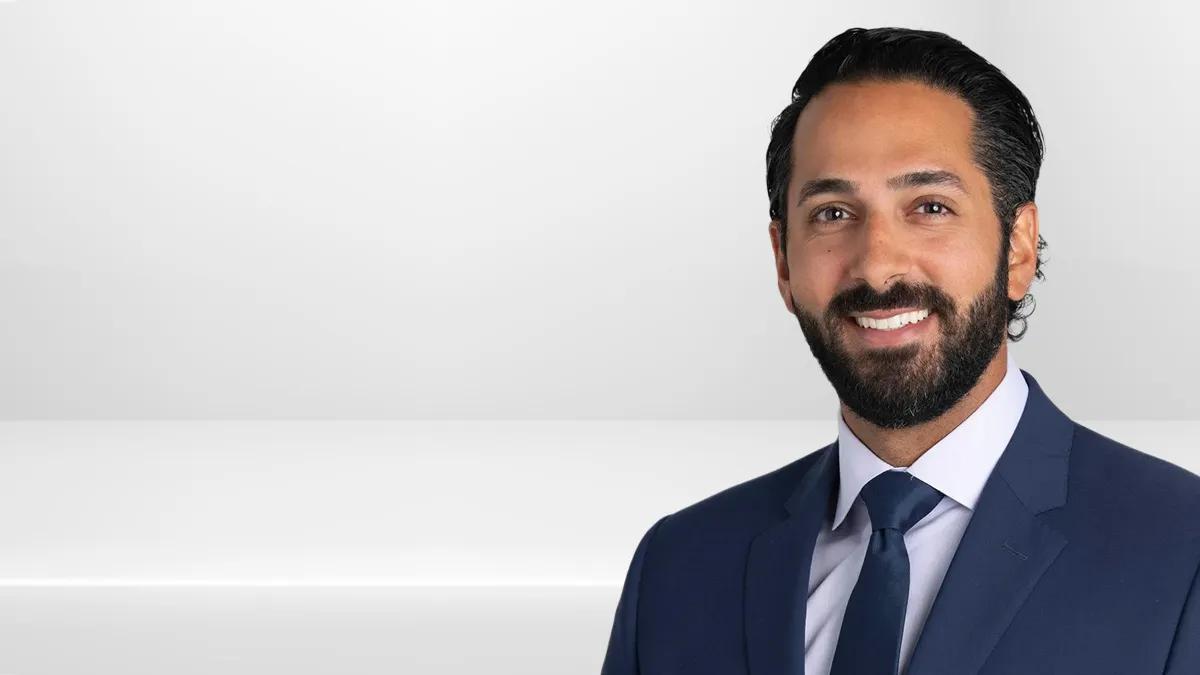
Advancing Care in Facial Plastic and Reconstructive Surgery
In this episode of Head and Neck Innovations, Paul Bryson, MD, MBA is joined by facial plastic and reconstructive surgeon Khashayar Arianpour, MD, to discuss the evolving field of facial plastic surgery. They explore the intersection of functional and aesthetic outcomes in rhinoplasty, advances in facial reconstruction following skin cancer treatment and trauma, the role of 3D imaging and surgical planning technologies, and the growing emphasis on personalized, natural-looking results that preserve each patient's unique identity.
Advertisement
Cleveland Clinic is a non-profit academic medical center. Advertising on our site helps support our mission. We do not endorse non-Cleveland Clinic products or services. Policy
Recent Episodes
Collaborative Care and Innovation in Lateral Skull Base Tumors
In this episode of Head and Neck Innovations, experts in neurotology and neurosurgery discuss the diagnosis and management of lateral skull…
Multidisciplinary Management of Cerebrospinal Fluid Leaks and Idiopathic Intracranial Hypertension
In this episode of Head and Neck Innovations, Edward Doyle, MD, and Varun Kshettry, MD, join host Paul Bryson, MD, to discuss the diagnosis…
Advances and Risk Management in Endonasal Skull Base Surgery
In this episode of Head and Neck Innovations, Christopher Roxbury, MD, and Rhinology Fellow Chase Kahn, MD, join host Paul Bryson, MD, to di…
Video content: This video is available to watch online.
View video online (https://cdnapisec.kaltura.com/p/2207941/sp/220794100/playManifest/entryId/1_eza2o4td/flavorId/1_5f3sgelj/format/url/protocol/https/a.mp4)
Transcript
Dr. Paul C. Bryson, MD, MBA:
Thanks for joining us for another episode of Head and Neck Innovations. I'm your host, Paul Bryson, Director of the Cleveland Clinic Voice Center. You can follow me on X, formerly Twitter, @PaulCBryson, and you can get the latest updates from Cleveland Clinic Otolaryngology-Head and Neck Surgery by following us on LinkedIn at Cleveland Clinic Otolaryngology - Head and Neck Surgery, and Instagram at Cleveland Clinic Otolaryngology.
Advertisement
Cleveland Clinic is a non-profit academic medical center. Advertising on our site helps support our mission. We do not endorse non-Cleveland Clinic products or services. Policy
Today, I'm joined by my colleague, Dr. Kash Arianpour, facial plastic and reconstructive surgeon. He specializes in plastic surgery of the face, head, and neck, with a practice that includes cosmetic facial surgery, rhinoplasty, hair restoration, facial reconstruction, and care for facial trauma. Welcome to Head and Neck Innovations, Dr. Arianpour.
Dr. Khashayar Arianpour, MD:
Thanks for having me, Dr. Bryson.
Dr. Paul C. Bryson, MD, MBA:
Well, it's great to have you back on faculty, but to start, can you introduce yourself to our listeners, give us some of your background and what inspired you to pursue facial plastics and reconstruction?
Dr. Khashayar Arianpour, MD:
Thanks. I actually came to facial plastic surgery through head and neck surgery. So, I did my residency here at Cleveland Clinic, and during that time, I just found myself increasingly drawn to this unique intersection of anatomy and function and aesthetics that all came together. And so, that's what I loved and I loved how millimeters made a difference. And so, I ultimately pursued a fellowship at Jefferson University, pursuing a formal fellowship in facial plastics and reconstructive surgery through the American Board of Facial Plastics.
Dr. Paul C. Bryson, MD, MBA:
Well, I appreciate that. Thank you for sharing that. And as you said, it's great to have you back on faculty. It was great to play a role in your training and everybody was excited to have you come be part of our staff, so it's great.
Advertisement
Dr. Khashayar Arianpour, MD:
A huge role and I appreciate coming back. I'm very excited to be back.
Dr. Paul C. Bryson, MD, MBA:
Well, so for our listeners, sometimes people think of facial plastic surgery as only cosmetic, but it really involves not just cosmetics, but also functional reconstruction. Can you give us just a little context and talk about the difference, but how they're really integrated in your approach to patient care?
Dr. Khashayar Arianpour, MD:
Absolutely. I think you raise a really good point. I think there's a huge overlap between the two and it's often unrecognized, but we tend to want to put things in boxes, cosmetic versus reconstructive. And the reality is the overlap impacts also on a daily basis. I think the perfect example is rhinoplasty is probably the most used example, and it goes either way. So, patients who have at some point sought nasal surgery for a functional concern and ended up with aesthetic outcomes they were not pleased with and vice versa, those who sought out aesthetic changes and were left with functional dysfunction essentially. So, I think that overlap is very clear when it comes to that surgery. And a lot of times we have to have a lot of nuanced conversations with patients about how we can address one and not have a side effect of something else they wouldn't like. So, these are really, really commonly involved in our practice and what takes up the majority of our patient consultations and visits.
Dr. Paul C. Bryson, MD, MBA:
Yeah. I mean, there's a lot of things you do. I imagine that rhinoplasty is probably one of the more requested surgical procedures. We'll talk about some other stuff of course, but what you alluded to some of the functional and cosmetic, the balance, what are some of the misconceptions that patients might have about rhinoplasty and how has it evolved? I mean, my understanding is that there are certainly trends that can come and go with some procedures, but how's the procedure evolved to present times?
Dr. Khashayar Arianpour, MD:
Yeah. I think the first thing is people are starting to realize that there's no one perfect nose. I think not long ago, everyone had this picture of what a perfect nose looked like and the goal was to put that nose on everybody. And so more and more we have patients coming in with specific requests on noses that they may be more interested in that they actually feel maybe better fits their face and so on and so forth. So, I think one misconception is that there's this one perfect nose and hopefully that's kind of been trending towards the right direction. But I think sometimes the best rhinoplasty result is one where you stop noticing the nose and start noticing the unique features of the face. That's kind of the goal. And I think that is the misconception we're trying to hopefully overcome over time. And really in my mind, a good rhinoplasty shouldn't announce to the world that it's been operated on. It should be just unnoticed.
Advertisement
Dr. Paul C. Bryson, MD, MBA:
Yeah, no, that's a great point. Yeah, because it can be something that catches the eye otherwise, right?
Dr. Khashayar Arianpour, MD:
Absolutely.
Dr. Paul C. Bryson, MD, MBA:
Some of the other really amazing things that you're doing, I wanted to talk about skin cancer removal and reconstruction, but also trauma surgery for the face. Can you talk a little bit about how you approach these and what some of the reconstructive options are and I guess how you personalize care for these because it can be pretty heterogeneous.
Dr. Khashayar Arianpour, MD:
Yeah. Facial reconstruction is extraordinarily individualized. I mean, no two defects are the same. And so just by nature of the anatomy, you're already dealing in a personalized manner with every patient. And that's what I love most about it. And that's why it makes the decision making nuanced and it makes the conversations quite in depth with patients. It allows you an opportunity to get to know patients well and establish long-term relationships with them. So, a portion of my practice is Mohs local reconstruction, folks who've undergone skin cancer excision and then referred to us for a definitive reconstructive repair, especially in areas of the face that are crossing several subunits and becoming more and more complex, especially around the nose, the eyelids, cheek, lips, those are sort of the areas. And the conversation and the consultation for that is really a discussion on the myriad of options that may be available for that one specific defect and then taking into account the patient's age, their comorbidities, their skin type, their overall goals, what are their aesthetic standards, what are their goals in terms of how many times they would like to undergo a procedure.
Advertisement
And so, it's a conversation that we have and every approach has its pros and cons, but that's why the dual decision making comes into play. So, that's on the skin side of things or skin cancer side of things. And as far as to answer your question about trauma, the trauma ranges in how we see it both at the acute setting as well as the sort of long-term sequelae. And I think the majority of what we see is probably in the acute setting, patients who've been to the hospital for either a fall or some sort of injury and underwent imaging that demonstrated some form of fracture involving the face. And so we see those patients in the acute setting to decide whether or not anything needs to be done about it. And those two are quite in depth conversations and review of imaging. And then the part that I find slightly more interesting is the patients that come in with the long-term sequelae of either fractures or injuries that were either not treated or were undertreated and how do we manage that?
And so, that's where I think the field has grown a little bit. We have more tools available to us. There's 3D imaging that could be used to make custom implants and so on and so forth. So, those are sort of the trauma domain of facial plastics that we deal with.
Advertisement
Dr. Paul C. Bryson, MD, MBA:
Yeah. With regards to traumas, does it seem to be better to try to fix things early or I understand sometimes things can be quite complex and it might maybe require staging or things like that. How do you kind of break down what can be fixed early, but what typically requires a bit more?
Dr. Khashayar Arianpour, MD:
Yeah, I think that's totally dependent on where the fracture is and the degree of the fracture. And so, those conversations are always focused around the specific type of fracture and whether or not early versus later intervention is necessary. Most fractures, I think if you look at them in a broad way is if they're acute and they are displaced enough to have either a functional or aesthetic component, it's better to intervene early rather than late. If they're sort of in the gray area of severity, then it's better to wait because many of the functional issues that patients may have early on may actually resolve with the natural spontaneous ways that the body heals.
Dr. Paul C. Bryson, MD, MBA:
So, as we were just talking about skin cancer and trauma and it can be complicated as you said. How has technology sort of evolved to help you or to even just shape general facial plastic surgery to date for you? I hear about advancements and things like 3D imaging, some very innovative surgical planning tools, even minimally invasive techniques. Can you speak a little bit to how you use these tools and what they might look like as you integrate them in your practice?
Dr. Khashayar Arianpour, MD:
Yes. I should preface by saying that what I say to most of my patients, which is technology is a tool and it doesn't replace our surgical judgment. And I think in our field that's especially important because many patients seek out care and options on their own and do a lot of research into what they think they need or want. And so they come to you with tools that they've used to try and dictate some of their surgical plans. So, for me in my practice, really the technology I probably use most often is something that's been around for a long time, but I think we're getting more nuanced in terms of our software available for it, which is creating simulations and morphs of patients for anticipated changes to their appearance for before and after. In rhinoplasty, that's been established for a really long time, but now we have 3D cameras that we use to help make some of those modifications and then we're able to definitely do it a lot better when it comes to facial rejuvenation.
The software can get rid of wrinkles and give volume to parts of the face that need it and so it can start to mimic even facelifts. And I think that's pretty helpful. With respect to especially rhinoplasties, I think where it really plays a role for me is its value in communication. I never present these morphs to patients as this is your guaranteed surgical outcome. The conversation is more so, you said you want a refined tip and I can picture what I picture a refined tip to be in my head, but I want to know does that correlate with what you envision? And so, it's really to make sure that we are both on the same page about what we're shooting for. And if so, then we can kind of move forward or if not, we go back to the drawing board and figure out what it is that we can decide on that's both feasible as well as sort of meets the other features of your face.
So, I would say that's the technology that I use most commonly. And then we're definitely seeing a trend over the last decade of using more precise instrumentation in the operating room when we're getting increasingly sophisticated as far as being able to make precise changes to the nose in a way where structure is preserved and we lead to better long-term outcomes.
Dr. Paul C. Bryson, MD, MBA:
What are you most excited about as some of, certainly as you build your practice, but as you use these tools, what's in the pipeline or what excites you most about some of the work you're doing?
Dr. Khashayar Arianpour, MD:
Well, for me, I think really what's been exciting is how much facial plastic surgery has becomes individualized. I think we're definitely moving more towards a world where patients understand that each of them have their own unique features and it's about finding a way to make a change that really is in harmony with the remainder of their face, but gives them the change that they're looking for. I think we're starting to see that in the world of rhinoplasty that techniques that were used 20, 30 years ago are leading to long-term sequelae where patients are having troubles breathing and they're having formulas that are super difficult to fix. And so, we definitely are in the era of making sure that we do sort of sparing techniques where structure is preserved and we give patients the same, if not even better aesthetic results while making sure that their long-term outcomes last.
And then in the facial rejuvenation world, the last few decades we've started to recognize the importance that aging is not confined to the skin and it's a lot of changes that happen on a deeper surface from bone, muscle, glands that are involved. And so, we're increasingly addressing deeper space structures to create external changes that are meaningful to the patient. And it's the same reason why we're moving towards a world where we can get contemporary results that look natural and still effectively help the patient get the aesthetic that they're looking for. And I think probably the most important thing in my mind for an emerging trend that is exciting is really on the human side. More and more we're seeing patients come in requesting natural results. They're moving away from sort of this standardized beauty towards surgery that now they're looking for, I want to preserve my identity and I'm seeing it even in younger patients than one would expect. So, I think that's exciting on a societal level and something that hopefully we're going to see more and more of.
Dr. Paul C. Bryson, MD, MBA:
I really appreciate that. For referring providers, when should patients be considered by an evaluation by you or other members of the team?
Dr. Khashayar Arianpour, MD:
Well, there's myriad of domains within facial plastic surgery and there's six of us in our group and together collectively we cover them all. And although we each have our own concentrated focus, I think I would say to referring providers, just send them our way. Any of us are happy to see them and the earlier, the better. In my world, I think I love seeing patients sooner rather than later because it just opens a door to creating a relationship that can be long-lasting earlier and you can start to have those conversations earlier. And one of my favorite things is to meet a patient and go over all their options and what are their options in the short term, what are their options in the long term? And last thing I'd say, I really encourage outside providers not to be uncomfortable referring patients who simply bring up an aesthetic concern.
I think patients in the midst of a very busy visit with probably many other medical issues that are being addressed may make small comments like, "Oh, I'm tired of looking tired all the time." Or, "I'm tired of people thinking I'm angry all the time." And these are small comments that I think are easily missed because they're in a busy visit and that's what we're here for. Don't be afraid to send those patients our way.
Dr. Paul C. Bryson, MD, MBA:
For more information about Cleveland Clinic's facial plastic and reconstructive surgery program or to connect with a specialist or submit a referral, call 216.444.8500. Dr. Arianpour, thank you for joining us on Head and Neck Innovations.
Dr. Khashayar Arianpour, MD:
Thanks for having me.
Dr. Paul C. Bryson, MD, MBA:
Thanks for listening to Head and Neck Innovations. You can find additional podcast episodes on our website clevelandclinic.org/podcasts. Or you can subscribe to the podcast on iTunes, Google Play, Spotify, BuzzSprout, or wherever you listen to podcasts. Don't forget, you can access realtime updates from Cleveland Clinic experts in otolaryngology – head and neck surgery on our Consult QD website at consultqd.clevelandclinic.org/headandneck. Thank you for listening and join us again next time.
Recent Episodes
Collaborative Care and Innovation in Lateral Skull Base Tumors
In this episode of Head and Neck Innovations, experts in neurotology and neurosurgery discuss the diagnosis and management of lateral skull…
Multidisciplinary Management of Cerebrospinal Fluid Leaks and Idiopathic Intracranial Hypertension
In this episode of Head and Neck Innovations, Edward Doyle, MD, and Varun Kshettry, MD, join host Paul Bryson, MD, to discuss the diagnosis…
Advances and Risk Management in Endonasal Skull Base Surgery
In this episode of Head and Neck Innovations, Christopher Roxbury, MD, and Rhinology Fellow Chase Kahn, MD, join host Paul Bryson, MD, to di…
Never miss a moment - subscribe now.
Listen to the Health Essentials Podcast on your favorite streaming platform.
Other Podcasts You May Love
Beyond Leadership
Hosts Jim Pae and Elizabeth Pugel escort you through a network of thought leaders, sharing world-cla…

Beyond the Pages: CCJM Podcast
Beyond the Pages: CCJM Podcast takes the listener more in-depth into Cleveland Clinic Journal of Med…
Butts & Guts
A Cleveland Clinic podcast exploring your digestive and surgical health from end to end. You’ll lear…
Cancer Advances
A Cleveland Clinic podcast for medical professionals exploring the latest innovative research and cl…