



Sclerotherapy for Cosmetic and Symptomatic Spider Veins
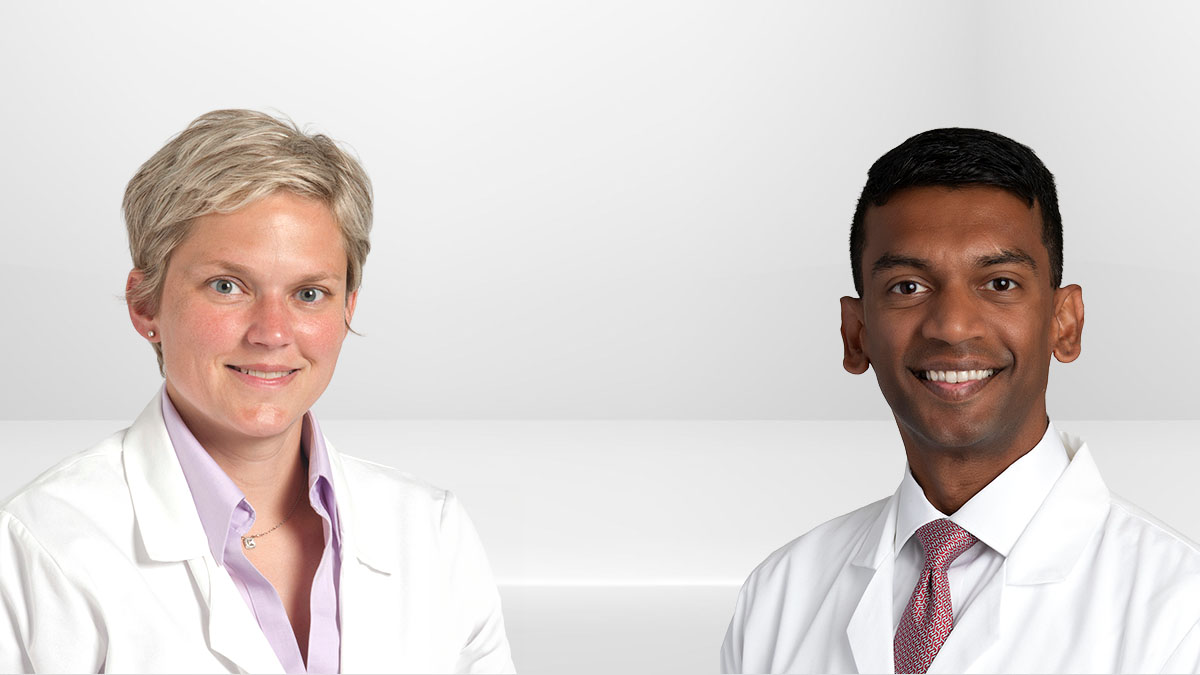
Gayan De Silva, MD, and Kathleen Boyle, DO, discuss clinical evaluation and treatment of patients with spider veins, including differentiation from underlying venous and arterial disease and appropriate patient selection. Learn about technique considerations for foam and liquid sclerotherapy, expected outcomes, and long-term management.
Looking to refer a patient? Please reach out to our Physician Referral team Mon. - Fri., 8 a.m. - 5 p.m. (ET) at 855.751.2469.
Advertisement
Cleveland Clinic is a non-profit academic medical center. Advertising on our site helps support our mission. We do not endorse non-Cleveland Clinic products or services. Policy
Recent Episodes
Robotic Lung Transplantation
Kenneth McCurry, MD, and Gregory Jones, MD explores protocol development and future applications of robotic technology in lung transplantati…
A Multidisciplinary Approach to Limb Preservation
Courtney Hanak, MD, and Ravi Ambani, MD, discuss limb preservation and amputation prevention in patients with peripheral arterial disease an…
2026 Cholesterol Guidelines and What Clinicians Need to Know
Ashish Sarraju, MD, and Leslie Cho, MD, discuss key updates in the 2026 ACC/AHA cholesterol guidelines, including earlier LDL screening and…
Video content: This video is available to watch online.
View video online (https://cdnapisec.kaltura.com/p/2207941/sp/220794100/playManifest/entryId/1_v9y1mypj/flavorId/1_5f3sgelj/format/url/protocol/https/a.mp4)
Transcript
Announcer:
Welcome to Cardiac Consult, brought to you by the Sydell and Arnold Miller Family Heart, Vascular and Thoracic Institute at Cleveland Clinic. This podcast will explore the latest innovations, medical and surgical treatments, diagnostic testing, research, technology and practice improvements.
Advertisement
Cleveland Clinic is a non-profit academic medical center. Advertising on our site helps support our mission. We do not endorse non-Cleveland Clinic products or services. Policy
Dr. Gayan De Silva, MD:
Thank you for joining us. I'm Dr. Gayan De Silva, I'm a vascular surgeon at the Cleveland Clinic, mostly in the west region. I'm joined by Dr. Katie Boyle. Dr. Boyle, I'll let you go ahead and introduce yourself as well.
Dr. Kathleen Boyle, DO:
Hi, I'm Katie Boyle. I am a vascular surgeon in the south region, mostly at Medina.
Dr. Gayan De Silva, MD:
Today, we're going to be discussing cosmetic and symptomatic sclerotherapy for spider veins and varicose veins. This is certainly a problem that many of our patients are plagued with, and there's always a little bit of uncertainty as to who benefits from therapy, what that kind of therapy looks like, and what the options for therapy are. Hopefully, Dr. Boyle and I will be able to answer some of those questions and alleviate some of those concerns. Dr. Boyle, if you don't mind me asking, what is sclerotherapy, and how do we use it to treat visible leg veins?
Dr. Kathleen Boyle, DO:
Sclerotherapy is a way that we can use a chemical to treat the smaller visible veins that you see. It's not typically used for more of the varicose veins, which are bigger, bulgy. It's more so for the little blue, purple veins that you see on your legs.
Dr. Gayan De Silva, MD:
Yeah. These can vary in size. Some of them can be very, very small, maybe the size of a dime, and some of them can be quite large and really spread out across your entire thigh or entire leg. Certainly, not everyone who has spider veins necessarily needs to be treated, but we can talk about the difference between symptomatic veins and asymptomatic veins. In your practice, Dr. Boyle, when patients come in with symptomatic spider veins, what are they usually concerned about, or what symptom do they present with?
Advertisement
Dr. Kathleen Boyle, DO:
Sometimes they can present with just focal pain at the vein itself. They describe it as kind of like a pinchy, sharp pain. The more concerning one is that they have bleeding from the spider veins, and those tend to need to be treated.
Dr. Gayan De Silva, MD:
Yeah, I agree. Usually when patients come in with bulky, ropey varicose veins, they complain of this aching, throbbing, hot sensation. But a lot of times those spider veins, just as Dr. Boyle described, it's more of like a burning, pinching discomfort. Sometimes, if people have a very, very large group of spider veins, they can have tenderness and sensitivity there.
Dr. Gayan De Silva, MD:
So again, we certainly want to make sure that we adequately assess these patients and get a really good clinical history for them to see if they're a good candidate for this. Usually, when I see these patients in clinic, it starts with a thorough history and physical exam. We want to make sure that we document where all the spider veins are. We also want to assess whether they have some underlying venous disease called venous insufficiency. That's when the valves in the veins, which normally help move that blood flow back up towards our heart from our legs, aren't functioning properly.
Dr. Gayan De Silva, MD:
So, a very thorough history and physical exam, as well as some imaging, is necessary for helping us make the diagnosis. I think once we've done that, then we can start talking about different therapeutic options. That can involve foam sclerotherapy, that can involve liquid sclero. I'll let Dr. Boyle talk to you a little bit about what that looks like in her practice.
Dr. Kathleen Boyle, DO:
So, for sclerotherapy, there are two types, which Dr. De Silva alluded to. You have your foam sclerotherapy, which is where we use the medication and we mix it with air, and it creates a foam. The purpose of it is to treat bigger veins that otherwise, the medication would get diluted out within the blood and not be as effective. Versus liquid sclerotherapy, which is typically for smaller veins. We inject it just directly into those smaller spider veins, usually using a smaller needle.
Dr. Gayan De Silva, MD:
Yeah. I will say it's a very, very well-tolerated procedure in the office. It doesn't require sedation; it doesn't require general anesthesia. It's quite safe. Certainly, when you're in the hands of an operator who does a lot of this, you can achieve an excellent technical result both for symptomatic patients and also for cosmetic purposes, as well.
Dr. Gayan De Silva, MD:
I think one of the important things to counsel patients on is what they should expect maybe after the first treatment. Patients usually want to know, "Well, am I going to get the result I want in just one treatment, or should I expect to come back?" What do you tell folks, Dr. Boyle?
Dr. Kathleen Boyle, DO:
I typically tell patients that you'll need more than one treatment. Usually, we could get to about 70% to 80% of the veins to be treated, but usually you'll start to see effects, not right away. Initially, the veins may actually look worse. They may look a little bit darker. Give it some time, at least up to eight weeks, to see what the effect is and if you'll need another treatment. But even at eight weeks, the veins can still continue to improve up to six months after a session of sclerotherapy.
Advertisement
Dr. Gayan De Silva, MD:
Agreed. I tell folks they're going to look worse before they start to look better. There is an element of patience and trusting the process, but it's not unusual that patients will need more than one treatment. I think that's an important thing that we counsel them on. We tell them, "Hopefully, we get an excellent technical result with just one singular treatment, but certainly don't be surprised if it takes two."
Dr. Gayan De Silva, MD:
Sometimes, for very, very large groups of spider veins or maybe veins that are distributed all across the leg, we're looking at two, three, sometimes four treatments, but we want to allow for adequate time between those treatments to give the full benefit of the therapy.
Dr. Gayan De Silva, MD:
I think an important adjunct to that is compression stockings. I recommend that patients wear compression stockings as much as they can because that will help keep the medication locally in the system or in the area of treatment, and also help with some of that additional venous drainage, which may be compounding the reason that they get those spider veins in the first place.
Dr. Gayan De Silva, MD:
So, once we've treated a segment, Dr. Boyle, do you find that we have to go back later on? Do they tend to recur in the same areas, or can they occur in different areas too?
Advertisement
Dr. Kathleen Boyle, DO:
Typically, what I see is the veins that we've treated have been treated, but you will get new spider veins, whether it's in a new area or around the areas that have been treated. It's not characteristic for the veins to come back or recur exactly where we treated. Sometimes, what patients can see is almost a little shadow of the veins that we have treated. That vein's no longer working or open, but you can still see a faint outline of where the vein is. That's something that people should expect or can expect after we do sclerotherapy.
Dr. Gayan De Silva, MD:
Yeah, agreed. Agreed. I think one of the ways, again, to reduce the risk of prevention – preventing them from coming back in different spots is to be very vigilant and aggressive with compression stockings. Certainly, in the winter, it’s not that big of a deal, but as we start to get in the summer and the heat and humidity start to climb, it can be a little bit more challenging for patients to be very compliant with their compression stockings, and we realize that. But again, prevention is the best prescription, I think, in this particular scenario.
Dr. Kathleen Boyle, DO:
I was just wondering, Dr. De Silva, are there any patients whom you wouldn't want to do sclerotherapy on or treat? In my practice, I'm pretty open to a majority of patients. Patients who are pregnant, I would not do treatment on and would suggest after they have their baby, then they come back to us and we reevaluate them for treatment. But is there anybody else?
Advertisement
Dr. Gayan De Silva, MD:
Yeah, that's a great question, Dr. Boyle. Certainly, if they're pregnant or even breastfeeding. Patients who have a history of significant blood-clotting disorders, I'm a little reticent about intervening there as well. If they have an active skin infection or maybe an ulcer where we expect to do that treated area, we really don't want to be introducing needles and potentially breaking that skin barrier that's so important for our immunologic stability.
Dr. Gayan De Silva, MD:
Also, if they're maybe not really able to walk or even potentially wear some compression stockings afterwards, I'm a little bit wary of treating those folks as well. Certainly, as you mentioned earlier, really big, ropey varicose veins certainly don't do well with sclerotherapy. We have other treatment options, which I think we'll discuss in a different podcast, as to the best way to treat those.
Dr. Gayan De Silva, MD:
But hopefully, through this podcast, patients are realizing that there's a whole armamentarium of ways that vascular surgeons can help them with their symptomatic spider veins, and also for cosmetic purposes as well. What I tell patients is if it's something that's bothering you, if it's affecting your quality of life, if you simply don't like the way they look, we're happy to help you and evaluate you.
Dr. Kathleen Boyle, DO:
Yeah, I agree.
Dr. Gayan De Silva, MD:
So, Dr. Boyle, when we get a direct referral for these patients, one of the things that we also have to assess is: are any other vascular concerns present? When you're seeing these patients in the clinic, how do you tease out some of these details?
Dr. Kathleen Boyle, DO:
Just through a good history and physical. Some people will come into the office, and I find that they visibly see the veins. They think their issue is veins, but when you actually dig a little bit deeper in their history, you find it's more of an arterial or a claudication problem than it is necessarily veins. Oftentimes, patients confuse veins and arteries. So, they say, "My veins are hurting," when really it's another cause and not necessarily the visible varicose veins or spider veins.
Dr. Gayan De Silva, MD:
Agreed. I think just because there's a "problem" maybe they had some sort of diagnostic test that said, "Oh, there's something wrong with your veins," that may actually not be the reason for whatever symptom they're presenting with. For instance, if it's an ulcer or if it's a wound on their foot. Certainly, both of us being vascular surgeons and being part of a very robust vascular surgery department at the Cleveland Clinic, we treat the full spectrum of both arterial disease as well as venous disease.
Dr. Gayan De Silva, MD:
So, I think that's definitely a benefit of being a patient at Cleveland Clinic and being surrounded by so many excellent providers. I think that's one of the advantages of coming to the Cleveland Clinic is we have a tremendous capacity and capability for taking care of patients and pretty much anybody who walks through the door. I think especially because we do have so many providers in various locations on the west region, on the east side, at main campus and south region, we have capacity to see anyone and take care of anyone and make sure that our patients are given the absolute best level of care possible. Any final take-home points, Dr. Boyle, that we should hit on before we sign off?
Dr. Kathleen Boyle, DO:
Nope. I think we hit a lot for sclerotherapy.
Dr. Gayan De Silva, MD:
Agreed. So, thank you again for joining us. Dr. Boyle, thank you for your time and your expertise.
Dr. Kathleen Boyle, DO:
Thank you. Thank you as well.
Announcer:
Thank you for listening to Cardiac Consult. We hope you enjoyed the podcast. For more information or to refer a patient to Cleveland Clinic, please call 855.751.2469. That's 855.751.2469. We welcome your comments and feedback. Please contact us at heart@ccf.org. Like what you heard? Subscribe wherever you get your podcasts or listen at clevelandclinic.org/cardiacconsultpodcast.
Recent Episodes
Robotic Lung Transplantation
Kenneth McCurry, MD, and Gregory Jones, MD explores protocol development and future applications of robotic technology in lung transplantati…
A Multidisciplinary Approach to Limb Preservation
Courtney Hanak, MD, and Ravi Ambani, MD, discuss limb preservation and amputation prevention in patients with peripheral arterial disease an…
2026 Cholesterol Guidelines and What Clinicians Need to Know
Ashish Sarraju, MD, and Leslie Cho, MD, discuss key updates in the 2026 ACC/AHA cholesterol guidelines, including earlier LDL screening and…
Never miss a moment - subscribe now.
Listen to the Health Essentials Podcast on your favorite streaming platform.
Other Podcasts You May Love

Butts & Guts
A Cleveland Clinic podcast exploring your digestive and surgical health from end to end. You’ll lear…
Health Essentials
Tune in for practical health advice from Cleveland Clinic experts. What's really the healthiest diet…
Love Your Heart
A Cleveland Clinic podcast to help you learn more about heart and vascular disease and conditions af…
Neuro Pathways
A Cleveland Clinic podcast for medical professionals exploring the latest research discoveries and c…