



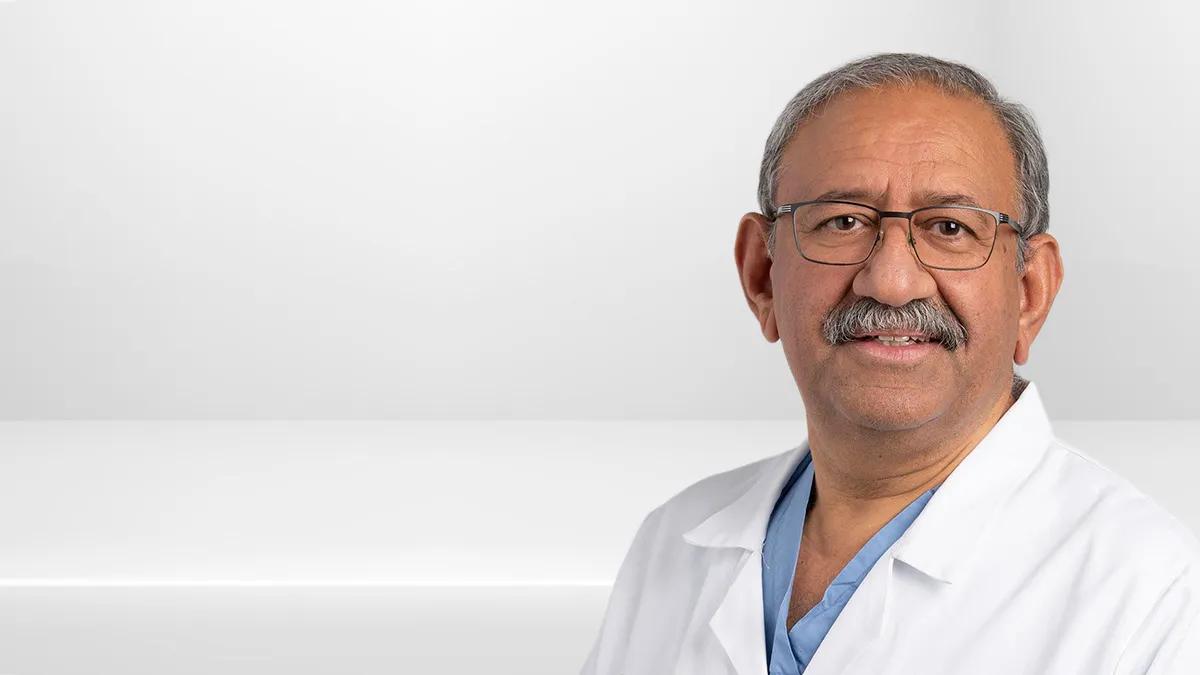
Preserving Vision, Expanding Options in Uveal Melanoma
As new therapies move through clinical trials, the management of uveal melanoma is entering a period of significant change. In this episode of Cancer Advances, Arun Singh, MD, discusses emerging strategies to avoid radiation, prevent radiation-related vision loss and shrink tumors before definitive treatment. Learn how these innovations address longstanding unmet needs and reshape care for patients with this rare ocular malignancy.
Advertisement
Cleveland Clinic is a non-profit academic medical center. Advertising on our site helps support our mission. We do not endorse non-Cleveland Clinic products or services. Policy
Recent Episodes
Personalizing Pediatric Cancer Care: The Promise of Precision Oncology
As molecular profiling advances, precision oncology is reshaping cancer care for children, adolescents and young adults. In this episode of…
From Evidence to Practice: How NCCN Defines the Standard of Cancer Care
What does it take to establish the standard of care in oncology? Matt Kalaycio, MD, Vice Chair of the Cleveland Clinic Cancer Institute and…
Redefining Resectability in Advanced Rectal Cancer
What happens when a cancer is deemed unresectable? In this episode, Dr. Haniee Chung discusses how multidisciplinary care is expanding treat…
Video content: This video is available to watch online.
View video online (https://cdnapisec.kaltura.com/p/2207941/sp/220794100/playManifest/entryId/1_9ldxbe8u/flavorId/1_5f3sgelj/format/url/protocol/https/a.mp4)
Guest
Transcript
Dale Shepard, MD, PhD:
Cancer Advances, a Cleveland Clinic podcast for medical professionals, exploring the latest innovative research and clinical advances in the field of oncology.
Advertisement
Cleveland Clinic is a non-profit academic medical center. Advertising on our site helps support our mission. We do not endorse non-Cleveland Clinic products or services. Policy
Thank you for joining us for another episode of Cancer Advances. I'm your host, Dr. Dale Shepard, a Medical Oncologist and Co-Director of the Sarcoma Program at Cleveland Clinic. Today, I'm happy to be joined by Dr. Arun Singh, Director of Ophthalmic Oncology. He is most recently a guest on this podcast to discuss advances in diagnosing and treating melanoma of the iris, and that episode is still available for you to listen to. He's here today to talk about new trials for patients with uveal melanoma. So welcome back.
Arun Singh, MD:
Well, thanks for having me.
Dale Shepard, MD, PhD:
So, remind us a little bit about what you do here at Cleveland Clinic?
Arun Singh, MD:
So I run ocular oncology clinic that covers practically all tumors in and around the eye, within the eye, of the UVR, retina, adults, children, metastatic tumors, and tumors of the orbit. So it's a comprehensive oncology service now for last 23 years or so.
Dale Shepard, MD, PhD:
We're going to talk about uveal melanoma, and we actually had an episode previously we talked about uveal melanoma, but in this case, we're going to talk about some new developments. Remind us, how has this disease historically been treated?
Arun Singh, MD:
Uveal melanoma is a rare disease, of course, and the incidence has not changed, so it still continues to be rare. But in big centers like our centers, we see more than 100, 150 new cases per year. And so over the years we have built up sufficient experience and we offer all kinds of treatments, but in general, the treatments are led by the size and the location of the tumor. Very broadly speaking, we say, is it a small tumor, is it a medium-sized tumor or is it a large tumor?
Advertisement
For small tumors, sometimes small melanomas can resemble a large nevus or a large benign tumor for that matter. And initial observation therefore would be a reasonable approach if the diagnosis is not clear to see how this tumor evolves. But for medium-sized tumors, which are the most common melanomas of the uvea or the choroid, we say radiation therapy, brachytherapy, radiation implants are the most common treatment. In fact, 85% or so of all melanomas in United States get treated by radiation treatment.
And the largest tumors, which are uncommon, fortunately, end up getting enucleation because the tumor is too big or the vision potential is too poor to do any kind of a conservative therapy. So observation for small tumors, radiation for medium-sized tumors, and enucleation generally for large tumors.
Dale Shepard, MD, PhD:
And how often do these metastasize to other parts of the body?
Arun Singh, MD:
Over the long term, we say that maybe 40%, 50% of tumors will show metastasis. And the metastasis can be delayed for many years, up to even 25 years, so to speak. But most of the risk is in the first, let's say, five years and some trickles on up to 15 years. It'll be very unusual for metastasis to happen after 15 years.
Dale Shepard, MD, PhD:
And how does this differ from what people might think of as cutaneous melanoma, the more common melanomas?
Arun Singh, MD:
In generally speaking, we say the uveal melanoma is 60 times less common than skin melanoma. Skin melanoma tends to be small and it's only treated by surgery initially because easy to excise and it's visible or noted easily on examination. Whereas a choroidal uveal melanoma may not cause any symptoms. Like 30% of patients may not have any symptoms related to it and they may be walking around with nevus or melanoma for years without realizing it. So that's one difference.
And second is that the rate of metastasis also much higher in uveal melanoma than cutaneous melanoma. And the last thing, which is most important, is that the metastasis is hematogenous, mostly bloodborne because the eyeball has no lymphatics, the eyeball itself. And so cutaneous melanoma will go through lymph nodes, for example, whereas the uveal melanoma will travel more to liver than any other place.
Dale Shepard, MD, PhD:
If we think about, you described treatments based on size so medium size radiation, the larger size you're having surgery. What are the biggest gaps? When we think about unmet needs in terms of our treatments, what would those be?
Advertisement
Arun Singh, MD:
The three main things one can summarize for this discussion, we say for tumors that are small, we are hedging to treat or not to treat because we are afraid that if I did a radiation and then the radiation will cause vision loss. So the biggest problem with the radiation is highly effective, we say 99% local control rates, but has a high chance of vision loss. Maybe 50% of patients will lose practically most of the vision in the eye with the melanoma.
So for small tumors, we hesitate a little bit because our treatments may be very detrimental to vision. And for medium-sized tumors, we know it's melanoma so we accept that risk of vision loss and treat them. So that's a big unmet need is the vision loss or dependence on radiation because historically, more than 100 years, only good local therapy has been radiation, so we are kind of dependent on it.
And for larger tumors, we say enucleation because there is not much we can do to shrink the tumor. And the last one is of course metastasis. So just for this present discussion, we say three things really alternatives to radiation, any way of reducing the risk of radiation vision loss, or to avoid enucleation. So those are the three major unmet needs from the ophthalmic perspective.
Advertisement
Dale Shepard, MD, PhD:
Okay. And tell me about some trials that are going on to answer those questions?
Arun Singh, MD:
Well, I have to say that after 30 years in this business, now we are busy with the trials, which is very good.
Dale Shepard, MD, PhD:
That's a good thing.
Arun Singh, MD:
Yeah. There are trials for practically all of these three aspects that I mentioned. We say we are seeking treatments that are not radiation-dependent. So we are trying totally avoid radiation retinopathy or radiation vision loss because we are not using radiation. So that's an Aura CoMpass trial ongoing, randomized trial now Phase 3, and previously Phase 2 studies have been very encouraging.
So we are trying to use viral capsid-like material that's injected into the eye, followed by laser treatment, to achieve local control for small growing melanomas. So very specific criteria, and the trials should be finished by the end of this year and another maybe two years before the readout to see the outcomes of this randomized trial. At least we here at Cleveland Clinic Cole Eye, we have patients that are enrolled in this trial and that's ongoing. So that's to avoid radiation altogether.
And the second trial is to identify patients who are at high risk of vision loss from radiation because of the size of the tumor or the proximity to the macular or the vision area of the retina. And in those patients, we can randomize them also into a trial for prevention of vision loss from radiation. So we know they're at the risk of it and then we can inject certain drugs in the eye to prevent vision loss from radiation. Here they get the benefit of good control from radiation, which we know is highly effective, 99%, and at the same time try to mitigate the main side effect, which is the radiation retinopathy.
Advertisement
And the third one, which is also interesting, is a novel approach where we are trying to reduce the tumor size. So we never really had any medications or drugs that will reduce the tumor within the eye. So here we are using neoadjuvant, or before primary treatment, and oral medication, darovasertib, which can reduce tumor by almost 50% maybe in 70, 80% of cases. So the drug is taken by pill and the tumor is monitored and there's a reduction in size. And as long as there's a reduction, you can continue the medication for maybe up to even six months. And then very likely the tumor has become smaller than large. It was large, that becomes medium. Then you could do radiation treatment. And if it was medium-sized tumor, would get smaller within its own group and then the radiation collateral damage would be minimized because the tumor size has become small.
So one is to avoid radiation altogether, one trial, that's the Aura trial. Second is the DRCR trial where we're trying to keep the radiation, but minimize the radiation damage by preventing using certain adjuvant medications. And third is to reduce the tumor, avoid enucleation. And if it's a medium size, very likely reduce the risk of radiation retinopathy. So all three approaches are ongoing and it's exciting.
Dale Shepard, MD, PhD:
That's fantastic. What's been the biggest barrier in the past to reducing the size of tumors in the eye? Is it just access of drugs to the eye itself?
Arun Singh, MD:
No, the lack of drugs. We haven't had any drug. Nobody has been interested in this landscape. These are rare tumors. And as you know for this, often tumors, there's nobody to adopt this. But now with this molecular biological stuff, new technology, new platforms of drug identification and targeted drugs, we are getting into this new era of target therapies for uveal melanoma.
Dale Shepard, MD, PhD:
That's fantastic. About how long do you think it'll be before we find out about the results of the second two trials?
Arun Singh, MD:
I think in the next five years. We always say five years, but I think this is real five years, we will have hugely new knowledge, clearly new ways how we counsel our patients, how we treat our patients, how we approach our patients. It's going to drastically change. It's very exciting times, I have to say, in this field of ophthalmic oncology.
Dale Shepard, MD, PhD:
When you think about the availability of trials, I'm guessing as a rare disease, there are not many centers that have them?
Arun Singh, MD:
No. The Aura trial is a global trial across globes. They have, I think, about 100 sites to get 100-some patients. So you have to go to many sites to get sufficient cases. The IDE trial, the one with darovasertib, also is a global multinational trial, Europe, Australia, and many centers in United States. And DRCR trial is confined to U.S. We have about 10 centers and trying to open up in some other 10 more centers. So multicenter trials are necessary. Yeah.
Dale Shepard, MD, PhD:
And I guess just from a patient selection standpoint, are there any particular patients that would make more sense to be sent to see you here at Cleveland Clinic?
Arun Singh, MD:
It's hard to, first of all, make an accurate diagnosis before the patient comes in. Some may not even have melanoma. But if they have a melanoma, we can pretty much find a trial into which they will fit in for small tumor, medium-sized tumor, large tumors. All sizes are welcome because we have a trial now for all categories.
Dale Shepard, MD, PhD:
Sounds fantastic. It sounds like previously we talked about metastatic disease. Now we're talking about local control in three different settings. So it is really an abundance of data that's being generated. It's fantastic.
Arun Singh, MD:
Yeah, it's exciting. Just to touch upon the metastasis. One can also theorize that some of these approaches may also have impact, although not proven yet, and I'm sure will be investigated further, in reducing the risk of metastasis. If you can reduce the tumor in the eye, theoretically at least one can expect some benefit on micrometastasis that's happening outside the eye, but that will be proven in other trials that are also being planned. So those will be adjuvant therapy trials, but they're coming.
Dale Shepard, MD, PhD:
Well, that's great. A rare disease, but a lot of hope for the future. Appreciate you joining and letting us know about the new advances.
Arun Singh, MD:
Thank you so much for having me. Thank you.
Dale Shepard, MD, PhD:
To make a direct online referral to our Cancer Institute, complete our online cancer patient referral form by visiting clevelandclinic.org/cancerpatientreferrals. You will receive confirmation once the appointment is scheduled.
This concludes this episode of Cancer Advances. For more podcast episodes, visit our website, clevelandclinic.org/canceradvancespodcast. Subscribe on Apple Podcasts, Spotify, or wherever you listen to podcasts.
Thank you for listening. Please join us again soon.
Recent Episodes
Personalizing Pediatric Cancer Care: The Promise of Precision Oncology
As molecular profiling advances, precision oncology is reshaping cancer care for children, adolescents and young adults. In this episode of…
From Evidence to Practice: How NCCN Defines the Standard of Cancer Care
What does it take to establish the standard of care in oncology? Matt Kalaycio, MD, Vice Chair of the Cleveland Clinic Cancer Institute and…
Redefining Resectability in Advanced Rectal Cancer
What happens when a cancer is deemed unresectable? In this episode, Dr. Haniee Chung discusses how multidisciplinary care is expanding treat…
Other Podcasts You May Love
Beyond Leadership
Hosts Jim Pae and Elizabeth Pugel escort you through a network of thought leaders, sharing world-cla…

Beyond the Pages: CCJM Podcast
Beyond the Pages: CCJM Podcast takes the listener more in-depth into Cleveland Clinic Journal of Med…

Butts & Guts
A Cleveland Clinic podcast exploring your digestive and surgical health from end to end. You’ll lear…
Cardiac Consult
A Cleveland Clinic podcast exploring heart, vascular and thoracic topics of interest to healthcare p…