



Uterine Transposition: A New Approach to Fertility Preservation in Colorectal and Pelvic Cancers
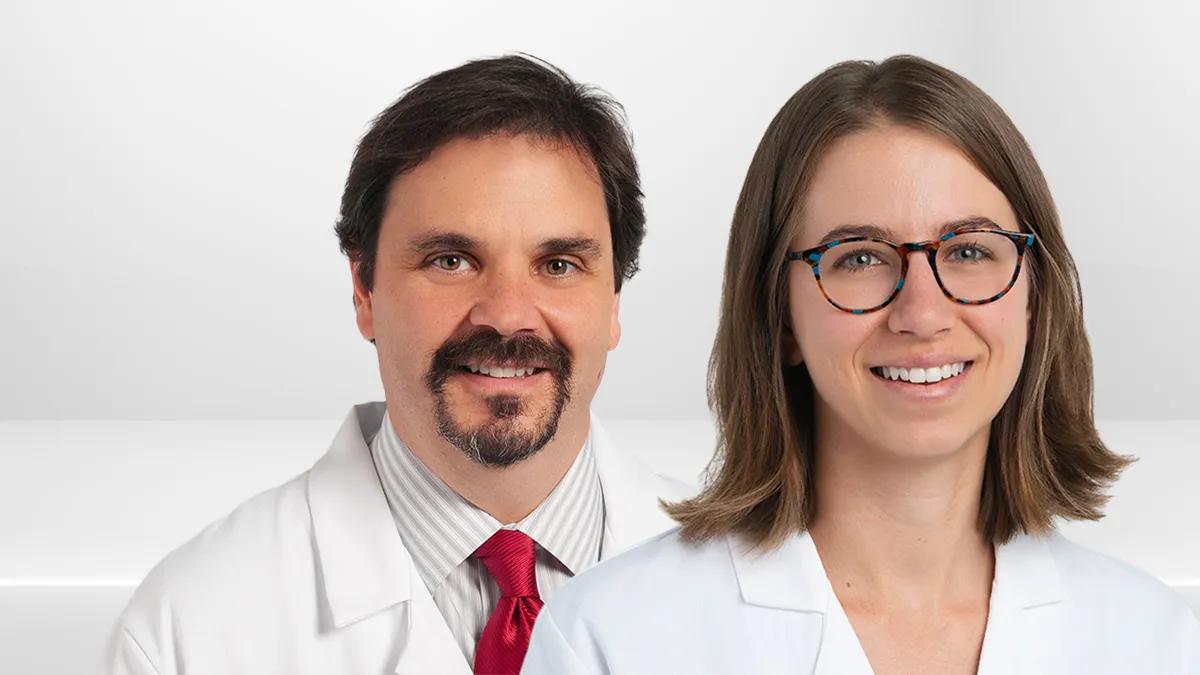
On this episode of Butts & Guts, Johanna Kelley, MD, and Robert DeBernardo, MD, gynecologic oncologists at Cleveland Clinic, discuss uterine transposition, an innovative fertility-preserving option for young patients undergoing treatment for colorectal and other pelvic cancers. Learn how pelvic radiation can affect fertility, what options may help preserve the chance of future pregnancy, and why early conversations about fertility preservation are an important part of cancer care.
Advertisement
Cleveland Clinic is a non-profit academic medical center. Advertising on our site helps support our mission. We do not endorse non-Cleveland Clinic products or services. Policy
Recent Episodes
What Causes Bowel Leakage? Understanding Fecal Incontinence and the Latest Treatment Options
Bowel leakage and fecal incontinence affect millions of people, yet many are uncomfortable talking about them. In this episode of Butts & Gu…
Weight Loss Without Surgery? Understanding Bariatric Endoscopy
Bariatric endoscopy offers incisionless weight loss options for people looking for an alternative to traditional bariatric surgery. Stephen…
Inguinal Hernias: From Groin Pain to Hernia Repair
In this episode of Butts & Guts, Dr. Kevin Wissinger, a general surgeon at Cleveland Clinic Florida, discusses inguinal hernias, including c…
Video content: This video is available to watch online.
View video online (https://cdnapisec.kaltura.com/p/2207941/sp/220794100/playManifest/entryId/1_7ekyi9pk/flavorId/1_5f3sgelj/format/url/protocol/https/a.mp4)
Host
Guest Speaker
Transcript
Dr. Scott Steele:
Butts & Guts, a Cleveland Clinic podcast exploring your digestive and surgical health from end to end. Hi again everyone, and welcome to another episode of Butts & Guts. I'm your host, Scott Steele, colorectal surgeon and President of Main Campus here at the Cleveland Clinic in beautiful Cleveland, Ohio. And today I get the pleasure of having two expert guests on Butts & Guts. I'm pleased to welcome Dr. Robert DeBernardo, who is a gynecology oncologist and also the Laura J. Fogarty chair in uterine cancer here at the Cleveland Clinic, as well as Dr. Johanna Kelley, also a gynecologic oncologist here at the Cleveland Clinic. Johanna, Rob, welcome to Butts & Guts.
Advertisement
Cleveland Clinic is a non-profit academic medical center. Advertising on our site helps support our mission. We do not endorse non-Cleveland Clinic products or services. Policy
Dr. Robert DeBernardo:
Thank you, Scott, for having us.
Dr. Johanna Kelley:
Thanks so much.
Dr. Scott Steele:
So today we're going to talk something obviously a little bit near and dear to both of our hearts or both of our collective group hearts, and that's preserving fertility in rectal cancer patients. Before we get there, I'd like for each of you, and Johanna, we'll start with you first. Tell us a little bit about your background, where you're from, where'd you train, and how did it come to the point that you're here at the Cleveland Clinic?
Dr. Johanna Kelley:
Yeah, I'm originally from Vermont and did my training there and then matched here for fellowship in gynecologic oncology at the Cleveland Clinic and somehow convinced Dr. DeBernardo to give me a job. So I was fortunate enough to stay on here and I really enjoy all the multidisciplinary collaboration that we get to do here at the Cleveland Clinic in addition to the complex surgeries.
Dr. Robert DeBernardo:
Yeah, I too come from the East Coast. I grew up not far from Vermont and did all my education there. So I trained at Hopkins and then Mass General for my fellowship. I was recruited out here for a job and I've been with the clinic for almost 15 years now. So yeah, and Joey kind of downplays it. She was heavily recruited to our program, had a lot of options, and I'm glad she stayed. She's a super talented surgeon.
Advertisement
Dr. Scott Steele:
Well, we are glad that the both of you are here and super excited that you could join us here on Butts & Guts. And so Dr. Kelley, we'll start with you. So can you explain at a high level, we're going to talk about this, obviously preserving fertility in rectal cancer patients. And what is this new approach, and how does it preserve fertility, and maybe why is it so unique?
Dr. Johanna Kelley:
Yeah, so we are really excited about this new approach for patients. In the past, the only option historically for patients was to transpose the ovaries out of the radiation field, which would prevent the patient from going through menopause, but it would not preserve their fertility. And this new procedure called a uterine transposition moves the uterus, cervix, fallopian tubes, and ovaries all up out of the radiation field so that once the patient has finished their treatment, that can then be reunified and ultimately the patient could go on to carry their own pregnancy.
Dr. Scott Steele:
So Rob, we've had a lot of patients come from, I think we all feel very, very honored that patients would come from all around the world to seek care at the Cleveland Clinic. And more recently, you've had a patient that has come specifically to the Cleveland Clinic to choose this new approach to preserve her fertility. How did that all happen?
Advertisement
Dr. Robert DeBernardo:
Yeah, so I think a lot of it is initially word of mouth because this is not a technique that's generally offered. I think this was maybe the, I mean, it's been done a few dozen times worldwide. So this patient happened to hear about Mindy Christianson, who's one of our reproductive specialists who's been pretty excited to get a program started here since she joined. And I had done this procedure in the lab a few times since first learning about it. So this patient found out sort of through word of mouth and then came to see us. And what was important I think was we're dealing with patients with cancer. We have to move relatively quickly. And to me, that was the nice part, is we have a committed group of people. We saw her, and within two weeks she was having her surgery, so we didn't have to delay her therapy for her rectal cancer.
Dr. Scott Steele:
So Johanna, obviously myself as a colorectal surgeon, one of the more mind-boggling things we're dealing with is the prevalence of early onset colorectal cancer today, specifically rectal cancer. And as we talked about very briefly, one of the types of treatments we do prior to surgery for rectal cancer is giving chemotherapy and radiation therapy. So why is fertility preservation becoming such an important topic in colorectal cancer today?
Advertisement
Dr. Johanna Kelley:
Thank you. So when radiation is given to the pelvis, if the uterus is left in place there, the radiation that's given quickly makes it so the uterus cannot hold a pregnancy in the future. And this makes it so that patients have very limited options otherwise. They would need to preserve oocytes and then find a surrogate to carry their pregnancy, which can be very cost prohibitive for many patients. And so this procedure is really exciting because it allows the patient the opportunity to potentially carry their own pregnancy in the future.
Dr. Robert DeBernardo:
And I'd add, Scott, as you know, I mean, we're seeing more and more younger people with cancer, especially colorectal cancer. So I think where maybe 20 years ago there would've been far fewer women that would be in this situation. I think that combined with the fact that women tend to be having children a little later in life now than maybe 20 or 30 years ago. So I think there's more patients that fertility becomes an issue. So that's why I think this is becoming somewhat more prevalent and more timely to talk about. And then the other practical piece of the reproductive part is despite the fact that we have technologies that could allow people to have their own biologic children, those are generally not covered by insurance and are prohibitively expensive. So even if we transpose an ovary and find a surrogate, that's not realistic for most people to be able to have their own biologic children. They just simply can't afford it.
Advertisement
Dr. Scott Steele:
So Rob, just as a gynecological oncologist, we spoke and you and I have operated together many times. And so for somebody in their 20 and 30s, I mentioned briefly about the increased prevalence of colorectal cancer, but can you talk just a little bit about symptoms or risk of cancer in this younger population? Are you seeing it across the board in other types of cancer or what are your thoughts there?
Dr. Robert DeBernardo:
Yeah, absolutely. I have to say it's surprising the number of younger people that we're seeing with cancer. As you guys are seeing with colorectal cancer, cervix cancer is a disease that impacts a lot of very young women. We have HPV vaccination. Our take-up rates have been relatively low in the United States, but states that have a high prevalence of getting vaccinated, those cervical cancer rates are falling. Whereas other states that not, we still are seeing high rates of this cancer. So the symptoms that people experience, at least women, I mean, I think change in their menstrual cycles, abnormal pain, rectal bleeding, these things need to be evaluated. And I just still think that our medical system fails somewhat because we assume they're young, this couldn't be anything terrible. And I think people, women in particular, have to be their own advocates. And if they think something's wrong, they should seek medical opinion.
Advertisement
Dr. Scott Steele:
Jo, I want to go back to something that you said, and that's kind of the effects of radiation on fertility in women. So is it the fact that basically radiation is scarring the tubes or doing something to the uterus or is it actually killing some of the eggs? I mean, how does this really come about and what are the challenges that these patients usually face?
Dr. Johanna Kelley:
Yeah, so radiation affects all of the reproductive organs. It causes stenosis of the vagina. It can cause scarring of the cervix and damages the tissues of the cervix and uterus so that they cannot function properly in addition to scarring the fallopian tubes. And then in terms of the ovaries, the ovaries are often, stop producing their normal hormones and patients will stop ovulating with very low doses of radiation.
Dr. Scott Steele:
And Rob, before this approach, which to me, obviously from an outsider I'm like, "God, why didn't we do this before?" What options did women have if they wanted to preserve their ability to have children?
Dr. Robert DeBernardo:
Yeah, very few. Ovarian transposition has been done for years. We simply disconnect the ovary and transpose it up into the upper abdomen. And now that's a relatively simple procedure done laparoscopically. I think you're right, moving the uterus out of the, I mean it seems pretty obvious and it's actually technically not that hard. Joey and I did the first case. I think it took about two and a half hours. We did it all laparoscopically and the patient went home the next day. I think now that we have really good laparoscopic techniques and equipment, this has become very feasible and reasonable. And what's exciting about it is women won't need expensive reproductive assistance to get pregnant. Once their uterus is transposed and their cancer's cured and they do get pregnant, they'll need to deliver by C-section. But other than that, they shouldn't need IVF hopefully at all. I mean, our protocol here is we will still harvest eggs in case there's something, let's say that goes wrong in the uterus or the ovaries lose its blood supply, we'll still at least have those banked, but they shouldn't theoretically need them.
Dr. Scott Steele:
And if I understand, Dr. Kelley, what makes this approach different from what's available at other hospitals is maybe other hospitals don't do this at all and they just maybe just do the ovarian or what's the deal there?
Dr. Johanna Kelley:
Yeah, most hospitals are not doing this procedure at all. There are a few hospitals that are starting to do this procedure robotically. However, ours was really the first center in the United States that reported doing this laparoscopically without robotic assistance, which I think is a really nice option for patients. There's often less time constraints with scheduling for laparoscopic procedures rather than robotic procedures, and it makes it so that we can collaborate with colorectal surgeons who also may want to do a follow-up surgery laparoscopically and where we then reunify the uterus.
Dr. Scott Steele:
And Rob, obviously we're talking about rectal cancer in this particular instance, but are there other pelvic cancers that this fertility sparing procedure can apply to?
Dr. Robert DeBernardo:
Yeah, so there are. Rectal cancer is the one that's most obvious, but there are some pelvic sarcomas that this potentially could be a helpful treatment. We have patients that have very early cervix cancers where we do something similar where we radically resect the cervix and the perimeter and the lymph nodes and then reunify immediately at the same time, the uterus to the top of the vagina. We're potentially looking to expand that application. So potentially some women with cervix cancer could potentially benefit from something like this down the road. But mostly rectal cancer, pelvic sarcomas would be the few that would benefit from this.
Dr. Scott Steele:
And Johanna, you talked a little bit about different specialists. So this kind of care seems to me may take a team. Can you talk a little bit about the different specialists that are involved and how you all work together?
Dr. Johanna Kelley:
Yeah, thank you. I love that question. It's my favorite part of the clinic here, is all the great teams that we get to work together on. So this included the reproductive endocrinology and infertility team who, like Rob said, brought the patient through oocyte cryopreservation, and then they saw Dr. DeBernardo and he worked with the colorectal team, including a colorectal surgeon, the medical oncologist, and the radiation oncologist to ensure that the patient was going to get the right treatment plan and that our part of her care would not delay her cancer directed therapy at all. And then we have wonderful nursing staff and social work staff and all the aspects of the team that make everything here at the clinic work. So we're very fortunate to have excellent assistance in the operating room and on the outpatient side.
Dr. Robert DeBernardo:
I would say the other piece is the clinical care coordinators. So it's nice to have somebody on the team that helps people navigate the six or seven appointments that they need. So that's another piece of the puzzle that we are fortunate enough to have. So to go back to what you were saying earlier, well, what other centers would be offering it? I think you need a center that's going to have a fair amount of complex procedures that have multidisciplinary teams because we need all these people. In fact, the radiation team was in the OR when we were doing this so that we could determine once the abdomen was de-insufflated and the uterus was in its new position, is this truly outside the radiated field? So I think all those things make a difference.
Dr. Scott Steele:
Johanna, just finishing up, what would you want a young patient listening right now to know if they've been diagnosed with pelvic cancer? And Rob, you can add on after.
Dr. Johanna Kelley:
Yeah, I think it's important for them to know that there are centers like ours which can offer them excellent cancer care, but also prioritize them as a person so that they have quality of life and they also have options, right? The reproductive options for patients are hugely important and can shape what their life looks like tremendously. And so I'd encourage anyone that's interested or has a family member who may be interested in this to reach out to us.
Dr. Robert DeBernardo:
Yeah. I mean, I think we deal with a lot of young people in our practice. Fertility is not something that's the top of mind in patients that are newly diagnosed with cancer generally. I think people are mostly shocked and they want to know, am I going to get cured? What is this? And it's kind of a whirlwind. So I would encourage young women to ask, "Hey, what does this mean?" I think we're doing a better and better job of treating and curing a lot of these cancers. And so the long-term sort of ramifications become more important and we lose an opportunity if we don't jump on it right away. So I would just pass on that message, that women should feel empowered to ask these questions.
Dr. Scott Steele:
Fantastic. So now it's time for our quick hitters, a chance to get to know each of you a little bit better. So we'll just kind of go back and forth and Jo, we'll start with you. So what's your favorite food?
Dr. Johanna Kelley:
Raspberries.
Dr. Scott Steele:
Rob?
Dr. Robert DeBernardo:
That's got to be pizza.
Dr. Scott Steele:
Salt or sweet? Salt or sweet?
Dr. Johanna Kelley:
Definitely sweet.
Dr. Robert DeBernardo:
Definitely salt. How are we partners?
Dr. Johanna Kelley:
I don't... We balance each other out.
Dr. Scott Steele:
What was your first car?
Dr. Johanna Kelley:
My first car was a blue Nissan stick shift truck.
Dr. Robert DeBernardo:
Good for you. I had a 1974 Oldsmobile Cutlass that I bought for $200 that had a dent in every single panel before I could even drive. That was my first car.
Dr. Scott Steele:
And finally, do you have a favorite maybe Christmas holiday or birthday gift when you look back in time and one that maybe sticks out?
Dr. Johanna Kelley:
That is a good question.
Dr. Robert DeBernardo:
Wow, that is.
Dr. Johanna Kelley:
I would have to say a lacrosse stick. I played lacrosse in high school and college and was given a lacrosse stick for Christmas I think one year and carries a lot of good memories.
Dr. Robert DeBernardo:
I race cars and so my wife got me this package where I was able to drive seven super cars on a racetrack back to back. That was actually a once in a lifetime sort of thing.
Dr. Scott Steele:
Fantastic. Sounds just a skosh bit dangerous. And so to the both of you, give us a final take home message for our listeners regarding this topic of preserving fertility in rectal cancer patients.
Dr. Robert DeBernardo:
Take home message. Yeah, this technique is out there. I think it's something that really we should strongly consider. It's something that I think we should strongly consider in women because I think this should be the future of how we manage this in young women. It's not going to delay therapy. It's going to preserve them all the options to have children. It's just a matter of getting it out there and getting people referred and building centers across the country.
Dr. Johanna Kelley:
Yeah. I hope this becomes the new standard of care for patients someday so that they can have good quality of life and have all the options that they want in addition to receiving excellent cancer care.
Dr. Scott Steele:
Well, on behalf of many patients and future patients out there, we're so glad that you are invoking this and have come up with the technique. And so to learn more about colorectal cancer treatment options at the Cleveland Clinic, please visit clevelandclinic.org/coloncancercare. That's clevelandclinic.org/coloncancercare. And to make an appointment with a colon cancer specialist, please call our Cancer Answer Line at 866.223.8100. That's 866.223.8100. And I should also say that if you have any questions about gynecological oncology disease, you can also reach out and contact either Dr. DeBernardo or Dr. Kelley at the Cancer Answer number. So Johanna, Rob, thanks so much for joining us on Butts & Guts.
Dr. Robert DeBernardo:
Thanks, Scott. It was great to be here.
Dr. Johanna Kelley:
Thank you so much.
Dr. Scott Steele:
That wraps things up here at Cleveland Clinic. Until next time, thanks for listening to Butts & Guts.
Recent Episodes
What Causes Bowel Leakage? Understanding Fecal Incontinence and the Latest Treatment Options
Bowel leakage and fecal incontinence affect millions of people, yet many are uncomfortable talking about them. In this episode of Butts & Gu…
Weight Loss Without Surgery? Understanding Bariatric Endoscopy
Bariatric endoscopy offers incisionless weight loss options for people looking for an alternative to traditional bariatric surgery. Stephen…
Inguinal Hernias: From Groin Pain to Hernia Repair
In this episode of Butts & Guts, Dr. Kevin Wissinger, a general surgeon at Cleveland Clinic Florida, discusses inguinal hernias, including c…
Never miss a moment - subscribe now.
Listen to the Health Essentials Podcast on your favorite streaming platform.
Other Podcasts You May Love
Beyond Leadership
Hosts Jim Pae and Elizabeth Pugel escort you through a network of thought leaders, sharing world-cla…

Beyond the Pages: CCJM Podcast
Beyond the Pages: CCJM Podcast takes the listener more in-depth into Cleveland Clinic Journal of Med…
Cancer Advances
A Cleveland Clinic podcast for medical professionals exploring the latest innovative research and cl…
Cardiac Consult
A Cleveland Clinic podcast exploring heart, vascular and thoracic topics of interest to healthcare p…