



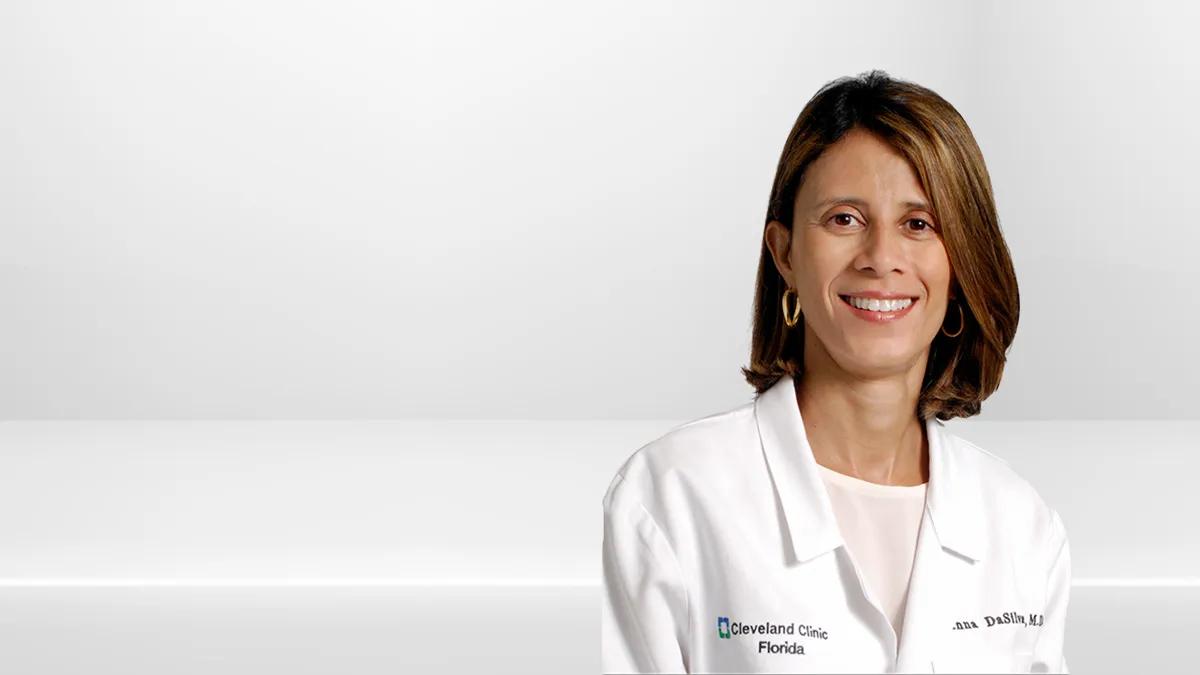
What Causes Bowel Leakage? Understanding Fecal Incontinence and the Latest Treatment Options
Bowel leakage and fecal incontinence affect millions of people, yet many are uncomfortable talking about them. In this episode of Butts & Guts, Giovanna da Silva Southwick, MD, colorectal surgeon and Director of Clinical Research at Cleveland Clinic Florida, discusses what causes loss of bowel control, who is most at risk and the latest treatment options available to help patients regain confidence and improve quality of life.
Advertisement
Cleveland Clinic is a non-profit academic medical center. Advertising on our site helps support our mission. We do not endorse non-Cleveland Clinic products or services. Policy
Recent Episodes
Weight Loss Without Surgery? Understanding Bariatric Endoscopy
Bariatric endoscopy offers incisionless weight loss options for people looking for an alternative to traditional bariatric surgery. Stephen…
Inguinal Hernias: From Groin Pain to Hernia Repair
In this episode of Butts & Guts, Dr. Kevin Wissinger, a general surgeon at Cleveland Clinic Florida, discusses inguinal hernias, including c…
Reducing Your Risk of Pancreatic Cancer
What can you do to reduce your risk of pancreatic cancer? Robert Simon, MD, general surgeon and hepatobiliary/pancreatic specialist at Cleve…
Video content: This video is available to watch online.
View video online (https://cdnapisec.kaltura.com/p/2207941/sp/220794100/playManifest/entryId/1_5qwzd2ob/flavorId/1_5f3sgelj/format/url/protocol/https/a.mp4)
Host
Guest Speaker
Transcript
Dr. Scott Steele:
Butts & Guts, a Cleveland Clinic podcast exploring your digestive and surgical health from end to end. Hi again everyone, and welcome to another episode of Butts & Guts. I'm your host, Scott Steele, colorectal surgeon and president of main campus here at Cleveland Clinic in beautiful Cleveland, Ohio. And today I'm super pleased to have a returning guest on with me and that's Dr. Giovanna da Silva Southwick, who is an expert colorectal surgeon and the Director of Clinical Research at Cleveland Clinic Florida. Giovanna, welcome back to Butts & Guts.
Advertisement
Cleveland Clinic is a non-profit academic medical center. Advertising on our site helps support our mission. We do not endorse non-Cleveland Clinic products or services. Policy
Dr. Giovanna da Silva Southwick:
Oh, thank you for having me.
Dr. Scott Steele:
So today we're going to talk about fecal incontinence, but before we jump in there, for those who don't know your background, can you tell us a little bit about where you're from, where did you train, and how did come to the point that you're here at the Cleveland Clinic?
Dr. Giovanna da Silva Southwick:
Okay, so I am originally from Brazil and I came to the US in 2000. I spent few years doing research at Cleveland Clinic Florida. Then I went to New York and I did general surgery residency for five years. I returned to Cleveland Clinic Florida and did a year of fellowship. And since then, I was fortunate enough to join the staff. I have been at Cleveland Clinic Florida for 16 years now.
Dr. Scott Steele:
Well, we're super glad that you're here. And so let's jump right into fecal incontinence. Not a topic we talk amongst our friends or at the dinner table a whole lot about, but can you walk us through at a high level overview what is fecal incontinence, how common it is, and what are some of the factors that contribute to it occurring?
Dr. Giovanna da Silva Southwick:
Yeah, so fecal incontinence is usually defined when inability to control bowel movement. So if one has the urge to go to the bathroom, they may not reach the toilet in time and sometimes accidents will happen even without any awareness. Believe it or not, it's extremely common. The literatures reported about 20% of prevalence in nursing home, can be up to 50%, but this is under-reported because understandably people are embarrassed to talk about it or they might think there is nothing that can be done about it. Common contributing factors include pregnancy, advanced age, vaginal delivery, muscle injury due to surgery, nerve damage, and very common chronic diarrhea or constipation.
Advertisement
Dr. Scott Steele:
So although fecal incontinence can happen, either man or women, why are women more at risk for this condition?
Dr. Giovanna da Silva Southwick:
Yeah, the risk in women is increased to pregnancy. Vaginal delivery, especially when it is episiotomy. If episiotomy is performed, it can cause some sphincter injury. Woman also may undergo hysterectomy, which we know can cause pelvic floor weakness. And as women approach the period of menopause, perimenopause, that is a significant drop in the estrogen levels, which is an important hormone to keep the pelvic floor strong.
Dr. Scott Steele:
So are there things that our listeners can do to prevent or reduce their risk of fecal incontinence?
Dr. Giovanna da Silva Southwick:
Yeah, so I would say adopting good habits, avoiding a sedentary lifestyle, obesity, having a regular exercise schedule and eating a high-fiber diet can help bulking the stool and making bowel movements more regular, decreasing the chances of accidents.
Dr. Scott Steele:
What exams or tests are done to diagnose a patient with fecal incontinence?
Dr. Giovanna da Silva Southwick:
Well, the diagnose is really clinical. The patient comes to their office and they say they cannot control bowel movement. We then do a physical exam and might order some tests that might help us to identify the cause and also can guide us in the decision for the best option to treat this patient. So one of the tests is anal ultrasound. It's a simple test that it consists of placing a probe in the rectum and can give us information to see whether there is any sphincter injury or not that can be repaired. Another one is anal manometry. It's a small catheter that is placed in the rectum. The patients asked to squeeze, relax, and give us information about the strength of the sphincter muscle. And there are also some imaging called defecography or dynamic MRI that records the dynamics of the defecation and can identify conditions like rectal prolapse when the rectum is dropping down and that can cause pelvic floor weakness and incontinence.
Dr. Scott Steele:
So truth or myth, truth or myth. If I have diarrhea, that means I have incontinence.
Dr. Giovanna da Silva Southwick:
Oh, that's a myth. But having said that, if the stool is too liquid, it will be harder to control and increase the chance of having incontinence.
Dr. Scott Steele:
Talking about diet nutrition changes, can that help a patient maintain, or even improve, or even completely get rid of their fecal incontinence symptoms?
Dr. Giovanna da Silva Southwick:
Yes. Yes, it can, especially if the incontinence is caused by changes in stool consistency like diarrhea or constipation. So a diet rich in fiber 20, 30 to 35 grams a day can be helpful by bulking the stool. If incontinence happens mainly when the stool is liquidy, then avoiding certain foods and beverages like milk, dairy products, artificial sweeteners, coffee, chocolate can all control the symptoms significantly. If the leakage happens, if the patient suffers from constipation, then again, a diet rich in fiber and drinking plenty of water, eight to 10 glasses a day can make bowel movements more regular and decrease the risk of incontinence.
Dr. Scott Steele:
So Giovanna, are there other non-surgical treatments that patients can do for fecal incontinence?
Dr. Giovanna da Silva Southwick:
Yes. One of them very common, especially if incontinence is happening in the setting of a liquid stool, then we can give some medications like Lomotil, Imodium, the antidiarrheals, and they become part of the treatment. Quite often we refer them to pelvic floor therapy, which consisted of seeing a therapist to specialize in the pelvic floor. They will teach regular exercises to increase the muscle strength and might also use muscle stimulation. There is also some injectables. There's injections that we do in the office that can increase the bulk in the anal canal, creating a barrier so the patient decreases the incidence of leakage and some anal plugs for patients with minor symptoms, minor leakage. They can be helpful and improve the quality of life.
Advertisement
Dr. Scott Steele:
So obviously you're a colorectal surgeon, so let's shift gears now. Can you walk us through the current surgical treatment options to treat fecal incontinence? And how do you think through all of these options and why do you choose some procedures preferable over others? Is it the procedure itself or is it the degree of incontinence or the type of incontinence a patient may have?
Dr. Giovanna da Silva Southwick:
Both. Both. The decision-making for the best therapy will depend on the severity and the cause. One of the most common indicated procedures is the sacral neuromodulator. And I like that because it's minimally invasive. The way that it is, is an outpatient procedure, that we placed a little electrode in the back, in the sacrum that stimulate the sacral nerves and coordinate with the brain bowel motility, pelvic floor strength. And this procedure can significantly decrease frequent incontinence episodes and also urinary incontinence, which quite often comes together.
Now, let's say I have a young patient who had a vaginal delivery and a sphincter laceration. For that patient, if I do an ultrasound and I see the sphincter defect, then I would indicate sphincteroplasty, which is basically a procedure that we put the sphincter back together. Now if my imaging studies now in a patient show that this patient in fact have a pelvic prolapse or rectal prolapse, then none of those therapies will work. And for that patient, I would recommend a procedure called ventral mesh rectopexy, when we place the rectum back in place, restoring the anatomy, and that can improve the episodes of incontinence as well.
Advertisement
Dr. Scott Steele:
So looking at the horizon, whether it be research or treatment, is there anything out there that strikes you in the realm of fecal incontinence?
Dr. Giovanna da Silva Southwick:
What has been studied now, there are some new medications to reduce the episodes of fecal incontinence. There are some novel artificial bowel sphincters which had been tried in the past, but now it's silicone-based and there's some promising results and research on stem cells. They're very preliminary, but it's seem promising.
Dr. Scott Steele:
Giovanna, one last question. I've been told by patients that their hemorrhoids actually improve their incontinence and by others it makes it worse. Which one is it?
Dr. Giovanna da Silva Southwick:
Well, hemorrhoids, they can provide a bulk to the anal canal, so they have a role in maintaining the continence. Now, if they become a chronic problem where they are prolapsing and protruding, they can make the leakage happen. So patients are going to have uncontrolled leakage of stool, makes the cleaning also very difficult, and mucus will be leaking as well. So it could be both.
Dr. Scott Steele:
Fantastic. And so now it's time for our quick hitters, a chance to get to know our guests a little bit better. So on a typical weekend, would you rather eat out or stay home?
Dr. Giovanna da Silva Southwick:
Stay home.
Advertisement
Dr. Scott Steele:
Vacation: mountains or the beach?
Dr. Giovanna da Silva Southwick:
Mountains.
Dr. Scott Steele:
What was your first car?
Dr. Giovanna da Silva Southwick:
Oh, a Voyage.
Dr. Scott Steele:
And then finally, if you could gather one superpower and make it your own, what would it be?
Dr. Giovanna da Silva Southwick:
I think flying.
Dr. Scott Steele:
Fantastic. And so give us a final take-home message for our listeners on this topic.
Dr. Giovanna da Silva Southwick:
Oh, I wanted them to know that they're not alone. The fecal incontinence is extremely common. Don't feel embarrassed. We are here to help. There is help available. And as I mentioned, a number of treatments that can significantly improve the quality of life.
Dr. Scott Steele:
That's fantastic. And so for more information on the Digestive Disease Institute at Cleveland Clinic Florida, call 877.463.2010. That's 877.463.2010. You can also visit clevelandclinicflorida.org/digestive for more information, and that's clevelandclinicflorida.org/digestive. Giovanna, thanks so much for joining us on Butts & Guts.
Dr. Giovanna da Silva Southwick:
Thank you. Thank you for having me.
Dr. Scott Steele:
That wraps things up here at Cleveland Clinic. Until next time, thanks for listening to Butts & Guts.
Recent Episodes
Weight Loss Without Surgery? Understanding Bariatric Endoscopy
Bariatric endoscopy offers incisionless weight loss options for people looking for an alternative to traditional bariatric surgery. Stephen…
Inguinal Hernias: From Groin Pain to Hernia Repair
In this episode of Butts & Guts, Dr. Kevin Wissinger, a general surgeon at Cleveland Clinic Florida, discusses inguinal hernias, including c…
Reducing Your Risk of Pancreatic Cancer
What can you do to reduce your risk of pancreatic cancer? Robert Simon, MD, general surgeon and hepatobiliary/pancreatic specialist at Cleve…
Never miss a moment - subscribe now.
Listen to the Health Essentials Podcast on your favorite streaming platform.
Other Podcasts You May Love
Beyond Leadership
Hosts Jim Pae and Elizabeth Pugel escort you through a network of thought leaders, sharing world-cla…
Beyond the Pages: CCJM Podcast
Beyond the Pages: CCJM Podcast takes the listener more in-depth into Cleveland Clinic Journal of Med…

Cancer Advances
A Cleveland Clinic podcast for medical professionals exploring the latest innovative research and cl…
Cardiac Consult
A Cleveland Clinic podcast exploring heart, vascular and thoracic topics of interest to healthcare p…