



Weight Loss Without Surgery? Understanding Bariatric Endoscopy
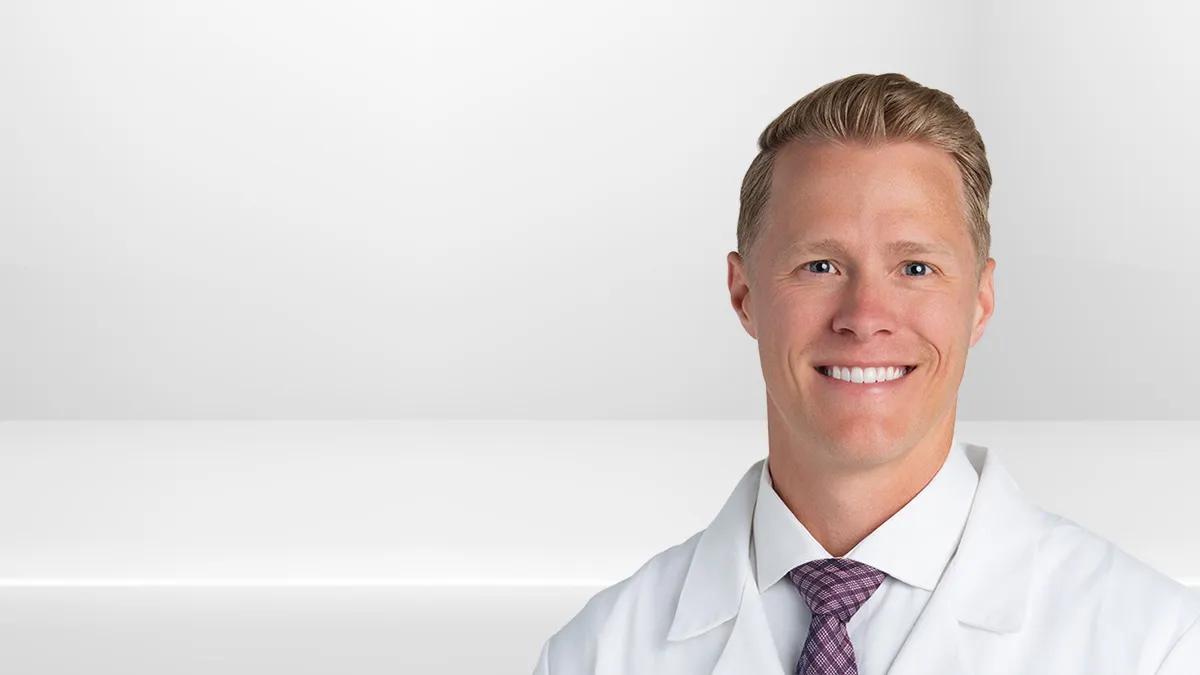
Bariatric endoscopy offers incisionless weight loss options for people looking for an alternative to traditional bariatric surgery. Stephen Firkins, MD, gastroenterologist and Co-Director of Advanced and Bariatric Endoscopy for the Digestive Disease Institute at Cleveland Clinic, joins Butts & Guts to explain procedures such as endoscopic sleeve gastroplasty (ESG), who may benefit and what patients can expect before and after treatment.
Advertisement
Cleveland Clinic is a non-profit academic medical center. Advertising on our site helps support our mission. We do not endorse non-Cleveland Clinic products or services. Policy
Recent Episodes
Inguinal Hernias: From Groin Pain to Hernia Repair
In this episode of Butts & Guts, Dr. Kevin Wissinger, a general surgeon at Cleveland Clinic Florida, discusses inguinal hernias, including c…
Reducing Your Risk of Pancreatic Cancer
What can you do to reduce your risk of pancreatic cancer? Robert Simon, MD, general surgeon and hepatobiliary/pancreatic specialist at Cleve…
Constipation: What's Normal and When Should You Be Concerned?
Constipation is common, but when is it more than just an occasional problem? In this episode of Butts & Guts, Cleveland Clinic Florida gastr…
Video content: This video is available to watch online.
View video online (https://cdnapisec.kaltura.com/p/2207941/sp/220794100/playManifest/entryId/1_t9qaodjf/flavorId/1_5f3sgelj/format/url/protocol/https/a.mp4)
Host
Guest Speaker
Transcript
Dr. Scott Steele:
Butts & Guts, a Cleveland Clinic podcast exploring your digestive and surgical health from end to end. Hi again everyone, and welcome to another episode of Butts & Guts. I'm your host, Scott Steele, president of main campus and colorectal surgeon here at the Cleveland Clinic in beautiful Cleveland, Ohio. And today, it's always nice to welcome a first-time guest, and I'm pleased to welcome Dr. Stephen Firkins, a gastroenterologist and co-director of Advanced and Bariatric Endoscopy for the Digestive Disease Institute here at the Cleveland Clinic. Welcome to Butts & Guts.
Advertisement
Cleveland Clinic is a non-profit academic medical center. Advertising on our site helps support our mission. We do not endorse non-Cleveland Clinic products or services. Policy
Dr. Stephen Firkins:
Thanks so much, Scott. It's a real pleasure to be here.
Dr. Scott Steele:
Well, we always like to start out with our guests a little bit knowing more about you. So tell us a little bit about where you're from, where'd you train, and how did it come to the point that you're here at the Cleveland Clinic?
Dr. Stephen Firkins:
I'm an Ohio native, and I actually did my GI fellowship here at Cleveland Clinic. And surprisingly, I did a kind of a roundabout way to getting into GI. I started in physical medicine and rehabilitation residency, and for a number of reasons, decided that that wasn't right for me and kind of fell in love with GI and endoscopy and really advanced endoscopy in general. And so in my internal medicine training at Ohio State, I knew early on that I wanted to be an advanced and interventional endoscopist. And Cleveland Clinic had a fantastic program and had the opportunity to learn endoscopic suturing, which is really one of the big things that made me want to come here and put them high on the short list of my fellowship programs.
Dr. Scott Steele:
Well, for those who aren't used to that endoscopic suturing, it certainly is a difficult task to conquer and you've done that. So today we're going to talk a little bit about bariatric endoscopy. So we've had a lot of different podcasts about bariatrics and even bariatric surgery, but let's start a little bit with the basics on bariatric endoscopy. What is it and how is it different from traditional weight loss or bariatric surgery?
Advertisement
Dr. Stephen Firkins:
Yeah, bariatric endoscopy really is an umbrella term for a number of different endoscopic weight loss procedures. And these range from the historic intragastric balloons, which we still perform at some points, to now endoscopic suturing procedures like the endoscopic sleeve or endoscopic revisions of prior bariatric surgeries in patients who've had weight regain over years. And this is really just another toolbox that we're able to offer patients to help take control of their obesity and really reach the health goals that they want.
Dr. Scott Steele:
So you mentioned right off the bat the endoscopic sleeve, gastroplasty, or sometimes called the ESG. So people may be hearing a little bit more about that. Can you explain to us what is that, how does it work, and how is it performed without incisions?
Dr. Stephen Firkins:
Yeah, the endoscopic sleeve is a great procedure that I'm really passionate about, and it's kind of the endoscopic version of a surgical sleeve gastrectomy where 70 to 80% of the stomach is actually taken out. In a surgical sleeve gastrectomy, of course, we're not using any scalpels or incisions. Everything that we do is through the scope, down the mouth, and we use an endoscopic suturing device to put stitches along the stomach, anywhere from six to eight or even up to 10 stitches along the stomach and really fold the stomach in on itself from the inside and create a nice tube-like shape, almost like you would see if you were performing an endoscopy on someone who's had a sleeve gastrectomy.
Dr. Scott Steele:
Is it able then to allow the weight loss from hormonal, from just the mere mechanics of losing a portion of that sleeve, making it into a tube? Or how does that work in weight loss?
Dr. Stephen Firkins:
Yeah, a lot of it is restrictive, similar to a sleeve gastrectomy where you're, again, taking around 70 or 80% of the stomach volume and really taking that away. So patients feel full faster, they stay full longer and they lose weight from a purely restrictive capacity. But we are learning more and more about the hormonal effects of endoscopic sleeves and some of the hormones, for example, GLP-1 and changes in ghrelin, which is the hunger hormone that do accompany the endoscopic procedures.
Dr. Scott Steele:
So Cleveland Clinic does offer a range of bariatric endoscopic procedures that are beyond ESG. Can you walk us through some of these options and maybe go into a little bit more detail about having this ranges of treatments that allows your team to tailor what approach you do for specific patients?
Dr. Stephen Firkins:
Yeah, I mentioned earlier that the most historical version of a bariatric endoscopy procedure was an intragastric balloon, which we do still offer. And these are simple space-occupying balloons that are put down the mouth, or even they have some that can be swallowed now that inflate with air or are inflated with a liquid solution like saline, and they stay in for about six months and they simply make patients feel full quicker and lose weight that way. It's a very, very minimally invasive option for patients. The endoscopic sleeve we talked about is another great option for patients who have not had surgery before, who want a minimally invasive option. And then we do a host of different endoscopic procedures to revise prior bariatric surgeries.
Advertisement
One of these is called the TOR procedure or transoral outlet reduction in patients who've had a gastric bypass who over time may regain weight. Some of that is due to stretching of the actual anastomosis, the bypass site itself, and we can simply take sutures and kind of tighten that area up to induce weight loss. So we revise endoscopically gastric bypass or even surgical sleeve gastrectomies that have dilated over time. And again, these are all just different options that we can give patients to choose from in addition to revisional surgeries or primary surgeries along with very powerful medications that we have nowadays to really fit what they want out of their lifestyle and what's best for them.
Dr. Scott Steele:
So as I said, there's a lot of options that are potentially out there, not only the things we're talking about here, but surgical as well as some of the medications that you mentioned. As a leader in this field, how do you determine when somebody may benefit from a medication versus what you do versus going on to surgery?
Dr. Stephen Firkins:
I think there's a couple important distinctions to make, and one is really identifying the phenotype of the patient, right? Are these patients who have very severe obesity, whose BMI is quite high, who have a lot of metabolic comorbidities like insulin-dependent diabetes or severe reflux that really would benefit most from having a gastric bypass or a surgical intervention? Or are these patients who are on the lower spectrum or earlier phases of obesity who want to start taking charge of their weight loss that might benefit or be looking for a less invasive option like a medication or an endoscopic procedure? And importantly, these don't have to happen in isolation, right? The medications can be combined with endoscopic or surgical procedures to really help patients achieve even more than what any of these options have on their own.
Advertisement
Dr. Scott Steele:
There's a lot of patients out there that might want to start on this journey, but they don't want to take a shot or a pill or they may have some concerns about traditional bariatric surgery procedures. So can you talk a little bit about, would this bariatric endoscopy provide another option for somebody who isn't ready to make that leap to full-blown surgery, even if you might actually think they would be best served by bariatric surgery, for example?
Dr. Stephen Firkins:
Absolutely. Yeah. We see patients in our clinic all the time who are just looking for advice and they may be best served with a surgical option, but there's this kind of historical fear of surgery, even though these are very, very safe surgeries, that patients are still just averse to wanting to undergo something as permanent and kind of final in their mind as a surgery. And they find that these endoscopic options are kind of a middle ground for them where they want to potentially have an intervention that maybe they've tried medications or they haven't tolerated them or they don't want to take a medication long-term.
And these endoscopic procedures are kind of the bridge between traditional lifestyle and diet changes or medication changes and the surgical option. So we talk about all these options with every patient that we see and really lay out what the benefits of each one are. And again, a lot of it is about fitting their lifestyle and what their goals are because ultimately the option that they commit to and that they believe in is the one that's going to be most successful.
Advertisement
Dr. Scott Steele:
So I'm a patient out there and I'm thinking about undergoing a bariatric endoscopy procedure, walk me a little bit through the preparation, what do they experience on the day of the operation and then even afterwards? Is there dietary restrictions? Let's say they're a workout fanatic. They got to sit it out for a little while or walk me through this whole process?
Dr. Stephen Firkins:
Of course. We have a very well-operating multidisciplinary team as any weight management program should have with dieticians and psychological support, care coordination that they'll see the entire team. So they'll be evaluated by a bariatric psychologist, a bariatric dietician, and then a medical provider prior to any procedure. On the day of the procedure, assuming we've worked with their insurance company and had these approved, which is a big part of our process as well, on the day of the procedure, they'll have nothing to eat like any surgical or endoscopic procedure. And the ESG itself takes around 60 minutes to perform. It's under general anesthesia.
And we watch these patients afterwards in the postoperative recovery area for about two hours. We make sure they're well hydrated, that any postoperative nausea is under good control, and they go home. These are outpatient procedures, same-day procedures that they can go home with. Post-operatively, there is a diet protocol that they'll follow, similar to any surgical procedure where we advance them from clear liquids to prolonged liquid diet for about six weeks. And that six-week mark can be a little bit daunting to some patients, but it's really important because these are endoscopic procedures. These are internal sutures that really need that time to heal and allow the body to remodel into this new shape.
Really being adherent to that post-operative diet is key to the durability of these procedures. And then they'll follow with our team long-term, ideally lifelong. We see them frequently and early, immediately post-operatively, and then every six months to a year outside of a year afterwards. We're always stressing that diet and lifestyle changes are still the foundation of any successful weight loss program.
Dr. Scott Steele:
Yeah, I'm sure a common question you get asked is how much weight am I going to lose with these procedures? What's the answer to that?
Dr. Stephen Firkins:
Yeah, there's a mounting amount of data out there and the numbers for any weight loss procedures given in terms of percent total body weight, so it can be relative to different people. And the percent total body weight that we see with an endoscopic sleeve is around 15 to 18%. This is in comparison to, say semaglutide or tirzepatide, which are in the 15 up to 20% range, so very comparable to some of these newer powerful GLP-1 medications. And we haven't quite reached the degree of weight loss that we can achieve with surgery, for example, a sleeve gastrectomy where you might have 25 or 30% total body weight loss or a gastric bypass where you're looking at 30 and 35%. But again, there is more efforts being looked at in combining these therapies with medical therapies to try and reach those surgical-type numbers, 25, 30% or more.
Dr. Scott Steele:
It's pretty well known now that you can have weight regain. You mentioned it very briefly earlier following bariatric surgery. So how does that occur and do these incisionless options, maybe one like the transoral outlet reduction, can they help in that situation?
Dr. Stephen Firkins:
Yeah, so any procedure, patients can experience weight regain. And for example, in gastric bypass, around 20 to 30% of patients will have some clinically significant weight regain usually years down the road. And this is for a number of reasons from social and psychological factors to anatomical factors in the case of gastric bypass, which is dilation of that gastrojejunal anastomosis. So when it comes to an anatomical factor, that's where these endoscopic revisions come in and can be really helpful for those patients with weight regain or dumping syndrome. Post-bariatric hypoglycemia is a very effective procedure for that too.
And weight regain can happen with endoscopic procedures as well as any surgery as well. But one of the beauties of these procedures is that we're not taking out any of the organ. These procedures can be repeated. They can even be reversed if patients are having too many symptoms. It's rare, but that's one of the benefits of having a purely endoscopic and truly organ-preserving procedure.
Dr. Scott Steele:
I'm biased, but one of the things I love about the Cleveland Clinic is the team-based approach to a lot of what we do here. And in weight management, there's not a better example of that between endoscopy and surgery and endocrine surgery, obesity medicine, nutrition, behavioral health, the things that you mentioned in the past. How do y'all work together to create that individualized plan?
Dr. Stephen Firkins:
Yeah, here at Cleveland Clinic, it's really a pleasure to work with the obesity management team, the bariatric surgery team, and things that have been really well established for many, many years here at the clinic, whereas bariatric endoscopy is a newer service line. But we have very, very firm relationships with our endocrinology and obesity medicine teams, referrals for the bariatric surgeons. And there's a lot of times when I need help from a surgical standpoint and there's things that I can't manage endoscopically or potentially issues that a surgeon may ask for help from an endoscopic perspective.
And one of the beauties, like you said, working at Cleveland Clinic is that we really are trying to improve patient care and access for patients and trying to put aside any egos and any personal desires and really just want to focus on how can we make the clinic better? How can we really reach more patients?
Dr. Scott Steele:
I want to circle back to something you said a little bit briefly earlier, and that was talking about insurance coverage and cost and insurance coverage certainly can be major concerns for many patients that are considering any treatment, but what should someone specifically about insurance coverage for the endoscopic sleeve gastropathy or what questions should they ask their insurance provider or healthcare team?
Dr. Stephen Firkins:
One of the biggest improvements that we had in this past year with the ESG in particular was approval of a category one CPT code for ESG. And what that means is that there's a formal code that insurances can now create policies similar to a bariatric surgical procedure. And so this was approved by CMS in January of 2026. So government insurances as well as a growing number of private insurances are building policies around this procedure, making it easier to get approved and easier for patients to have access to. And when they don't have policies yet, we still work with that insurance company to appeal medical necessity for these procedures for these patients. And we have a pretty good track record of having these approved even without the coding.
Dr. Scott Steele:
So for somebody out there that has maybe struggled a bit during the course of their life to lose weight, but it's easy to feel overwhelmed by all the different options, including lifestyle changes, and now we got weight loss medications, bariatric endoscopy that we're talking about, as well as surgery, what do you recommend to just taking that first step?
Dr. Stephen Firkins:
I think the important thing is just taking that first step, realizing that there are options out there and realizing that unlike historically where there was kind of a stigma about reaching out and talking about your weight, that that's no longer the case. And that's really from a multitude of reasons. But I think one of the things that the GLP boom has done, which has really made discussing weight and reaching out about obesity, reaching out for medical help has become really not a stigma anymore. And patients are more willing than ever to talk to their providers to seek what kind of options are out there. And I think that's important to know that patients all over are dealing with the same problems that someone else may be dealing with and that we're here to give information and to offer resources and taking that first step is just the most important thing.
Dr. Scott Steele:
That's fantastic. And so now it's time for our quick hitters, a chance to get to know our guests just a little bit better. So first of all, what was your first car?
Dr. Stephen Firkins:
My first car was a blue Ford Fusion.
Dr. Scott Steele:
Fantastic. And if you didn't go into medicine, what would you think you have done?
Dr. Stephen Firkins:
I think I would've been a veterinarian. My father works at Ohio State and he's an animal nutritionist. He works with dairy cattle. So I spent my formative years growing up doing science fairs on dairy cattles and actually cows with ostomies and reaching into their stomachs. And that's kind of brought me into research and science and ultimately going into medicine, but I probably would've been a veterinarian.
Dr. Scott Steele:
What is your favorite college sports team?
Dr. Stephen Firkins:
The Buckeyes. Ohio State Buckeyes.
Dr. Scott Steele:
On the opposite end, had to choose your worst college sports team out there, what would that be?
Dr. Stephen Firkins:
I think it goes without saying that the team up north has to be it.
Dr. Scott Steele:
The team with no name. And finally, if you could go back in time to your 17 or 18-year-old self and give you a piece of advice, what advice would you give yourself?
Dr. Stephen Firkins:
I think what I would say is just keep going, right? I mentioned in the beginning of the podcast that where I am now is not where I thought I was going to be in the beginning of my medical journey, but I think it's important to know that following your desires and your passion is really, really important and not straying and not giving up on those. So really following your passion and just keep going.
Dr. Scott Steele:
Fantastic. So give us a final take-home message to our listeners regarding this bariatric endoscopy.
Dr. Stephen Firkins:
The goal is always to reach patients, to give them the tools that they need to reach their health goals. And it's not about endoscopy versus medications versus surgery. It's about reaching patients, giving them the tools that they need, giving them the resources they need, and allowing them to take charge of their life. And bariatric endoscopy is just one of those tools.
Dr. Scott Steele:
Fantastic. And so for more information on the bariatric endoscopy program here at the Cleveland Clinic, please call 216.444.6149 or visit clevelandclinic.org/bariatricendo. That's B-A-R-I-A-T-R-I-C-E-N-D-O. That's clevelandclinic.org/bariatricendo. And thanks again for listening to Butts & Guts. Be sure to follow us on Apple Podcasts, Spotify, or wherever you listen to your podcasts. And so for more information, you can also visit clevelandclinic.org/buttsandguts. Stephen, thanks for joining us.
Dr. Stephen Firkins:
Thanks so much. It was my pleasure.
Dr. Scott Steele:
That wraps things up here at Cleveland Clinic. Until next time, thanks for listening to Butts & Guts.
Recent Episodes
Inguinal Hernias: From Groin Pain to Hernia Repair
In this episode of Butts & Guts, Dr. Kevin Wissinger, a general surgeon at Cleveland Clinic Florida, discusses inguinal hernias, including c…
Reducing Your Risk of Pancreatic Cancer
What can you do to reduce your risk of pancreatic cancer? Robert Simon, MD, general surgeon and hepatobiliary/pancreatic specialist at Cleve…
Constipation: What's Normal and When Should You Be Concerned?
Constipation is common, but when is it more than just an occasional problem? In this episode of Butts & Guts, Cleveland Clinic Florida gastr…
Never miss a moment - subscribe now.
Listen to the Health Essentials Podcast on your favorite streaming platform.
Other Podcasts You May Love
Beyond Leadership
Hosts Jim Pae and Elizabeth Pugel escort you through a network of thought leaders, sharing world-cla…
Beyond the Pages: CCJM Podcast
Beyond the Pages: CCJM Podcast takes the listener more in-depth into Cleveland Clinic Journal of Med…
Cancer Advances
A Cleveland Clinic podcast for medical professionals exploring the latest innovative research and cl…
Cardiac Consult
A Cleveland Clinic podcast exploring heart, vascular and thoracic topics of interest to healthcare p…