



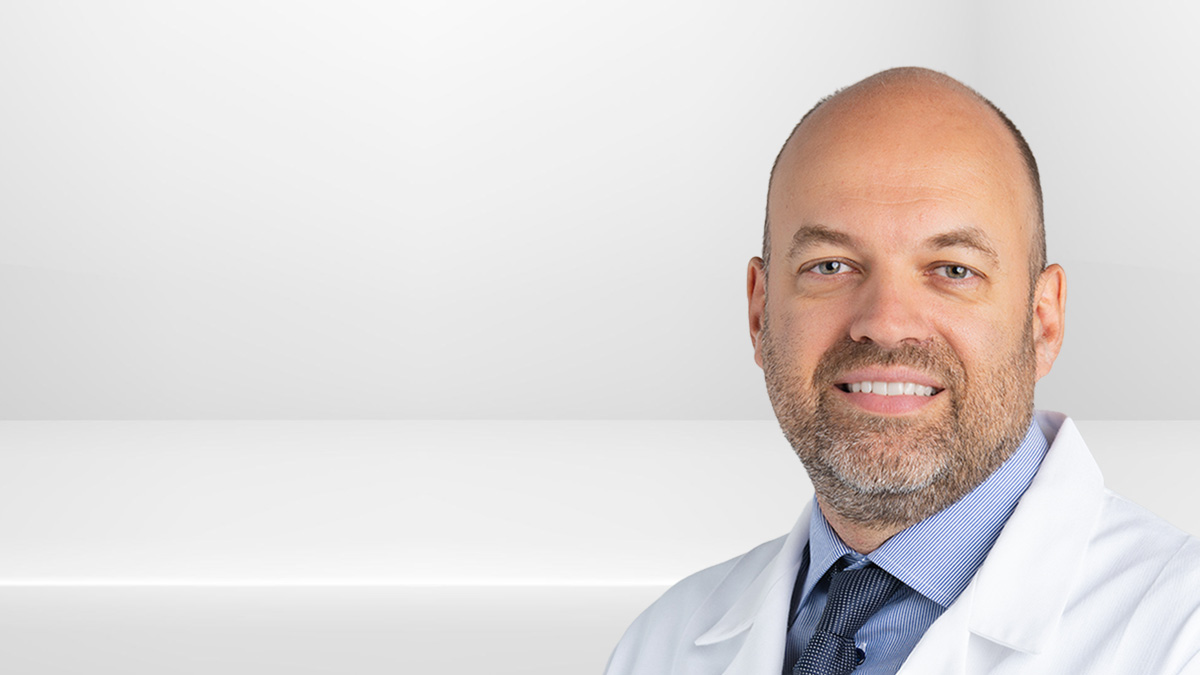
Surgical Advances for Crohn's Disease
Dr. Anthony de Buck, Section Head of IBD for the Department of Colorectal Surgery at Cleveland Clinic, joins Butts & Guts to discuss the latest surgical advances for treating Crohn's disease. Dr. de Buck explains when surgery might be needed, what new techniques are available and how these improvements help patients recover faster with better outcomes. Listen to learn what’s on the horizon to treat this chronic inflammatory disease.
Advertisement
Cleveland Clinic is a non-profit academic medical center. Advertising on our site helps support our mission. We do not endorse non-Cleveland Clinic products or services. Policy
Recent Episodes
What Is a Hernia? Signs, Causes and Treatment Options
On this episode of Butts & Guts, Dr. David Krpata, a Cleveland Clinic general surgeon and hernia specialist, explains what a hernia is, the…
Trouble Swallowing? It Could Be Dysphagia
Do you have trouble swallowing or feel like food gets stuck when you eat? In this episode of Butts & Guts, Dr. Fady Asslo, gastroenterologis…
FiberMaxxing: The Truth About Fiber, Your Gut Microbiome and Digestive Health
Is fibermaxxing just a social media trend, or is dietary fiber truly the key to better gut health? In this episode of Butts & Guts, Clevelan…
Video content: This video is available to watch online.
View video online (https://cdnapisec.kaltura.com/p/2207941/sp/220794100/playManifest/entryId/1_dkq7pwxy/flavorId/1_5f3sgelj/format/url/protocol/https/a.mp4)
Transcript
Dr. Scott Steele:
Butts & Guts, a Cleveland Clinic podcast exploring your digestive and surgical health from end to end. Hi again, everyone. Welcome to another episode of Butts & Guts. I'm your host, Scott Steele, the president of main campus and colorectal surgeon here in beautiful Cleveland, Ohio. I am so glad to always welcome a guest of one of our own, Dr. Anthony De Buck, who's a colorectal surgeon and the section head for inflammatory bowel disease at the Cleveland Clinic. Anthony, welcome to Butts & Guts.
Advertisement
Cleveland Clinic is a non-profit academic medical center. Advertising on our site helps support our mission. We do not endorse non-Cleveland Clinic products or services. Policy
Dr. Anthony De Buck:
Thank you. Very happy to be here this morning.
Dr. Scott Steele:
So we always like to start out to get to know a little bit about you. You've had some world travels and some stops. And so tell us where are you from? Where'd you train? And how did it come to the point that you're here at the Cleveland Clinic?
Dr. Anthony De Buck:
So I'm actually from Belgium. I was born and raised in Belgium. I did my medical school, surgical training in Belgium, and I worked a few years at University of Leuven, which is one of the oldest universities in Europe, 600 years old. And after a few years, I moved to Toronto where I worked at University of Toronto at Mount Sinai Hospital, very much focusing on IBD already. And I've very recently now moved to Cleveland Clinic to become the section head of IBD here in Cleveland, which is a great opportunity.
Dr. Scott Steele:
Well, we are super excited to have you here. And so, today we're going to talk about advanced surgical procedures for Crohn's disease. So can you start... I know we've had some podcasts on this in the past, but can you share an overview for our listening audience about what is Crohn's disease and how it differs from other digestive diseases?
Dr. Anthony De Buck:
So Crohn's disease is a chronic inflammatory disease of the gastrointestinal tract. So it basically means that whatever part of your GI tract is chronically inflamed, and we don't necessarily understand the causes of it. And that longstanding inflammation of your bowel can cause damage to your bowel. It either reflects in stricture or narrowing of your bowel or it can form fistulas, which are connections between two organs that doesn't need to be there. And so, it's a little bit different than, for example, ulcerative colitis, which is another inflammatory bowel disease, which is only isolated to the large bowel, the colon, while Crohn's disease can occur in every part of your GI tracts, mainly in your small bowel basically. And very typically it is at the last part of your small bowel. So we don't know the reasons. It's multifactorial. Probably the environmental factors play a very big role. We kind of understand more that the diet and more precisely the hyper processed foods are playing an important role in causing Crohn's disease.
Advertisement
Dr. Scott Steele:
We're going to focus on the surgical aspects that care for the patient with Crohn's disease. And so I guess to lead off, at what point does surgery become necessary for Crohn's patient? And a little bit further, is there a role of timing of an operation? Is it a last resort? Is this something we do upfront? Does it depend on what aspect of Crohn's? How does this all come together?
Dr. Anthony De Buck:
So as I was mentioning, like, the chronic inflammation caused by Crohn's disease causes damage to the bowel. And so, it usually results in either narrowing or fistulas and that's actually when we start considering surgery, because all the drugs that are available for Crohn's disease are not efficient in treating those patients with narrowings and fistulas. And so that's when surgery actually plays a very important role to remove mostly that part of the bowel. However, more recently, we've actually noticed with recent studies that surgery is very efficient in bringing patients into remission.
And so, we are accepting a more aggressive approach where surgery is actually earlier treatment for Crohn's disease than we always thought in the past. And so, it's not necessarily a last resort. We know that when a patient has surgery, is in deep remission, we know that medication is actually acting better after surgery sometimes than before surgery. So I think it's important for patients to understand that they have to talk to their physicians and their surgeons about considering surgery earlier on in their disease course.
Dr. Scott Steele:
Some of the terms, just to make sure that our audience is with us that we talk about for Crohn's disease, manifesting in abscess, stricture in fistula. Can you just give us a 10,000 foot view? What do those three terms mean? What's an abscess? What's a stricture? What's a fistula?
Dr. Anthony De Buck:
Yeah, it's a great question. So a stricture is basically a narrowing. So basically what happens is with the inflammation, patients develop scar tissue in their bowel. And so, when you have a tube... And what a scar tissue typically does, it actually causes retraction. And so when you have a tube and you have retraction, it causes a narrowing. And so the diameter or the opening of the bowel becomes very narrow so the food has a difficulty passing through that bowel segment. A fistula is something different. It's a connection between two organs that shouldn’t be there. And so, for example, you can have a fistula between two different loops of bowel. You can have a fistula between a bowel loop and the skin. You can have a fistula between the bowel loop and the bladder, for example. And so, this can cause significant symptoms and needs surgery in most cases.
An abscess is when you have an active infection that collects [inaudible 00:05:03] mainly puss into a cavity in the abdomen or in the stomach that shouldn't be there. And so, it's often in conjunction with a fistula. It's something that needs drainage and possibly antibiotics as well.
Advertisement
Dr. Scott Steele:
Okay. So now we're going to talk a little bit technical regarding the surgery itself, but before we go technical, let's talk human anatomy. So there's going to be two terms I'm going to ask you to kind of talk about, and that's the site of the bowel. So you can tell us about from our mouths to our bums, what are the different bowel anatomy sites cause, and then the term specific to bowel, mesentery. What is that mesentery before we jump into some technical things?
Dr. Anthony De Buck:
So just to understand the anatomy of the GI tract, it obviously starts with the mouth, goes through the esophagus, the stomach, the small bowel, the large bowel, which is called the colon, and ends with the rectum and the anus. It's important that patients understand that the rectum and the anus is not the same thing. The rectum is the last part of this large bowel and the anus is really the opening at the end of the bowel. The bowel is usually free floating in the abdomen, however is attached with the mesentery. And mesentery is a sheath that provides the blood supply to the bowel. It's very important in Crohn's disease because we see that the mesentery in Crohn's disease is looking very differently than mesentery in a healthy portion of the bowel. And that's why we think that the mesentery may play a role in the disease course, either in causing recurrence or playing a role in how patients recur.
Advertisement
And so, more recently there's been research in looking whether resecting that mesentery together with the bowel segment that is attached to it or keeping it behind has an impact on how fast and how severely the disease may recur. There's conflicting evidence about that. Too much details to go into today, but it's definitely a very interesting aspect of Crohn's disease for sure.
Dr. Scott Steele:
So I'm a patient out there and I've been told that I need to have surgery for my Crohn's disease. What are some of the most common surgical procedures performed for Crohn's? And just to kind of harken back, as a surgeon, you got to put something together. We call that an anastomosis. We take something out and we connect it together. Does it matter the way you put it back together and what are the different ways that they may put it back together?
Dr. Anthony De Buck:
So most surgeries for Crohn's disease will be a resection or removal of a portion of the bowel. And as I said previously, it's usually the last part of your small bowel that will be resected because that's the most occurring spot where Crohn's disease occurs.
Dr. Scott Steele:
It's called your ileum, right?
Dr. Anthony De Buck:
Yeah. It's called your terminal ileum actually. And so, the surgery for that is called an ileocecal or ileocolic resection, which you may hear from your surgeon when they would talk about it. And so, that portion is usually removed and put back together in most cases. And that way we put it together, that's called the anastomosis and there's different ways to do that. You can use staples, you can use stitches. And also when you use either of those, you can put it together in a different way. You can put it side to side, end to end. You also have the Kono-S anastomosis, which has been quite a high platelet, which patient may have heard. And one of the things that we are very interested in is to see whether the way we put the bowel back together has an impact on the disease recurrence. There's conflicting evidence, again, probably too many details to go into it, but it's a very interesting aspect.
Advertisement
And actually, I was just going to say, there's never been as much research in the surgery for Crohn's disease in the last two years, which obviously makes it very interesting.
Dr. Scott Steele:
So, many people by now have heard about minimally invasive procedures, where for our world in the bowel and in the belly, we call it laparoscopy or robotic surgery. So has minimally invasive laparoscopic robotic procedures at all changed Crohn's surgery over the last bit? And do you offer that to patients? Do we offer it here at the Cleveland Clinic? And what benefits, if any, do these approaches offer our patients?
Dr. Anthony De Buck:
Yeah, we used to operate on patients with a big incision, a big midline incision. And so, I would say for the last 20 years, laparoscopy has been like the big change into surgery for Crohn's disease, doing the same surgery inside with small incisions. And basically for people to understand, what we do is we make several small incisions of about half to one centimeter large to introduce instruments and a camera and do whatever we need to do inside with those instruments. And it has had a significant impact on patient recovery, minimizing the infection rate for wounds, minimizing the complications in terms of hernias and so on, preserving fertility in women especially. So it really is a very important change in surgery. For Crohn's disease, more recently, we've pushed it even further by doing single port surgery, minimizing it to one small incision. And also the advent of the robot has been very important as well in order to improve the minimal invasiveness for surgeries, as well as improving the ergonomics for the surgeon.
And that also obviously is a continuing evolution of newer technologies coming on. The great thing about Cleveland Clinic is that we are offering all those options here, preserving the patient's integrity by minimizing the number of incisions and improving recovery after surgery.
Dr. Scott Steele:
Let's look at it the other way now. So unfortunately, some Crohn's patients out there might have to have multiple surgeries. So do you still perform what we call a traditional open surgery in these patients? And you can talk about the need for a stoma or an ostomy in Crohn's patients.
Dr. Anthony De Buck:
Yeah. So some patients informally don't qualify for laparoscopy or robotics, even though having had a surgery previously is not necessarily disqualifying you for having laparoscopy or robotic surgery or minimal invasive surgery. We know that in the majority of cases, we're still able to do surgery with small incisions, even though a patient might have had, like, an open surgery in the past. And I think it's still very important to attempt it because it obviously improves the outcomes for the patient. And concerning the stoma, we were talking about the anastomosis. Sometimes it's either not possible or not safe to put an anastomosis or the bowel back together right away, and we have to give either temporary or sometimes even a permanent stoma. Obviously, that's something that scares patients significantly. And so, that's probably one of the reasons why they are not looking forward to have surgery. One of the things I would say about a stoma is that I'm always amazed how fast patients get used to it.
Even before going home from the hospital, they're actually used to taking care of it, even though they will have support back home as well, but they will have a very normal life with a stoma with a very good quality of life. And there's basically no restrictions in doing anything in terms of physical activities, professional activities, social activities. It preserves quality of life extremely well.
Dr. Scott Steele:
So can you walk us through a little bit about the recovery from a Crohn's surgery? How long does it typically take to get back to normal function?
Dr. Anthony De Buck:
Yeah, let's assume that we take that patient who has an ileocolic resection, the most common surgery for Crohn's disease, and we can do it with small incisions. Typically, a patient like that would stay three to five days in hospital. We would expect the patient to move around as much as he or she can, start eating from day one whenever possible, at least start with some fluids. And after three or five days, the patient will be able to go home, walk home, no wheelchairs involved, and will be self-sufficient at home, even though probably need some help for house chores, but the patient will be eating, walking, and actually we want the patient to be as active as possible at home as well. And the overall recovery is usually between four and six weeks. The main restriction for six weeks is for the patient not to lift any heavy weights to give some time to the scars to heal.
But other than that, we want the patient to be active, to take a shower, to take a bath as soon as the wounds have healed, and after four to six weeks, typically they can go back to work.
Dr. Scott Steele:
So we talked about robotics. We talked about laparoscopy. We talked about some of the different types of anastomosis. Are there any other advances on the horizon in terms of surgery for Crohn's patients?
Dr. Anthony De Buck:
Yeah. So one of the exciting parts of surgery for Crohn's patients is AI. First of all, AI plays and will play an even more important role in diagnostics for imaging, scopes, and so on to better describe, better identify the disease. But I also think that AI will play a very important role in detecting any surgical complications early on. I'm hoping that AI at some point will help us identify patients that have some postoperative infections earlier on so that we actually can act on it earlier and so that it doesn't have as big a consequences for a patient. So I think there's many, many interesting things that will come for IBD patients and definitely the patients that need surgery. The other thing I think is that we'll understand better how nutrition and nutritional support to patients, both pre-op as well as post-op, as well as the role of diet on patients with IBD will affect patient's recovery. So I think that's also something that we'll understand better in the short future and the near future and is something definitely very exciting as well.
Dr. Scott Steele:
So listeners to this podcast have heard in relation to cancer, terms like multidisciplinary conference, multidisciplinary team, things like that. But in fact, you have that for IBD and Crohn's patients. So can you talk a little bit about who's involved in that? How do you guys go about caring for the patient and putting the patient at the center?
Dr. Anthony De Buck:
I think that's a very important thing for IBD patients and Crohn's disease patients. The treatment of Crohn's has become so complex with all the medication that is available and there's so many more coming in the near future. Patients with Crohn's disease are very complex with very complex disease. And I think that it's extremely important to have a multidisciplinary approach to those patients in order to involve the GIs for discussions, the surgeons, the radiology, for medical imaging, the pathologists that look at the tissues and help us with diagnostics, as well as... The other thing we know as well is that patients with Crohn's disease, it has a significant impact on their mental health, on their nutrition. And so, involving psychologists, dietitians, nutritionists, stoma nurses and so on is extremely important to have the best possible care for those patients. And we are very lucky here at Cleveland Clinic to have all those resources available in order to help our patients the best we can.
Dr. Scott Steele:
So you talked a little bit about in relation to stoma and how quickly patients bump back, but can you talk about quality of life in general for these patients who have inflammatory bowel disease or specifically Crohn's? Can they return to a normal life? Do they continue to have ongoing symptoms? Can they even eat normally going ahead?
Dr. Anthony De Buck:
Yeah, great question. So patients after surgery, in most cases, I would say a big majority of cases have a normal quality of life after surgery. Even cases where they have a stoma, as I said, patients with a stoma are able to have a quality of life back to normal basically. And we often hear patients after surgery telling us that they wish they had had their surgery earlier on because they were anticipating a worse outcome from their surgery and they really appreciate how well they're doing after their surgery. And so, the purpose of someone for Crohn's disease having surgery is to go back to work, to go back to university, whatever. And it's very interesting to see that we often operate on very young patients with Crohn's disease that have stopped their life, not going back to school or university or didn't do whatever they wanted in their career.
And so, that's one of the most enjoyable things of being a surgeon treating those patients is that once you treat them and they are able to go back to work, to university, back to school, have their first child after their surgery, it's a great outcome. And that's usually possible after surgery for Crohn's disease.
Dr. Scott Steele:
So we know that patients with any surgical disease potentially have to go in for an emergent operation, which changes things. But let's talk about the elective scenario when patients aren't doing well. We talk about the term preoperative optimization, getting patients ready for surgery. Why is that so important in Crohn's and what does that mean?
Dr. Anthony De Buck:
Yeah, patients with Crohn's disease are sick for quite some time before they come to the surgeon. And so they have adapted their diet. They're not able to eat whatever they want. They're actually malnourished more than they actually realize themselves. And so, obviously the nutritional situation of a patient is very important for recovery after surgery to minimize the risk of infections after surgery and other possible complications. And so, it's very important to assess that first and that's why we have that multidisciplinary team as well, to optimize the nutritional situation of the patient prior to surgery in order to be able to have the safest surgery possible. The other thing is also patients with steroids. Steroids is a very old medication for Crohn's disease. It's still very efficient, however, has many, many side effects. And one of those side effects is that it causes surgical complications by delayed wound healing and so on.
So having a patient off steroids before surgery is important, it's not always possible. So we may need to adapt our surgery considering the fact they're taking steroids, but optimizing patients trying to avoid steroids is very important. Obviously, we have the typical things that is important for any type of surgery, patients smoking or patients having a lack of physical activity. Having a good physical activity before surgery is important as well. But one of the things that I'm going to add is, and what we see more and more in Crohn's disease and IBD in general is obese patients. And I was talking about patients that are malnourished and even obese patients can be malnourished. And we see the prevalence and incidence of obesity and IBD increase. And we think it also plays a role together with some impact from one to the other, but also impacts the ease and the outcome of the surgery. And so, we'll need to think on how to optimize those patients for surgery for IBD as well.
Dr. Scott Steele:
That's great. And so, finally just wrapping this up, what advice would you give to a newly diagnosed IBD patient who's anxious about their diagnosis, especially I know patients are anxious about surgery and how can they be proactive partners with their physicians or healthcare team?
Dr. Anthony De Buck:
Yeah, I always tell patients, but also tell colleagues to make sure that you create a partnership with your patients. And it often takes time for you to build that relationship with your patients so that the patient actually has the confidence in his or her surgeon before heading towards surgery. And therefore I would say, and I would tell patients, talk to your surgeon, talk about the things that makes you anxious about surgery, whether it's a stoma, whether it's the possible surgical complications and so on, and build that relationship with your surgeon. On the other hand, one of the things that I've also found very helpful is for patients to get in touch with peers, with support groups, patient support groups, and I would advise patients to find those support group help, ask help to your physicians or your surgeons to kind of put you in touch with those groups.
It really helps very much to understand better how the treatment for Crohn's actually looks like, what the surgery looks like, and be able to talk to peers. And last thing, as I said, is that in Cleveland Clinic, we have many, many resources available, psychologists, nutritionists, and so on for patients to be in touch with in terms of go over their fears for treatment for IBD.
Dr. Scott Steele:
That's fantastic. So now it's time for our quick hitters, a chance to get to know our guests a little bit better. So first of all, what was your first car?
Dr. Anthony De Buck:
My first car was a Volkswagen Golf, I think back in 2005 or '06, something like that.
Dr. Scott Steele:
Fantastic. What's your favorite food?
Dr. Anthony De Buck:
Since I moved to North America, one of the things I appreciate the most making and eating is smoked food, like, pulled pork and all the different types of smoked foods.
Dr. Scott Steele:
Fantastic. And so, you've traveled the world. Is there a trip that you would like to go on, a place that you would like to visit that you haven't?
Dr. Anthony De Buck:
I've been several times to Africa and I'm deferring a little bit from the question, but I would love to go show Africa to my kids. I think it's a fantastic continent and I would love to travel to Africa with them.
Dr. Scott Steele:
That's great. And if you could harken and somehow gather one superhero power, what superhero power would you like to be able to have?
Dr. Anthony De Buck:
Without any doubt flying.
Dr. Scott Steele:
That's fantastic. And so give us a final take home message about surgery in Crohn's patients.
Dr. Anthony De Buck:
Yeah, I would say first of all, create a very good relationship with your surgeon. Talk about your surgery. Don't be scared about surgery. And I would say also make sure that your physician, your surgeon has a multidisciplinary approach to your surgery involving whoever you need to support you through this journey with surgery.
Dr. Scott Steele:
Fantastic. And so, to learn more about Crohn's disease treatment here at the Cleveland Clinic, visit our website at clevelandclinic.org/ibd. That's clevelandclinic.org/ibd. You can also call us at 216.444.7000, that's 216.444.7000. Dr. de Buck, thanks so much for joining us on Butts & Guts.
Dr. Anthony De Buck:
Thank you very much for having me.
Dr. Scott Steele:
That wraps things up here at Cleveland Clinic. Until next time, thanks for listening to Butts & Guts.
Recent Episodes
What Is a Hernia? Signs, Causes and Treatment Options
On this episode of Butts & Guts, Dr. David Krpata, a Cleveland Clinic general surgeon and hernia specialist, explains what a hernia is, the…
Trouble Swallowing? It Could Be Dysphagia
Do you have trouble swallowing or feel like food gets stuck when you eat? In this episode of Butts & Guts, Dr. Fady Asslo, gastroenterologis…
FiberMaxxing: The Truth About Fiber, Your Gut Microbiome and Digestive Health
Is fibermaxxing just a social media trend, or is dietary fiber truly the key to better gut health? In this episode of Butts & Guts, Clevelan…
Never miss a moment - subscribe now.
Listen to the Health Essentials Podcast on your favorite streaming platform.
Other Podcasts You May Love
Beyond Leadership
Hosts Jim Pae and Elizabeth Pugel escort you through a network of thought leaders, sharing world-cla…
Beyond the Pages: CCJM Podcast
Beyond the Pages: CCJM Podcast takes the listener more in-depth into Cleveland Clinic Journal of Med…
Cancer Advances
A Cleveland Clinic podcast for medical professionals exploring the latest innovative research and cl…
Cardiac Consult
A Cleveland Clinic podcast exploring heart, vascular and thoracic topics of interest to healthcare p…