



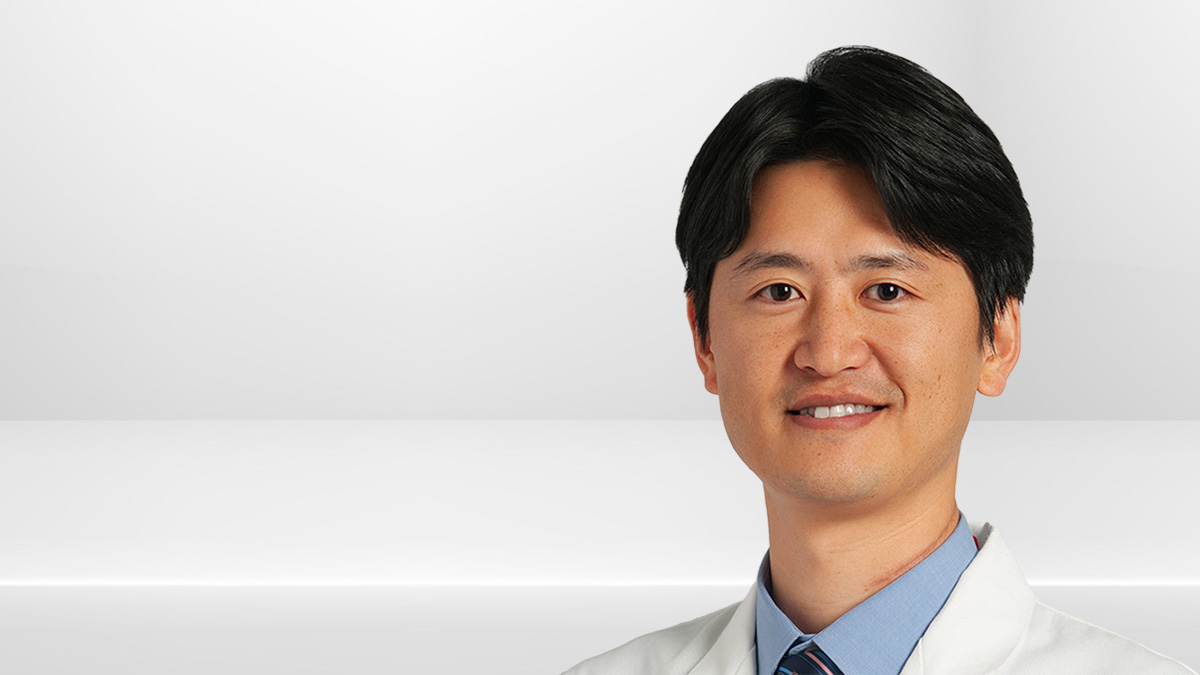
Advancements in Intestinal Transplants
Intestinal transplants are saving lives, and the field has never been more advanced. Masato Fujiki, MD, Surgical and Program Director of the Intestinal Transplant Program at Cleveland Clinic, breaks down why rejection rates have dropped dramatically, and how transplant oncology is opening doors for cancer patients.
Advertisement
Cleveland Clinic is a non-profit academic medical center. Advertising on our site helps support our mission. We do not endorse non-Cleveland Clinic products or services. Policy
Recent Episodes
Weight Loss Without Surgery? Understanding Bariatric Endoscopy
Bariatric endoscopy offers incisionless weight loss options for people looking for an alternative to traditional bariatric surgery. Stephen…
Inguinal Hernias: From Groin Pain to Hernia Repair
In this episode of Butts & Guts, Dr. Kevin Wissinger, a general surgeon at Cleveland Clinic Florida, discusses inguinal hernias, including c…
Reducing Your Risk of Pancreatic Cancer
What can you do to reduce your risk of pancreatic cancer? Robert Simon, MD, general surgeon and hepatobiliary/pancreatic specialist at Cleve…
Video content: This video is available to watch online.
View video online (https://cdnapisec.kaltura.com/p/2207941/sp/220794100/playManifest/entryId/1_9bpk2mxy/flavorId/1_5f3sgelj/format/url/protocol/https/a.mp4)
Transcript
Dr. Scott Steele:
Butts & Guts, a Cleveland Clinic podcast exploring your digestive and surgical health from end to end. Hi again everyone, and welcome to another episode of Butts & Guts. I'm your host, Scott Steele, colorectal surgeon and the president of Main Campus here at the Cleveland Clinic in beautiful Cleveland, Ohio. And today I'm super excited to have a first-time guest, Dr. Masato Fujiki, who is an intestinal transplant surgeon and the program director, surgical director of the Intestinal Transplant Program here at the Cleveland Clinic. Masato, thank you so much for joining us here on Butts & Guts.
Advertisement
Cleveland Clinic is a non-profit academic medical center. Advertising on our site helps support our mission. We do not endorse non-Cleveland Clinic products or services. Policy
Dr. Masato Fujiki:
Yeah, thank you for having me.
Dr. Scott Steele:
We always like to start a little bit with our guests by getting a little bit about your background. So where are you from, where did you train, and how did it come to the point that you're here at the Cleveland Clinic?
Dr. Masato Fujiki:
I graduated from medical school in Japan in 2000. I started the residency at the transplant and hepatobiliary surgery at Kyoto University, which was a world leader of the living donor liver transplantation at that time. During my residency in Japan, I had the opportunity to visit the University of Miami to observe real transplant practice in the United States, where I saw intestinal and multivisceral transplantation for the first time. At that time, I never imagined that I would one day be performing these kind of complex procedures myself. So after completing my residency training in Japan, I joined the Cleveland Clinic as a clinical fellow of liver transplant surgery in 2009. That same year, clinic performed the first intestine transplant in the institution. Since then, I've been fortunate to see the program grow into one of the leading program in the world. So now I serve as the director of intestinal rehabilitation and the transplant program.
Advertisement
Dr. Scott Steele:
Well, that is fantastic. And obviously we are super glad that you decided to train here and then stay here and now lead here. It's been several years since we last covered intestinal transplant on these Butts & Guts podcast. So for listeners who are new on this topic, can you give us a little bit of a lay of the land? What is intestinal transplant, who needs one, and when is it truly the right call versus other options?
Dr. Masato Fujiki:
Intestine transplantation is a lifesaving option for patient with intestinal failure, meaning their gut cannot absorb enough nutrients anymore. Those patients are supported with IV nutrition, which can work very well. But over time, some patients develop serious complications like bloodstream infections, liver damage, or loss of venous access. So that's when transplant becomes the right option.
Dr. Scott Steele:
So what type of intestinal transplants are there? Are we talking small bowel, colon, part of the small bowel, all the bowel? What is it?
Dr. Masato Fujiki:
There are several types depending on the extent of the disease. Largely, we divide two categories. One is isolated intestine transplant, which comes only intestine and possibly colon. Then the others may need a combined liver and intestine transplant if liver is damaged. So it is called a multivisceral transplant, basically replacing majority of the abdominal organs together, including liver, pancreas, and intestine, and sometimes with colon.
Dr. Scott Steele:
So how common are intestinal transplants?
Dr. Masato Fujiki:
These are still relatively rare procedures, about 80 to 100 per year in the United States. It is much less compared to over 12,000 liver transplants and 27,000 kidney transplants performed annually. But the need for intestine transplant is actually much higher. Many patients who could benefit are either not referred or referred too late. So one of our biggest goal is to raise awareness and connect those patients to us earlier. Therefore, I'm very grateful today for this opportunity to speak about intestine transplant in this podcast.
Dr. Scott Steele:
Diving down a little bit deeper in terms of who needs one and when is it the right call versus other options, what type of underlying pathology would one even approach you for that they would say, "I need to go to Cleveland and I need to speak with Dr. Fujiki about intestinal transplant."
Dr. Masato Fujiki:
Historically, the majority of patients who need transplant is short bowel syndrome who lost the majority of the bowel. But nowadays, so medical treatment so improved. So many patients come off IV nutrition without transplant. Now we are changing the shift to more cancer-related indications. So patients who cannot have a complete surgery for cancer related, we may consider for the transplantation.
Advertisement
Dr. Scott Steele:
So truth or myth, truth or myth. Intestinal transplants are more common in adults than children.
Dr. Masato Fujiki:
Yeah. Answer is true. Historically, although more cases were done in children, but now we are seeing more adults as indications expand, as I mentioned previously, and the outcomes improve.
Dr. Scott Steele:
We mentioned a little bit before that Cleveland Clinic's intestinal transplant program is one of the largest in the world. And as you said, it uniquely serves both adults and children. So can you talk a little bit more about the specifics there, what it is that makes this program distinct, volume, expertise, the kind of cases you take that other centers might not?
Dr. Masato Fujiki:
What makes our program unique is that we truly cover the entire continuation of intestinal failure care in each patient. So basically we do pre-transplant work medically, surgically. So about 80% of our intestinal failure patients can avoid transplant through the advanced surgical reconstruction and the medical management. Even with such approach preserving transplant as the last result, we are still performing the highest volume adult intestine transplant with excellent outcomes. And we also take care of very complex cases, including like tumor cases that many other centers may not.
Advertisement
Dr. Scott Steele:
When you talk about rejection, can you first tell a little bit about what rejection is and how historically it's been an obstacle and intestinal transplant? You noted in the past that rejection rates have improved 40 to roughly 8% over that last decade. What's driven that progress and what are the remaining challenges?
Dr. Masato Fujiki:
Yeah. So intestine has a lot of lymphatics and then it can induce a lot of reaction from the host body. So that's caused a very highest rate of rejection in this organ compared to other organ. So the historically, you mentioned it was like 40 to 60% of rejection rate, but Cleveland Clinic started using different modified immunosuppression protocol now. With this new protocol, we have reduced this rejection rate dramatically to 10%. So because of this overall outcomes have improved as well, now our one-year survival approaching 90%, 90% in Cleveland Clinic. However, there are still challenges. One of the biggest is long-term management for the patient who lives with the transplanted intestine, because not like other organs, we don't have a good blood test to monitor how the intestine is doing. So this is another project we have to focus on.
Dr. Scott Steele:
Masato, one of the things that you talked about earlier was the expanding role for intestinal transplant as a new treatment offer for advanced abdominal cancers. So can you talk a little bit about why this is so exciting? And can transplant oncology, if you will, theoretically cure certain abdominal cancers? And can you also talk a little bit about what this exciting new option may mean for the intestinal transplant program here at the Cleveland Clinic?
Advertisement
Dr. Masato Fujiki:
Yeah. One of the most exciting area right now is transplant oncology, meaning that we use transplant technique to remove extensive tumor with the most radical way possible. But we are not talking about typical aggressive cancers. Our targets are slow-growing tumors, such as desmoid tumor, neuroendocrine tumors, and the more recently pseudomyxoma peritonei. They grow slowly over time, but eventually they can take over entire abdominal space. At some point, standard surgery is no longer possible. So what we can do is remove all of the tumor-involved organs and replace them with a new set of organs. So this is essentially a greatest clearance of disease. So regarding any other exciting thing clinic is doing, that I'm working on so called ex vivo tumor resection with intestinal autotransplantation.
In this procedure, the patient with large tumor involving major vessel intestine, we can remove the intestine tumor together. Then we perform a complex tumor resection outside of the body and re-implant these own intestine or organs back to the patient body. The difference between this and the regular transplant is apparently we don't need somebody's graft. We just use their own intestine so the patient don't have to take anti-rejection drug. So it is good for the postoperative recovery and also for oncological reasons.
Dr. Scott Steele:
That is unbelievably amazing. So can you walk us through the patient journey from the first moment someone suspects that they might need an intestinal transplant to how they find the clinic through evaluation, listing of the actual organ themselves, surgery and recovery, what does the patient and the family actually experience in this process?
Dr. Masato Fujiki:
So many of the patients with intestinal failure is referred by local physicians. Unfortunately, intestine transplantation is not well recognized even among physicians. So sometimes patient and family themselves have to find us through Internet and they directly call us. Then when they come to Cleveland Clinic, we're going to start with comprehensive evaluation and they see gastroenterologists, transplant surgeons, and social workers. And evaluation takes like maybe two months. And after we confirm the patient is good for transplant, we list the patient to the list and wait for organs. Once organs available, we're going to proceed with the transplantation. So it is quite long journey, but we are always there to help the patient and family every step of the way.
Dr. Scott Steele:
So you talked a little bit earlier about that multi-organ transplant. And Cleveland Clinic actually has performed a landmark procedure, including the first in the world, full multi-organ transplant to treat a rare appendiceal cancer. So can you give us a little bit more specifics on this multivisceral transplant? What are the boundaries of what's surgically possible and how that's expanded over time?
Dr. Masato Fujiki:
Multivisceral transplantation is one of the most complex operations we can do. It basically replaces multiple abdominal organs, including the liver, stomach, intestine, and the colon all together as a single unit. So we use this for the very severe conditions. Historically, it was started for the patient with requiring IV nutrition that damaged the liver. Also, for the patient with extensive blood clots in the abdominal veins. Then recently, the patient with tumors involve critical vessels and cannot be removed safely.
So by using this technique, we are pushing those boundaries and expanding the indications. So as you mentioned that we performed this multivisceral transplantation for the patient with extensive pseudomyxoma peritonei, that patient was filled with mucin everywhere, but we could remove all the disease organs and replaced with the new organs. So this is simply the most radical surgical procedure to remove the tumor.
Dr. Scott Steele:
So talk a little bit about post-transplant and what does resuming normal life realistically look like and how has post-transplant quality of life evolved?
Dr. Masato Fujiki:
Our goal is now not just for survival. Survival rate has been improved. Now our focus is quality of life and many patients return to eating normally and they can travel, work, and live much more normal lives. So as human beings, eating is the most fundamental joys in life. And one of the most rewarding moment is seeing those patients able to eat again, sometimes for the first time in years. So that is a very rewarding moment for us.
Dr. Scott Steele:
That's amazing. So is there anything else on the horizon as far as additional research in innovations in intestinal transplants or improving quality of life post-transplant?
Dr. Masato Fujiki:
Yes. One area I was so excited about is this ex vivo tumor resection and autotransplant. We are also working on improving organ preservation using techniques like hypothermic oxygenated perfusion. So instead of just storing the intestine on ice, we perfuse it with oxygen at lower temperatures, which helps preserve the energy in intestine, reduce inflammation, and potentially improve post-transplant outcomes. So together, these innovations are expanding what's possible in intestinal transplantation.
Dr. Scott Steele:
So now it's time for our quick hitters, a chance to know our guests so just a little bit better. So first of all, Masato, what's your favorite food?
Dr. Masato Fujiki:
My favorite food, it maybe sounds weird, but I like curry rice. It's curry rice. Japan imported it from India, and now it's becoming a national food in Japan.
Dr. Scott Steele:
Fantastic. What is your favorite sport to play or to watch?
Dr. Masato Fujiki:
I love playing the soccer, so I often play soccer with a colleague at the Cleveland Clinic.
Dr. Scott Steele:
What was your first car?
Dr. Masato Fujiki:
My first car, I think it's Toyota RAV4.
Dr. Scott Steele:
And then finally, can you tell us what was the best trip or one of the best trips? What was the place that you went to?
Dr. Masato Fujiki:
I think it was my trip in Japan. I went to the northern island, Hokkaido. This was a fantastic place with good food and nice seeing.
Dr. Scott Steele:
That's fantastic. And so can you give our listeners a final take-home message regarding intestinal transplant?
Dr. Masato Fujiki:
The treatment for intestinal failure is a long journey, but we support the patient and the families every step of the way. And what's exciting is that today intestinal failure is no longer the end of the road. With modern treatments from advanced medical and surgical management, including transplant, we can offer patients not just longer survival, but a real chance to get back to a meaningful active life.
Dr. Scott Steele:
Well, that is fantastic. And so if you or someone you know is interested in learning more about Cleveland Clinic's Transplant Center, please visit clevelandclinic.org/transplant. That's clevelandclinic.org/transplant. You can also call the transplant center at 216.444.2394. That's 216.444.2394. Dr. Masato, thanks so much for joining us here on Butts & Guts.
Dr. Masato Fujiki:
Thank you for having me.
Dr. Scott Steele:
That wraps things up here at Cleveland Clinic. Until next time, thanks for listening to Butts & Guts.
Recent Episodes
Weight Loss Without Surgery? Understanding Bariatric Endoscopy
Bariatric endoscopy offers incisionless weight loss options for people looking for an alternative to traditional bariatric surgery. Stephen…
Inguinal Hernias: From Groin Pain to Hernia Repair
In this episode of Butts & Guts, Dr. Kevin Wissinger, a general surgeon at Cleveland Clinic Florida, discusses inguinal hernias, including c…
Reducing Your Risk of Pancreatic Cancer
What can you do to reduce your risk of pancreatic cancer? Robert Simon, MD, general surgeon and hepatobiliary/pancreatic specialist at Cleve…
Never miss a moment - subscribe now.
Listen to the Health Essentials Podcast on your favorite streaming platform.
Other Podcasts You May Love
Beyond Leadership
Hosts Jim Pae and Elizabeth Pugel escort you through a network of thought leaders, sharing world-cla…
Beyond the Pages: CCJM Podcast
Beyond the Pages: CCJM Podcast takes the listener more in-depth into Cleveland Clinic Journal of Med…
Cancer Advances
A Cleveland Clinic podcast for medical professionals exploring the latest innovative research and cl…
Cardiac Consult
A Cleveland Clinic podcast exploring heart, vascular and thoracic topics of interest to healthcare p…