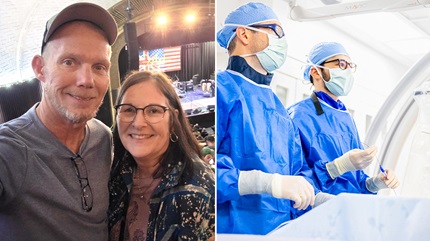
As he briskly walked toward the exit of London’s Tottenham Hotspur Stadium during the 2022 National Football League (NFL) game between the Minnesota Vikings and New Orleans Saints, Mr Aswinkumar (Ash) Vasireddy believed he likely wouldn’t need to return.
Moments earlier, the stadium had fallen silent as medical personnel surrounded then-Vikings rookie safety Lewis Cine, who had suffered a serious leg injury during a punt coverage play. From his seat high above the field, Mr Vasireddy, lead trauma and orthopaedic surgeon at Cleveland Clinic London, watched as one of his red-capped colleagues on the sideline reached for his phone. Cleveland Clinic serves as the Official Supplier of the NFL in the UK, providing medical services for the games in London. During this event, Mr Vasireddy was on call. Soon, his own phone rang.
“He told me the player had an open, segmental fracture of the lower leg and a large laceration,” Mr Vasireddy recalls. “After an X-ray in the locker room confirmed the injury, he called me back and said they were taking Lewis by ambulance to Cleveland Clinic London, and I said I would meet them there.”
Lewis, a first-round draft pick from the University of Georgia, knew something was wrong the moment he landed awkwardly.
“As I was falling down, I saw my leg was twisted at a 90% angle,” Lewis recalls. “I knew immediately, oh my God, something’s not right.”
With his leg immobilised in a vacuum splint and the wound—where the fractured tibia had pierced through the skin—covered by a dressing, Lewis was waiting to be transferred into the ambulance.
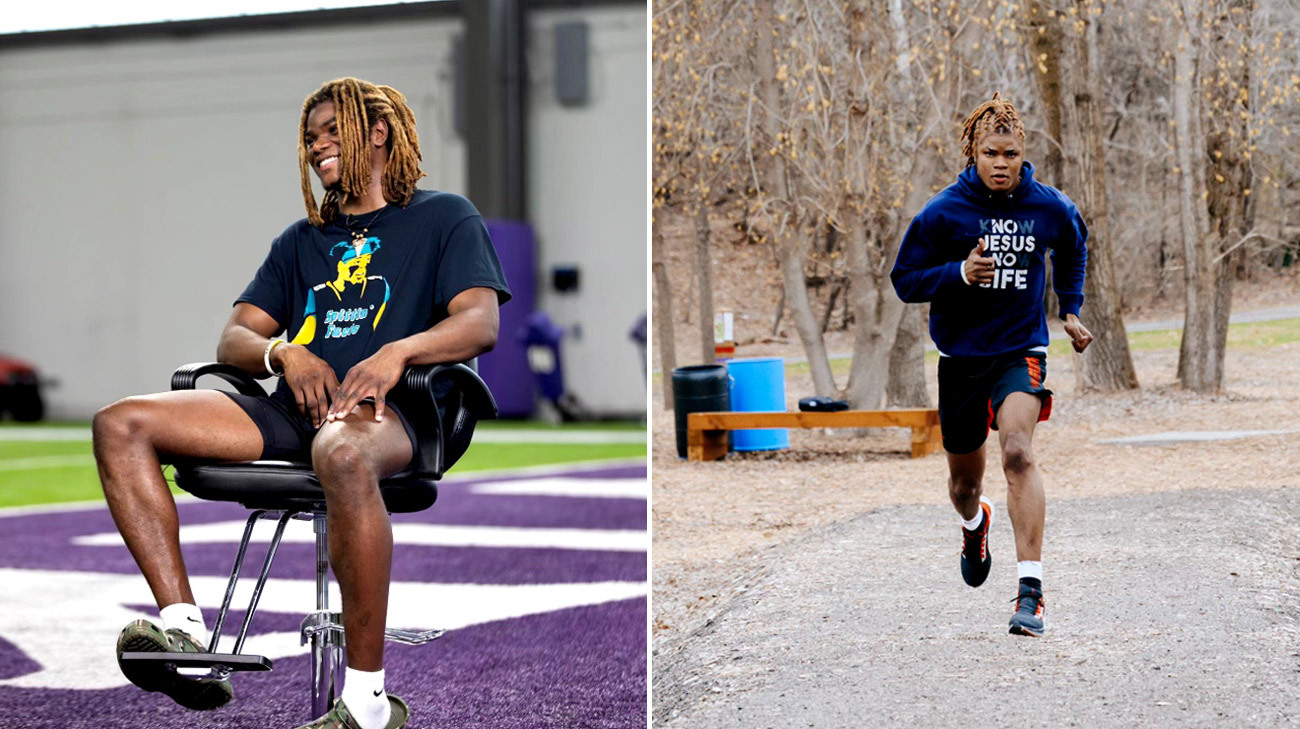
(Courtesy: Lewis Cine)
As he made his way to Cleveland Clinic London, the team was already preparing for the complex care ahead. By the time Mr Vasireddy completed the 35-minute drive to the hospital, Lewis was undergoing blood tests and scans in preparation for treatment. During the ride, Mr Vasireddy coordinated with nurses and plastic surgeon Mr Edmund Fitzgerald O'Connor to ensure the surgical team was briefed and ready.
Upon arrival, he reviewed Lewis’ test results and examined the injury. Despite the open wound, fractures to the tibia and a broken fibula, the blood vessels and nerves were intact—a positive sign in a critical situation.
“I see these most of the time when people are injured in a car accident or fall from a huge height,” Mr Vasireddy explains. “It’s not something we normally see in football (soccer) or rugby, in terms of severity. But we’ve performed these types of surgeries many times.”
The team’s first task was to clean and stabilise the injury in preparation for reparative surgery a few days later. Working with Mr Fitzgerald O’Connor, they decontaminated the wound, removing debris and damaged tissue. To further stabilise the leg, they inserted a temporary external fixator brace-like device secured with pins through the skin and into the bones.
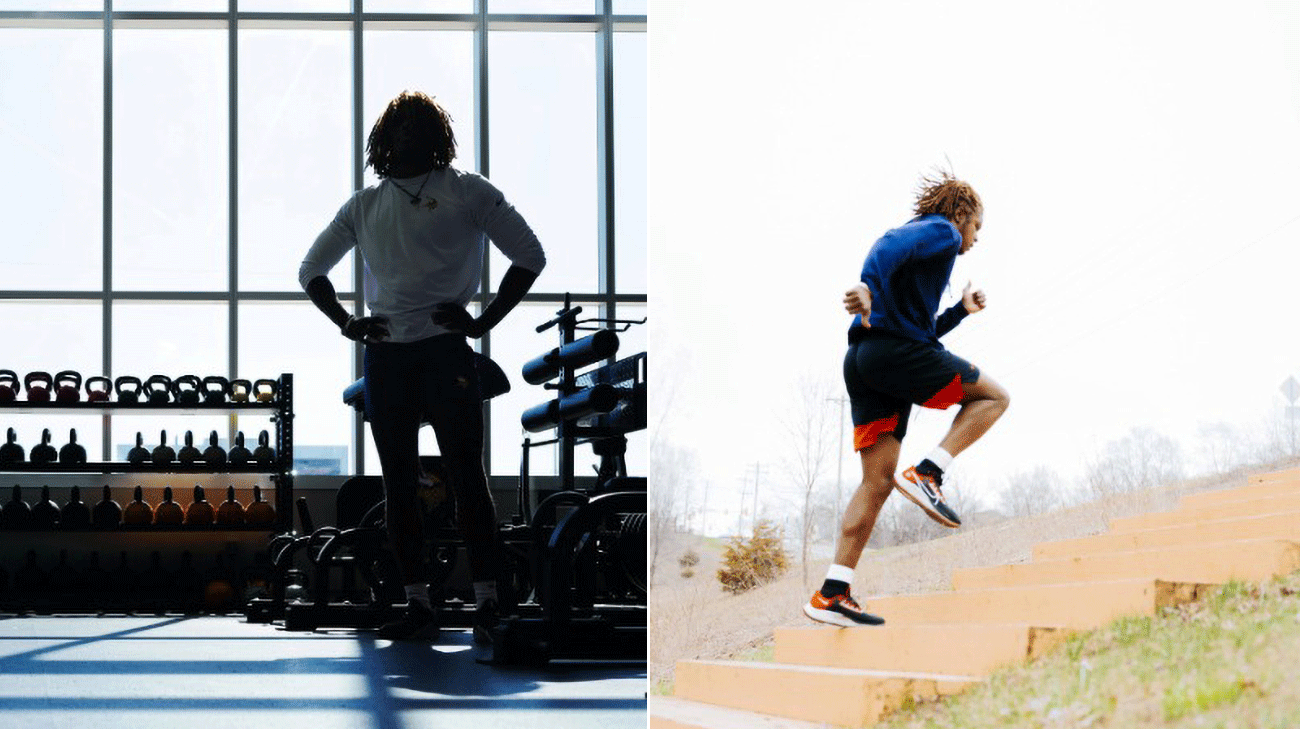
(Courtesy: Lewis Cine)
Two days later, they performed the major surgery to repair the fractures. The two-hour procedure involved inserting an intramedullary nail (IM nail)—a long titanium rod—into the hollow centre of the tibia. Anchored with screws at both ends, the rod would permanently stabilise the bone.
Rather than reopen the wound, the surgeons made an incision above Lewis’ kneecap to insert the rod.
“In order for bones to heal, they need compression,” Mr Vasireddy explains. “When we’re putting the nail in place and finalising its position, there are some tricks we do to squeeze the area tighter, which potentially makes the healing much better, quicker, and robust.”
That proved true for Lewis. Five days after surgery, accompanied by his father and a Vikings’ medical staffer, he flew by air ambulance back to Minnesota to begin rehabilitation—guided in part by Mr Vasireddy. Shortly after, Lewis surprised teammates and coaches by walking into the team’s practice facility unaided and barely limping. Shortly after, months of intense rehab began.
“The first weeks were really tough. It was a battle of the mind. You have to push yourself, really push yourself, until it finally gets easier,” Lewis says with a laugh.
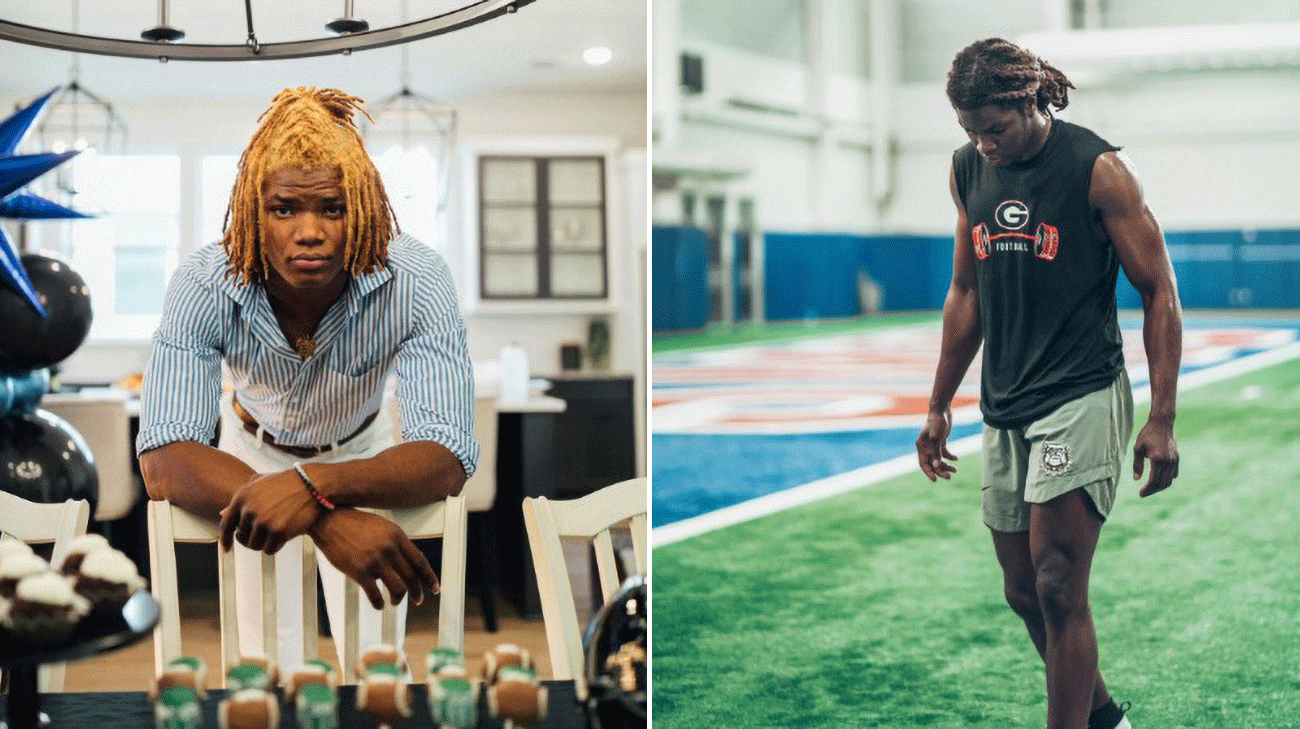
Lewis adds, “I’ve had to learn a lot of things all over again, but I never gave up on myself. I give so much credit to the surgeons and everyone who cared for me. They helped me regain not only my strength, but also my confidence. And God willing, I hope this experience has given me the chance to keep moving forward and make the most of whatever comes next.”
Related Institutes: Orthopaedic & Rheumatologic InstitutePatient Stories
Exercise Medicine Program Helps Man Prepare for Surgery and Reclaim an Active Life
Oct 9, 2026

‘Cornstarch Keeps My Son Alive’: Boy Eats Raw Cornstarch Daily To Manage Rare Metabolic Disorder
Oct 8, 2026