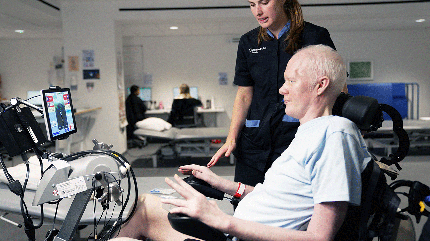
When Stacey Claus was diagnosed with ovarian cancer, she knew she wanted palliative medicine to be part of her care team. As a nurse, she understood they could help her with any side effects she might experience from her cancer treatment – which involved multiple rounds of chemotherapy.
"Simply put, they are quality of life experts," says Stacey of Olmsted Township, Ohio. And this team became pivotal in her care after she began experiencing chemotherapy-induced peripheral neuropathy, a type of nerve damage caused by cancer treatment in some cases.
"The ball of my left foot felt like it was constantly bruised, and I started having these sensations where it felt like someone was rubbing sandpaper along my right leg. The pain was progressing to the point where it was getting more and more painful just to be on my own two feet," says Stacey.
While a vital part of treatment, chemotherapy – and occasionally radiation therapy – can damage nerve cells in the body for some patients. This can lead to abnormal signals being sent to the brain, resulting in symptoms like numbness, tingling and pain – most often in the hands and feet.
"Chemotherapy-induced peripheral neuropathy isn’t just uncomfortable, it can interfere with daily life. Patients may have trouble feeling their feet, increasing the risk of falls or make driving difficult. When the hands are affected, tasks we take for granted like buttoning clothes and cooking become challenging. These symptoms can persist beyond treatment and impact quality of life," says Laura Shoemaker, DO, the Chair of the Department of Palliative and Supportive Care at Cleveland Clinic.
As an avid hiker, it was getting increasingly painful for Stacey to be on her feet. But working with palliative medicine experts, they offered her a potential solution called Scrambler Therapy, a novel approach to break the cycle of pain without using medications.
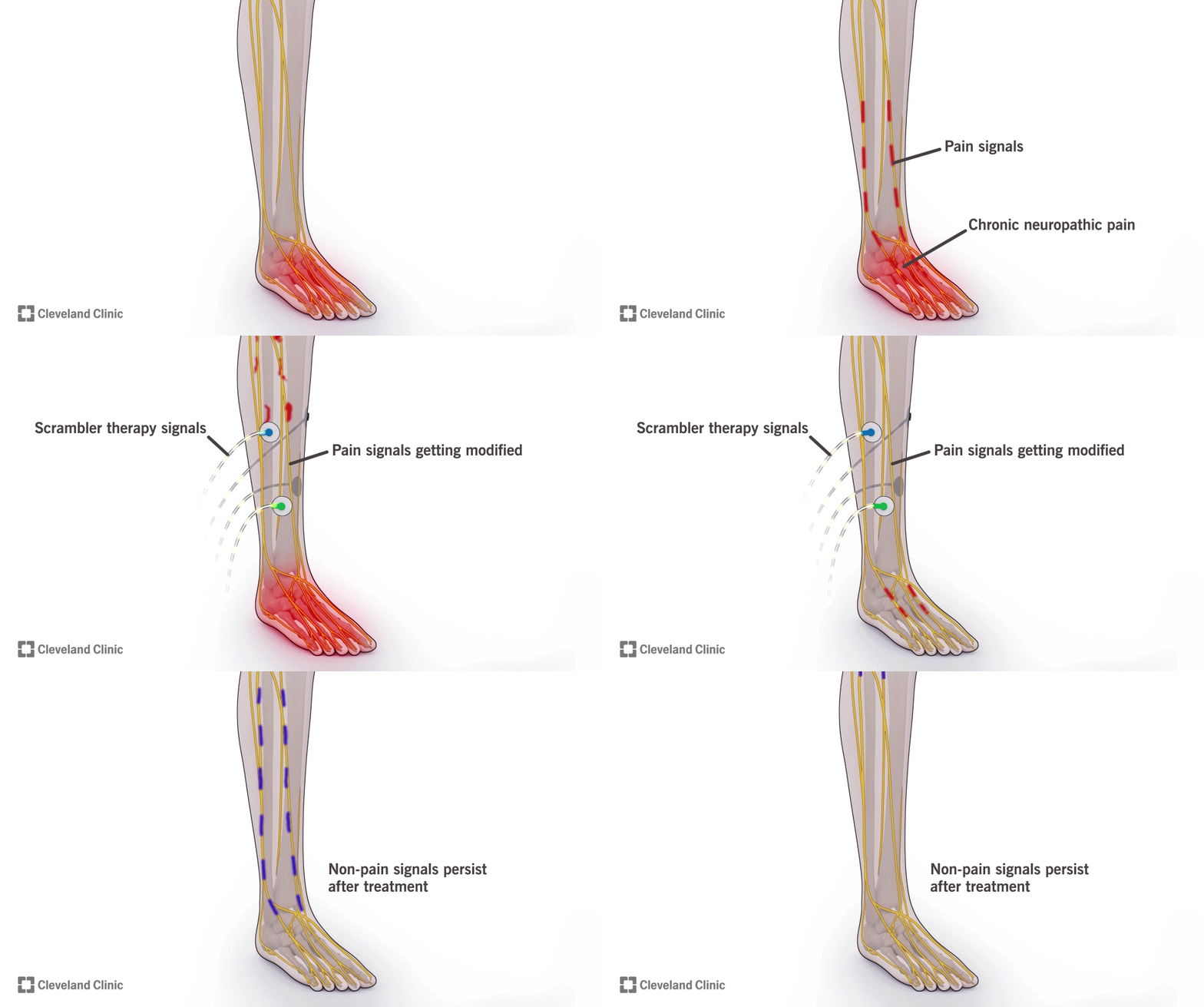
Scrambler Technology is an FDA-approved device that uses electro-analgesia therapy for the noninvasive treatment of chronic neuropathic symptoms, such as pain, tingling, numbness and cold/warm sensation. (Courtesy: Cleveland Clinic)
"Scrambler Therapy is a type of neuromodulation that uses a low-intensity electrical stimulus delivered through electrodes placed on the skin. It's designed to scramble or override pain signals from damaged nerves – retraining the brain over time to interpret those signals differently and reduce discomfort,” says Dr. Shoemaker. “We hope this therapy will not only provide relief for people whose cancer treatment or long-term function is limited by neuropathic pain but also reduce their dependence on prescription medications. The real impact is helping patients return to work, daily routines and the activities they enjoy.”
With funding from VeloSano, Cleveland Clinic’s annual fundraiser to support cancer research, Dr. Shoemaker and team were able to launch a clinical trial and start offering Scrambler Therapy to patients like Stacey.
“Scrambler Therapy is an FDA-approved treatment for chronic neuropathic pain that has shown promising results. Now, we're working to understand which groups of patients respond best, whether it’s those with nerve damage from chemotherapy, diabetes or other causes. We're also trying to determine how long the benefits of this therapy last," says Dr. Shoemaker, the lead investigator for the study.
As part of the trial, half of participants receive Scrambler Therapy during the study period and half do not, allowing investigators to better measure its effectiveness. All participants will receive the therapy after the study concludes. Patients receiving the therapy undergo treatment for 10 consecutive days, during which the machine transmits a non-painful electrical stimulus for about 45 to 60 minutes. While the duration of relief from Scrambler Therapy is still being studied and can vary from patient to patient, some have reported relief lasting weeks, months or even years.
“If participants in our study experience a good response to Scrambler Therapy but their symptoms return, we can bring them back for additional treatments,” adds Dr. Shoemaker.

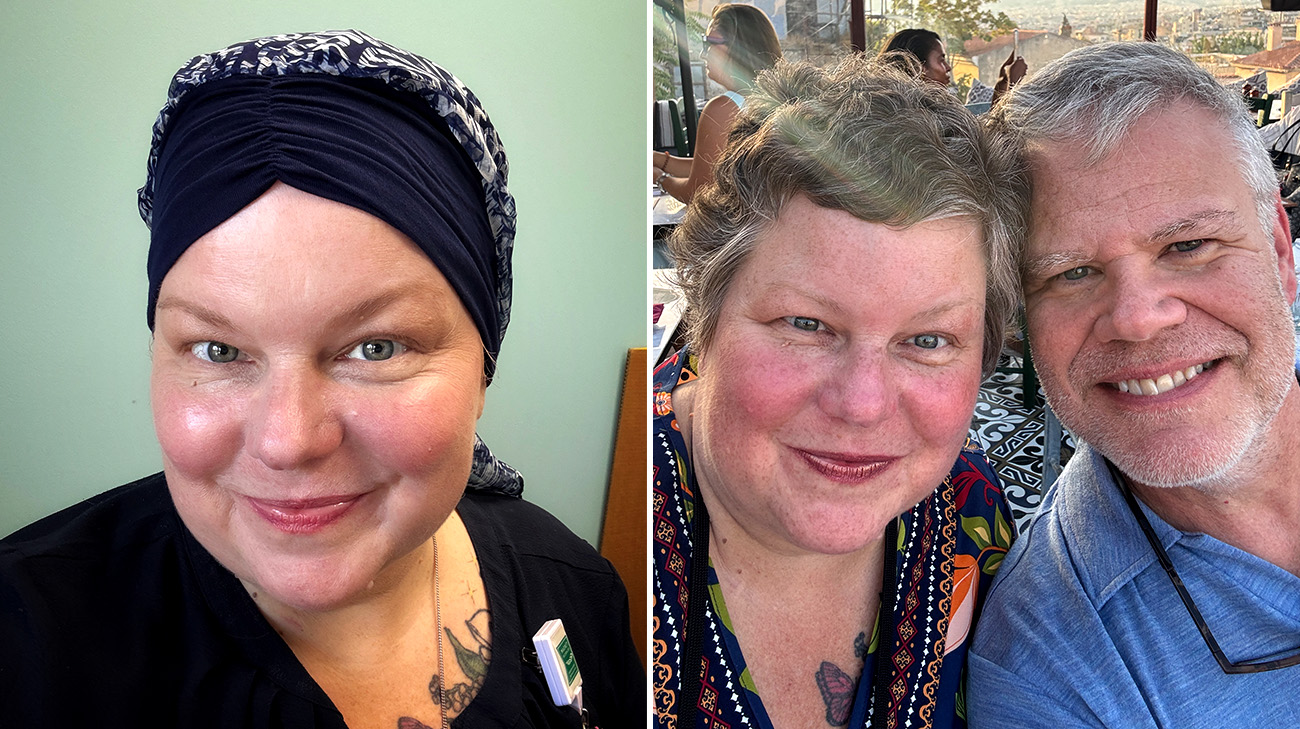
Following her treatment and retirement, Stacey and her husband enjoy a vacation in Greece. (Courtesy: Stacey Claus)
For Stacey, who received the full Scrambler Therapy in July 2026, she says the results have been life changing. Retiring a month after undergoing the therapy, she was able to enjoy a trip to Greece – walking pain-free with her husband by her side.
"I was a little bit nervous about traveling and jumping back into over 10,000 steps a day. But I was able to do that and really didn't have discomfort in my feet. I have very few, if any, symptoms at this point," says Stacey.
Both Stacey and Dr. Shoemaker are grateful for the support of VeloSano donors and fundraisers. Dr. Shoemaker says funds raised through VeloSano enabled the team to acquire the equipment needed to deliver the therapy and train physicians to use it.
"VeloSano is allowing us to understand this newer treatment better while also giving our patients access to it," says Dr. Shoemaker, an 11-year rider in VeloSano Bike to Cure.
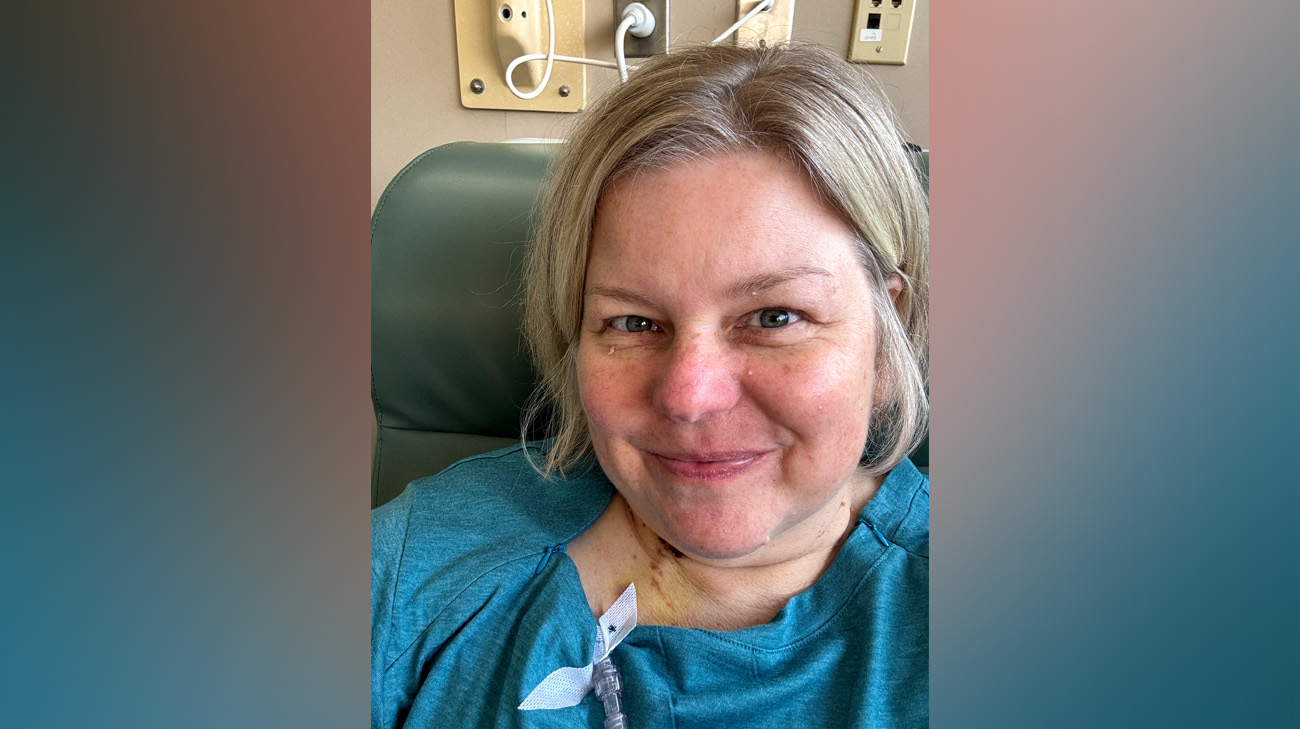
Stacey at Cleveland Clinic undergoing treatment for ovarian cancer. (Courtesy: Stacey Claus)
“Because of VeloSano and my palliative care team, I’ve had the opportunity to participate in this research study, and I feel truly blessed. It's given me my life back and the ability to enjoy the activities I love, from traveling to hiking. I'm hopeful this treatment can help more people with peripheral neuropathy," says Stacey.
Along with VeloSano and palliative care, Stacey says she's also grateful to the pathology team. They discovered she had ovarian cancer after she underwent an elective hysterectomy in June 2025 for adenomyosis, which occurs when tissue from the lining of the uterus grows into the uterine wall.
During surgery, her fallopian tubes were removed and then sent for routine pathology. A pathologist spotted a lesion classified as an early warning sign of ovarian cancer. Largely invisible and rarely caught this soon, Stacey says Andres Chiesa-Vottero, MD, the gynecologic pathologist who made the discovery, saved her life.
"It's something that couldn't be seen any other way. My scans were normal, my ultrasounds were normal, my labs were all normal. If Dr. Chiesa-Vottero hadn’t flagged the lesion, I wouldn't have caught my ovarian cancer so early. As shocking and scary as it was, it was really a blessing," says Stacey.
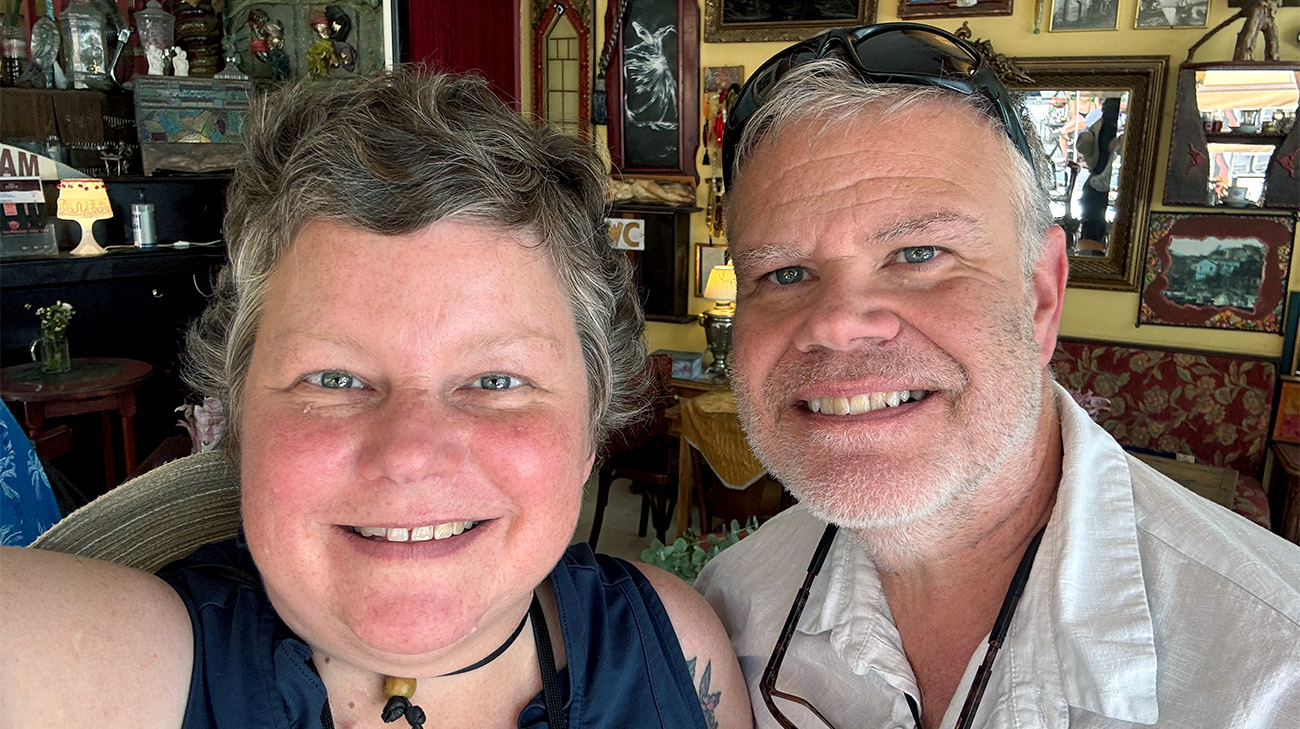
Stacey and her husband are looking forward to more trips and creating new memories together. (Courtesy: Stacey Claus)
Stacey was ultimately diagnosed with stage 2A ovarian cancer. According to the American Cancer Society, only about 20% of ovarian cancers are diagnosed at an early stage. One reason is there is currently no screening test proven to reliably detect ovarian cancer early in women at average risk for the disease. Knowing this, Stacey applied to become an advocate for the Ovarian Cancer Research Alliance, hoping to raise awareness and increase funding for ovarian cancer screening and research.
"I hope early detection can become a reality for more women facing ovarian cancer. My main message to others is to know your risk, don't be afraid to ask questions and always advocate for your health and well-being," says Stacey.
Related Institutes: Ob/Gyn & Women's Health Institute, Pathology & Laboratory Medicine, Cleveland Clinic Cancer CenterPatient Stories
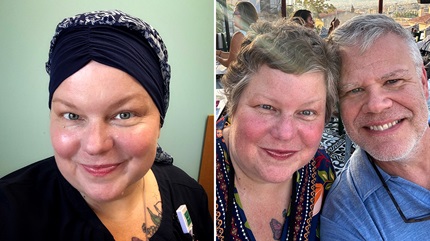
After Early Ovarian Cancer Diagnosis, Woman Finds Relief From Chemotherapy-Related Nerve Pain
Sep 18, 2026
Adelynn Strong: Family's Promise Carries Girl Through Leukemia Treatment
Sep 15, 2026