



Dyspnea, or shortness of breath, is the feeling that you can’t get enough air into your lungs. It might feel like your chest is tight, you’re gasping for air or you’re working harder to breathe. Heart and lung conditions are common causes of dyspnea. But anxiety, limited physical activity and other conditions can also cause it.
Advertisement
Cleveland Clinic is a non-profit academic medical center. Advertising on our site helps support our mission. We do not endorse non-Cleveland Clinic products or services. Policy
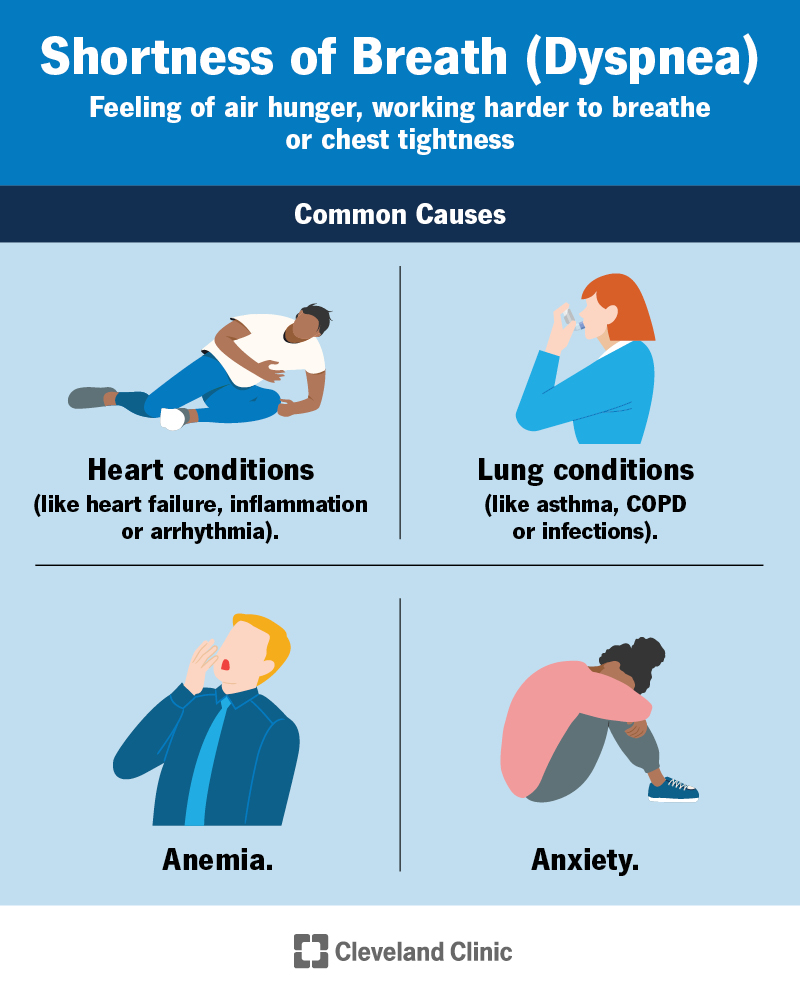
Image content: This image is available to view online.
View image online (https://my.clevelandclinic.org/-/scassets/images/org/health/articles/16942-dyspnea)
Dyspnea (pronounced “DISP-nee-uh”) is the word healthcare providers use for feeling short of breath. Shortness of breath can feel different from person to person and depending on what’s causing it. It might feel like:
Advertisement
Cleveland Clinic is a non-profit academic medical center. Advertising on our site helps support our mission. We do not endorse non-Cleveland Clinic products or services. Policy
Sometimes, it comes with other symptoms, including:
Many conditions can make you feel short of breath, including asthma, allergies, anxiety and colds. It can also be a sign of more serious heart and lung conditions.
Acute dyspnea can come on quickly and doesn’t last very long (hours to days). Chronic dyspnea is shortness of breath that lasts a long time (several weeks or longer) or keeps coming back.
Exercise, illness and health conditions can cause shortness of breath. The most common causes are heart, lung and airway conditions.
Anything that increases your need for oxygen or raises carbon dioxide levels in your blood can make you feel short of breath. When this happens, your body tells you to breathe harder to get more oxygen in or carbon dioxide out.
For example, vigorous exercise can make you breathe heavily since your muscles are using more oxygen during physical activity. On the other hand, not getting regular exercise can make you feel breathless much of the time. This is because your muscles are working hard during daily activities.
Advertisement
Your heart and lungs work together to bring oxygen to your blood and tissues and remove carbon dioxide. That’s why conditions that affect either are common causes of dyspnea.
Lung, airway and heart conditions are the most common causes of shortness of breath. Other conditions can also cause it.
Lung and airway conditions
Heart and blood conditions
Other conditions
To try to figure out what’s making you feel breathless, a healthcare provider will ask you about any symptoms you’re having. They’ll listen to your lungs with a stethoscope and take your blood pressure. They’ll put a sensor on your finger to test oxygen levels in your blood.
They may do additional testing, including:
How you treat shortness of breath depends on the cause. If you have an underlying medical condition, managing it can improve your symptoms.
Treatments that may improve your breathing include:
Some strategies to prevent shortness of breath include:
Advertisement
Contact a healthcare provider if you have severe shortness of breath or if your breathlessness interferes with your everyday activities. If you have a condition that makes you short of breath often, ask a healthcare provider if there are additional treatments to help you breathe better.
On its own, dyspnea usually isn’t dangerous. But sometimes, shortness of breath can be a sign of a life-threatening condition. Go to the nearest ER or get emergency medical attention if you have:
When something “takes your breath away,” it’s usually a good thing. But the scary feeling of dyspnea is the kind of breathtaking no one wants to experience. Get help right away if you have sudden or severe shortness of breath.
If you have dyspnea on a regular basis due to an underlying condition, talk to your healthcare provider about managing your symptoms. You might not be able to get rid of your symptoms completely. But sometimes, even small changes can make a big difference in helping you do more of what you enjoy in life.
Advertisement
Advertisement



Sign up for our Health Essentials emails for expert guidance on nutrition, fitness, sleep, skin care and more.
Learn more about the Health Library and our editorial process.
Cleveland Clinic’s health articles are based on evidence-backed information and review by medical professionals to ensure accuracy, reliability and up-to-date clinical standards.
Cleveland Clinic’s health articles are based on evidence-backed information and review by medical professionals to ensure accuracy, reliability and up-to-date clinical standards.
Whether you need stitches, a broken bone set or think your appendix might be causing your abdominal pain, Cleveland Clinic’s emergency medicine team is here to help.
