



Osteoarthritis is the most common type of arthritis. It happens when the cartilage that lines your joints is worn down or damaged. Your bones rubbing together when you use that joint causes symptoms like pain and swelling. A healthcare provider will find a combination of treatments to manage symptoms and help you stay active.
Advertisement
Cleveland Clinic is a non-profit academic medical center. Advertising on our site helps support our mission. We do not endorse non-Cleveland Clinic products or services. Policy
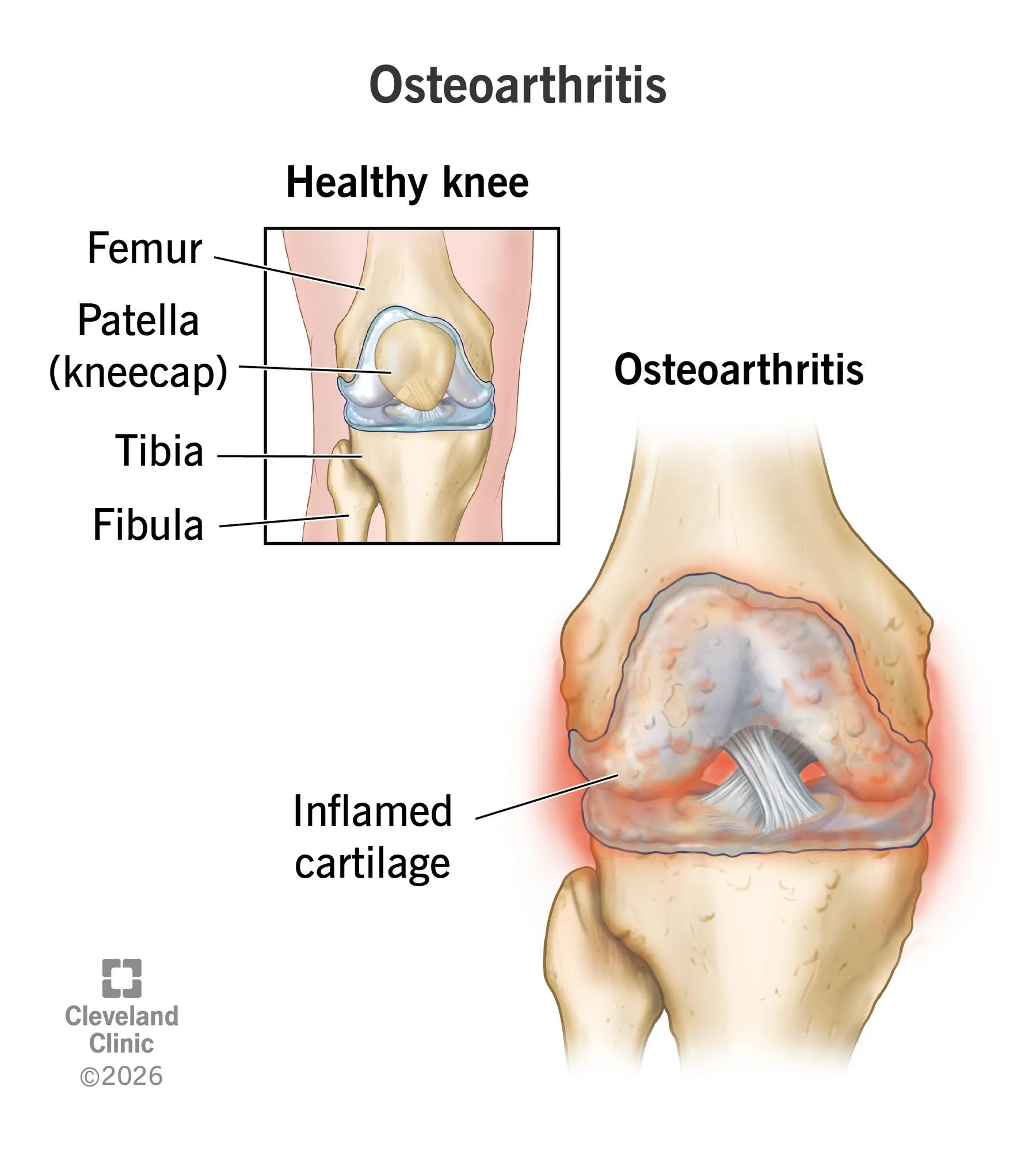
Image content: This image is available to view online.
View image online (https://assets.clevelandclinic.org/transform/eeff241f-55d6-418b-98c9-8c29117356db/Osteoarthritis_HL_26-RHE-8062061)
Osteoarthritis is the most common type of arthritis. Healthcare providers sometimes refer to it as degenerative joint disease or OA.
Advertisement
Cleveland Clinic is a non-profit academic medical center. Advertising on our site helps support our mission. We do not endorse non-Cleveland Clinic products or services. Policy
Usually, the ends of bones in your joints are capped in a layer of cartilage. Cartilage is like a combined shock absorber and lubricant. It helps the bones in your joints move past each other smoothly and safely. If you have osteoarthritis, the cartilage in your affected joints wears away over time. Eventually, your bones rub against each other when you move your joints.
Osteoarthritis can develop in any of your joints, but it’s most common in:
Osteoarthritis is extremely common. Experts estimate that more than 8 in 10 adults over 55 have it.
A healthcare provider might classify osteoarthritis as one of two types:
The most common osteoarthritis symptoms include:
Advertisement
Primary osteoarthritis usually develops slowly over time as you age. Normal wear and tear on your joints as you get older can lead to cartilage breaking down.
Anything that directly damages your joints can cause secondary osteoarthritis. Examples include:
Having another type of arthritis can also lead to secondary osteoarthritis, especially if you have inflammatory arthritis. The inflammation can damage healthy cartilage in your joints and break it down over time.
You may develop osteoarthritis alongside:
Anyone can develop osteoarthritis. You’re more likely to if you’re over 55 or in postmenopause.
You might have a higher risk if you have certain health conditions, including:
A healthcare provider will diagnose osteoarthritis with a physical exam and imaging tests. They’ll look at your joints and ask you when you first noticed any symptoms. Tell your provider if any activities make the symptoms worse, or if they come and go.
Your healthcare provider might use X-rays to take pictures of your joints. They might also use an MRI or CT scan. You may need blood tests to rule out other conditions or issues that cause similar symptoms.
Your healthcare provider will find treatments that help relieve the symptoms you experience. There’s no cure for arthritis. And you can’t regrow the cartilage in your affected joints. But you should feel better when you find treatments that work for you.
The most common osteoarthritis treatments include:
Advertisement
Visit a healthcare provider as soon as you notice any osteoarthritis symptoms. Even minor joint pain can be a sign that you need treatment, especially if it doesn’t get better in a few days.
Talk to your provider if it feels like symptoms are getting worse or happening more often. Tell them if it feels like your treatments aren’t as effective as they used to be. They might be able to tweak your treatment plan. They may suggest different ways to manage pain and swelling.
You’ll likely need to manage the symptoms for the rest of your life. There’s no way to replace the missing or damaged cartilage in your joints. But you should feel better once you find treatments that work for you.
If you have osteoarthritis, it’s important to stay as active as possible. If joint pain and other symptoms make it too hard for you to move, you may have an increased risk for other serious health conditions, like heart disease, diabetes and some types of cancer.
Talk to your healthcare provider if osteoarthritis makes it hard (or impossible) to stay active. They can recommend ways to modify your activities. That way, you can still do the things you want while staying safe and as pain-free as possible.
You might want to work with an occupational therapist if you need help performing your daily tasks. They can help you manage physical challenges from arthritis.
Advertisement
You can’t always prevent osteoarthritis. But you can follow these tips to lower your risk and protect your joints:
Osteoarthritis is a type of arthritis that happens when cartilage in your joints wears down. Without that slippery, smooth shock absorber, your joints can feel stiff, painful or like they’re grinding together when you use them.
The best thing to do for osteoarthritis is to visit a healthcare provider as soon as you notice symptoms, especially if they’re making it hard to participate in your usual activities. It might take time to adjust to new treatments or manage symptoms. But your provider will help you find ways to reduce how much of an impact osteoarthritis has on your daily routine.
Advertisement



Sign up for our Health Essentials emails for expert guidance on nutrition, fitness, sleep, skin care and more.
Learn more about the Health Library and our editorial process.
Cleveland Clinic’s health articles are based on evidence-backed information and review by medical professionals to ensure accuracy, reliability and up-to-date clinical standards.
Cleveland Clinic’s health articles are based on evidence-backed information and review by medical professionals to ensure accuracy, reliability and up-to-date clinical standards.
Osteoarthritis can make everyday activities painful. Cleveland Clinic offers expert diagnosis and treatment to help you move more comfortably.
