



Labia (or vagina lips) are skin folds around your vaginal opening. You have outer labia (labia majora) and inner labia (labia minora). They help protect your vagina. Labia vary in size, shape and color.
Advertisement
Cleveland Clinic is a non-profit academic medical center. Advertising on our site helps support our mission. We do not endorse non-Cleveland Clinic products or services. Policy
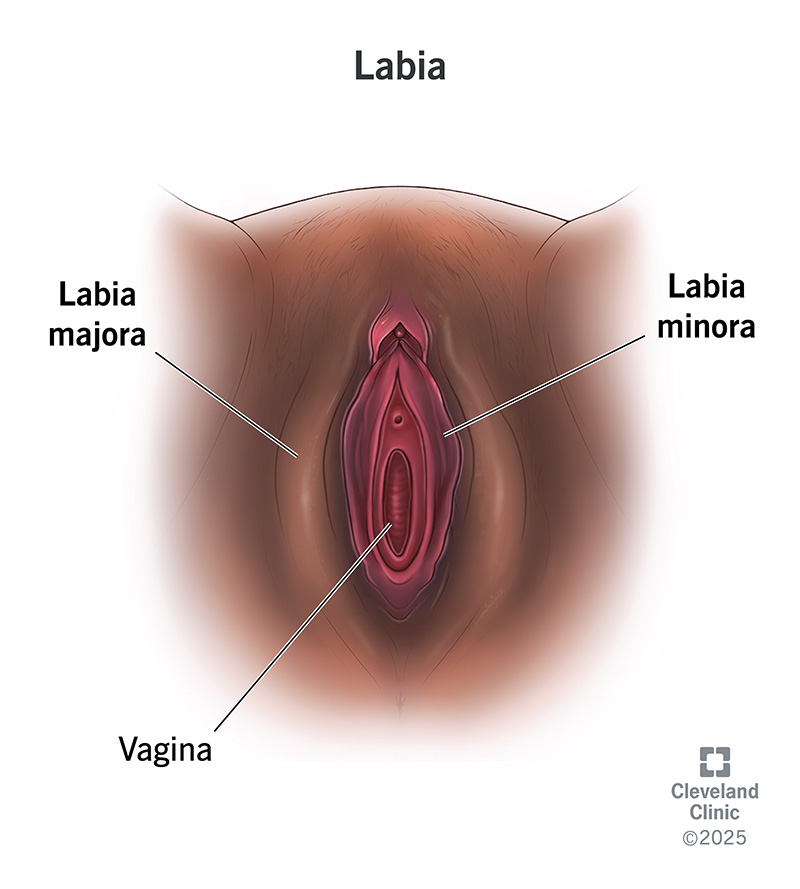
Image content: This image is available to view online.
View image online (https://my.clevelandclinic.org/-/scassets/images/org/health/articles/labia)
Your labia are two folds of skin around your vaginal opening. Many people call the labia the vagina lips. You have two sets — the labia majora (outer lips) and the labia minora (inner lips).
Advertisement
Cleveland Clinic is a non-profit academic medical center. Advertising on our site helps support our mission. We do not endorse non-Cleveland Clinic products or services. Policy
The outer lips are larger and fleshy. After puberty, they contain pubic hair. The inner lips are within your outer lips and closer to your vaginal opening. They’re typically smoother and smaller. The main job of the labia is to protect your vagina.
Labia come in many shapes, colors and sizes. Some labia are short; some are long. Some are wrinkled, while others are smooth. They can even look different as you get older. Your vagina lips are just as unique as you are.
The main job of your labia is to protect your vulva, which includes your vaginal and urethral openings (the hole you pee out of). These areas are delicate and can get infected.
Your labia also play a role in intercourse. Labia swell with blood when you experience arousal. Touching them can contribute to sexual pleasure.
Your labia minora contain glands that keep your vulva moist. This helps protect it from friction and dryness.
Your labia are part of your vulva. They extend vertically from your pubic bone to your perineum.
Your labia consist of two parts: labia majora and labia minora.
Advertisement
There isn’t a normal look of the labia. Everyone’s looks a little different. It’s normal to feel unsure about how your labia look compared to others. But they come in all shapes and sizes. Here are common variations:
Several different health conditions can affect your labia — some are minor, and others can be more serious. Some of the most common include:
The look of your labia may be something that bothers you or even affects your sex life. While it can be comforting to know that there isn’t one normal look, you may wish they looked different. You should talk to a healthcare provider about your feelings. There are cosmetic procedures, like labiaplasty, that can help.
Contact a healthcare provider if you have any of the following symptoms:
These can be signs that something is wrong. Your healthcare provider will recommend treatment for any disorders related to your labia. Treatment for health conditions that affect your labia can range from medications and surgery to changes in your daily habits.
Your labia are unique to you. The size, shape, color and texture vary between people — and all of it is completely normal. If you have questions about the size or look of your labia, talk to a healthcare provider. Seek medical care if you notice bumps or sores on your labia or if your vaginal lips cause you pain or discomfort. They can recommend treatment based on what’s going on.
Advertisement



Sign up for our Health Essentials emails for expert guidance on nutrition, fitness, sleep, skin care and more.
Learn more about the Health Library and our editorial process.
Cleveland Clinic’s health articles are based on evidence-backed information and review by medical professionals to ensure accuracy, reliability and up-to-date clinical standards.
Cleveland Clinic’s health articles are based on evidence-backed information and review by medical professionals to ensure accuracy, reliability and up-to-date clinical standards.
From routine pelvic exams to high-risk pregnancies, Cleveland Clinic’s Ob/Gyns are here for you at any point in life.
