



A vaginal delivery is when a woman gives birth through her vagina. Vaginal deliveries are the most common and most preferred method of delivery. This is because they’re typically low-risk and carry the most benefits to the birthing mother and baby.
Advertisement
Cleveland Clinic is a non-profit academic medical center. Advertising on our site helps support our mission. We do not endorse non-Cleveland Clinic products or services. Policy
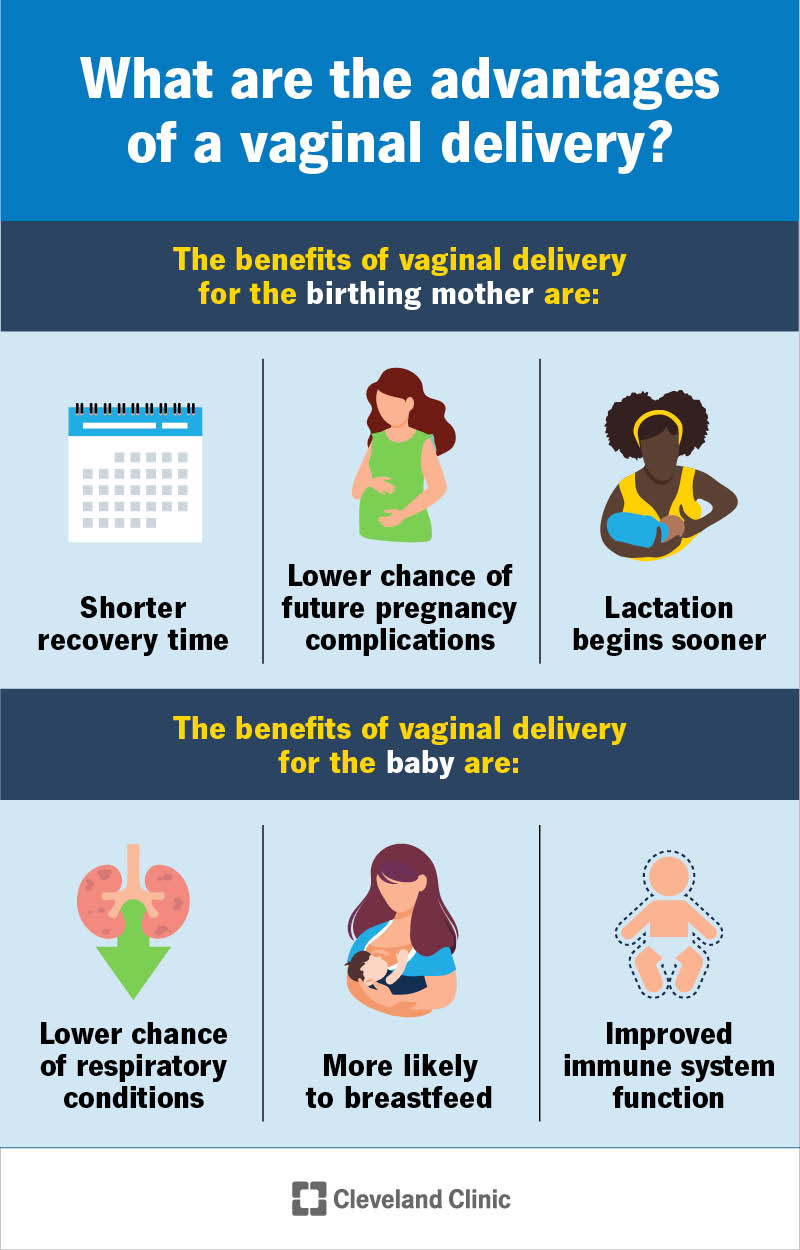
Image content: This image is available to view online.
View image online (https://my.clevelandclinic.org/-/scassets/images/org/health/articles/23097-vaginal-delivery)
A vaginal delivery is when you give birth through your vagina. Your uterus contracts during labor to thin and open your cervix. You push your baby out through your vagina (birth canal).
Advertisement
Cleveland Clinic is a non-profit academic medical center. Advertising on our site helps support our mission. We do not endorse non-Cleveland Clinic products or services. Policy
Vaginal births are usually safest for the baby and birthing mother. They typically occur between 37 and 42 weeks of pregnancy. Vaginal deliveries account for about 68% of all births in the United States and 80% of births worldwide.
You can try to prepare for a vaginal delivery by creating a birth plan. But there’s no way to predict what will happen when the time comes. Every labor and delivery is unique. A birth plan can help you envision what you want your birth experience to look like. It can also help you think of questions to ask your provider.
Healthcare providers classify vaginal deliveries into three types:
A vaginal birth involves three stages:
Advertisement
Labor and childbirth are different for everyone. Certain factors can play a role in your labor being longer or shorter. For example, your labor may be longer if it’s your first baby. Factors like the size and position of your baby can all affect how long it takes.
Most women describe vaginal birth as painful. There are many medical options to help manage pain. Discuss your options with your healthcare provider. You can also use non-medical coping skills.
A vaginal delivery offers several benefits to both you and your baby.
Compared to having a C-section, the benefits for you include a shorter recovery time and a lower chance of future pregnancy complications.
Vaginal birth benefits for your baby include:
If you’re going to breastfeed, a vaginal delivery also increases your chances of lactating sooner. And your baby is more likely to latch and breastfeed successfully.
Vaginal deliveries generally carry the least risk. The most common complications include:
All these complications have treatments. Your healthcare team will keep you informed and explain the next steps.
Healthcare providers usually prefer vaginal births. But certain conditions make them dangerous. Your healthcare provider may recommend a C-section delivery if:
Most women have swelling, bruising and general soreness in their vaginal area for a week or two. Putting cold compresses or cooling sanitary pads on your vulva may help.
But recovery time varies. Generally, healing from a vaginal birth is faster than it is for a C-section. Several factors can influence how quickly you heal. One factor is having a vaginal tear. It may prolong healing. If you have a tear, you may feel sore for several weeks. Going to the bathroom, sitting and doing everyday tasks may be painful. But it should get better over time. Tell your provider if it’s not.
Advertisement
In general, postpartum recovery can take several months. Pregnancy affects nearly all aspects of your body. It may take a long time before you feel like yourself again.
It can vary. It’s considered normal to have lochia (blood and discharge) for up to six weeks after birth. The bleeding, specifically, lasts around two weeks. Contact your healthcare provider if bleeding increases over time or becomes suddenly severe.
Most healthcare providers recommend waiting at least six weeks or until after your postpartum visit to have intercourse. This gives your body time to heal. Your provider will also check your cervix and vagina to make sure they’re healthy.
Consider birth control options and future pregnancies before having sex again. It’s possible to get pregnant again soon after giving birth, even if you haven’t had a period.
It’s hard to know what to expect from a vaginal delivery, especially if you’ve never given birth. It may help to ask your healthcare provider the following questions:
Advertisement
Every pregnancy, labor and delivery is unique. It’s hard to know what to expect from a vaginal delivery until you’ve experienced it. But talking through it with your healthcare provider can help you prepare. Vaginal deliveries are generally low-risk and successful. Your healthcare team is trained to manage any complications that arise and help you welcome a healthy baby into the world.
Advertisement



Sign up for our Health Essentials emails for expert guidance on nutrition, fitness, sleep, skin care and more.
Learn more about the Health Library and our editorial process.
Cleveland Clinic’s health articles are based on evidence-backed information and review by medical professionals to ensure accuracy, reliability and up-to-date clinical standards.
Cleveland Clinic’s health articles are based on evidence-backed information and review by medical professionals to ensure accuracy, reliability and up-to-date clinical standards.
Cleveland Clinic childbirth experts coach you through every step — from labor to delivery to what to expect when you and your newborn head home.
