
Overview
Cleveland Clinic Weston Hospital offers a two-year ACGME-accredited fellowship in Clinical Cardiac Electrophysiology for physicians who have completed an ACGME-accredited fellowship in Cardiovascular Disease. The program accepts two fellows per year at the PGY-7 level, with four fellows in training at steady state, and prepares graduates for the ABIM Certification Examination in Clinical Cardiac Electrophysiology and for independent practice across the full scope of contemporary heart rhythm care.
Training is designed to meet and exceed Level III standards as defined by the ACC/AHA/HRS Advanced Training Statement on Clinical Cardiac Electrophysiology, with readiness for independent practice assessed through ACGME Milestones 2.0 and direct observation rather than case volume alone. Fellows train across the full contemporary armamentarium — pulsed field, cryo, and radiofrequency ablation for atrial fibrillation; substrate-based ventricular tachycardia ablation; conduction system pacing; leadless pacing; subcutaneous defibrillator therapy; laser and mechanical lead extraction; and left atrial appendage occlusion.
Cleveland Clinic in Florida continues the tradition of innovation in cardiac care and research at the Miller Family Heart, Vascular & Thoracic Institute in Cleveland, Ohio. Fellows participate in standing weekly joint conferences with the Cleveland Clinic Ohio main campus electrophysiology team, giving them exposure to high-complexity cases well beyond what any single site encounters, while training in a program small enough that every fellow is a primary operator rather than one of many.
As a primary and tertiary referral center in South Florida, Cleveland Clinic Weston Hospital serves a demographically and clinically wide-ranging population — including a large elderly cohort, a substantial international and seasonal patient base, and patients facing barriers to access referred from urban and rural communities across the region. Fellows manage arrhythmia care across the full spectrum of complexity, from first-presentation palpitations to redo ablation in patients with advanced structural heart disease, adult congenital heart disease, and mechanical circulatory support.
Program at a glance
| Program Name | Clinical Cardiac Electrophysiology Fellowship |
| Sponsoring Institution | Cleveland Clinic Florida |
| Primary Clinical Site | Cleveland Clinic Weston Hospital, Weston, FL |
| Accreditation | ACGME accredited |
| ACGME Program ID | 1541114002 |
| Program Length | Two years |
| Positions per Year | Two |
| Training Levels | PGY-7 and PGY-8 |
| Program Start Date | July 1 |
| Application | ERAS / NRMP Medicine and Pediatric Specialties Match |
| Board Eligibility | ABIM Clinical Cardiac Electrophysiology |
| Visa Sponsorship | J-1 |
Program Details
The Section of Cardiac Electrophysiology at Cleveland Clinic Florida is a subspecialty group committed to educating and mentoring electrophysiology fellows to achieve excellence in patient care, teaching, and research, and to fulfill the requirements for board certification in Clinical Cardiac Electrophysiology.
Training is organized around three integrated environments — the electrophysiology laboratory, the inpatient arrhythmia consult service, and the longitudinal outpatient and device clinic. Fellows function as primary operator early and often, under direct faculty supervision, with progression governed by demonstrated competence rather than by calendar.
Clinical environment
- Two dedicated electrophysiology laboratories, with plans to add 1-2 more labs in the near future
- Three-dimensional electroanatomic mapping across all four major platforms — CARTO, EnSite X, Rhythmia and Affera
- Pulsed field ablation, cryo, and radiofrequency ablation
- Intracardiac echocardiography and ultrasound-guided vascular access as routine practice
- Laser and mechanical lead extraction with on-site cardiothoracic surgical backup
- Dedicated cardiac surgical intensive care unit
- Cardiac CT, cardiac MRI, and nuclear cardiology, including pre-ablation imaging integration
- Dedicated device clinic with in-person and remote monitoring infrastructure
- Simulation resources for transseptal puncture, catheter manipulation, ablation technique, and device implantation
- Vendor-supported hands-on workshops for device programming and procedural technique
Supervision and graduated autonomy
Fellows are supervised by CCEP board-certified faculty until proficiency is demonstrated. Progression from first assistant to primary operator is individualized and competence-based, determined by direct observation, structured procedural assessment, review of case logs, and semiannual evaluation by the Clinical Competency Committee. Fellows advance through the full range of diagnostic, ablative, and device procedures over the two years, with complexity and independence increasing as readiness is demonstrated rather than on a fixed schedule.
Call
Fellows take home call approximately one week per month, covering the electrophysiology consult and device services, with attending back-up available at all times. Call complies with ACGME clinical and educational work hour requirements.
Curriculum & Rotations
The curriculum is delivered across a 24-month block schedule that balances laboratory time, consultative arrhythmia care, longitudinal outpatient continuity, and protected academic time. Rotation-specific goals and objectives are distributed to fellows and faculty at the start of each rotation and are mapped to ACGME Milestones 2.0.
Core rotations
- EP Laboratory — ablation and device implantation
- EP Consult / Arrhythmia Service — inpatient consultative arrhythmia management
- Device and Outpatient Continuity Clinic: in-person interrogation, remote monitoring, troubleshooting, lead management with longitudinal, weekly outpatient clinics throughout both years
- Research / Scholarly blocked time
- Elective — tailored to career trajectory, such as adult congenital electrophysiology, advanced imaging integration, lead management, or inherited arrhythmia clinic
Procedural experience
Fellows participate as both primary operator and first assistant across the full range of contemporary electrophysiology. The case mix includes diagnostic electrophysiology study; ablation of AV nodal reentrant tachycardia, accessory pathways, atrial tachycardia, and cavotricuspid isthmus-dependent flutter; atrial fibrillation ablation using pulsed field, cryo, and radiofrequency energy, including redo and complex left atrial procedures; ventricular tachycardia ablation with substrate mapping in ischemic and non-ischemic cardiomyopathy; PVC ablation; and the full range of device work — single- and dual-chamber pacemakers, leadless pacing, conduction system pacing, transvenous and subcutaneous defibrillators, cardiac resynchronization therapy, implantable loop recorders, laser and mechanical lead extraction, and left atrial appendage occlusion.
Emphasis is placed on patient selection, procedural planning, intracardiac signal interpretation, complication recognition and management, and post-procedural care. Our volume and case mix allow fellows to meet or exceed the procedural benchmarks recommended by the ACC/AHA/HRS Advanced Training Statement well within the training period, while assessment of readiness for independent practice rests on competency-based evaluation. Procedural competence is documented through structured evaluation instruments, case logging in MedHub, and semiannual Clinical Competency Committee review.
Outpatient continuity clinic
Each fellow is assigned a weekly half-day continuity clinic held consistently throughout the fellowship and supervised by a dedicated electrophysiologist. Because attending clinic assignments rotate, the fellow's clinic floats across the week rather than being fixed to a single weekday; continuity of the patient panel is maintained regardless of day.
The clinic panel includes atrial fibrillation, supraventricular and ventricular arrhythmia, syncope, inherited arrhythmia syndromes, and patients undergoing evaluation and longitudinal management of cardiac implantable electronic devices. Fellows are responsible for history and examination, interpretation of ECG and ambulatory monitoring data, device interrogation, shared decision-making discussions regarding procedural options and anticoagulation, documentation, and formulation of the management plan, with real-time faculty review and feedback.
Protected academic time
A protected academic half-day is built into the weekly schedule and paired with the continuity clinic. This time is shielded from clinical assignments and is used for core conference, tracing review, journal club, quality improvement work, and scholarly project development.
Didactic Education
The core curriculum is a structured two-year conference series mapped to the ABIM Clinical Cardiac Electrophysiology board blueprint and to ACGME Milestones 2.0, so that every fellow receives the complete curriculum without repetition across the two years.
| Session | When | Format |
|---|---|---|
| EGM / intracardiac tracing review | Monday morning | Fellow-led small group with faculty oversight, alternating real cases and board-style tracings |
| Joint VT conference | Monday afternoon | Virtual joint conference with Cleveland Clinic Ohio main campus |
| Core conference | Wednesday | Faculty lecture, with journal club and quarterly morbidity and mortality conference in rotation |
| Joint lead extraction conference | Thursday | Virtual joint conference with Cleveland Clinic Ohio main campus |
| GME Fellows' Meeting | First Wednesday monthly | Institution-wide trainee forum |
Five faculty electrophysiologists share the core lecture series, each teaching within their subspecialty focus. Journal club is fellow-led and meets nine times per year; morbidity and mortality conference is held quarterly. Board-style tracing review is embedded longitudinally throughout both years rather than compressed into an end-of-program review block.
Curriculum content
The conference series covers sinus node and atrioventricular conduction assessment; intra-atrial and intraventricular conduction; supraventricular tachycardia evaluation, mapping, and ablation; atrial flutter and atrial tachycardia; atrial fibrillation mapping and ablation strategy; His-Purkinje evaluation and bundle branch reentry; ventricular tachycardia induction, mapping, and entrainment; programmed stimulation protocols; pharmacologic and autonomic modulation testing; inherited arrhythmia syndromes; tilt-table testing; conduction system pacing; device testing and troubleshooting; biophysics of ablation, pacing, and defibrillation; radiation physics and safety; antiarrhythmic pharmacology and anticoagulation; and the role of randomized trials and registries in clinical decision-making.
Board preparation
The program funds the HRS Board Review Course and the ACC Electrophysiology Self-Assessment Program for each fellow, and provides HRS and ACC trainee memberships giving access to society educational resources. Board-style tracing review is built into the weekly Monday morning session throughout both years.
Access to missed content
Didactic sessions are recorded and posted, with slide decks and supporting materials organized by topic on a secure institutional educational portal, so that fellows with clinical conflicts retain full access to the curriculum. Attendance is tracked and reviewed during semiannual meetings with the Program Director.
Research & Scholarly Activity
Every fellow is expected to complete at least one scholarly project during training, with dedicated research time built into the block schedule and faculty mentorship assigned at the start of fellowship.
Fellows are mentored across the full breadth of the section's academic work. Dr. Parikshit Sharma is among the more widely published investigators in conduction system pacing, with contributions to the International Collaborative LBBAP Study (I-CLAS) Group and to multicenter comparisons of conduction system pacing against biventricular pacing for cardiac resynchronization therapy, including the Left vs Left randomized trial.
The section participates in ongoing multicenter clinical trials in device therapy and catheter ablation, and fellows have access to Cleveland Clinic enterprise research infrastructure across the health system. Fellows can take part in enrollment, protocol execution, data analysis, and authorship.
The program supports abstract submission and presentations at national meetings, including Heart Rhythm Society Scientific Sessions and the ACC Annual Scientific Session, with funding for meeting travel and registration. Quality improvement projects addressing procedural safety, laboratory utilization, and care transitions are encouraged and integrated into the practice-based learning curriculum.
Goals & Objectives
- Develop comprehensive expertise in the evaluation and management of the full spectrum of cardiac arrhythmias and conduction disorders, in both inpatient and ambulatory settings.
- Achieve technical proficiency and independent judgment in diagnostic electrophysiology study, catheter ablation of supraventricular and ventricular arrhythmias, and implantation and management of cardiac implantable electronic devices.
- Develop competence in conduction system pacing, leadless pacing, defibrillator therapy, lead management and extraction, and left atrial appendage occlusion.
- Master interpretation of surface electrocardiography, ambulatory and continuous monitoring, intracardiac electrograms, activation and substrate maps, and remote device transmissions.
- Provide safe, patient-centered, evidence-based, and cost-effective arrhythmia care, including shared decision-making regarding procedural options, device therapy, and anticoagulation.
- Develop the skills to recognize, prevent, and manage procedural complications, and to lead peri-procedural and post-procedural care.
- Build habits of critical appraisal, self-assessment, and quality improvement that sustain lifelong learning beyond fellowship.
- Complete meaningful scholarly work with faculty mentorship, culminating in presentation or publication.
- Develop the communication, teaching, and team leadership skills required to function as a consultant electrophysiologist and to teach cardiology fellows, residents, and allied health professionals.
- Acquire the practice management knowledge — including coding and documentation, prior authorization, laboratory utilization, regulatory compliance, and performance metrics — necessary for a sustainable independent career.
How to Apply
Eligibility
- MD, DO, or equivalent degree
- Completion of an ACGME-accredited residency in Internal Medicine
- Completion of, or current enrollment in the final year of, an ACGME-accredited fellowship in Cardiovascular Disease
- Board certified or board eligible in Internal Medicine
- ECFMG certification for international medical graduates
- Eligibility for a Florida training license
Application materials
Applications are accepted exclusively through ERAS. The program participates in the NRMP Medicine and Pediatric Specialties Match. Interviews are conducted virtually.
- ERAS common application form
- Personal statement
- Curriculum vitae
- Three letters of recommendation, including one from your Cardiovascular Disease Program Director
- Medical school transcript and Dean's letter (MSPE)
- USMLE or COMLEX transcripts
- ECFMG certificate, if applicable
- Professional photograph
Timeline
| ERAS application season opens | Early July |
| NRMP Match opens | August 26, 2026 |
| Interview season | Late summer through fall |
| Interview format | Virtual |
| Ranking opens | September 30, 2026 |
| Rank order list certification deadline | November 18, 2026 |
| Match Day | December 2, 2026 |
| Fellowship start | July 1 |
Visa sponsorship
The program sponsors J-1 visas. H-1B visas are not sponsored.
Benefits
Salary, insurance, leave and additional benefits information is available on the Cleveland Clinic Florida Graduate Medical Education Benefits page.
Program-specific support includes:
- HRS Board Review Course
- ACC Electrophysiology Self-Assessment Program
- HRS and ACC trainee memberships
- Funded travel to national meetings, including attendance as well as presentation of accepted work
- Access to Cleveland Clinic enterprise educational resources and joint conferences with the Ohio main campus
- ACC Cardiosource, includes EP SAP and ACC SAP
Faculty
Program leadership
Parikshit Sharma, MD, MPH, FHRS
Program Director
Clinical focus: Device therapy and conduction system pacing
Fellowship training: The Wright Center for Graduate Medical Education and Virginia Commonwealth University
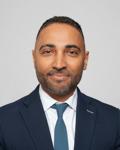
John N. Bibawy, MD, FACC, FHRS
Associate Program Director
Clinical focus: Atrial fibrillation and atrial arrhythmias
Fellowship training: University of Rochester, Strong Memorial Hospital
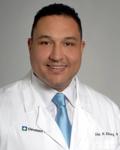
Gloria Hernandez, BCS
Program Coordinator
Phone: 786.509.0856
Email: hernang1@ccf.org
Clinical staff
Marcelo Helguera, MD
Clinical focus: General EP
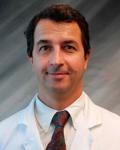
Ricardo J. Hernandez, MD, FHRS
Clinical focus: Lead extraction and VT ablation
Fellowship training: University of Texas Health Science Center at Houston
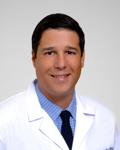
Bishoy Hanna, MD
Clinical focus: VT and PVC ablation; adult congenital electrophysiology
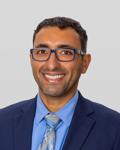
Current Fellow
Class of 2028 — Inaugural Class
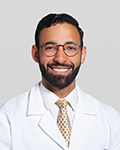
Gustavo Duarte, MD
Cardiology Fellowship: Cleveland Clinic Florida, Weston, FL, 2026
Life in South Florida
Weston is a planned community in western Broward County, consistently ranked among the safest and best places to live in Florida, with well-regarded public schools, extensive parks and trails, and a quiet residential character that makes it a natural fit for trainees with families. The hospital sits at the western edge of the Everglades, with the Atlantic beaches, Fort Lauderdale, and Miami all within easy reach in the other direction.
South Florida offers what few training environments can: no state income tax, housing costs well below those of comparable academic medical centers in the Northeast and on the West Coast, year-round outdoor living, and one of the most internationally wide-ranging communities in the country. Fellows and their families have access to boating, diving, fishing, and the Keys within a couple of hours, alongside the restaurants, arts, and professional sports of the Miami-Fort Lauderdale metro area.
Fort Lauderdale-Hollywood International Airport is about 20 minutes from the hospital, which makes travel to national meetings and trips home straightforward — a practical advantage over programs that require a connection to get anywhere.
Contact Us
For further questions please contact:
Gloria Hernandez, BCS
Program Coordinator
2950 Cleveland Clinic Blvd.
Weston, Florida 33331
Phone: 786.509.0856
Email: hernang1@ccf.org
