



A bone lesion is a broad term that describes any area of diseased or damaged bone tissue. Anything that weakens, damages or affects your bones’ development can cause lesions. Most are benign. But they can be cancerous. Your healthcare provider will tell you which type you have, what caused it and which treatments are best for you.
Advertisement
Cleveland Clinic is a non-profit academic medical center. Advertising on our site helps support our mission. We do not endorse non-Cleveland Clinic products or services. Policy
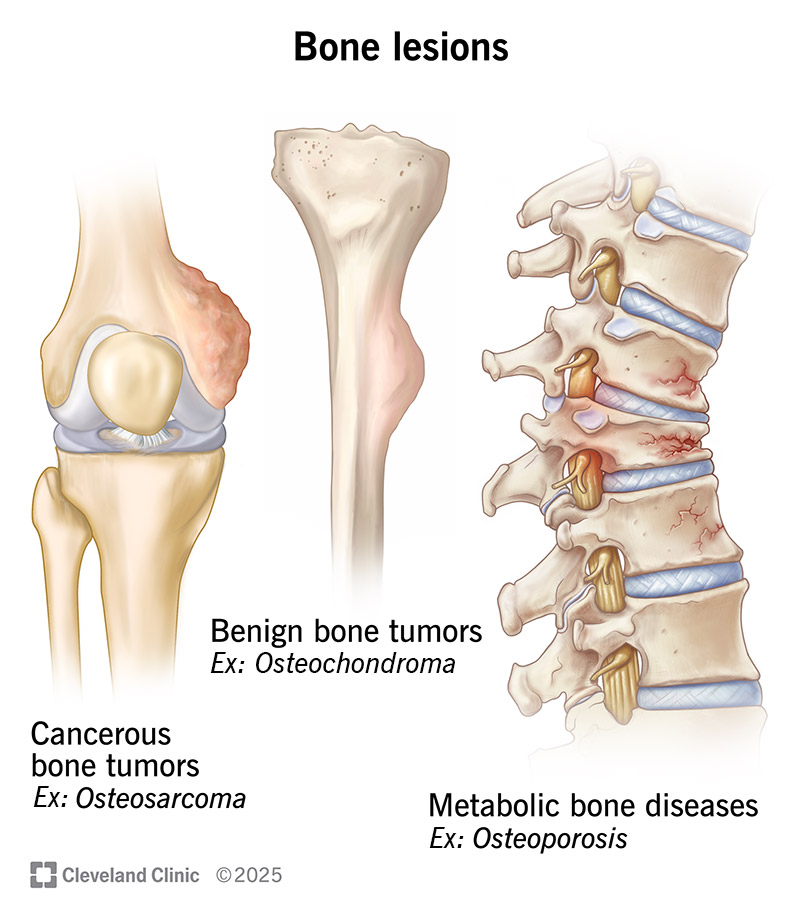
Image content: This image is available to view online.
View image online (https://my.clevelandclinic.org/-/scassets/images/org/health/articles/bone-lesions-2)
A bone lesion is an area of abnormal or damaged tissue on one of your bones. “Lesion” is a broad term healthcare providers use to mean any spot that’s damaged or changed.
Advertisement
Cleveland Clinic is a non-profit academic medical center. Advertising on our site helps support our mission. We do not endorse non-Cleveland Clinic products or services. Policy
A bone lesion can be an unusual growth, a section that doesn’t form like it should or a damaged area.
Lots of injuries and health conditions can affect your bones and cause lesions. A healthcare provider will help you understand which type of lesion you have, why it happened and if you’ll need treatment.
There are several types of bone lesions, including:
Not all bone lesions cause symptoms. But they can if they’re big enough, or if they weaken your affected bone.
If you do have symptoms, they may include:
Advertisement
Anything that damages your bones or affects how they develop can cause bone lesions, including:
Some bone lesions can irritate or injure nearby nerves, muscles or connective tissues. Lesions may also increase your fracture risk.
Cancerous tumors can also spread from your bones to other body parts if treatment doesn’t stop them. This can be life-threatening.
A healthcare provider will use imaging tests to take pictures of your bones and the area around them, including:
These tests will show lesions and other injuries.
You may also need a biopsy. Your provider will remove a sample of your bone and send it to a lab for testing.
Your provider will classify the lesion by its appearance. They might describe it as:
Other clues that may help your provider identify the type of bone lesion you have include:
You might not need treatment for a bone lesion. Some lesions heal on their own. Others might need to be monitored for possible complications. Your healthcare provider will suggest follow-up scans or tests to make sure the lesion is healing correctly.
If you do need treatment, your provider may suggest:
Your recovery time and the treatment’s success rate can vary widely. It depends on which type of bone lesion you have. Your healthcare provider will help you understand what to expect. They’ll be your best resource for information about your specific case.
Advertisement
Your provider or other members of your healthcare team will schedule follow-up appointments to check on your bones and overall health. Some types of bone lesions can come back after treatment.
Bone lesions can range from minor annoyances to life-changing health conditions. It’s hard to say what you can expect if you have one. That’s because there are so many types and even more reasons they can happen. There’s no one-size-fits-all outlook you can read online.
That’s why it’s so important to keep in touch with your healthcare provider. They’ll tell you everything you need to know about the type, cause and treatment for the bone lesion you have. Ask them any questions that are on your mind. The more you understand about your health, the more confident you’ll feel throughout treatment and recovery.
Advertisement



Sign up for our Health Essentials emails for expert guidance on nutrition, fitness, sleep, skin care and more.
Learn more about the Health Library and our editorial process.
Cleveland Clinic’s health articles are based on evidence-backed information and review by medical professionals to ensure accuracy, reliability and up-to-date clinical standards.
Cleveland Clinic’s health articles are based on evidence-backed information and review by medical professionals to ensure accuracy, reliability and up-to-date clinical standards.
If you learn you have a bone tumor, you’ll want expert care. Cleveland Clinic treats benign tumors and bone cancer with compassionate, personalized support.
