



Narcolepsy will make you feel very sleepy. This sleep disorder affects your brain’s control over sleep and wake cycles. Sudden “sleep attacks” can happen anytime — even during work, class or a conversation. You might have muscle weakness, vivid dreams or temporary paralysis while falling asleep or waking up. Medications and routine changes may help.
Advertisement
Cleveland Clinic is a non-profit academic medical center. Advertising on our site helps support our mission. We do not endorse non-Cleveland Clinic products or services. Policy
Narcolepsy is a sleep disorder that causes extreme daytime sleepiness and sudden “sleep attacks,” where you fall asleep without warning. These can happen at any time, even during regular activities. It affects your brain’s ability to control when you fall asleep and wake up.
Advertisement
Cleveland Clinic is a non-profit academic medical center. Advertising on our site helps support our mission. We do not endorse non-Cleveland Clinic products or services. Policy
The condition can disrupt your daily life, making it harder to work, study or keep relationships. It may also cause symptoms like sudden muscle weakness, vivid dreams or sleep paralysis.
Narcolepsy is uncommon. But it’s a manageable lifelong condition. A healthcare provider can help you find the right treatment and support.
There are two main types:
A separate condition called secondary narcolepsy can happen due to a brain injury, lesion, or other medical or genetic disorder. It often comes with more severe symptoms and longer sleep times.
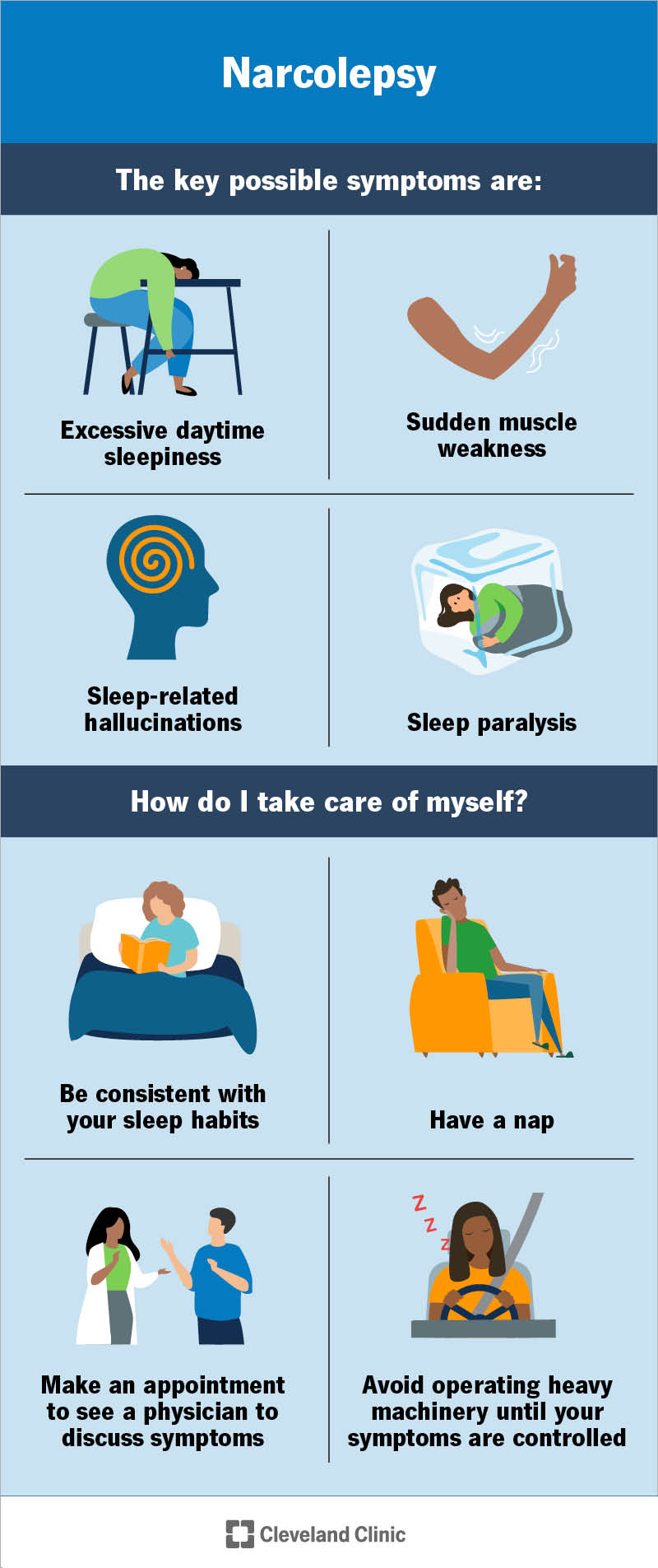
Image content: This image is available to view online.
View image online (https://my.clevelandclinic.org/-/scassets/images/org/health/articles/12147-narcolepsy)
Narcolepsy can feel different for everyone. You may not have all the symptoms listed here. Common ones include:
Advertisement
Narcolepsy type 1 happens when your brain loses cells that make a chemical called hypocretin/orexin. This chemical helps control when you’re awake and when you sleep. The loss of these cells happens in a part of your brain called the hypothalamus. It regulates your sleep-wake cycle. Experts believe this loss happens because your immune system mistakenly attacks and destroys the cells that make hypocretin/orexin.
The cause of narcolepsy type 2 is unknown.
Secondary narcolepsy may be due to:
Sometimes, doctors can’t find a clear cause.
Narcolepsy type 1 can have a genetic link. Healthcare providers found that certain genes that control your immune system relate to this condition. One is the HLA DQB1*0602 allele, although many people have this allele and don’t have narcolepsy. Narcolepsy type 1 rarely runs in families.
Type 2 narcolepsy doesn’t have a strong genetic pattern.
Anyone can develop narcolepsy. Your risk is higher if you have:
Triggers are things that can cause symptoms to start or get worse. Suspected but unproven triggers include:
This condition can affect more than just your sleep. It may lead to:
Narcolepsy itself isn’t usually dangerous, but sudden sleep episodes or muscle weakness can lead to accidents or injuries. These risks are higher when driving, using machinery or doing activities like swimming or climbing.
A healthcare provider will start by learning about your symptoms and sleep habits. Because other conditions can look similar, special sleep tests help confirm a diagnosis.
Before testing, your provider may have you track your sleep with a sleep diary and a wearable device called an actigraph.
Common tests include:
Advertisement
These tests help rule out other sleep disorders. Your provider will explain which tests you need and what to expect from each one.
Video content: This video is available to watch online.
View video online (https://cdnapisec.kaltura.com/p/2207941/sp/220794100/playManifest/entryId/1_xjioqggo/flavorId/1_5f3sgelj/format/url/protocol/https/a.mp4)
Nancy Foldvary-Schaeffer, DO, breaks down the most common symptoms and treatments for narcolepsy.
There’s no cure for narcolepsy. But treatment can help you manage symptoms and improve daily life. Your healthcare provider may recommend:
Medicines are the main way to treat narcolepsy. Common types include:
Advertisement
Getting the right treatment can take time, but your healthcare provider will work with you to find the right balance.
See a healthcare provider if you often fall asleep during the day without meaning to. This is especially important if you’re sleeping well at night but still feel very tired during the day.
Let your provider know if you also have symptoms like sleep paralysis, sudden muscle weakness or vivid dreams or hallucinations when falling asleep or waking up.
If you’re already getting treatment, call your provider if symptoms get worse or if you have side effects from a medication.
Seek emergency help if you hurt yourself after falling asleep during an activity, like driving.
Without treatment, narcolepsy can have a big impact on your daily life. It can make it hard to work, go to school or take part in everyday activities.
The condition itself isn’t life-threatening. But it can affect your safety if you fall asleep during tasks that need your full attention.
With the right treatment and ongoing care, most people manage their symptoms well. A healthcare provider can help you build a plan that supports your safety and well-being over time.
Managing narcolepsy can mean moving through a world that doesn’t always match your pace. Excessive sleepiness, muscle weakness and other unexpected symptoms can make daily life feel out of sync.
Advertisement
Your healthcare provider will work with you to create a treatment plan that supports both your alertness and your routines. It’s OK to need extra rest, structure or adjustments that others might not.
With steady care, a personalized plan and people who understand what you’re going through, you don’t have to face this by yourself. Your care team will help you manage symptoms and adjust your plan as your needs change over time.



Sign up for our Health Essentials emails for expert guidance on nutrition, fitness, sleep, skin care and more.
Learn more about the Health Library and our editorial process.
Cleveland Clinic’s health articles are based on evidence-backed information and review by medical professionals to ensure accuracy, reliability and up-to-date clinical standards.
Cleveland Clinic’s health articles are based on evidence-backed information and review by medical professionals to ensure accuracy, reliability and up-to-date clinical standards.
Hypersomnia disorders cause you to be sleepy all day long. And can get in the way of life. Cleveland Clinic’s sleep experts are here to help.
