



A sexually transmitted infection (sexually transmitted disease) is a serious condition that can develop after you have sex. Common STI symptoms include itching and burning around your genital area. The good news is that most STI treatments can cure the infection, but not all types. You can get an STI again, even after treatment to cure it.
Advertisement
Cleveland Clinic is a non-profit academic medical center. Advertising on our site helps support our mission. We do not endorse non-Cleveland Clinic products or services. Policy
Sexually transmitted infections (STI) are infections or conditions that you can get from any kind of sexual activity involving your mouth, anus, vagina or penis. Another common name for STIs is sexually transmitted diseases, or STDs. There are several types of STIs. The most common symptoms are burning, itching or discharge in your genital area. Some STIs are asymptomatic, meaning you may not have any symptoms.
Advertisement
Cleveland Clinic is a non-profit academic medical center. Advertising on our site helps support our mission. We do not endorse non-Cleveland Clinic products or services. Policy
Sexually transmitted infections are highly contagious. If you’re sexually active, you can have (and pass on) an STI without even knowing it. The Centers for Disease Control and Prevention (CDC) recommends regular STI screenings or testing if you’re sexually active.
STIs are serious illnesses that need treatment. Some, like the human immunodeficiency virus (HIV), have no cure and can be life-threatening without treatment.
A sexually transmitted infection is the same as a sexually transmitted disease. STI is the most accurate term to describe the condition.
The most common types of sexually transmitted infections include:
Sexually transmitted infections are common. More than 25 million sexually transmitted infections occur each year in the United States. Around the world, an estimated 374 million sexually transmitted infections occur each year. According to the CDC, there were approximately 2.5 million cases of chlamydia, gonorrhea and syphilis in the U.S. in 2021. About half of these cases occur in people ages 15 to 24.
Advertisement
Symptoms of sexually transmitted infections (sexually transmitted diseases) vary by type. You might not have any symptoms. If you do have symptoms, they may appear around your genital region and could include:
In addition, you may also have symptoms throughout your body, including:
Sexually transmitted infections develop when various bacteria, viruses or parasites infect your body. You can get these microorganisms from bodily fluids (like blood, urine, semen, saliva and other mucous-lined areas) during sex — usually vaginal, oral and anal sex or other sexual activities.
Yes, sexually transmitted infections (sexually transmitted diseases) are contagious. Most STIs pass from person to person by sexual contact through bodily fluids or from skin-to-skin contact by touching the infected part of a person’s body, usually the genitals. Some STIs, like syphilis, can spread while giving birth to a baby.
If you have an STI, it’s important to visit a healthcare provider to receive treatment. Some STIs are curable. You can prevent the spread of STIs by getting tested regularly if you’re sexually active, talking to your sexual partners about your diagnosis and using protection during sex.
If you’re sexually active, you’re at risk of developing a sexually transmitted infection (sexually transmitted disease).
You can also get an STI if you share personal items like needles that contain your blood. This may occur in the following instances:
A lack of communication due to stigma or shame about having an STI can put you and your partner(s) at a greater risk of spreading the infection. Before having sex, you should ask your partners the following questions:
Asking these questions can help you protect yourself.
It’s common to feel strong emotions after an STI diagnosis. You might want to avoid telling your sexual partner because you feel embarrassed. Being open and honest with your sexual partners helps build trust and understanding. If you have an STI, you can reduce the risk of spreading the infection to your sexual partner(s) by talking it over with them before engaging in sexual activities.
Advertisement
Sexually transmitted infections can cause lifelong complications if left untreated. Common complications from untreated STIs include the following:
STI complications for females include:
In males, untreated STIs can lead to:
A healthcare provider will diagnose a sexually transmitted infection (sexually transmitted disease) after a physical exam and testing. Your provider will ask about your symptoms and your medical and sexual history — answer honestly, so you can get the help you need. After a positive STI diagnosis, you need to notify your sexual partner(s) that they should also get tested. This can be a very emotional process, but telling your partners can help them get the care they need and prevent the spread of the infection.
A sexually transmitted infection test is a medical test to determine if you have an STI. A healthcare provider will review your symptoms and offer a test or tests to determine the cause. There are different tests for each type of STI. Your provider will talk to you about what test(s) you need. STI testing could include:
Advertisement
STI testing is mostly painless. You might feel a small pinch during a blood test or a sting from a swab touching a sore.
Most healthcare providers recommend annual sexually transmitted infection testing. You may choose to get tested more often, like every 3 to 6 months, if you have multiple sexual partners. Some providers recommend testing before having sex with a new partner. Regular testing helps find and treat STIs you may not even know you have. Talk to a healthcare provider about a testing schedule that makes sense for you.
The goal of sexually transmitted infection (sexually transmitted disease) treatment is to:
Treatment for STIs could include taking medications like:
You can take these medicines orally (by mouth), or a provider will give you an injection.
The human papillomavirus (HPV) is the most common viral STI in the U.S. People with HPV may have no symptoms, or they may develop warts or bumps around the genitals. High-risk HPV can even cause cervical cancer.
Advertisement
There’s a vaccine to prevent HPV and genital warts. Healthcare providers advise children ages 11 to 12 to receive it because it’s most effective before you become sexually active. Providers recommend the vaccine for everyone up to age 26, and updated information shows people up to the age of 45 years may benefit from the HPV vaccine. Talk to your healthcare provider to see if it’s right for you.
Expedited partner therapy (EPT) is where your healthcare provider gives you a prescription for your partner without examining them when you’re diagnosed with chlamydia or gonorrhea. Typically the healthcare provider would wait to examine your partner before providing a prescription. But the logical assumption is that if you have one of these STIs, then your partner probably does, as well. This prevents reinfection and stops additional transmission as soon as possible.
If your provider gave you antibiotics or antivirals to treat a sexually transmitted infection, you should start feeling better within a few days. Make sure to complete all the medicine as directed, even if you’re feeling better. And never share medicines — don’t give your medicine to others, and don’t take someone else’s medication for your symptoms.
Most STIs go away after treatment. Some may require lifelong management with medications. You can develop the same STI after it goes away if you get infected with it again.
People who get an STI diagnosis may feel embarrassed or ashamed. But STIs can happen to anyone — millions of people have them. Statistics show that most people will get an STI at least once. If you’re experiencing anxiety or stress about your STI diagnosis, consider reaching out to a friend, loved one or mental health professional for support.
If you’re pregnant and have an STI, talk to your healthcare provider right away. They’ll discuss treatment options to keep you and the fetus safe.
Many sexually transmitted infections (sexually transmitted diseases) can be cured. Unfortunately, there isn’t a cure for all STIs. Conditions like HIV require lifelong care and treatment. You can get an STI again, even after treatment to cure it.
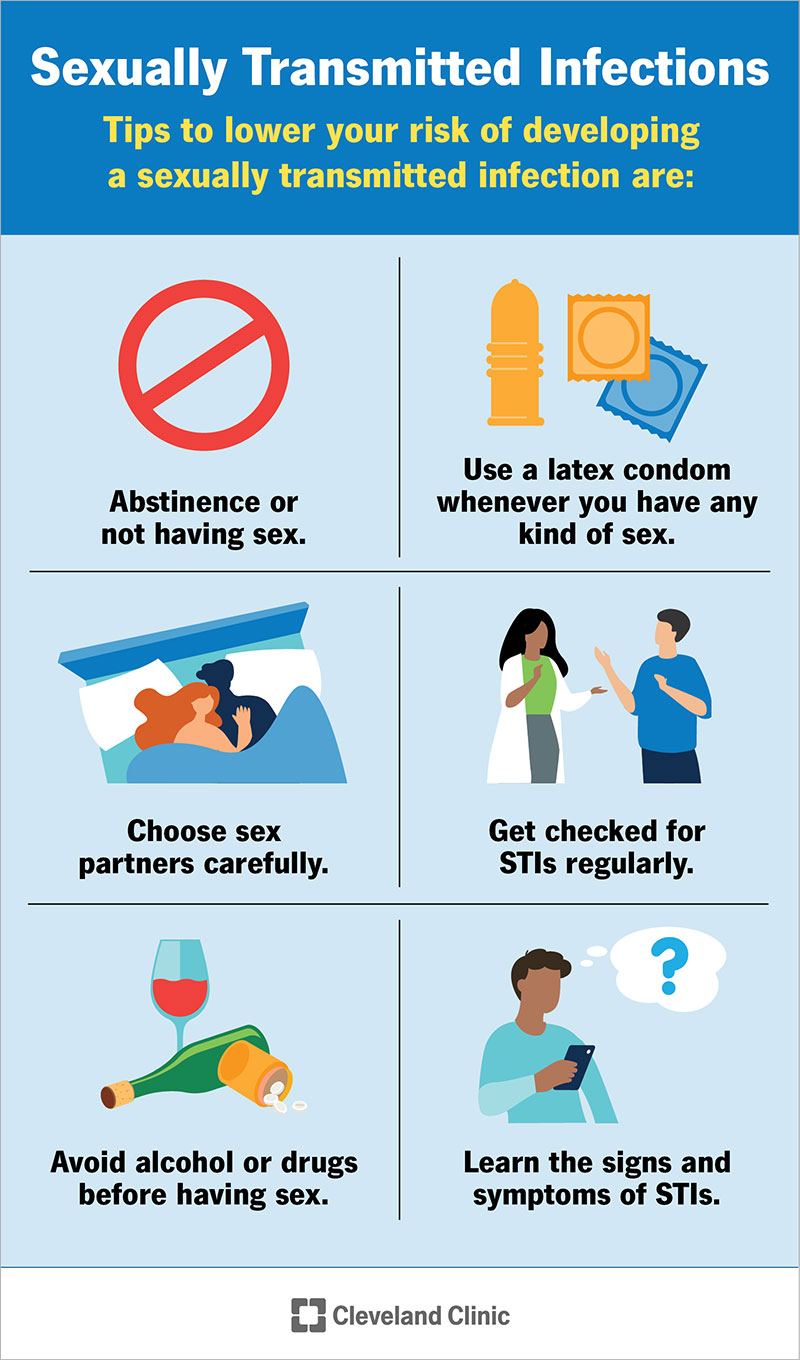
Image content: This image is available to view online.
View image online (https://my.clevelandclinic.org/-/scassets/images/org/health/articles/9138-sexually-transmitted-infections)
The only way to reduce the risk of sexually transmitted infections is to abstain from sex (not have sex). If you’re sexually active, you can:
You can take steps to protect yourself and others from sexually transmitted infections:
If your healthcare provider gave you a sexually transmitted infection diagnosis, take steps to keep yourself healthy:
Visit a healthcare provider if you notice that you or your partner has symptoms of an STI. You should also regularly visit a healthcare provider for annual or more frequent STI testing if you’re sexually active.
If you’re sexually active or you’ve had an STI, ask your healthcare provider:
Sexually transmitted infections are common. If you feel uncomfortable burning or itching around your genitals or other signs of a possible STI, talk to a healthcare provider. Antibiotics can usually treat the infection successfully. Most of the time, you can cure an STI without long-term complications. In some instances, like with HIV, you may need lifelong treatment. Using a condom or other STI preventative measures when you’re sexually active can reduce your risk of STIs.



Sign up for our Health Essentials emails for expert guidance on nutrition, fitness, sleep, skin care and more.
Learn more about the Health Library and our editorial process.
Cleveland Clinic’s health articles are based on evidence-backed information and review by medical professionals to ensure accuracy, reliability and up-to-date clinical standards.
Cleveland Clinic’s health articles are based on evidence-backed information and review by medical professionals to ensure accuracy, reliability and up-to-date clinical standards.
Have a virus, fungus or bacteria? Some of these “bugs” won’t go away on their own. Cleveland Clinic’s infectious disease experts are here to help.
