



Hypothyroidism is when your thyroid gland doesn’t make and release enough hormone into your bloodstream. The condition slows down your metabolism, which may make you gain weight unexpectedly or feel tired all the time. Hormone replacement therapy is the most common treatment for an underactive thyroid.
Advertisement
Cleveland Clinic is a non-profit academic medical center. Advertising on our site helps support our mission. We do not endorse non-Cleveland Clinic products or services. Policy
Video content: This video is available to watch online.
View video online (https://cdnapisec.kaltura.com/p/2207941/sp/220794100/playManifest/entryId/1_fck7e4so/flavorId/1_5f3sgelj/format/url/protocol/https/a.mp4)
Learn the difference between hypothyroidism and hyperthyroidism.
Hypothyroidism (underactive thyroid disease) is a condition that happens when your thyroid gland doesn’t make or release enough hormone into your bloodstream. As a result, your metabolism slows down. This can cause unintentional weight gain and make you feel exhausted all the time.
Advertisement
Cleveland Clinic is a non-profit academic medical center. Advertising on our site helps support our mission. We do not endorse non-Cleveland Clinic products or services. Policy
Although weight gain and fatigue aren’t specific to hypothyroidism, a simple blood test can help your healthcare provider check for this condition.
In general, hypothyroidism is very treatable. Most people can manage the condition with medication and regular follow-up visits with their endocrinologist.
Left untreated over long periods of time, hypothyroidism can become life-threatening. If you develop new symptoms, it’s important to get an evaluation.
There are four main types of hypothyroidism:
Advertisement
Hypothyroidism can affect anyone. It’s most common among females over age 60, particularly after menopause.
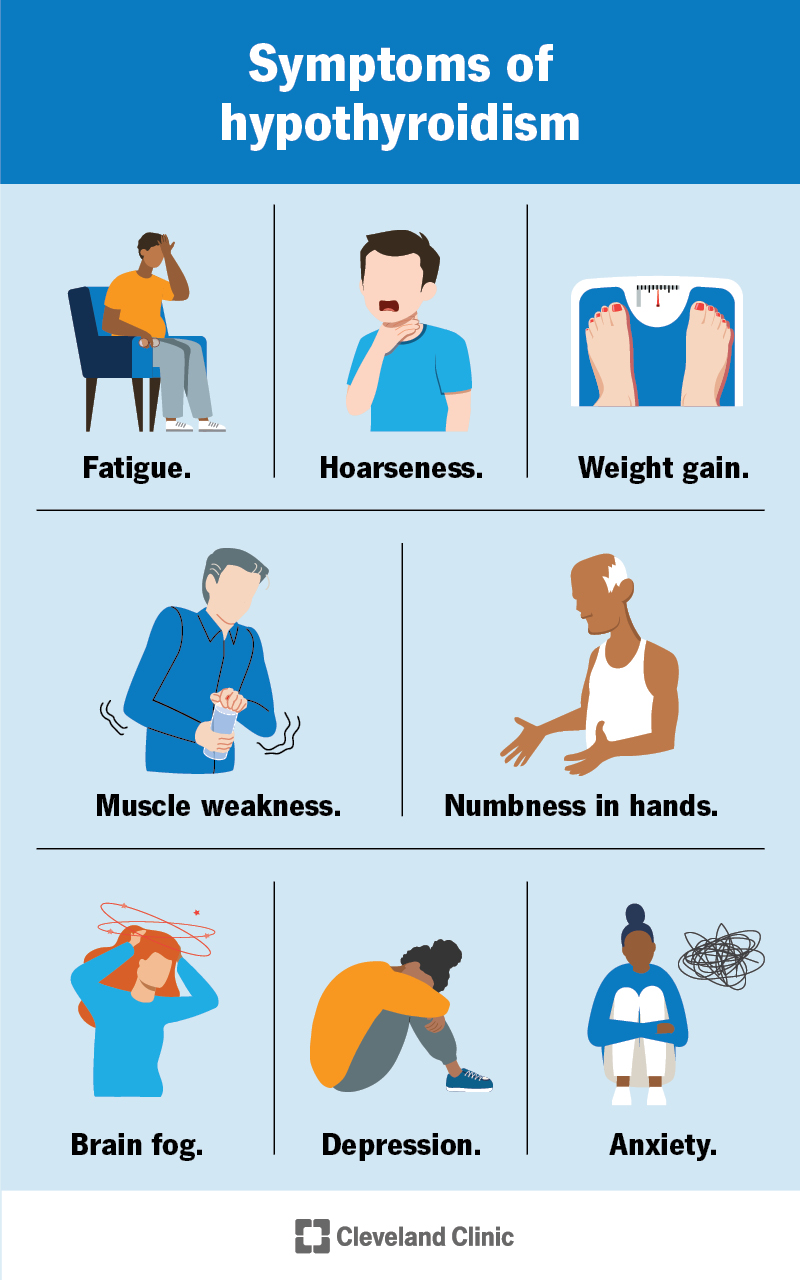
Image content: This image is available to view online.
View image online (https://my.clevelandclinic.org/-/scassets/images/org/health/articles/12120-hypothyroidism)
Hypothyroidism symptoms usually develop slowly over time. In some cases, it can take years. Some possible symptoms include:
If you develop any signs of hypothyroidism, let your healthcare provider know. They can run tests to confirm a diagnosis.
Hashimoto’s disease is the most common cause of hypothyroidism. It’s an autoimmune disease, so it happens when your immune system attacks your thyroid.
Other hypothyroidism causes include:
Anyone can get hypothyroidism. But you’re more likely to develop the condition if you're female or have:
With treatment, hypothyroidism complications aren’t very common. But left untreated, an underactive thyroid can lead to other health conditions like:
A provider will press gently around your thyroid during a physical examination to see if your gland feels swollen. They’ll also ask about your symptoms and review your medical history in detail.
Healthcare providers usually run thyroid tests to get an accurate hypothyroidism diagnosis. This is because an underactive thyroid can cause symptoms that mimic other, unrelated health conditions. Thyroid blood tests measure the level of thyroid-stimulating hormone (TSH) in your blood as well as the levels for each thyroid hormone (T3 and T4).
Advertisement
You might also need imaging tests of your thyroid, which could include:
The most common hypothyroidism treatment is hormone replacement therapy. Levothyroxine (Synthroid®, Levo-T®) is a medication that replaces the hormones that your thyroid can’t make naturally. Most people take it in the morning on an empty stomach. Taken daily, levothyroxine can even out your hormone levels and eliminate your symptoms.
It’ll take a bit of trial and error to find the right dosage. To do this, your provider will run routine thyroid blood tests until your TSH levels even out.
You’ll need to take hypothyroidism medication for the rest of your life. With careful management and regular follow-ups with your healthcare provider, you can lead a normal and healthy life.
Medications like levothyroxine start leveling out your hormones right away. But it usually takes a few weeks to notice an improvement in your symptoms.
Remember, you’ll probably need to take hypothyroidism medication for the rest of your life. If you stop taking it, your symptoms will likely return.
Currently, there’s no cure for hypothyroidism. But you can successfully manage the condition with hormone replacement therapy.
Advertisement
Hypothyroidism is a lifelong condition. If you receive a diagnosis, you’ll need to take medication every day to keep your thyroid hormone levels in check.
People with hypothyroidism have a great outlook if they receive treatment. Left untreated, an underactive thyroid can cause life-threatening complications like myxedema.
You can’t prevent hypothyroidism. If you develop symptoms like the ones mentioned above, let your healthcare provider know right away. Early diagnosis and treatment are the best ways to reduce your risk of complications and live a healthy life.
If you develop hypothyroidism symptoms like weight gain, dry skin or fatigue, let your healthcare provider know. They may want to run tests to rule out other conditions.
If you already take medication for hypothyroidism, let your provider know if your symptoms come back or persist. They may need to adjust your dosage.
You should call 911 or head to your nearest emergency room if you develop the following symptoms:
These symptoms may indicate myxedema, a life-threatening condition. If you’re experiencing these things, you need immediate treatment.
Advertisement
People with an underactive thyroid (especially primary hypothyroidism) have an increased risk of infertility and pregnancy complications like gestational hypertension and postpartum hemorrhage. But regular thyroid function tests and medication can help you have a healthy pregnancy. If you have hypothyroidism and think you might be pregnant, ask your healthcare provider how to manage your condition.
Some people are born with an underactive thyroid or no thyroid at all. When this happens, healthcare providers call it congenital hypothyroidism.
Providers test all newborns for hypothyroidism. Thyroid hormone is essential for an infant’s growth and brain development. If your baby has congenital hypothyroidism, your provider will begin treatment in the first weeks of life to prevent intellectual disabilities and developmental delays.
It can be, but it’s not always the case. Parents can pass hypothyroidism down to their biological children. But in many cases, there are environmental factors at play, like having thyroiditis, developing an iodine deficiency or taking certain medications.
Left untreated, hypothyroidism can cause you to gain weight. Many people lose weight once they start hormone replacement therapy. Still, it’s a good idea to talk to your healthcare provider about a nutrition and exercise plan that works for you.
Without treatment, hypothyroidism can become a serious and life-threatening medical condition.
Yes, it can. In fact, any thyroid gland dysfunction can cause both anxiety and depression. But hypothyroidism is the most common culprit. Ask your healthcare provider about ways to reduce stress and practice mindfulness.
Fatigue, brain fog, depression and unexplained weight gain are just some of the symptoms of hypothyroidism. It can feel scary if you notice these warning signs creeping into your everyday life. Left untreated, hypothyroidism can be life-threatening. But with medication, you can live symptom-free. If something doesn’t seem quite right, call your healthcare provider for an appointment. They can run tests to reach a diagnosis and recommend appropriate treatment to get you back on track.



Sign up for our Health Essentials emails for expert guidance on nutrition, fitness, sleep, skin care and more.
Learn more about the Health Library and our editorial process.
Cleveland Clinic’s health articles are based on evidence-backed information and review by medical professionals to ensure accuracy, reliability and up-to-date clinical standards.
Cleveland Clinic’s health articles are based on evidence-backed information and review by medical professionals to ensure accuracy, reliability and up-to-date clinical standards.
Cleveland Clinic’s experienced healthcare providers treat all kinds of thyroid disorders, including issues that cause hypothyroidism and hyperthyroidism.
