



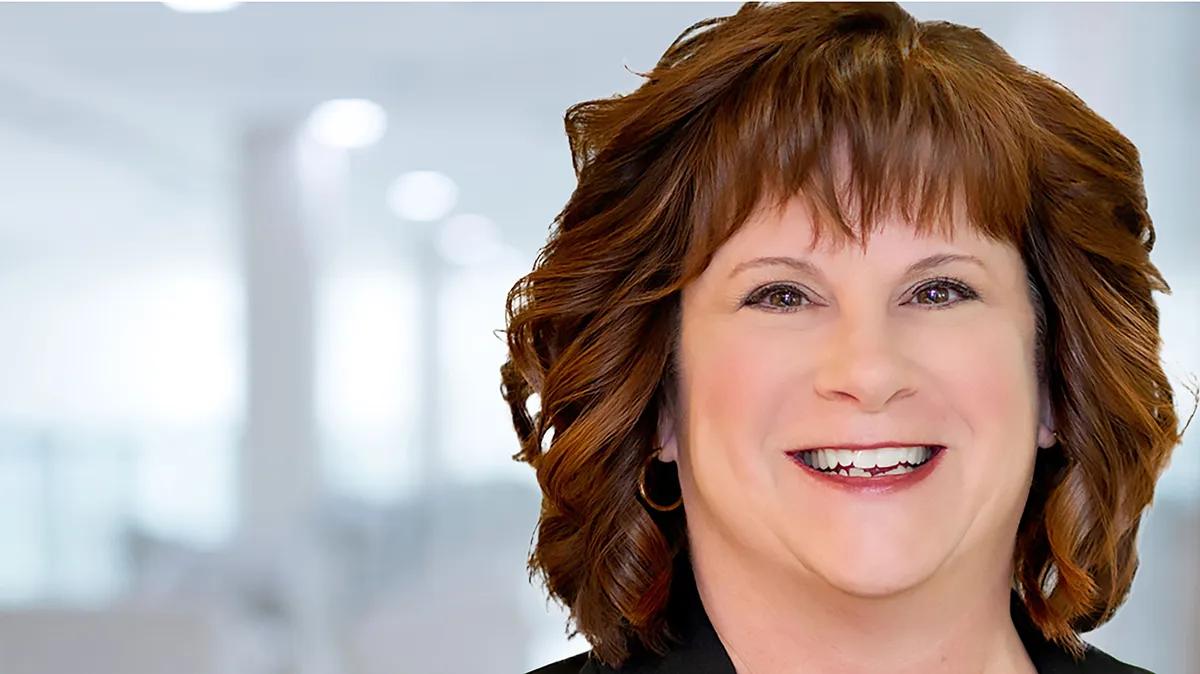
Transitioning Surgical Care from Inpatient to Ambulatory Surgery Centers
In January 2026, the Centers for Medicare & Medicaid Services (CMS) removed 285 procedures from its inpatient-only (IPO) list, accelerating the shift of surgical care from inpatient settings to ambulatory surgery centers. In this episode of Nurse Essentials, Wendy Simmons, MSN, RN, Perioperative Nursing Director for Cleveland Clinic Outpatient Surgery & Endoscopy, explores the evolution of outpatient surgery centers and the changing expectations and responsibilities of nurses.
Advertisement
Cleveland Clinic is a non-profit academic medical center. Advertising on our site helps support our mission. We do not endorse non-Cleveland Clinic products or services. Policy
Recent Episodes
Back to School: Is it Time to Pursue Another Nursing Degree?
Lisa Baszynski, DNP, RN, NE-BC, Associate Chief Nursing Officer (ACNO) for nursing education and professional development at Cleveland Clini…
De-escalation Strategies to Prevent Workplace Violence
Healthcare workers are four to five times more likely to experience workplace violence injuries than workers in private industry, according…
Experienced Nurses Share Advice for New Grads
According to the National Council of State Boards of Nursing, approximately 227,000 new nurses entered the U.S. workforce last year. As more…
Video content: This video is available to watch online.
View video online (https://cdnapisec.kaltura.com/p/2207941/sp/220794100/playManifest/entryId/1_g0chg01f/flavorId/1_5f3sgelj/format/url/protocol/https/a.mp4)
Transcript
Carol Pehotsky:
Advertisement
Cleveland Clinic is a non-profit academic medical center. Advertising on our site helps support our mission. We do not endorse non-Cleveland Clinic products or services. Policy
It's no secret to those of us who've been in healthcare and nursing for more than a handful of years that the length of time our patients spend in a hospital recovering from surgery is decreasing and we're seeing more and more patients transition to outpatient surgical centers, departments, et cetera, to get their care. That will just continue as we see Medicare and Medicaid really challenge us as healthcare providers to think about how we can provide that care in a place that's perfectly safe, designed for patient experience, and thrives on that efficiency that can be created. I'm joined today by Wendy Simmons as we talk more about the transition of surgical care from inpatient to ASC (ambulatory surgery centers).
Hi, and welcome to Nurse Essentials, a Cleveland Clinic podcast where we discuss all things nursing, from patient care to advancing your career, to navigating tough on-the-job issues. We're so glad you're here. I'm your host, Carol Pehotsky, associate chief nursing officer of surgical services nursing. Welcome back everyone. Yet another episode where we get to talk about one of the things I love most, which is surgery and taking care of surgical patients. I promise this was another idea that wasn't generated by me, but by our listeners. We're talking today about the movement of surgical and procedural care away from inpatient and hospital-based settings to ambulatory and outpatient surgery centers, often which are physically detached from the hospital building. As I was reflecting on the topic, I was thinking about way back in the stone ages when I first started nursing, even just the length of stays then.
Advertisement
So, people would have a hysterectomy and stay three, four days, and now it's outpatient. At first, it was the reduction in length of stay. And now we're seeing it's not just reduction of stay. It's saying there are groups of patients who can have this surgery done safely elsewhere in places that are designed and created to facilitate that experience, to facilitate movement of patients and care of patients in a different way than our hospitals are set up. With all that as the intro, it's my great pleasure to introduce all of you to Wendy Simmons. Wendy is the periop (perioperative) nursing director for Cleveland Clinic Outpatient Surgery and Endoscopy. Wendy, thanks for joining me today.
Wendy Simmons:
Thank you for having me.
Carol Pehotsky:
Of course. Before we get into the topic, I'm hoping you'll share with our audience a little bit about your nursing career and journey.
Wendy Simmons:
I would be happy to. I've got a different background than you probably suspect. Right out of nursing school, I actually went into labor and delivery, did that for a number of years, worked across three hospitals really, because I was one of those crazy people who worked 12-hour nights and was trying to keep my schedule the same. I did labor and delivery and some high-risk labor and delivery at a hospital. Also did inpatient peds. And it was through those relationships with the physicians I worked with that I came to the clinic.
Carol Pehotsky:
Okay.
Wendy Simmons:
Yes. So, they asked me to come and work as a nurse at Cleveland Clinic in their offices because they knew my work, of course, from the hospital. I did that for a number of years, became a clinical coordinator back then, A&M, whatever the title was. And then as we started looking at building additional surgery centers, I was like, "I want to go back to my little bit of GYN experience that I had and joined periop." At that time, we were building Avon, Twinsburg and Wooster. So then opened the Wooster Surgery Center in 2011 and was the manager for about a year and then became the assistant director and then director and haven't looked back since.
Carol Pehotsky:
Gosh, I'm losing track of time.
Wendy Simmons:
Right?
Carol Pehotsky:
It's been a great journey. And side note audience, a great placeholder for, as one of Wendy and my mentors would always say, "Hire for attitude, train for proficiency." You don't have to be an expert in things to be an expert leader. And that definitely resonates throughout Wendy's career. I can assure all of you. We're so glad to have you in this space. You really have, throughout all that time with us, gone the extra mile to make sure you understood not just surgery and you're out there scrubbing and circulating cases when need be, but really the regulatory implications and making sure that we truly can say we're providing safe care of patients. So, tell us a little bit about what is unique about ambulatory surgery centers or outpatient surgery. We'll get into what the difference between those two is, but if you don't mind starting off with talking about how these facilities differ from even having outpatient surgery in a hospital.
Advertisement
Wendy Simmons:
They're standalone. Most are in one of our family health centers. So, we occupy a floor of a family health center that is essentially a closed self-sufficient unit where you've got nursing, administrative leaders, surgeons, anesthesia leading the care that's provided in that center.
Carol Pehotsky:
There's a lot that goes into that, right? Not just the building. You were part of the building and design of some of these facilities. What did you have to think about differently to make sure that really those were set up for patients to have a great experience that was fully contained in that unit and was able to provide care to sometimes a high number of patients in one day.
Wendy Simmons:
So, there's a lot of regulatory items to open a surgery center, and that was a steep upward climb for me to learn, but it's through networking and building relationships with your state board. I have people there, first name basis. I called them, and they were picking up the phone through our accreditation colleagues. And we have a phenomenal construction department within Cleveland Clinic. So, it was a safe space to ask questions and say, "Okay, we know we have a regulation around who can use the waiting room because we can't have shared spaces if it's a licensed ASC." Either the ASC is using it or an office uses it. And that was like, "What? We're in the same building, right?
Advertisement
Carol Pehotsky:
From a clinician, that doesn't make any sense.
Wendy Simmons:
But having that safe space that you've networked with other leaders to ask those questions and learn was very important. We learned a lot about building code, what we needed, and what we didn't need. Even today, someone asked me for a code around, "Well, if we're using a C-Arm, what does that room need to have in it?" And having those connections of who you can loop in and answer those questions. So, back to your other comment, you don't have to be an expert in everything, but your ability to network and connect to people is so important.
Carol Pehotsky:
Absolutely. And just a little disclaimer here. Each state has its own rules and regulations, and CMS has different rules and regulations around what is licensed as an ambulatory surgery center versus what we in the biz call a hospital outpatient department but is really detached from the building. So, anyone listening who is either in the ASC space or looking to get into that space, we would also refer you to your local state to learn more about what that looks like where you live.
Wendy Simmons:
Correct.
Carol Pehotsky:
All right. Back to the fun stuff. As I mentioned at the beginning, we've certainly seen as technology has enhanced and medications have advanced, patients are able to recover much more quickly from surgery, the anesthetic gases wear off more quickly, and that helps length of stay go down. What's driving though that move from, I go to hospital X and I have surgery and I go home the same day to, now I'm going to go to a whole separate facility to have that surgery done.
Advertisement
Wendy Simmons:
So, some of it's being driven by payers, right? And rightfully so, if we can do it more efficiently. But then if you take a step back and look at how you provide care to that patient and that connection to the community and the surgeon, and how you're creating efficiency for the surgeon, the team, the patient to be able to go home quicker, we know they recover well in their own environment. But I think healthcare's changed so that there are services now available to people in their homes that previously you had to stay in the hospital for. So, if you look at orthopedics and the outpatient joints, you would have stayed. Now they're going home on the same day. We have the patient connected to home health. They're following up with a patient, and I don't know about you, but I sleep better in my own home than I do anywhere else. And so, you think about the recovery piece for that patient; they're recovering better at home.
Carol Pehotsky:
I have a core memory of standing in a stairwell on a phone call when CMS first announced that joints could be done in an outpatient center. I'm like, "That'll never happen."
Wendy Simmons:
And here we are.
Carol Pehotsky:
And here we are. And like you said, it's the right thing to do and people have great success with it. So we live behind the curtains a little bit. There certainly is a great deal of thought that goes into not just what is moving to an outpatient center, but what needs to happen to make sure that's done safely. Can you share with our audience a little bit about that thought process, preparation and review, and the approval of all of that?
Wendy Simmons:
Sure. When we start thinking about a service line, whether we're going to move ENT cases or orthopedic cases, we start looking at, "Okay, let's look at our outpatient centers. What resources do they also have within the family health center that those service lines are going to need?” We lean into our ambulatory colleagues to look at what services are offered there. In some states, there are regulations around who’s your governing body for your outpatient centers, your ASCs. And so, we start looking at, "Who's our governing body? Do we need to pull together, and look at what cases are going to be done? What are the risk factors? Are we putting things in place to mitigate that risk?" And then you start looking at, "Okay, what equipment do we need? Do we have the right space? What about training for our caregivers?" That's the big piece. And I think being part of Cleveland Clinic, I've been able to take ASC teams, go to one of our hospitals, work alongside, learn the skills, hone the skills, be able to bring that back to our centers. So, it's seamless for the teams.
Carol Pehotsky:
And for the surgeons too, which they're very grateful for.
Wendy Simmons:
And the surgeons. Yes.
Carol Pehotsky:
Yes, absolutely. And there's oversight into what gets moved to an ASC, correct?
Wendy Simmons:
Correct. So that's where our governing body looks at that. And if we're doing it at a hospital, have there been any events? What happened? Would that put us at risk at that site? And so, there's a voting process that's a combination of surgeons and nursing looking at that and voting approval for procedures. That's very important.
Carol Pehotsky:
And it's funny, I was talking to somebody in my outside life about an upcoming very standard screening procedure that all of us over the age of 40 to 45 should get, wink, and saying, "I would never have that done away from a hospital. Tell me more about that." And "Well, they're doing invasive things to me. What if I get into trouble?" You can imagine what I said. So, if you'll share with our audience, what would you say in that type of conversation?
Wendy Simmons:
Yes. Those teams are trained in ACLS and we do mock codes. They're trained to respond. And fortunately, with Cleveland Clinic, we can call for transfer, we can call for auto launch, but those teams go through rigorous training to keep those skills up because what's important is you can have a site that's not going to have any events. We are doing some mock codes to keep those kills up.
Carol Pehotsky:
Absolutely. Yes. Rest assured everybody, I feel very confident no matter where you live, because teams know there's less resources, one could argue they might even be more prepared because the cavalry isn't coming.
Wendy Simmons:
Correct. And through that, I think those teams are so tight-knit and know that they're relying on each other in those situations that it's not viewed as, "Oh, we have to go do a mock code." It's like, "Yay, they're coming to help us keep our skills up." And so, we do those quarterly caregivers as 10, two, to three a year, but we bring those teams out to help us quarterly.
Carol Pehotsky:
And, I feel very confident in saying that really any place that is physically detached from a hospital doing surgery or procedures is expected to have that agreement with a partnering hospital if bad things happen. So, let's talk more about the caregivers. We'll get to eventually that now we are hiring some new grads in this space, but that's a recent development. You have hired folks into this space that either have come from inpatient pre-post, they've come from inpatient OR, and sometimes you've hired people who don't have procedural background. Let's linger with the inpatient-based OR or PACU nurse. What are some of the things that surprise them when they come over to an ASC?
Wendy Simmons:
The pace, the volume of patients that we care for in a day, the efficiency, the constant look at there's no time to sit down. We're always moving and doing something. And unfortunately, some people view that as their retirement job and they get there and they think this is not for me. There's a lot of activity that goes on there. The one center I have is between 50 and 70 cases a day, and so they're moving constantly.
Carol Pehotsky:
Makes the day go by fast.
Wendy Simmons:
It does. It makes it go by fast.
Carol Pehotsky:
And so thinking about that nurse that you might hire who maybe is a new grad or from inpatient or a non-procedural area, what sort of things are you and your teams working on to try to push some boundaries and welcome people that don't have that experience to make sure they feel fully competent to take care of these patients in this fast-paced environment?
Wendy Simmons:
Some of that's happened organically because we've taken students.
Carol Pehotsky:
Okay.
Wendy Simmons:
And so, as we have students in our space that gel really well with us, we're able to groom them. Here's our vision, here's our values, that's what we're about. We've kept some of them and it's worked out great. And it's one of those areas that, through the nursing program, they don't get a lot of exposure to. So, when we can capture them as a student, they're like, "Oh, this is really cool about what you guys do every day." We've kept them and brought them on as RN residents.
Carol Pehotsky:
And it's been so nice to see, you've also been able to retain the surge tech students who come through and sending ASC OR nurses through our residency. It doesn't matter where you're doing the surgery, you need to be fully prepared to scrub and circulate a case no matter where you are.
Wendy Simmons:
Correct. I would say the other group that we've really attracted nurses through is L&D, labor and delivery. When you work in that space, you really learn critical thinking. And so those caregivers have really come in and fit well because they bring those critical thinking skills, and we have to teach them our skills. But in the end, as you alluded to earlier, we're looking for people that have chemistry, are a good fit and we can train.
Carol Pehotsky:
And willing to hustle. Whether somebody is coming to the ASC from a student role or they're coming from another experience or even a perioperative area in the hospital, what are those skills and competencies that are most important for someone to be successful in an ambulatory surgery setting?
Wendy Simmons:
Probably most people are going to say the competencies and the technical skills.
Carol Pehotsky:
Okay.
Wendy Simmons:
That's true. I would consider those technical skills to be part of the IQ of someone, right?
Carol Pehotsky:
Sure. Mm-hmm.
Wendy Simmons:
The second thing is, what is their emotional intelligence? How do they respond? Because some of these situations are very tense and like you said, the cavalry's not coming. So how do I lean into my peers in a professional way, even though it's an intense moment? But the other thing that we are really looking at is AQ. It's the adaptability of someone.
Carol Pehotsky:
Oh, Okay. Yeah.
Wendy Simmons:
So, they may come to us knowing what that environment was like in an inpatient setting. I need them to have an open mind and be adaptable because we serve many service lines and every day is different. You have to be willing to walk through that door. And if you're looking for an area that is routine every day, that's not us and the ASCs. It's different every day. The service lines are different.
Carol Pehotsky:
The fact that it's not just hips and joints, it's heart caths, spine surgery, increasingly complex care; we do eight-hour facelifts in some of our centers.
Wendy Simmons:
Correct.
Carol Pehotsky:
It's being able to adapt to both your skillset as well as the pace.
Wendy Simmons:
Correct. And sometimes that's intimidating and we have to stop ourselves and say, "Just because Carol didn't get through orientation as fast as Wendy did, what do we need to do additionally to support Carol? Because she's our fit, but how do we give her more time to learn those skills and not think that everybody fits into the same box and timeline to learn because we don't all learn the same." So that's been a real eye-opening challenge for our team over the past year.
Carol Pehotsky:
I know it's true in many of our Cleveland Clinic locations, and I would argue it's probably true in a lot of outpatient surgery centers where like a lot of units, when it's a great fit, it's a great fit and people stay, but sometimes that means they don't have a lot of exposure to new hires. They have retirements, they're bringing in new nurses or new surgical techs. And it's been a while maybe since they've trained anybody. I know you had that situation. What did you do to help that team adapt while also making sure you had preceptors and people that were ready to welcome those people and help them train up their skills?
Wendy Simmons:
Yes. I think of the location last year, you know that we have increased rooms.
Carol Pehotsky:
Yes.
Wendy Simmons:
We opened on Saturdays. We brought in 21 caregivers, and we had caregivers that were like, "I'll orient, but that's really not my thing to precept." And so it was that weekly touchpoint with the two together to say, "Okay, how are we doing? What can we do to support?" And then also having somebody that is one of our routine preceptors touch base with that additional caregiver that had to pick up an employee that wasn't what we had asked them to do previously.
Carol Pehotsky:
It's making them a little uncomfortable but supporting them through that.
Wendy Simmons:
Yes. But it's been very interesting to watch that process because we've actually had surgeons come back to us and say, "I would've never known they hadn't worked here for years." The culture has not changed.
Carol Pehotsky:
Nice.
Wendy Simmons:
So, that was very reassuring that the process that manager put in place worked and those caregivers feel like they're part of the team. And for the existing caregivers that were there, that was a different way for them to think too, how are we going to bring in these and how are we going to make this work? And it's flourishing.
Carol Pehotsky:
Yes. I'm sure there are places across the country very much like the experience you described where there’s either a shelled room we're opening or places that used to be maybe lower acuity are now bringing in that complex care. I think about another one of your sites that went from your standard high turnover, high patient load to these longer cases. What should nurse leaders in these spaces be thinking about to help their existing teams transition from it's still outpatient surgery, it's still very much the same rules of the role, but now we're bringing in more complex patients so that their caregivers aren't getting scared off by that.
Wendy Simmons:
Yes. I think the hardest part about being a nurse manager is people look to you to always have all the answers, right?
Carol Pehotsky:
Yes.
Wendy Simmons:
And you have to network. We did so much networking with other leaders in our system to say, "All right, tell us the pitfalls. When you went through this, what worked, what didn't work? Now can we come and observe as a leader in your space? Okay, now can we bring some caregivers with us?" Now that they're comfortable there, can they work alongside your team and learn? It was networking with other leaders. But the other thing that I think is important is those skills learned at the field, right? To have other locations willing to let us come in and learn those skills side by side.
Carol Pehotsky:
And it's OR, it's pre-post. It's, yeah, what am I looking for? Yes, of course, I'm a highly competent OR procedural PACU nurse, but now we're layering on, are there airway issues, are there bleeding issues, things like that. CMS, they have a list that's called the inpatient only list. It truly does list out which surgeries can only be done in an inpatient setting. And they dramatically cut that at the end of 2025 going into 2026. So, looking into our magic eight-ball or our crystal ball, what do you think that means, Wendy, for how outpatient surgery and ASCs will continue to evolve? What are some things we all need to be thinking about no matter where we work in terms of that movement of care?
Wendy Simmons:
The payers are going to drive a lot of this. And for leaders to maintain an open mind that healthcare constantly changes, so our centers are going to constantly change. And as we look at hiring caregivers, looking at that variety of backgrounds our caregivers have is so important because those that have been in the inpatient world are used to that higher acuity. So, having some of them in our centers is so important, right? Because that anxiety level that my 20-year ASC nurse is going to have over adding an inpatient more complex case, that nurse that has the inpatient background is like, "High five, been there, done that, I'll help you." It's forming those internal partnerships for learning and having that openness that caregivers can ask those “what about” questions. What about this? And being honest and saying, "You know what? I hadn't thought about that yet. Let's write that down. Let's investigate that." Strong teamwork and open communication is going to help us get through that.
Carol Pehotsky:
And those of you who are listening, who might be from an inpatient background saying, "Yeah, yeah, yeah." I think it's important for all of us as leaders to start thinking about, just as I think about the beginning of my career, the patients who were in the ICU, those are patients that are now on a med-surg floor. The patients who might not have survived are in an ICU. And as we keep seeing this sort of schism divides into what is a hospital's intent in terms of caring for critically ill patients, we're all going to have listeners think about as our care platform evolves, being able to be adaptable and realizing that what's happening today is not what's going to happen tomorrow in terms of where we deliver care.
Wendy Simmons:
It's so true. I remember one time you asked me why you will stay doing what you're doing. Because every day's different. For sure. I don't like the routine. I like change. I'm one of those people that likes change and likes to learn things and meet new people. But I think keeping an open mind about that, your worst fear probably isn't going to happen. You're going to learn so much through the experience. And we've seen that in the teams. I always tell the team, I'm so thankful we work for the Cleveland Clinic because we've got those inpatient partners that will help us learn and partner with us so that we are successful when we bring things to the outpatient world.
Carol Pehotsky:
So, there are listeners that aren't as fortunate as we who are maybe working in standalone outpatient centers. There are fewer of them, but they still exist. So where can they go? Any suggestions on resources they could tap into or some things they should be thinking about as they think about welcoming more complex care?
Wendy Simmons:
I would say it's through networking, going to national organizations and conferences. I know even when we go to ARN, I try and sit in some of the ASC tracks as well as leadership tracks. Through that, you meet people who are willing to share expertise, and it is when you're out there, because I've got a center that's out on its own.
Carol Pehotsky:
Out there, yes.
Wendy Simmons:
It's far away. And it's truly networking with those other leaders. I haven't met one that isn't willing to share their story and say, "Well, here's my experience. What's your experience? How can we do this better?"
Carol Pehotsky:
And not to put you on the spot, but listeners, you want to talk about an expert, you can talk to you, Wendy. She's also never refused a question in terms of being a mentor. It's been really lovely to see our periop of organizations ensure that there's an ASC track, whether it's ASPAN or AORN or even ASCA or other things like that. There are places where people can go to get resources and network. Wendy, thank you.
Wendy Simmons:
Thank you.
Carol Pehotsky:
This has been fantastic. Before we call it a day, I have the pleasure of knowing you pretty well, but I would love it if our audience got to know you a little bit more as the amazing human being you are. So, first speed round question, who has been a vital mentor or inspirational figure in your life?
Wendy Simmons:
I'm going back to Vicki Butler.
Carol Pehotsky:
Hey, Vicki, if you're listening.
Wendy Simmons:
Yes. Hi, Vicki. She hired me into the periop world in 2010, and it's through her storytelling, her mentorship. I learned so much from someone who tells you stories, the good and the bad, learn from her lessons, learn from what you did well or not. She's taught me a lot about knowing who I am as a person, staying true to my true north and having a heart in mentoring others and that really stuck. And sometimes it's taking the walk in the parking lot and talking to yourself and saying, "Wendy, you can do this. Pull your bootstraps up." But those are things that she would have said.
Carol Pehotsky:
And to close out, as you know, we revised our organizational values this past year down to serve with heart, succeed as one team and shape the future. I'm wondering if you can share with us which of those resonate with you the most and why?
Wendy Simmons:
I like all three because they fit together. I think you can say we serve with heart to succeed as one team and shape the future, right? But I think it's truly to succeed as one team. I know you've heard me say this on multiple means. I may have nursing director behind my name, but it's about the team. How do we set teams up to succeed? Because when teams succeed, the patient receives the best care. So that's the one that resonates the most with me.
Carol Pehotsky:
Thank you so much for joining me today.
Wendy Simmons:
Thank you for having me.
Carol Pehotsky:
As always, thanks so much for joining us for today's discussion. Don't miss out. Subscribe to hear new episodes wherever you get your podcasts. And remember, we want to hear from you. Do you have ideas for future podcasts or want to share your stories? Email us at nurseessentials@ccf.org. To learn more about nursing at Cleveland Clinic, please check us out at clevelandclinic.org/nursing. Until next time, take care of yourselves and take care of each other. The information in this podcast is for educational and entertainment purposes only and does not constitute medical or legal advice. Consult your local state boards of nursing for any specific practice questions.
Recent Episodes
Back to School: Is it Time to Pursue Another Nursing Degree?
Lisa Baszynski, DNP, RN, NE-BC, Associate Chief Nursing Officer (ACNO) for nursing education and professional development at Cleveland Clini…
De-escalation Strategies to Prevent Workplace Violence
Healthcare workers are four to five times more likely to experience workplace violence injuries than workers in private industry, according…
Experienced Nurses Share Advice for New Grads
According to the National Council of State Boards of Nursing, approximately 227,000 new nurses entered the U.S. workforce last year. As more…
Never miss a moment - subscribe now.
Listen to the Health Essentials Podcast on your favorite streaming platform.
Other Podcasts You May Love
MedEd Thread
MedEd Thread explores the latest innovations in medical education and amplifies the tremendous work…
Health Essentials
Tune in for practical health advice from Cleveland Clinic experts. What's really the healthiest diet…
Beyond Leadership
Hosts Jim Pae and Elizabeth Pugel escort you through a network of thought leaders, sharing world-cla…
Studies in Empathy
Join Cleveland Clinic Patient Experience leaders and a group of guests with a wide range of experien…