



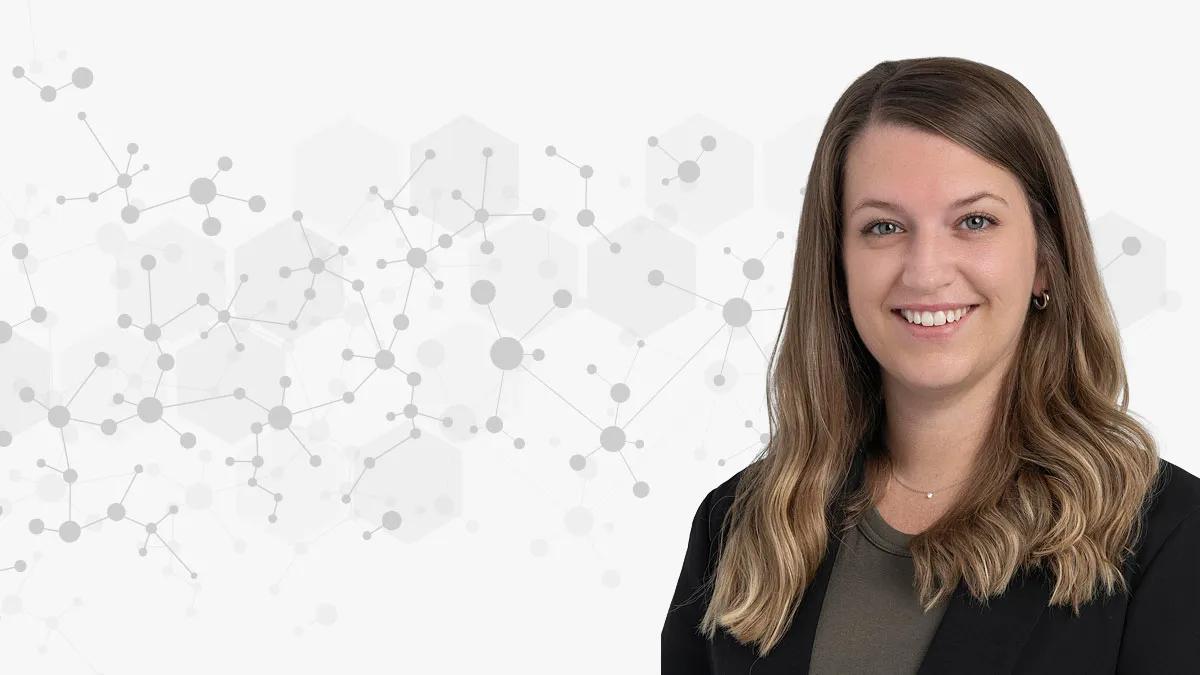
Behavioral Health Protocols for Suicidal Ideation
Brianne Markley, PhD, explains how screening tools, risk assessment and safety planning can help clinicians recognize and respond to suicidal ideation in patients with neurological conditions.
Advertisement
Cleveland Clinic is a non-profit academic medical center. Advertising on our site helps support our mission. We do not endorse non-Cleveland Clinic products or services. Policy
Recent Episodes
Transforming Epilepsy Diagnosis and Treatment Through AI-Enabled Infrastructure
Imad Najm, MD, discusses how AI-enabled infrastructure and advanced EEG analysis are transforming epilepsy diagnosis.
Delirium in the Hospital Setting: Recognition, Risks, and Management
Anna Shapiro Krew, MD, and Christopher Strayhan, BSN, RN, explain how multidisciplinary care and environmental design can help reduce deliri…
Lavender Rooms & the Future of Caregiver-Centered Design
Kristen Vargo, DNP, RN, NE-BC, explains how Cleveland Clinic's new Neurological Institute building is enhancing caregiver experience, patien…
Video content: This video is available to watch online.
View video online (https://cdnapisec.kaltura.com/p/2207941/sp/220794100/playManifest/entryId/1_r0478xkw/flavorId/1_5f3sgelj/format/url/protocol/https/a.mp4)
Transcript
Neuro Pathways Podcast Series
Advertisement
Cleveland Clinic is a non-profit academic medical center. Advertising on our site helps support our mission. We do not endorse non-Cleveland Clinic products or services. Policy
Release Date: September 15, 2026
Expiration Date: September 14, 2027
Estimated Time of Completion: 30 minutes
Behavioral Health Protocols for Suicidal Ideation
Brianne Markley, PhD
Description
Each podcast in the Neurological Institute series provides a brief, review of management strategies related to the topic.
Learning Objectives
- Review up to date and clinically pertinent topics related to neurological disease
- Discuss advances in the field of neurological diseases
- Describe options for the treatment and care of various neurological disease
Target Audience
Physicians and Advanced Practice providers in Family Practice, Internal Medicine & Subspecialties, Neurology, Nursing, Pediatrics, Psychology/Psychiatry, Radiology as well as Professors, Researchers, and Students.
Accreditation
In support of improving patient care, Cleveland Clinic Center for Continuing Education is jointly accredited by the Accreditation Council for Continuing Medical Education (ACCME), the Accreditation Council for Pharmacy Education (ACPE), and the American Nurses Credentialing Center (ANCC), to provide continuing education for the healthcare team.
CREDIT DESIGNATION
- American Medical Association (AMA)
Cleveland Clinic Center for Continuing Education designates this enduring material for a maximum of 0.50 AMA PRA Category 1 Credits™. Physicians should claim only the credit commensurate with the extent of their participation in the activity.
Participants claiming CME credit from this activity may submit the credit hours to the American Osteopathic Association for Category 2 credit. - American Nurses Credentialing Center (ANCC)
Cleveland Clinic Center for Continuing Education designates this enduring material for a maximum of 0.50 ANCC contact hours. - Certificate of Participation
A certificate of participation will be provided to other health care professionals for requesting credits in accordance with their professional boards and/or associations. - American Board of Surgery (ABS)
Successful completion of this CME activity enables the learner to earn credit toward the CME requirements of the American Board of Surgery’s Continuous Certification program. It is the CME activity provider's responsibility to submit learner completion information to ACCME for the purpose of granting ABS credit.
Advertisement
Credit will be reported within 30 days of claiming credit.
Podcast Series Director
Andreas Alexopoulos, MD, MPH
Epilepsy Center
Additional Planner/Reviewer
Ari Newman, BSN
Faculty
Brianne Markley, PhD
Multiple Sclerosis Center / Mellen Center
Host
Glen Stevens, DO, PhD
Cleveland Clinic Brain Tumor and Neuro-Oncology Center
Agenda
Behavioral Health Protocols for Suicidal Ideation
Brianne Markley, PhD
Disclosures
In accordance with the Standards for Integrity and Independence issued by the Accreditation Council for Continuing Medical Education (ACCME), The Cleveland Clinic Center for Continuing Education mitigates all relevant conflicts of interest to ensure CME activities are free of commercial bias.
The following faculty have indicated that they may have a relationship, which in the context of their presentation(s), could be perceived as a potential conflict of interest:
Glen Stevens, DO, PhD
| Company | Relationship |
|---|---|
| DynaMed | Consulting |
| Company | |
| DynaMed | |
| Relationship | |
| Consulting |
All other individuals have indicated no relationship which, in the context of their involvement, could be perceived as a potential conflict of interest.
CME Disclaimer
The information in this educational activity is provided for general medical education purposes only and is not meant to substitute for the independent medical judgment of a physician relative to diagnostic and treatment options of a specific patient's medical condition. The viewpoints expressed in this CME activity are those of the authors/faculty. They do not represent an endorsement by The Cleveland Clinic Foundation. In no event will The Cleveland Clinic Foundation be liable for any decision made or action taken in reliance upon the information provided through this CME activity.
HOW TO OBTAIN AMA PRA Category 1 Credits™, ANCC Contact Hours, OR CERTIFICATE OF PARTICIPATION:
Go to: Neuro Pathways Podcast September 15, 2026 to log into myCME and begin the activity evaluation and print your certificate If you need assistance, contact the CME office at myCME@ccf.org.
Copyright ©2026 The Cleveland Clinic Foundation. All Rights Reserved.
Introduction:
Neuro Pathways, a Cleveland Clinic podcast exploring the latest research discoveries and clinical advances in the fields of neurology, neurosurgery, neuro rehab, and psychiatry.
Dr. Glen Stevens, DO, PhD:
Behavioral health is an essential component of comprehensive neurological care. Understanding how to identify and respond to suicide risk is critical for clinicians across all specialties. In this episode of Neuro Pathways, we discuss behavioral health protocols for suicidal ideation, including particular approaches to risk assessment, screening tools, and strategies to help clinicians confidently and effectively respond when patients present with this risk. I'm your host, Glen Stevens, neurologist, neuro-oncologist in Cleveland Clinic's Neurological Institute. And joining me today is Dr. Brianne Markley. Dr. Markley is a psychologist in Cleveland Clinic's Neurological Institute's Mellen Center and Department of Psychiatry and Psychology. Brianne, welcome to Neuro Pathways. Let's start by having you introduce yourself to our listeners. Where did you train? And what do you do here at the Cleveland Clinic?
Advertisement
Dr. Brianne Markley, PhD:
Yeah, I went to Otterbein University for my undergrad and earned a bachelor's in psychology and a bachelor's in religion while I was there. And then I went to Kent State where I earned a master's in clinical mental health counseling. And then lastly, I obtained my PhD in counseling psychology from Cleveland State University. And at the Clinic, I'm a health psychologist. I work at the Mellen Center where I have an outpatient clinic. And then I also work on an inpatient consult service where I treat patients with a variety of neurological reasons who are admitted to the hospital.
Dr. Glen Stevens, DO, PhD:
Well, I'm glad to see that you finally made it out of the education process. And I'm sure your parents are happy that you found a job.
Dr. Brianne Markley, PhD:
Yes, we are all pleased. And really loving what I do, so it's paying off that way.
Dr. Glen Stevens, DO, PhD:
I was doing a little reading before our chit chat today, and you can tell me if these numbers are correct, but they're saying that just over 4% of the US population has some suicidal thoughts, which, if you look at the population of the US, that's a lot of people. And they were saying that three million people have some sort of a suicide plan. I don't know how dedicated that is or not, but that just seems astounding to me. And that 1.4 million people per year have a suicide attempt, which just seems astronomical numbers and very sad. Obviously a number of these patients, people are successful or unsuccessful, however you want to look at it, that it's the 10th leading cause of death in the United States. Pretty sad statement.
Advertisement
Dr. Brianne Markley, PhD:
I appreciate you looking into some of those numbers. And I think it just really speaks to the importance of this topic. And something that I really want to emphasize today, that risk is treatable and intervention is key to that. And so I think today we'll really get to talk more about what is that intervention? And how can we help these patients? Because there certainly is hope and help for that.
Dr. Glen Stevens, DO, PhD:
Yeah, and that's really the take home, isn't it? And that's what we want ourselves to understand, that's what we want other people to understand. List for me maybe some of the common neurologic conditions that you see more prevalence of suicidal ideation.
Dr. Brianne Markley, PhD:
Yeah. Well, I think risk assessment is important for any comprehensive care across all healthcare settings, but for patients with chronic neurological conditions, the risk of suicidal ideation and even attempts can increase from that of the general population. And so when we really take a look at the research and prevalence of risk for patients with neurologic conditions, we see increased risk for patients with epilepsy, multiple sclerosis, Parkinson's, stroke, TBI, and other neurodegenerative diagnoses.
Dr. Glen Stevens, DO, PhD:
Yeah, and it makes sense. I mean, if you have a chronic debilitating disorder that's sort of robbing you of you as time goes on, you would think it seems logical that people would develop mood-related issues associated with that.
Advertisement
Dr. Brianne Markley, PhD:
Sure. And yeah, I think that's part of the picture that makes sense, but I also think it's really important to think of suicide ideation and this risk assessment from a biopsychosocial context. And so happy to get into that a little bit if that would be helpful.
Dr. Glen Stevens, DO, PhD:
Yeah, give me some more. Yeah, give me some more.
Dr. Brianne Markley, PhD:
Okay. Okay. For example, I work with patients primarily with multiple sclerosis or MS and other autoimmune neurological disorders. Biologically, we are thinking about factors such as neuroinflammation and the impacts on neurotransmitters like dopamine and serotonin. We're also considering things like demyelination, lesion burden, and response to steroid-based treatments as relevant. And we also know that there's a higher prevalence of mood disorders in that patient population. Biologically, there is actually a lot going on that can contribute to increased prevalence of suicide ideation. Psychologically, we are treating the depression and anxiety that can co-occur with these diagnoses. And we're treating things like adjustment to the diagnosis, uncertainty of disease course, and then navigating possible changes in self-concept or what it means to have a chronic condition. And then lastly, and really importantly, we're also thinking about the social context, so managing physical symptoms, both visible and invisible and the impacts on social engagement. We also really want to help patients guard against this burden mentality, that because they have a chronic condition, they now all of a sudden are a burden to their loved ones or they can't engage as meaningfully as they used to.
Dr. Glen Stevens, DO, PhD:
I'm going to call you every time I feel down, okay? And you can lift me right back up there.
Dr. Brianne Markley, PhD:
I am a good person to call if you need some support with that. But really, I think viewing it right from the biopsychosocial model helps us understand risk in a more comprehensive way.
Dr. Glen Stevens, DO, PhD:
I've discussed before that my mother had multiple sclerosis on the podcast. And my mother's been deceased almost 30 years, and back when she was diagnosed, there weren't many options. And I have to admit, I was young, I was a teenager, and as a teenager, you're living your own life, so you don't really know. My perception, and of course was my mother, so she was the sweetest lady of all time, and I don't ever really recall mood-related disorders or problems, but as I get older and I get a little bit smarter, I suspect that I just was completely unaware of what was going on. I hope that's not the case, but these things become so prevalent, and she was quite disabled as time went on, so I'm sure there was a degree of that. But if we're not looking for it, it's easy not to find it, right?
Dr. Brianne Markley, PhD:
Yeah, and I think it can be a private experience if folks want to be extra careful not to share that or burden, if that's the mentality they have, their loved ones. And I think at the Mellen Center, I'm really proud of the teamwork we have there and the ways we can support patients from several different approaches. But we want folks to come to us with these concerns, or if they are struggling, we want to know about it and we want to help take care of them and learn how to communicate with their loved ones about this in a way that works.
Dr. Glen Stevens, DO, PhD:
We've already established that I'm not able to figure this out. When patients come to my clinic, what am I looking for in the patient other than they say, "I'm really depressed"? What types of things am I looking for, clues from their presentation?
Dr. Brianne Markley, PhD:
I would say anybody who's maybe a non-behavioral health provider who isn't super keen to this type of assessment, things that you should be looking for would be any report in change in social functioning. Doing less than you used to, withdrawing from social engagement, that can sometimes be a clue, maybe not towards total risk or suicidal ideation, but withdrawal and possible mood-related symptoms. We want to look out for comments about negative self-concept, "This disease has changed me so much. I don't know who I am anymore," statements like that. And again, really looking out for that burden mentality. We hear that language a lot of, "I just feel like a burden at this point," or, "I can't do what I used to do, and I feel like everybody's supporting me now." Those are careful statements to look out for and to just be curious about what does that mean to you and take it a step further.
Dr. Glen Stevens, DO, PhD:
Well, I appreciate that. And all very helpful. At the neuro-oncology clinics, for years we always did the PHQ-9, the patient health questionnaires. And my recollection is, I think question number nine maybe I think comes right out and asks, "Are you suicidal?"
Dr. Brianne Markley, PhD:
Yes.
Dr. Glen Stevens, DO, PhD:
And the way that we used to work was that if they scored over a certain score or they put down they were suicidal, that automatically triggered the social worker to come in and see them. And then the social worker, at least at the cancer center at that time, was the portal to the psychiatrist, so then the social worker would make a... Occasionally people would say, "Well, I was going really fast, and I just hit the wrong button. I'm perfectly fine. I didn't mean to say that." But then you have to decide, did they really not mean to say it? Or now they're going, "Oh my God, there's a fire drill. I don't want to get involved with it as it goes through." And I remember a case from quite a few years ago, long time ago, I saw a young guy, a brain tumor patient, and he scored over and hit, I think, that he was suicidal. And he ended up getting directly admitted to the psychiatric unit. And I distinctly remember he said to me, I think the next time I saw him, that he's never filling this stuff out again and he's never saying anything to anybody again because of what we did to him. I mean, he was very angry about it, that he got admitted. Thoughts about any of this?
Dr. Brianne Markley, PhD:
Yeah, that's a tricky thing for sure. And it's never the goal to work against a patient or have them receive treatment or care that they're not seeking. But at the end of the day, as healthcare providers, we do have an obligation to help keep folks safe.
Dr. Glen Stevens, DO, PhD:
Exactly.
Dr. Brianne Markley, PhD:
I do think there's a way to go about that where we can work very hard to collaborate with patients, explain that to them, why we think that potential hospitalization may be necessary and that we care about them and that that's why we want to keep them safe. I would say at the end of the day, in doing this work for the past decade or so, there have been many more patients who have told me, "Thank you. I needed that," or, "Thank you for hearing me in that time. It was really vulnerable." And so I would encourage fellow practitioners to collaborate with their patients in that moment the best you can. Try to elicit some shared decision-making if it comes to the point of hospitalization, but stand firmly in the notion that our goal and objective is to keep patients safe. And if hospitalization needs to be a part of that, hopefully there's some clarity on the other side from our patients of why, and maybe even a potential sense of gratitude, hopefully.
Dr. Glen Stevens, DO, PhD:
Yeah, and I would say as well the vast majority of patients in this situation, he's the only one I can ever think of that it went a negative way, but almost everybody, they come to a realization of where they really were and what they needed and are thankful for an intervention or those types of things. But there's always two sides to the coin, and if you do this enough and see enough people, you'll see some people on either side. You just have to be prepared that not everybody's going to be, "Oh yeah, great. Thank you very much. I'll be right over there."
Dr. Brianne Markley, PhD:
Sure. No, it's not a particularly joyous time. Obviously, it's a time of stress for these individuals. And so again, I think the best we can as providers working to mitigate that stress by working together and saying, "Hey, let's talk through this. This is what you would experience. Are you agreeable to this? If not, can we safety plan in a way that helps keep you out of the hospital? Do we both feel good about that?" I think there are options, depending on level of risk. It's not hospitalization or nothing. And I think nuanced providers can help figure out what is that maybe middle ground, if and as relevant.
Dr. Glen Stevens, DO, PhD:
Talk a little bit about the PHQ-9. Are you still using that? Is something else coming? Are we doing PHQ-9, second, third, fourth, fifth generation?
Dr. Brianne Markley, PhD:
The PHQ-9's a great resource for giving us this potential snapshot into depressive symptoms. And so you are correct in that there is a question on there, number nine, which will ask patients if they've had any thoughts that they would be better off dead or not being here. That question, if it's endorsed at a one, two, or three, really anything other than a zero should be prompting us for further conversation about, "What did you mean by that when you filled that out?" If initial risk is identified, then it's important to determine is this passive suicidal ideation? Is this more active suicidal ideation? Passive meaning thoughts of not being here, but no plan to act on that or intent to take that into your own hands. Active meaning I want to not be here to be dead, and I do have a plan or intent to act on that. Really parsing those things out is super important once the PHQ-9 gives us an indication of any level of risk.
Dr. Glen Stevens, DO, PhD:
Yeah, very helpful, very helpful. We obviously see a lot of patients, and on the inpatient probably more so than the outpatient. But we'll see patients that are a little encephalopathic or have cognitive impairment or their executive function's not working well. They may even have an aphasia. It gets a little complicated. A little tough to get the history sometimes. What do we do in those situations?
Dr. Brianne Markley, PhD:
Yeah, that's certainly a challenge. And I think we have a couple of options here to take an approach that works for each patient. One, if you're inpatient and you can take a little bit more time, if you have the flexibility of not running an outpatient schedule, I think really it's slowing down and trying to take time to utilize adaptive communication strategies with that patient, collaborate with collateral references, loved ones and providers if they're present, care providers if they're present, and if and as appropriate. I say this with a caveat in that collateral information can be utilized when a patient provides consent. And so if we're thinking about the outpatient experience, the patient themselves will be your primary source of information. But if we're talking about the inpatient population who may or may not be presenting with additional cognitive concerns or we need some supplemental support, then we work as a team to try to assess collateral for level of risk.
Dr. Glen Stevens, DO, PhD:
Talk to me a little bit about the consent issue with collateral.
Dr. Brianne Markley, PhD:
From an outpatient perspective, when somebody has capacity and is their own guardian on all of these things, the patient themselves gets to say, "Yes, you can speak with my loved one," or, "No, I'm not comfortable with that." And typically, from an outpatient perspective, we're really just working with the patient unless they have a caregiver present with them and they're comfortable with that person being present for the session. From an inpatient perspective, if we're working with folks who may be presenting with a higher level of impairment or less independence in report, it can be really tricky to tease out level of risk. And at that point, if there is a safety concern, we do have a due diligence to make sure that we're assessing collateral from loved ones or other providers if there's a concern for elevated risk.
Dr. Glen Stevens, DO, PhD:
I do think back on that patient I mentioned to you that got admitted, and I always think, did we escalate the care too much? Is it nobody wants to take the responsibility of saying, "Well, he said he was suicidal and you said he could go home," and then he did something on the way home? It becomes that defining moment that people hate crossing or stepping over the line and saying, "No, no, it's okay." How do we deal with that? How do we know when we're really overreacting, we're not? I mean, I guess we talk with the patient. If they allow us, we talk to the family to try and decide what's really going on. But it's difficult. I mean, we don't really know.
Dr. Brianne Markley, PhD:
Such an important point to highlight, and potentially a barrier to risk assessment, especially for providers who do not work explicitly in the behavioral medicine realm. And I want to normalize that assessing risk can be nerve-wracking for providers and patients alike. I think it's really important to just come right out and say that. It is not a comfortable thing for patients or providers typically because the stakes are high at times when we are assessing risk. And so this is a good point, I think, to introduce the Mellen Center SI, or suicidal ideation protocol that we just revamped as a multidisciplinary team at the Mellen Center. And really this protocol that we revised was created in a way that empowers our providers at the Mellen Center to know what to assess and how, and then to help them triage decision-making accordingly based on low, moderate, or high level of risk. And I think that this tool should be accessible to all of our providers so that they can similarly feel empowered to not under react or overreact and feel confident that they got that patient what they needed in that moment.
Dr. Glen Stevens, DO, PhD:
Well, certainly more tools would be very helpful. Is this something that should be or will be incorporated throughout the Neurological Institute?
Dr. Brianne Markley, PhD:
Yeah, this is the protocol that we use at the Mellen Center to assess risk with any of our patients. And any of our providers who are patient-facing have access to this, can use it, have utilized it, follow the protocol. More recently this year, I've gotten to do a bit more teaching on the protocol, too, to other colleagues in other departments and centers. And so I think we could certainly continue to benefit from making this protocol more enterprise-wide, and even thinking about what would it look like on our satellite locations where some of the procedures may be different or available resources might look different? But having a protocol in place, I think, is the first step to ensuring people feel confident in knowing what to do in these high-risk situations.
Dr. Glen Stevens, DO, PhD:
Are you doing a PHQ-9 and then using the second level? Or are you using this at the start?
Dr. Brianne Markley, PhD:
Yep, we do use the PHQ-9. And that gives us, again, that initial baseline or indicator if they endorse anything other than zero on question number nine. From there, we're using this protocol. I also want to make known to other listeners, at the Cleveland Clinic, we have the Columbia resource available to us. And so if you type in .CSSRS, which stands for Columbia Suicide Severity Rating Scale, it will auto-populate the Columbia screener. The Columbia is a very user-friendly question by question verbatim what to ask a patient if they're endorsing suicidal ideation. And it will even tell you, "If they answered yes to this question, go to the next question," or, "If they answered no, proceed accordingly." It really helps you stage level of risk for a patient, especially if it's not something you're naturally comfortable doing because of your expertise.
Dr. Glen Stevens, DO, PhD:
Well, that's helpful. I will follow up with our social worker and see what her understanding is of these. But again, this would be something that would've potentially eased some of my guilt. If it was available many years ago when I saw that patient, I could have went through one of these tools and then would have more confidence in yes or no, right?
Dr. Brianne Markley, PhD:
Correct. And then once you've staged the level of risk low, moderate, or high appropriately, we know how to respond. If somebody is at low risk, we can provide resources and discuss follow-up care. If somebody is at more moderate risk, we are teetering between are you able to discharge home safely with some safety planning and resources and follow-up care or are you teetering hospitalization because you're unable to safety plan, poorly connected to social support, have this history of attempts? That type of thing. If they're high risk, they need to seek additional support or potentially hospitalization.
Dr. Glen Stevens, DO, PhD:
People overusing drugs often sign a contract, "I won't do drugs," that type of thing. Does that type of thing exist with suicide, or no?
Dr. Brianne Markley, PhD:
That's a good question. It used to, and I'm sure in some circles still does. They were called no suicide contracts. And no suicide contracts actually have been found pretty ineffective in a lot of research on managing risk. And so it's an important thing. We don't want to ask our patients to contract not to complete suicide. Instead, we want to help our patients actively safety plan. If I'm feeling these things, what can I do instead? Who are my support people, my support resources? What is my follow-up intervention looking like? Safety planning is a much more effective approach to risk management than a no suicide contract.
Dr. Glen Stevens, DO, PhD:
Are there any shared medical appointments for suicidal patients? Or that's too personal a thing?
Dr. Brianne Markley, PhD:
No, another great question. I would say that the version of what you're thinking of would be our IOPs, or intensive outpatient programming at the clinic. And IOPs or PHPs, partial hospitalization programming, are a great place for people who may be experiencing chronic or more recent elevated suicidal ideation to connect with other people and professionals in a group setting, and honestly, just feel seen, feel heard to normalize, "Oh my gosh, other people have also though this way. I'm not alone in this really dark, deep time." PHP and IOP are amazing treatment options for patients who need a higher level of support but maybe aren't quite at the level of hospitalization.
Dr. Glen Stevens, DO, PhD:
So you know, sadly, often hear this phrase from the military, "Don't ask, don't tell." I think that's the phrase we never want to hear in the medical profession, right? We do want to ask and we do want patients to tell us.
Dr. Brianne Markley, PhD:
Absolutely. And I think one of the biggest barriers to helping keep people safe is if they feel there is this stigma around discussing mental health as a whole or potentially further suicidal ideation or any type of risk. And so if we, as providers, can create a sense of safety and trust for our patients, they are more likely to tell us these vulnerable things that they're experiencing, and then we get to work together. And what an honor and a privilege to be able to do that with patients in some of their hardest times.
Dr. Glen Stevens, DO, PhD:
Not everybody out there is going to be fortunate enough to have you with them, so if people out there are seeing patients that they feel that are a risk, where do they turn? What do they do? They may not have the same resources. What's somebody to do in a private practice?
Dr. Brianne Markley, PhD:
If you work in a private practice and you maybe don't have access to your behavioral health colleagues, I would still say it's important to know your resources around you, whether that's your local community health center that does have behavioral health supports or connecting with colleagues and hospital systems who know what it's like to work alongside social workers, counselors, psychologists, psychiatrists. Knowledge is power, so I think just having the notion of this is the type of support my patient may need. And if I work in a siloed industry, where are my community resources that I can link these people up with?
Dr. Glen Stevens, DO, PhD:
And of course, we're doing this virtually here, and I guess ever since COVID, people have gotten more used to doing things virtually, but I guess one of the good things on the psychiatric side of things is you can now reach people in deserts where they don't have access to anybody. They cannot physically go see somebody that they could go online and they could chat with somebody that could at least do a screening on them. I think that's really beneficial.
Dr. Brianne Markley, PhD:
Absolutely. Telehealth has improved our access in really great ways, and especially for folks who may not have a local community mental health center or access to behavioral health providers real close to them. Telehealth has been an incredible improvement to our reach and our access.
Dr. Glen Stevens, DO, PhD:
Time's starting to move along here, but not everybody's comfortable talking about these things. I'm a big advocate of forming a strong relationship with patients that I follow so that we can discuss things and have more difficult conversations, but it's difficult for a lot of physicians. How would I get more comfortable discussing this? Are there lines I should start with? Is there subject matter? How do I get better at it?
Dr. Brianne Markley, PhD:
Yeah, thank you for that question, because again, I think this is very practical and many people will probably relate with you on how do I manage the discomfort that I feel in this realm? And while we all have differing subspecialties within the NI, we all share the responsibility to protect the welfare of our patients. And so, I would encourage providers to think of it in that way, that this is another branch of protecting the welfare of my patient. And I would also remind providers the conversation doesn't need to feel comfortable. It doesn't have to be easy, it just has to be had. And so create that space where somebody feels willing to come to you. And then you don't have to have the finesse, hopefully, of a psychologist to manage these conversations, but your patients need to know they can trust you, they can come to you, and you will navigate it together, even if it feels a little clunky for both of you. What matters most is saying something to your patient like, "I care about you. Thank you for sharing that with me. I want to help make sure that you have what you need to be safe and to be well." And that's something I think any provider could get behind. When a patient trusts their provider, they're more likely to share with them vulnerable, hard truths. And if they trust you enough to bring something so vulnerable to you, then remind yourself you're already doing a lot of things right.
Dr. Glen Stevens, DO, PhD:
Excellent. Things that we haven't discussed that you would like to mention?
Dr. Brianne Markley, PhD:
I think a takeaway or something that I just really want to emphasize as we conclude today's episode is that I want providers to feel empowered, not only in knowing more about suicidal ideation, helping decrease the stigma and assessing for risk, but again, as we started today, Dr. Stevens, knowing that risk is treatable. There are built-in resources at the Cleveland Clinic. There are built-in team members who want to help support this initiative, and we can work together to make sure that our patients are taken care of all the way around.
Dr. Glen Stevens, DO, PhD:
Well, I appreciate your joining me today and sharing your expertise and appreciate all you do for our patients. And thank you very much.
Dr. Brianne Markley, PhD:
Thanks so much for having me. Likewise, it's been a joy to connect. And thank you for the work you do.
Closing:
This concludes this episode of Neuro Pathways. You can find additional podcast episodes on our website, clevelandclinic.org/neuropodcast, or subscribe to the podcast on iTunes, Google Play, Spotify, or wherever you get your podcasts. And don't forget, you can access real-time updates from experts in Cleveland Clinic's Neurological Institute on our Consult QD website. That's consultqd.clevelandclinic.org/neuro, or follow us on Twitter @CleClinicMD , all one word. And thank you for listening.
Recent Episodes
Transforming Epilepsy Diagnosis and Treatment Through AI-Enabled Infrastructure
Imad Najm, MD, discusses how AI-enabled infrastructure and advanced EEG analysis are transforming epilepsy diagnosis.
Delirium in the Hospital Setting: Recognition, Risks, and Management
Anna Shapiro Krew, MD, and Christopher Strayhan, BSN, RN, explain how multidisciplinary care and environmental design can help reduce deliri…
Lavender Rooms & the Future of Caregiver-Centered Design
Kristen Vargo, DNP, RN, NE-BC, explains how Cleveland Clinic's new Neurological Institute building is enhancing caregiver experience, patien…
Never miss a moment - subscribe now.
Listen to the Health Essentials Podcast on your favorite streaming platform.
Other Podcasts You May Love
Beyond Leadership
Hosts Jim Pae and Elizabeth Pugel escort you through a network of thought leaders, sharing world-cla…
Beyond the Pages: CCJM Podcast
Beyond the Pages: CCJM Podcast takes the listener more in-depth into Cleveland Clinic Journal of Med…
Butts & Guts
A Cleveland Clinic podcast exploring your digestive and surgical health from end to end. You’ll lear…
Cancer Advances
A Cleveland Clinic podcast for medical professionals exploring the latest innovative research and cl…