



Rethinking the Anatomy Educator Pipeline: A Competency-Based Fellowship
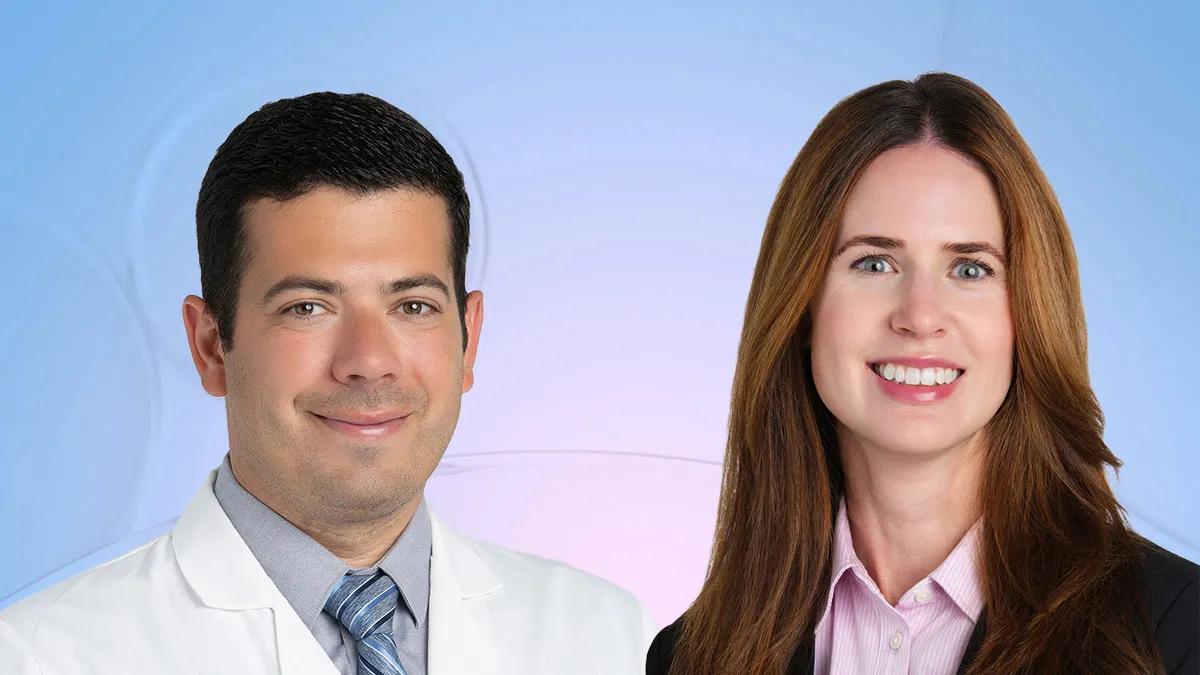
In this episode of MedEd Thread, we talk with Dr. William Albabish, Director of Anatomy, and Dr. Andrea Di Sebastiano, Associate Director of Anatomy at Cleveland Clinic Lerner College of Medicine, about a novel fellowship designed to prepare PhD scientists from adjacent fields for careers in anatomy education. They discuss how immersive donor-based dissection, teaching, curriculum development, educational technology and structured mentorship are helping address a growing shortage of anatomy educators. Tune in to learn how this competency-based approach is creating new pathways into anatomy education while preparing faculty for the evolving needs of medical learners.
Advertisement
Cleveland Clinic is a non-profit academic medical center. Advertising on our site helps support our mission. We do not endorse non-Cleveland Clinic products or services. Policy
Recent Episodes
Focused Cardiac Ultrasound Training: Building Competency Through a Multimodal Curriculum
In this episode of MedEd Thread, we talk with Dr. Zenab Laiq, cardiologist and cardiac imaging specialist at Cleveland Clinic's Akron Genera…
Launchpad to Nursing: Inspiring the Next Generation of Nurses
In this episode of MedEd Thread, we talk with Dr. Linda Gardner, Senior Director of Nursing Education and Professional Development at Clevel…
Book Club Series: Already Toast: Caregiving and Burnout in America by Kate Washington
In this episode of MedEd Thread, we talk with Loren Hackett, Medical Librarian at Cleveland Clinic Hillcrest Hospital, and Michelle Kraft, D…
Video content: This video is available to watch online.
View video online (https://cdnapisec.kaltura.com/p/2207941/sp/220794100/playManifest/entryId/1_gbmkfgti/flavorId/1_5f3sgelj/format/url/protocol/https/a.mp4)
Guests
Dr. William Albabish
Dr. Andrea Di Sebastiano
Transcript
Dr. James K. Stoller:
Hello, and welcome to MedEd Thread, a Cleveland Clinic education podcast that explores the latest innovations in medical education and amplifies the tremendous work of our educators across the enterprise.
Advertisement
Cleveland Clinic is a non-profit academic medical center. Advertising on our site helps support our mission. We do not endorse non-Cleveland Clinic products or services. Policy
Dr. Tony Tizzano:
Hello, welcome to today's episode of MedEd Thread, an education podcast exploring a novel one-year anatomical sciences fellowship designed to prepare PhD scientists without prior donor-based dissection experience for faculty roles in anatomy education. I'm your host, Dr. Tony Tizzano, director of student and learner health here at Cleveland Clinic in Cleveland, Ohio. Today, I'm very pleased to have with us Dr. William Albabish, Director of Anatomy at Cleveland Clinic's Lerner College of Medicine of Case Western Reserve University. William, welcome to today's podcast.
Dr. William Albabish:
Hi, Tony. Thank you for having us on your podcast.
Dr. Tony Tizzano:
Our pleasure. Also joining us is Dr. Di Sebastiano from the Lerner College of Medicine. Andrea, thank you for coming.
Dr. Andrea Di Sebastiano:
Hi, Tony. Thanks for having me as well.
Dr. Tony Tizzano:
To get us started, would each of you please tell us a little bit about yourselves, your educational backgrounds, what brought you to Cleveland, and your respective roles within the Cleveland Clinic Health System?
Dr. William Albabish:
Absolutely. I'm a classically trained anatomist and educator. Specifically, I completed both my master's and PhD at the University of Guelph in Canada, where my work focused on the study of human anatomy and modernizing how we translate anatomical knowledge. So I learned anatomy, teaching, and how to shovel snow with proper biomechanics. That background really shaped my niche, which has become bridging traditional anatomical education with modern technological innovations. Here at Cleveland Clinic, I direct the anatomy and body donation programs, and my role is to support anatomy education across the Institute with a focus on our CCLCM medical students, as well as residents, fellow staff, innovations, and a myriad of other clinical programs. What brought me to Cleveland was the opportunity to help build a modern clinically integrated anatomy program. You see, anatomy education today is not just about knowing structures. It's about connecting anatomy to clinical reasoning, procedural skills, imaging, surgery, and emerging tools like virtual reality, AR, augmented reality.
Advertisement
And that is what drives me, the notion of combining the timeless value of donor-based education with cutting-edge tools. For me, the goal is not technology for technology's sake, it's about making anatomy more relevant, improving how we train learners and healthcare practitioners, and ultimately improving how patients are cared for.
Dr. Tony Tizzano:
Fabulous. Andrea, how about you?
Dr. Andrea Di Sebastiano:
So a little about me. I am also a fellow Canadian. I did my undergraduate degree in physiology, and I also did my PhD in neurobiology at Western University, which is in London, Ontario, Canada. And I initially followed this up with a traditional academic path. I started a postdoctoral fellowship, and I had the goal of eventually running my own research lab. While I was doing my graduate, as well as my postdoctoral training, I was always drawn to teaching. I worked as an anatomy teaching assistant and really enjoyed the process of helping students learn and retain anatomy. However, my career took a bit of a unexpected turn. My husband started medical training, and we ended up moving several times as he was training to become a neurosurgeon. And after having our two daughters, I actually took about three years away from academia, and really at that time, I honestly wasn't too sure where my career was going to end up, or was it over, and what was it gonna look like moving forward?
I ended up returning to the workforce, and I started teaching anatomy at a small community college in Michigan. I was an adjunct instructor, and I was using models and pro sections to teach anatomy to these students. But shortly afterwards, my husband's job brought us here to Cleveland, and I started exploring other opportunities, which led me to this anatomy fellowship here at Cleveland Clinic. And we'll get into this, but now today, I am the Associate Director of Anatomy here at the Cleveland Clinic Lerner College of Medicine. I work very closely with William, helping to design and deliver our anatomical curriculum to the medical students. I participate in educational scholarship and integrate all the new technologies, uh, into our program. So it's very exciting.
Dr. Tony Tizzano:
Sounds wonderful. You know, serendipity is a wonderful thing. So in today's segment, we'll explore a novel competency-based fellowship for transitioning PhD scientists from adjacent fields into anatomy education to meet a growing demand. William, give us some sense of today's topic by framing it for our listeners and the impetus for this important pipeline program.
Dr. William Albabish:
Absolutely, Tony. The impetus for this fellowship came from a very real workforce problem. We needed a second anatomist here at Cleveland Clinic, but the traditional applicant pool was extremely limited. And that's not unique to us. It reflects a broader national and even dare I say, international challenge in anatomy education. You see, medical school enrollment has grown, and the need for anatomy educators remains strong, stronger than ever. At the same time, the number of doctoral programs and graduates specifically trained in human anatomy has declined dramatically. In fact, there's a study out of the US that really puts this into perspective. At one point, there was more than 160 anatomy PhDs that were being awarded in a year. By 2017, that number has fallen down into single digits. So the challenge is pretty clear. Demand for anatomy educators is going up while traditional training pipeline has become much, much smaller.
Advertisement
The other issue is the traditional pathways often recruit people who already know what they wanna do to become anatomists. But there's a large group of PhD scientists in adjacent fields, such as neuroscience, physiology, biomedical sciences, and related discipline who may have the intellectual foundation, teaching interests, and scientific maturity to become outstanding anatomy educators. And the gap is not necessarily talent, the gap is structured training. That's where this fellowship comes in. The idea was to create a competency-based mentored pathway that could take a PhD scientist from an adjacent discipline and provide immersive training in donor-based dissection, teaching, curriculum development, educational technology, and scholarship. In other words, we were not trying to lower the bar. We were trying to create a clear pathway to help the right person reach it.
Dr. Tony Tizzano:
Thank you for that, William. So Andrea, you know, you are a PhD-trained neurobiologist and are essentially the subject for this work, being the inaugural fellow for this very intriguing and novel approach. You know, what made you a desirable candidate?
Dr. Andrea Di Sebastiano:
Well, I think what made me a good fit was not only did I bring a strong science background, but I really was genuinely interested in education. And I think that came through when I came from my interview, was just how passionate about education I was in general. I wasn't just interested in teaching the anatomy. Obviously, that was a huge drawing point. But I was really interested in how our students learn, how we can design better learning experiences, and how we can use new technologies to support anatomy education and education in general. I did also come into this fellowship knowing that I did not have every skill. I didn't have experience teaching medical students. All of my teaching had been primarily at the undergraduate and community college level, and I knew that I had this very limited dissection experience. I don't think though that they were looking for someone who had it all figured out, and the whole point of that fellowship was to help me develop those competencies, and that was really appealing to me.
Advertisement
I was really excited to learn. I was open to feedback, and I had a willingness to work hard, which is essential in any of these types of programs. During this fellowship, I really gave me this opportunity not only to grow as an educator, which is something I have been passionate about for a very long time, but it also helped shape this fellowship, and it gave me the opportunity to shape something that could be usable for future trainees in this program. If I do look back, I think, you know, my curiosity, my adaptability, my willingness to embrace something that was new, something that may have been unfamiliar, that was just as important as my scientific and academic background in this process.
Dr. Tony Tizzano:
Thank you very much. So, William, you know, having gone through anatomy training in medical school and, and thinking of the complexity to learn it, what were some of the components of this immersive program that helped streamline training people in a very complex process?
Dr. William Albabish:
That's a very loaded question, Tony. And we actually have a paper coming out that really delves into detail about that, but to summarize, I would say we designed the fellowship to be immersive, and that's key. Immersive and practical and competency-based. It wasn't just an observational fellowship. So from the beginning, the goal was to progressively develop Andrea into someone who could function confidently as an anatomy educator in a real medical education environment. I would say there were five major components to this. First was immersive donor-based dissection training and self-directed anatomical study. That was essential because anatomy education requires more than conceptual knowledge. It requires spatial understanding, tissue handling, dissection judgment and skills, and the ability to connect with seen in the lab to what's learned and to understand it clinically. The second was teaching. Andrea was involved in first and second year medical education, both in the lab and in the classroom.
Advertisement
That repeated exposure was important because it allowed her to work with learners, respond to questions, address misconceptions, and develop different teaching approaches. The third aspect was curriculum development. Andrea contributed to refining educational materials, thinking through learning objectives, and helping align anatomy content with the needs of the curriculum. The fourth was technology integration. As I mentioned, we're really driven here with technological innovations. So we wanted this fellowship to reflect where anatomy education is going, not where it has been. We want it to be innovative. So Andrea participated in the creation and development of virtual and augmented reality tools and helped bring those tools into the teaching sessions and even further into research. Finally, everything was tracked through a structured competency-based framework. We evaluated growth across several domains, and some of these domains were donor-based dissection and psychomotor competency, teaching effectiveness, cognitive and conceptual mastery, professional engagement, and technological integration and scholarship.
And we developed this benchmark where we basically said we have a composite score, and that if you score 80 out of 100, it supports your transition into a faculty role. Andrea exceeded that benchmark, which was important because it showed that this was not just a good educational experience. It was a measurable pathway towards faculty readiness.
Dr. Tony Tizzano:
You know, William, it strikes me that it was probably beneficial to have Andrea learning this and also working on the curriculum for people who are trying to learn it. So she was immersed in the very issue of having to assimilate all this information and help to tweak that curriculum so that it would best benefit students. It just sounds like that would have been a positive. So Andrea, this all sounds pretty intense. How easily do you embrace the curriculum and what did you find most challenging? And how do you think you came out at the end?
Dr. Andrea Di Sebastiano:
I think intense is the right word to describe it. The program was incredibly immersive, incredibly challenging, and very fast-paced. I mentioned one of the biggest challenges for me coming into the fellowship was that I had a strong foundation in anatomy, but did not have that extensive dissection experience. With dissection, there's a very steep learning curve. It's not just about knowing the anatomy. There is a huge technical aspect to it as well. I needed confidence in my skills. I needed an ability to recognize these variations and adapt as I went. Over the course of the fellowship though, I had the opportunity to build those skills through ample hands-on practice, great mentorship and instruction from William. And as you mentioned, lots of teaching. We combined the dissection time with the teaching time. So I would dissect a certain area for our students, and then that week I would teach it to our students.
So this kind of cohesive dissection and teaching relationship really helped me learn the material. It was really, really rewarding to see how I grew over time, how much easier the technical skills of dissection came. Although the learning curve was steep as I jumped off on it, I began to become more skilled much more quickly. Basically, with those competency assessments, which William mentioned, I progressed pretty quickly from demonstrating basically fewer than half of the required dissection skills when I started to a full competency by the end, which was really exciting to see. At the same time as I was learning all these dissections, I was translating this to my effective teaching. When you are an anatomy educator, it's not just knowing the material. There is a lot of knowledge base in anatomy. You have to have a strong knowledge, but it's also about helping the students with their skills, helping them work through dissection, think through these processes, and connect what they're seeing in the lab to their clinical practice, and also make them more confident in their own knowledge.
It was really incredibly rewarding as I was teaching to see this reflected in positive teaching feedback from our students as I went through the fellowship. So I was really excited to see that. Talking challenges, it was very challenging, but it really did give me confidence. I don't know that I'd even be sitting here doing this podcast with this amount of confidence had I not gone through this experience. It really shows me a lot of these skills are translatable, and a lot of skills can be learned with the right mentorship and a lot of deliberate practice and a willingness to step outside my comfort zone. So overall, I'd say it went well. And where did I end up? I ended up feeling prepared to combine our dissection-based anatomy with imaging, virtual reality, emerging technologies, and innovative teaching to overall create really meaningful learning experiences for our students.
So very happy with how this all turned out.
Dr. Tony Tizzano:
Well, I would say so. I, I am very impressed. I must say that during my education, I had the great benefit of having two anatomy PhD students with me at our table. And so they had to do things at a much higher level of dissection and drawing and so on and so forth. And that was just that one course. And you've put this all together in a year. I think it gives a sense of meaning to the words baptism by fire. And you came out doing very, very well. Well, William, what are some of your impressions around the feasibility of this same approach and the ease with which it can be adopted by other institutions?
Dr. William Albabish:
Yeah. I would say my impression is that this model is very feasible, but, and this is a very big but is it has to be intentional. It cannot simply be come spend a year in the lab and let's see what happens. The structure really matters. And it does take a lot of effort into having it structured and planned ahead of time. The strengths of the model are the clear competencies, objective tracking, repeated feedback, and targeted mentorship. Those elements allowed Andrea to grow quickly in those areas that are difficult to develop without immersion, especially donor-based dissection training, teaching confidence, and integration of technology into anacne education. I think the model is scalable because many institutions are facing the same problem. They need anacne educators, but the traditional pipeline's not producing enough candidates. A fellowship like this gives programs a way to identify talented PhD scientists from related disciplines and train them in a focused, measurable way.
That said, the exact model would need to be adopted to each institution respectively. Programs that use different donor preparation model, have different maybe curricular structure or have less access to immersive donor-based learning would need to modify the experience accordingly. But the overall framework with the competency-based training, mentorship, progressive responsibility, and objective assessment is something that could be translated elsewhere with ease. The key point is this is not a shortcut. It's a structured bridge.
Dr. Tony Tizzano:
So that said, do you have to have an enterprise such as the Cleveland Clinic with its depth and breadth to be able to accomplish this? Or can a smaller institution manage such a program?
Dr. Andrea Di Sebastiano:
I would say that Cleveland Clinic, while it does provide a lot of advantages with its size, smaller institutions can absolutely have one of these types of fellowships. It's really gonna depend on the resources in their anatomy lab in particular. There's going to be obviously the need for a trained mentor, the willingness of that mentor to take on a fellow in this very immersive and intense training program. There's also gonna be the constraints of the donors and the dissection time within the lab. But if a program has a strong anatomy lab and space for these fellows to come and practice their dissection skills, as long as there is opportunity for anatomy teaching, this whole immersive experience can go together. It will just require a little bit of creativity. The program might have to be extended if there's not as much of this intensive teaching, but I do think it's possible at other institutions.
Dr. Tony Tizzano:
Yeah. I mean, we bring to the table every imaginable surgical fellowship. And so you've got experts in all these areas coming in and practicing. I got to spend just a short time in William and your lab and, and I was astonished at the number of people working and the amount of information that is derived from a single donor. It's not just a one and walk away. It, it's used over and over and over again by so many specialties. So when you think of the challenges that this model provides, what might some of those be? If I was ready as a director wanting to embark on this, what would I have to think about?
Dr. William Albabish:
Yeah. There are definitely challenges to a model like this. The first is that this was a single institution, single fellow experience, so we have to be careful about generalizing too broadly. Andrea was an excellent inaugural fellow and her motivation, work ethics, and adaptability were major contributors to the success of the program. The second challenge is the model depends on access, immersive donor-based learning. And just like you were saying, we do offer a myriad of workshops in our lab and you do get all sorts of exposure with different fellowships and residency programs. And so you need to be able to provide your fellow repeated teaching opportunities, close mentorship, and curricular alignment are not equally available at every institution. Another important limitation is mentor bandwidth. A fellowship like this requires regular feedback. Calibration and investment from faculty. It's not passive training. You need a clear structure, clear expectation in faculty who are committed to developing the fellow over time.
So I think the model is promising, but it needs the right environment, the right candidate, and the right support structure.
Dr. Andrea Di Sebastiano:
I would say from the fellow perspective, as I mentioned, that learning curve was very, very steep. Coming from my PhD background, it meant I was learning a lot of things at the same time. I was, as we mentioned, developing dissection skills, building spatial understanding of an anatomy, learning to teach medical students, designing curriculum, integrating technology, and trying to find my identity as an anatomy educator. Particularly early on, it felt like there was a lot happening all at once. I'm learning the anatomy, learning how to teach it, learning how to manage a lab and responding to students in real time. But I do think that the intensity is also what made the fellowship so valuable because it had this immersive experience, because I had such strong mentorship and support. I was able to grow quickly and build the confidence over time. I do think the biggest thing is that this model does require someone who is willing to have this willingness to be a lifelong learner.
You have to be comfortable that you don't know everything on day one, and you have to be willing to work hard and keep developing the skills. So the candidate for this has to have those qualities, and I think that's really important.
Dr. Tony Tizzano:
Yeah, I think we've all gotten a sense of that. Well, I must say that I think it speaks a great deal about the quality of this program having put this together and executing it. It also says a lot about you, Andrea. And I'm wondering, William, how many Andreas are there out there short of cloning someone? How easy is it gonna be to find someone who can pull this off in a year? I just, I'm so impressed.
Dr. William Albabish:
That's a great point. I mean, we definitely got lucky here, and Andrea's been phenomenal, not only at a professional capacity, but even her demeanor, how well she gets along with everyone, the students. That's the big factor here, is you definitely need someone that is very well-rounded. And education is education. You put the time into it, you will learn the content, but personality really matters. Being a team player really, really matters for success here.
Dr. Tony Tizzano:
Yeah. And just because we're an MD or a PhD doesn't automatically qualify us as teachers. There's a lot to education, and I think that's one of the strong suits of Cleveland Clinic is there are so many offerings in terms of building your educational skills. So what do you think lies on the horizon for these competency-based fellowships of this and similar nature?
Dr. William Albabish:
Yeah. I think the next step is broader implementation and refinement. If similar fellowships are developed at other institutions, we can collaborate. We can start to compare outcomes, identify which competencies matter the most, and refine benchmarks for faculty readiness. There's also a real opportunity here to build a more resource-efficient anatomy educator pipeline. I've mentioned before, we have such a shortage in anatomists that right now, anatomists are in truly a high demand. And instead of waiting for the traditional pool of anatomy-trained PhDs to grow, which may not happen quickly, we can intentionally recruit talented scientists from adjacent fields and provide the structured training they need to succeed. Long-term, I think this kind of model could help stabilize the anatomy educator workforce while also bringing new perspectives into the field.
Dr. Andrea Di Sebastiano:
One of the things that makes this model very exciting is it's gonna open the doors to people who may have not originally seen themselves as anatomists. There are lots of talented PhD scientists in lots of different fields, neuroscience, physiology, biomedical sciences. They have these strong scientific foundations. They have a passion for teaching. And maybe they don't want that traditional R01 bench work lab. They may be kind of wondering what they should do, and this might be the right opportunity for them. They might just need that structured pathway to transition to anatomy education. So really, with the right mentorship competency framework, someone from an adjacent field, as we said, can successfully develop into an anatomy educator. And it's important because anatomy education is evolving. We need a deep anatomical knowledge to teach our students that we need this appreciation for donor-based learning, but we also need skills in curriculum design, clinical integration, technology, assessment, educational scholarship.
It's really multifaceted. And I think somebody with a PhD can learn all of these things and can go into these types of programs to become a successful educator. And it's really gonna help us address the shortage that our field is facing.
Dr. Tony Tizzano:
Perfect. Well, I hope that among our listeners, someone either knows someone or someone is listening. We've sparked some interest because it would be great to get a call and say, "Gee, how can I approach something like this?" I think it's just fabulous. What do you think lies beneath the shortage? Why aren't more people going into formal anatomy curricula? PhDs like you did?
Dr. Andrea Di Sebastiano:
They're not offering them at the same degree as they used to. That's one of the biggest factors is that there are actually fewer doctoral programs granting these degrees in anatomy. And so they're not recruiting as many people to these types of programs. And so the ways to get into a traditional anatomy job, that pathway has been stunted by the lack of the programs. And so something like this to innovate, to find people to teach anatomy are necessary because we just don't have as many programs anymore.
Dr. Tony Tizzano:
Yeah. And I would think the path that you took where, gee, I'm a neurobiologist and, you know, I've learned all of this. Now you're gonna go look at the anatomy and you understand how it's going to be applied to the neurobiological framework that you've already mastered. I think that almost brings a new angle and perspective to being a, an effective teacher. You know, it's another dimension. Well, for both of you, is there anything that I did not ask that you feel is important for our listeners to know?
Dr. William Albabish:
Yeah, I would say and mimic what Andrea had just mentioned, and that's one important point is anatomy education is evolving. The field still depends on deep anatomical knowledge and donor-based learning, as well as the need to understand curricular design, clinical integration, et cetera. But also, it's important to be comfortable with technology, virtual reality, augmented reality, AI. There's a lot happening right now. So when we think about the future of anatomy faculty, we should not limit ourselves only to people who followed one traditional path. There are excellent candidates in adjacent fields who may not yet see themselves as anatomists, but with the right mentorship and structure, they can become exceptional anatomy educators. And the goal of this fellowship was to create that bridge, and Andrea's success shows that that pathway is possible.
Dr. Tony Tizzano:
Thank you, Andrea. Any thoughts?
Dr. Andrea Di Sebastiano:
One thing I do wanna add, couple things I wanna add, actually. First of all, we have started sharing this model with a broader community, not only through this podcast, but through our broader anatomy community. We presented this work at the American Association for Anatomy Annual Meeting. And we have also submitted the work for a publication in anatomical sciences education. So look for that, hopefully coming out fairly soon. And the last thing, I do wanna end kind of on a personal note. I think I would want people listening to this to take away, to be open to opportunities. They're gonna push you outside of your comfort zone. As I mentioned before, I had taken several years away from my career before exploring this opportunity while I was raising my young children. And there was a point where I honestly kind of wondered, "Is my academic career over?
Or am I just not gonna pursue this anymore?" And looking back, it really wasn't over. It had just started to evolve. And when this opportunity came along, I was definitely intimidated. I had moments where I wondered, "Am I capable? Can I do this?" Especially stepping into this dissection world. But one thing I think we can all know is that growth rarely happens when you're inside your comfort zone. And I was challenged in this fellowship in many ways that I didn't expect. And it also kinda gave me a reminder that our careers are not necessarily always linear. Something that feels like a detour may take you exactly where you need to end up. And for me, this experience showed me my career wasn't ending. All these skills that I had gained my PhD allowed it to evolve into something more meaningful. And just last, I really wanna thank William.
I think it's been clear he was my mentor through this process. Thank you for the experience. The mentorship has all turned out better than I could've expected. And I'm really excited to see not only where my career goes, his career goes, but where this fellowship can take us in the future.
Dr. Tony Tizzano:
Having gotten to know you both, all I can say is that we're lucky. And as, as a mentor, I tell my mentees, if a door opens just a crack, jam your foot in that crack and worry about how and if you can do it later, you won't regret it. And I think that's what you've done. Well, thank you both so much, William and Andrea. This is a wonderfully insightful and inspiring podcast. To our listeners, if you'd like to suggest an educational topic to us or comment on an episode, please email us at education@ccf.org. Thank you very much for joining, and we look forward to seeing you on our next podcast. Have a wonderful day.
Dr. James K. Stoller:
This concludes this episode of MedEd Thread, a Cleveland Clinic Education podcast. Be sure to subscribe to hear new episodes via iTunes, Google Play, Stitcher, Spotify, or wherever you get your podcasts. Until next time, thanks for listening to MedEd Thread, and please join us again soon.
Recent Episodes
Focused Cardiac Ultrasound Training: Building Competency Through a Multimodal Curriculum
In this episode of MedEd Thread, we talk with Dr. Zenab Laiq, cardiologist and cardiac imaging specialist at Cleveland Clinic's Akron Genera…
Launchpad to Nursing: Inspiring the Next Generation of Nurses
In this episode of MedEd Thread, we talk with Dr. Linda Gardner, Senior Director of Nursing Education and Professional Development at Clevel…
Book Club Series: Already Toast: Caregiving and Burnout in America by Kate Washington
In this episode of MedEd Thread, we talk with Loren Hackett, Medical Librarian at Cleveland Clinic Hillcrest Hospital, and Michelle Kraft, D…
Never miss a moment - subscribe now.
Listen to the Health Essentials Podcast on your favorite streaming platform.
Other Podcasts You May Love
Beyond Leadership
Hosts Jim Pae and Elizabeth Pugel escort you through a network of thought leaders, sharing world-cla…
Health Essentials
Tune in for practical health advice from Cleveland Clinic experts. What's really the healthiest diet…
Studies in Empathy
Join Cleveland Clinic Patient Experience leaders and a group of guests with a wide range of experien…
The Medicine Grand Rounders
A Cleveland Clinic podcast for medical professionals exploring important and high impact clinical qu…