



Book Club Series: Already Toast: Caregiving and Burnout in America by Kate Washington
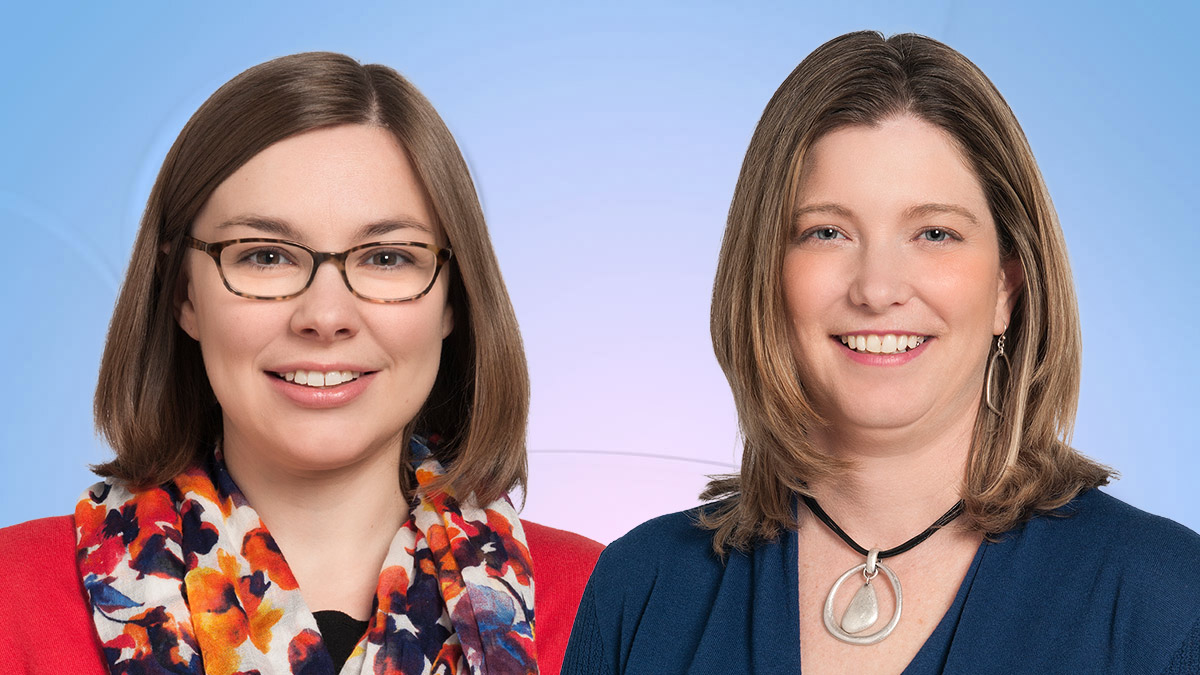
In this episode of MedEd Thread, we talk with Loren Hackett, Medical Librarian at Cleveland Clinic Hillcrest Hospital, and Michelle Kraft, Director of Library Services for the Cleveland Clinic Health System, to discuss Already Toast: Caregiving and Burnout in America by Kate Washington. Through the Hillcrest Book Club, they explore the emotional toll of caregiving, the challenges faced by families navigating complex healthcare needs and the importance of empathy, communication and support for caregivers. The discussion highlights how literature can deepen understanding of burnout and inspire more compassionate, patient- and family-centered care. Tune in to learn how storytelling can help healthcare professionals better understand the caregiver experience.
Advertisement
Cleveland Clinic is a non-profit academic medical center. Advertising on our site helps support our mission. We do not endorse non-Cleveland Clinic products or services. Policy
Recent Episodes
Focused Cardiac Ultrasound Training: Building Competency Through a Multimodal Curriculum
In this episode of MedEd Thread, we talk with Dr. Zenab Laiq, cardiologist and cardiac imaging specialist at Cleveland Clinic's Akron Genera…
Launchpad to Nursing: Inspiring the Next Generation of Nurses
In this episode of MedEd Thread, we talk with Dr. Linda Gardner, Senior Director of Nursing Education and Professional Development at Clevel…
Fiction-Based Book Clubs: Building Empathy Through Storytelling
In this episode of MedEd Thread, we speak with Loren Hackett, Medical Librarian at Cleveland Clinic Hillcrest Hospital, and Michelle Kraft,…
Video content: This video is available to watch online.
View video online (https://cdnapisec.kaltura.com/p/2207941/sp/220794100/playManifest/entryId/1_ayeeowmu/flavorId/1_5f3sgelj/format/url/protocol/https/a.mp4)
Transcript
Dr. James K. Stoller, MD, MS:
Hello, and welcome to MedEd Thread, a Cleveland Clinic education podcast that explores the latest innovations in medical education and amplifies the tremendous work of our educators across the enterprise.
Advertisement
Cleveland Clinic is a non-profit academic medical center. Advertising on our site helps support our mission. We do not endorse non-Cleveland Clinic products or services. Policy
Dr. Tony Tizzano, MD:
Hello, welcome to today's episode of MedEd Thread, an education podcast recapping the Hillcrest Book Club's review of Already Toast: Caregiving and Burnout in America by Kate Washington, and this will be done from an educational perspective. I'm your host, Dr. Tony Tizzano, Director of Student and Learner Health here at Cleveland Clinic in Cleveland, Ohio. Today, I'm very pleased to have Loren Hackett, medical librarian at Cleveland Clinic's Hillcrest Hospital here to join us. Loren, welcome to today's podcast.
Loren Hackett:
Oh, thanks for having me excited to be here.
Dr. Tony Tizzano, MD:
Also with us is Michelle Kraft, Director of Library Services for the Cleveland Clinic Health System. Michelle, thank you for joining us today.
Michelle Kraft, MLS:
Thank you. I'm happy to be here too.
Dr. Tony Tizzano, MD:
So both of you, to get us started, would you please tell us a bit more about yourselves, your educational backgrounds, what brought you to Cleveland, and your respective roles within the Cleveland Clinic Health System?
Michelle Kraft, MLS:
This is Michelle. And to get started, I've been a medical librarian for about 28, 29 years with Cleveland Clinic. I've progressed from being the entry level librarian all the way up to now the director of the Cleveland Clinic Health System, overseeing the library services and resources for the Cleveland Clinic Health System in the United States and working with great people like Loren.
Advertisement
Loren Hackett:
That's nice for you to say, Michelle. I also enjoy working with you, so I'm excited to be here to talk today. I've been at the clinic since late 2016, and I've done a little bit of everything at main campus. I did interlibrary loan and education, and now I'm running our small outpost at Hillcrest Hospital, doing all the librarian things out there, including running a book club. So that's what brings us here today.
Dr. Tony Tizzano, MD:
And I will point out to our listeners, you know, our literature is the backbone of our profession. And librarians are the custodians of that work. So we thank you both for the great work you do. So in today's segment, we'll recap Hillcrest Book Club's summary of the fiction-based title as an educational tool by promoting critical thinking, fostering a love of literature, and improving social skills through collaborative discussion. Also, these have become an engaging way for enhancing empathy, reducing physician burnout, and fostering narrative medicine skills. So with that in mind, Loren, could you please provide our listeners with a distilled summary of Already Toast, its author, and any relevant content for today's discussion?
Loren Hackett:
Sure. So Already Toast was published in 2021. It was written by Kate Washington, who is a journalist. And Washington and her husband were about 40 years old, raising two daughters when her husband was diagnosed with lymphoma. Washington then embarked on a caregiving stint that drained her physically, mentally, financially, and emotionally. She describes a never-ending cycle of soul-sucking experiences. She was dismissed by doctors. She felt she lost her privacy in her home as it became focused on basically becoming a care facility for her husband and all of his complex medical needs. And she talks about how she resented her ever-increasing responsibilities. And most importantly, the unquestioning assumption from those around her that she would take care of every single one of these tasks. And so what she did was she took this experience and because she was a journalist, dug into the widespread challenges faced by unpaid caregivers across the country who are juggling the medical care, emotional support, household management, bill paying, parenting, and then of course, their own self-care tasks on top of that.
So basically what we have here is the memoir she wrote about her personal experience, and then these very deep dive sections of the book that talk about the facts and figures around what really goes into being a caregiver for a chronically ill person in the United States today.
Dr. Tony Tizzano, MD:
And I have to add that, you know, I participated in this book club episode, and there were several of us there. And if there was ever a time when I felt that each of us brought to the table our own personal experience of which each of us had something where we were caring for a parent or a loved one, what have you, this was almost cathartic. It was really a very powerful experience. So Michelle, why was this particular title selected? And what is the intent of its author?
Michelle Kraft, MLS:
Well, I agree. It was a very cathartic experience. And we chose Already Toast because it really puts burnout, not just at the individual issue, but as a system-level problem front and center. The author is very intentional in showing how the healthcare system itself contributes to exhaustion rather than framing it as something providers just need to do better or manage better. So the goal of the book and why I think it works so well for the discussion is also that it pushes the readers and the people discussing in the book club to think beyond personal resilience and start questioning the structures and the expectations that shape their daily work. In other words, you know, not telling people, “Oh, you just need to suck it up and manage better and, oh, take care of yourself. Go get...”
Advertisement
Loren Hackett:
A massage.
Michelle Kraft, MLS:
Yeah. Those kind of things. There's more involved than that.
Dr. Tony Tizzano, MD:
A massage with a time that you don't have.
Michelle Kraft, MLS:
Right. Exactly.
Dr. Tony Tizzano, MD:
It's very easy for us as professionals to say, “This is what you should do,” but we never consider what can the family do? What can that loved one do? What's the environment? It's really hard to understand just the depth and breadth of what they're facing. So Loren, reflecting on what Michelle just said, what are some takeaways from the book club's discussion?
Loren Hackett:
So I think first and foremost, as you mentioned earlier, it was very cathartic for everyone who came to the book club to bring their caregiving experiences and relate them to the author's, both her experience as well as the journalistic pieces that she brought. You know, it was, yes, this fact about how many caregivers experience X, Y, Z, that also happened to me. You know, you were taking care of your parent, I was also taking care of my parent. And so this emotional toll that caregiving takes on us was universal in the group of people discussing the book. And I think it was really valuable for everyone to share that. And I think that also then is a way to combat the burnout caused by the toll that that takes on us. And so we talked a lot about what that burnout ends up doing to us mentally and physically.
Advertisement
And then what else but family dynamics and the complexity of those. That is also a big part of being an unpaid caregiver.
Michelle Kraft, MLS:
Because, and I think as medical professionals, we only see the medical. We don't see, okay, they got them to the appointment on time, but how early did they have to get up in the morning to get the patient ready to get to the appointment on time? Or even, like, they're dealing with, I don't have even enough money for gas, things like that because they've been using their money for other things. Right. And we in the medical profession don't see the other 23 hours of the day.
Loren Hackett:
I was...
Michelle Kraft, MLS:
Gonna say the colors around the patient. Oh, yeah. Yeah. So to speak. Yeah.
Dr. Tony Tizzano, MD:
And the discussants at that book club, all the participants, they felt this. They were reflecting on it. And I know just as I was recounting it in my mind how it impacted me, but moreover, my sister who lives, for example, with my mom, I found my voice almost cracking trying to articulate it because I didn't realize just how deep into it we were until we started to try to discuss it. So with burnout, do you think there's a solidarity in listening to other people talk about this? And boy, I'm not alone. This is what everyone experiences and how do they cope?
Advertisement
Loren Hackett:
Yeah, I think so. And I think too, as we discussed in our previous intro book club podcast, we talked about how can we bring these conversations from the book club into our everyday lives, into our home lives, our professional lives. And so I think what this conversation did for me was show me that there is a need in the greater scope of healthcare in our communities, in our relationships to build better support systems for these caregivers. And so I think one thing we talked about was how can the healthcare system be changed to better support these folks who are doing the hard work of taking care of, you know, wound care, making sure diets are followed properly.
Michelle Kraft, MLS:
Understanding the medical devices. Yeah. I mean, what is easy and simple and uncomplicated to a medical professional is completely foreign to the family member when that patient is released home.
Loren Hackett:
Exactly. And so where can the healthcare system step in and support those folks better? And then where can I as a friend or extended family member step in to support these people?
Dr. Tony Tizzano, MD:
You know, you mentioned this earlier, Michelle, kind of tangentially. The importance of recognizing the caregiver, for the professional to recognize the caregiver and the work they do would mean so much. You know, so often we direct things at the patient, but to say to the person who spends most of the time with them, “You are doing the yeoman's task. Thank you so much for your hard work. I hope you let us know what things we might be able to do or services that you may not know about that we may be able to put you in touch with.” Because even if it's not just at home, it can even be with someone who's in a care center. It's hard work there too. Every patient has unique needs. It's hard to be on point for every single nuance of what an individual needs.
And it's a combination of what comes to the table from professionals and what the family brings to the table as well.
Michelle Kraft, MLS:
Absolutely. And I think simply increasing the communication and asking just a few questions or even engaging with the caregivers of the patient, you get to know them a little bit better because people don't know the questions that they don't know. And so they come into a doctor's appointment and they might have a list of questions, but there's a whole set of other questions that they don't even know to ask. And so they may not even bring forth the idea or they might be embarrassed to say, “I can't afford this drug. Is there an alternative that works?” And so just engaging with them so that you can get to understand them a little bit better.
Dr. Tony Tizzano, MD:
If we look at the healthcare system challenges, if we had Dr. Stoller's magic wand and we made it the way we wanted to make it, what would it look like? What would we really want? In a perfect world, what is needed to better support these caregivers that we don't have already?
Michelle Kraft, MLS:
That's a question beyond the book club.
Loren Hackett:
Yeah. Wow. I love that you think we have all those answers. I appreciate your faith in us. I think more time to sit and flesh out the concerns being brought to the table. And I mean, that really would take a magic wand, right? To put more hours in the day. One of the examples from the book is that she was very nervous about using the tube feeding her husband was going to need during his recovery. And they were getting him ready for discharge from the hospital. And she mentions this multiple times in the book that hospital caregivers made some comment that was like, “You just plug it in. It's easy.” And for her, there was a lot of complexity in that task. And so she was so frustrated by that comment because it asked so much of her that she didn't feel she had.
And had that person said to her, “I can see this is stressing you out. How can I help? What can I do to prepare you for this? Wow, this is going to ask a lot of you. What do you need?” I think that would've sent her on a totally different trajectory in doing that task for her loved one.
Dr. Tony Tizzano, MD:
Sure. And Loren, am I right in saying that she was a person of some means? They had other resources that a lot of people don't have. And I can tell you, even if you have insurance, which, you know, we had for my mom, you still had to provide 100 hours of professional service before that insurance kicks in. And you know, it's in that first hundred hours that you need help. That you have no idea what to do, but you have to go it alone during that initial phase. So we really have to re-craft the lens through which we look.
Michelle Kraft, MLS:
Most definitely. And she brings it up in the book often that she is somebody who had financial privilege. If we're dropping the ball for people with financial privilege, can you imagine how badly we're dropping the ball? I mean, is it even a ball anymore? For people who don't have the financial means, who English isn't their first language, all of those kind of things that make it easier to understand the medical system.
Dr. Tony Tizzano, MD:
Yeah. And we have an aging population.
Michelle Kraft, MLS:
Yes.
Dr. Tony Tizzano, MD:
And the boomers, we're heading there faster than we'd like to think. And she mentioned Canada also and the system they have, a public health system that they have allowances for this, that, and the other.
Loren Hackett:
She did. To that point, there are plenty of other systems around the world that we could look to for some advice on these and see what's working. No system is perfect, but there may be some...
Michelle Kraft, MLS:
That's what I was going to say. I don't think any system is perfect. If we learn from each other, regardless of the system, that will help with improving all systems and other places as well.
Dr. Tony Tizzano, MD:
The world.
Michelle Kraft, MLS:
Yes. I can agree.
Dr. Tony Tizzano, MD:
I have a close friend in Canada and he is, you know, approaching his hundredth birthday. And his wife younger than him is already in a care center and they've had to move around. It's not even been easy there. So even systems that have a way to pay for this, you know, it's not ideal. We've got to work at this. It's easy to forget that person at that stage in their life.
Michelle Kraft, MLS:
Yeah. And just because there's a way to pay for it, we still have to remember the emotional and psychological and the personal side of things.
Loren Hackett:
Yeah. I mean, and that's what we were saying, right? She was able to pay for two home health aides to come in, I think for three or four months at one point. And she still felt overwhelmed by the stress of all of it.
Dr. Tony Tizzano, MD:
Convincing the person you're caring for that someone else has to help them.
Loren Hackett:
Yes.
Dr. Tony Tizzano, MD:
That I have to have a stranger come into the home because I'm having a difficult time. There's some guilt in that, and there's some, like, well, should I be able to do this? Believe me, I can see this. Michelle, what facets of medical education can themes of this book address?
Michelle Kraft, MLS:
Well, I think one of the big ones is wellness, work-life balance. I mean, we've so focused on clinician burnout, but this gives the caregiver burnout as well. And when you put the caregiver burnout side by side with physician burnout, and I don't want to say burnout, but the patient is also going to be burnt out as well, dealing with their healthcare and events around it. It really underscores how unsustainable and difficult the system can be for everybody. And that is definitely a big issue with burnout. I mean, in this book, we talked about she also had two young children. And her being the caregiver for her husband, she has to balance that along with the day-to-day needs of her children and putting her children as a priority too.
Dr. Tony Tizzano, MD:
So is there an opportunity for us to really work on our communication skills? Not just with the person we're caring for, but the communication skills for us as professionals with these families, these families with us. I mean, I think there's an opportunity here to be able to articulate and be transparent about what we're feeling and the kind of problems we're facing. Because if they're not brought to light, they're very difficult to tackle what you don't know.
Michelle Kraft, MLS:
And I think communication is a two-way street. And it sounds like we're putting a lot of the burden on the clinician or the medical professional. Yes, they need to communicate. But then also we, as ourselves, need to remember we need to communicate to the medical professional as well. They can't read my mind. They might be able to see I'm stressed, but do they know how stressed I am? They don't. And so communication is a two-way street. When we're reading this, we need to think of it as not only from the perspective of the medical professional, but also the person who's involved in the day-to-day lives.
Loren Hackett:
Yeah, because in this area of work, we're going to be on both sides of the table at some point in time.
Dr. Tony Tizzano, MD:
Do you think that healthcare professionals, if there's one in the family, and I would put you as medical librarians in the same boat, that when your family has a medical issue or one of your relatives, they come to you with a question? Does that ever happen?
Michelle Kraft, MLS:
Can you look this up for me? Yeah. All the time. Absolutely. I'm sure it happens to you too.
Dr. Tony Tizzano, MD:
So there's teamwork involved here. Perhaps we need to look at this as kind of a team sport when it comes to elder care, when it comes to care of persons who have special needs, that we need to come together and understand both sides of the playing field and have perhaps better interprofessional collaboration because we tend to be siloed. And I think we're moving away from that, but never fast enough.
Michelle Kraft, MLS:
Well, and I think if we really are able as medical professionals to step out for a second of our own medical professional role and just think a little bit in the role of the family or the caregiver, that actually provides us with a superpower that we don't really realize because we have the background and experience and knowledge of the care that's needed, but then we can understand the perspective of the person who is tasked with providing the care. And wearing both of those shoes, we can provide better care overall to not only the patient, but the family.
Dr. Tony Tizzano, MD:
Oh, I couldn't agree more.
Loren Hackett:
Yeah. I think that this book could be a great jumping off point for conversations about teamwork and interprofessional collaboration and how can we provide better care to a patient, which includes the people around that patient.
Dr. Tony Tizzano, MD:
So we already touched upon, I think, considerations for the healthcare system. So for each of you, are there any other thoughts on Already Toast that we haven't touched on? And in hindsight, what were some of the pros and cons of this selection for book club?
Michelle Kraft, MLS:
I think the main takeaway for me is that experiences like this remind me that healthcare isn't just clinical. It's deeply human. It's important to realize that it's a human and family and all-of-us community issue.
Loren Hackett:
Yeah. And I would also say that building on that, when we think about it as being human and community, we're not going to change the healthcare system overnight. We're not going to build in a 25th hour in the day. But what we can do is, our friend who's caring for their aging mother, a friend whose spouse was just diagnosed with cancer, we can reach out to them and say, “What can I do to help you? What could I take off your plate? Do you need an hour to go get a massage?”
Michelle Kraft, MLS:
Do you need me to go to the grocery store for you?
Loren Hackett:
Yeah. And take the kids to the pool for the day so you can have a moment, reminding us of our empathy for one another.
Dr. Tony Tizzano, MD:
Sure. And I would suggest not starting that conversation with, “Do you need?” But rather say, “I'm going to go grocery shopping for you. I'm taking the kids for three hours. I'm going to be over there tomorrow at noon, and I've got a massage scheduled for you.”
Loren Hackett:
Perfect. Yes, yes. That's what we need to do.
Dr. Tony Tizzano, MD:
Because otherwise, the person has to admit need. And we already know there's need. And so we can jump right around that, I think. Do you think there was a certain level of controversial nature to some of this? And is that kind of fun in a book club to have something where there's some controversy to sort out perhaps different perspectives? Or was everyone on the same page?
Michelle Kraft, MLS:
Well, I think parts of it, people were all on the same page, but I think this book was difficult to read. I think it was a challenge.
Loren Hackett:
You know, her experience is obviously not fun to read. It was hard. And her husband's diagnoses kept getting more and more complex. She says at one point, like, if something could go wrong, it did go wrong. He had the rarest form. He had the strangest symptoms. So it wasn't an easy topic. And on top of that, because it's nonfiction and a very journalistic dive into this piece of healthcare, there was a lot of more dry, fact-based sections that can be a little trickier to read. So this isn't something I'd recommend for a group that wants something fast to pick up and jump into.
Dr. Tony Tizzano, MD:
It wasn't light reading.
Michelle Kraft, MLS:
No, it wasn't a beach read.
Loren Hackett:
Not a beach read. But maybe you want to skip around and read different sections. That could be really helpful. And I think anytime we talk about overhauling the health system in the U.S., that can bring up some controversy. But for the most part, I think we can look at the human side of this. And everyone can appreciate that. Man, it's hard taking care of other people.
Dr. Tony Tizzano, MD:
Yep. So along that same vein, do you have titles that are on the horizon that you're thinking about?
Loren Hackett:
Sure. So actually, a really good one that we read last year that I think ties in nicely with this is Healing: When a Nurse Becomes a Patient by Teresa Brown. She was a lifelong nurse who was diagnosed with breast cancer. And she talked about being a patient and what it was like to be in the system. On the other side. That was really eye-opening, I think, for her. And then for her to share that, that was helpful. And we have some really wonderful titles coming down the pike. Our next book is going to be sort of the opposite of readability. The Serviceberry by Robin Wall Kimmerer is about abundance and reciprocity in the natural world.
Michelle Kraft, MLS:
It's a little more uplifting.
Loren Hackett:
A little bit more uplifting.
Dr. Tony Tizzano, MD:
Yeah. Cool. I have a serviceberry tree on my property.
Loren Hackett:
Oh, wonderful.
Dr. Tony Tizzano, MD:
On my farm.
Loren Hackett:
Yeah.
Dr. Tony Tizzano, MD:
Well, good. I think this is great. So is there anything that we didn't talk about regarding this book that you feel is important for our listeners to know?
Michelle Kraft, MLS:
Some books are hard to get through, and this book was hard to get through, but the value is in the discussion. So if you're able to even come to the book club and discuss these things, that's also a benefit as well.
Loren Hackett:
Yeah, absolutely. I think in a medical education setting, this book's topic is of immense value.
Dr. Tony Tizzano, MD:
Yeah. And I think coming together, the more the merrier. Having a variety of opinions is really the thing you're looking for. And if you've not got a lot of time, people can help steer that ship, the ones who've read through it, and even some of the reviews. Well, thank you both so much, Loren and Michelle. This was an intriguing, wonderfully insightful podcast. To our listeners, if you would like to suggest an education topic or a book perhaps to us or comment on an episode, please email us at education@ccf.org. Thank you very much for joining, and we look forward to seeing you on our next podcast. Have a wonderful day.
Dr. James K. Stoller, MD, MS:
This concludes this episode of MedEd Thread, a Cleveland Clinic Education podcast. Be sure to subscribe to hear new episodes via iTunes, Google Play, Stitcher, Spotify, or wherever you get your podcasts. Until next time, thanks for listening to MedEd Thread, and please join us again soon.
Recent Episodes
Focused Cardiac Ultrasound Training: Building Competency Through a Multimodal Curriculum
In this episode of MedEd Thread, we talk with Dr. Zenab Laiq, cardiologist and cardiac imaging specialist at Cleveland Clinic's Akron Genera…
Launchpad to Nursing: Inspiring the Next Generation of Nurses
In this episode of MedEd Thread, we talk with Dr. Linda Gardner, Senior Director of Nursing Education and Professional Development at Clevel…
Fiction-Based Book Clubs: Building Empathy Through Storytelling
In this episode of MedEd Thread, we speak with Loren Hackett, Medical Librarian at Cleveland Clinic Hillcrest Hospital, and Michelle Kraft,…
Never miss a moment - subscribe now.
Listen to the Health Essentials Podcast on your favorite streaming platform.
Other Podcasts You May Love
Beyond Leadership
Hosts Jim Pae and Elizabeth Pugel escort you through a network of thought leaders, sharing world-cla…
Health Essentials
Tune in for practical health advice from Cleveland Clinic experts. What's really the healthiest diet…
Studies in Empathy
Join Cleveland Clinic Patient Experience leaders and a group of guests with a wide range of experien…
The Medicine Grand Rounders
A Cleveland Clinic podcast for medical professionals exploring important and high impact clinical qu…