



What to Know About Heart Stents and Coronary Artery Disease
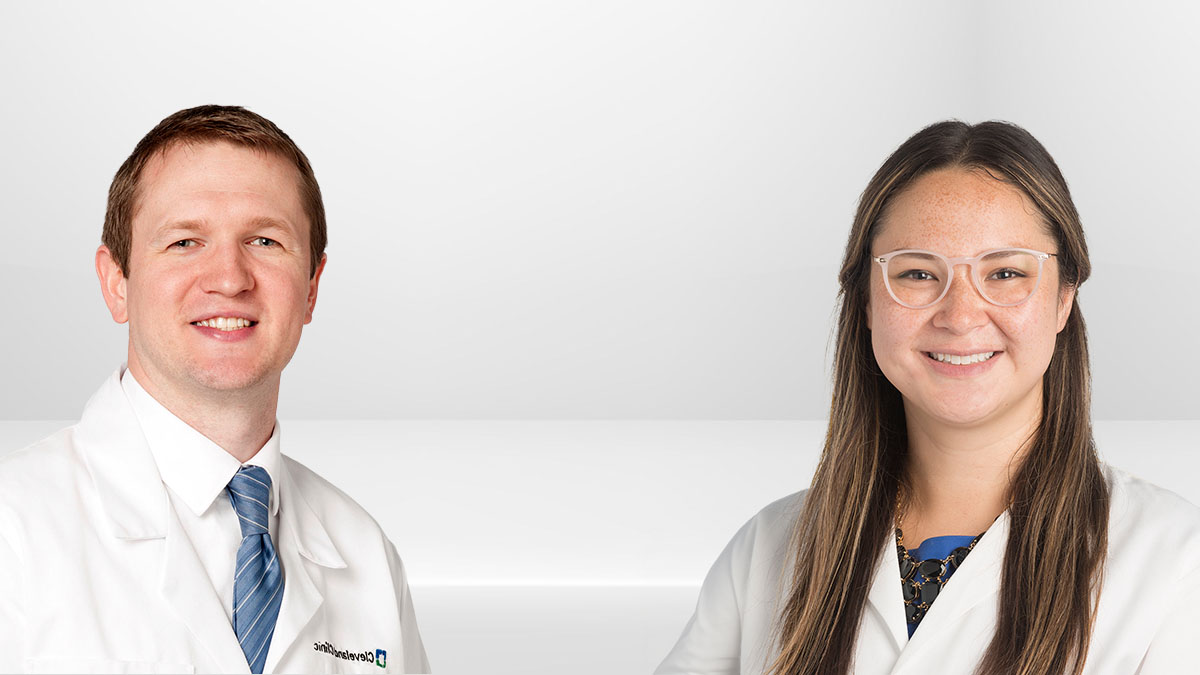
Grant Reed, MD, and Laura Young, MD, explain how coronary artery disease develops, what symptoms to watch for and when stenting is recommended. They walk through what patients can expect before, during and after a minimally invasive stent procedure, along with how newer technologies are improving outcomes and long-term heart health.
Schedule an appointment at Cleveland Clinic by calling 844.868.4339.
Advertisement
Cleveland Clinic is a non-profit academic medical center. Advertising on our site helps support our mission. We do not endorse non-Cleveland Clinic products or services. Policy
Recent Episodes
Ask the Heart Doctor | Genomics: Precision Medicine for Your Heart
In this Ask the Heart Doctor discussion, Cleveland Clinic experts explain cardiovascular genomics and how genetic testing can help identify…
Ask the Heart Doctor | Heart Failure: Surgical Options and Mechanical Support
Heart failure affects millions of people and can range from mild symptoms to advanced disease. In this episode, discuss how heart failure is…
Quick Questions: Mitral Valve Prolapse
Marc Gillinov, MD, explains what mitral valve prolapse is and how it is diagnosed. He also discusses when mitral valve prolapse can lead to…
Video content: This video is available to watch online.
View video online (https://cdnapisec.kaltura.com/p/2207941/sp/220794100/playManifest/entryId/1_6tsn5nnq/flavorId/1_5f3sgelj/format/url/protocol/https/a.mp4)
Transcript
Announcer:
Welcome to Love Your Heart, brought to you by Cleveland Clinic's Sydell and Arnold Miller Family Heart, Vascular and Thoracic Institute. This podcast will explore disease prevention, testing, medical and surgical treatments, new innovations and more. Enjoy.
Advertisement
Cleveland Clinic is a non-profit academic medical center. Advertising on our site helps support our mission. We do not endorse non-Cleveland Clinic products or services. Policy
Dr. Grant Reed:
Well, hello. I'm Dr. Grant Reed. I'm an interventional cardiologist here at the Cleveland Clinic, and I'm joined by my colleague.
Dr. Laura Young:
Hi, I'm Dr. Laura Young. I'm another interventional cardiologist here at Cleveland Clinic as well.
Dr. Grant Reed:
Wonderful. Well, we are going to tackle a really important topic today, and that is what is coronary artery stenting, who benefits most, what are some of the common techniques that we use, and what should you expect as a patient who may need this treatment? So, just to open us up, Dr. Young, maybe you can start with the basic overview of what coronary artery disease is and how it develops for patients over time.
Dr. Laura Young:
Yeah. We know coronary artery disease is a blockage that develops in the arteries that feed the heart. These arteries are the conduits and vessels that feed the heart muscle and supply the main oxygen for the muscle of the heart.
How does it develop over time? We know this process takes years. It doesn't happen all of a sudden. It's often a combination of genetics with bad cholesterol, high blood pressure, diabetes, and we know inflammatory diseases can also contribute to this process as well. It's a couple of different things at once going on.
Dr. Grant Reed:
Yeah, absolutely. When we think about once you have coronary artery disease, when does it need treatment? That's a common question that patients have. Generally speaking, the way we frame coronary artery disease is if it causes symptoms, which are what you think of as classical chest pain or angina. Angina doesn't always need to be chest pain, though. It can be discomfort. I may ask a patient, "Do you have chest pain?" They may say, "No, but I have discomfort." So, it's often how you frame the conversation. But it’s a pressure sensation, and it's almost always when you're exerting yourself. Random feelings of pain really aren't usually due to coronary artery disease, but it's the exertional symptoms we call exertional angina.
Advertisement
But patients can have shortness of breath, they can feel generally unwell, they can lose exercise tolerance. Especially in females and diabetic patients who may experience symptoms differently, we have to have a high index of suspicion that that's what's happening.
So, we would offer coronary artery stenting for patients who have symptoms like that that are not responding to medicines. We know that medicines work really well. This is what we call anti-anginal therapies, like long-acting nitroglycerin medicines or beta blockers, and some of the medicines which are really commonly used. In those patients who have refractory angina, despite optimal medical therapy, that's one indication.
The other indication is when patients come in with a heart attack. This is when stents can be life-saving. This is what I think we all go into interventional cardiology for is to treat those patients who come in with a heart attack, and you can really make a big difference, and you can save a life. You can prevent a long history or long future of heart failure. By simply catching the blockage soon enough, we can open up the artery, stop the heart attack, save a life and/or prevent patients from having heart failure long term.
So, Dr. Young, when you think about treating patients for stenting, say you need a stent, what are the most common treatments that you offer, what are the most common stents used, and what are some other treatments that we may offer patients during the same procedure?
Dr. Laura Young:
Yeah. I think every treatment for every patient is really tailored to that patient. That's the nice thing about treating coronary arteries these days is that we have a lot of tools available.
The most common kind of stent that we will place, and really universally nowadays, is a drug-eluting stent. That stent has a special medicine on it that helps the body accept the stent as its own. A stent is a foreign body, and it's a foreign material, and so the natural reaction is to kind of treat it like a splinter. Your body says, "Hey, that's not supposed to be there." But this medicine helps to kind of trick the body into understanding, okay, this is actually okay. It needs to be here to help open up that artery.
Dr. Grant Reed:
Yeah. Great. When patients undergo stenting, a common question I get asked is, "What am I going to experience, and how am I going to feel?" A lot of patients come in thinking that this is a major open-heart surgery. The way I would like to frame it is that it is a major procedure, but it is not a surgery. It is minimally invasive. The most common route that we use is by going from your radial artery in the wrist. In fact, about 90% of our procedures these days are from the radial artery. It's just like getting an IV placed.
Advertisement
We put a small tube called a catheter that goes up to the coronary artery. We're very careful. We guide that with an X-ray machine, and then we inject a small amount of dye into the coronary artery to then define the anatomy.
If we find a blockage, which may explain the patient's symptoms, then that's when we would potentially treat that if there's an indication. The way we do that is by putting a small wire beyond the blockage, dilating that with a balloon and then leaving a stent behind to keep the blockage open permanently.
Just as Dr. Young said, the most common type of stent that we use is a drug-eluting stent, which helps the body heal, the vessel heal in a controlled fashion and keeps the stent open for as long as possible.
So, it is a fairly quick procedure. On average, I know you do very complex cases, but what would you say for a patient if they were to come in? How long do you think a typical stent procedure would last, and how long would they stay in the hospital for afterwards?
Dr. Laura Young:
Yeah. I think our average procedure length of time is probably about 90 minutes to two hours. When we're doing those more complex procedures, we block them off for a full three hours, though. It really depends.
Advertisement
I think another key point is that they're under conscious sedation. Like you said, it's not like open heart surgery where they need to go under general anesthesia with a breathing tube, we're not stopping their heart at any point like an open heart surgery.
Dr. Grant Reed:
Yeah, that's a misconception a lot of patients have is that they're going to be totally knocked out for the procedure, and they say, "Wow, I was a lot more awake than I thought." That's actually a good thing because we keep patients as sedated and comfortable as they need to be. Some of my patients are dozing off and sleeping the whole time, but some patients are awake enough to ask us questions, and they want to look at the screen.
Dr. Laura Young:
They're active participants.
Dr. Grant Reed:
Yeah, we say, “it’s okay, we'll show you the pictures afterwards,” so that they're not moving and wanting to actually see everything we're doing. But at the same time, we keep patients comfortable and strike a really good balance. Patients and their comfort is of utmost importance during our procedures. But it's really been a game changer because when you think about open heart surgery, which is really useful in certain patients, coronary artery stenting can really save patients. To have an open heart surgery, especially in patients who are older, may not be an option. Stenting can really be life-changing and life-saving.
Advertisement
Dr. Laura Young:
Yeah, they end up in the hospital less, too, right?
Dr. Grant Reed:
Exactly.
Dr. Laura Young:
So, our length of stay for our procedures is oftentimes overnight when we're doing these electively at the most. We can oftentimes get them out the same day, too, which is great.
Dr. Grant Reed:
I know a lot of the procedures you do are more complex, chronic total occlusions and high-risk coronary anatomy cases, but these more straightforward cases, as you mentioned, can take an hour to an hour and a half and even be discharged on the same day, which is really an incredible thing.
So, maybe we can talk a little bit, and take a step back, about inpatients who do have coronary artery disease, how do we frame the conversation of whether or not you might need stents or need bypass surgery, and what are the important things that maybe you think about when you're trying to make that decision for a patient?
Dr. Laura Young:
Yeah, that's a really good question. A lot of it comes down to the complexity of the anatomy, the patient's comorbidities, their functional status, and how active they were prior to coming into either the hospital or the office visit. It's a lot of moving parts that we're taking together.
A lot of times these days now, like you said, the question is not, can we stent it, it's what's the best kind of outcome and durable result for these patients? So, it's really individualizing it for each patient.
Dr. Grant Reed:
Yeah. I think that when it comes to coronary artery stenting, you said it very well, that we individualize the treatment, we personalize the treatment so that there's not a one-size-fits-all approach.
Stents have evolved really dramatically over the last decade to such an extent that in the early days, we were using what we call bare metal stents, which didn't have the drug coating. Now, with the drug-eluting stents, the rates of stent failure are much lower. The stents have also become a lot thinner. We have what we now call ultra-thin stent strut platforms, which have a really low rate of stent failure.
So, this perception that stents may not last as long is being challenged. Our most recent evidence suggests that stents have excellent durability, that they're used in a very wide range of patient anatomies, which we couldn't treat before, and that patients can expect that they would be able to get a stenting procedure done, and hopefully that, in many cases, is the only procedure that they need to do for their lifetime. But even if not, the possibility of having additional stenting done and other work done in the future is certainly possible for patients if needed.
But bypass surgery is an excellent treatment. Patients who are diabetic or potentially have multi-vessel coronary artery disease or blockages which are very complex, which might require overlapping stents and what we call bifurcation anatomy, those are patients we sometimes will think more about surgery for.
It's, again, individualized because some patients, even despite having those features, they're too high risk for a surgery. We experience maybe a disproportionate number of those complex patients at Cleveland Clinic, and I know you do. We're very, very adept at treating the simple patients but also the most complex patients here with coronary artery stenting. I think universally, whether it be with stenting or bypass surgery, we have just some of the world's best outcomes, which is the most important thing.
Dr. Laura Young:
Yeah. We've come a long way, I think, like you said too, in terms of even surgical approaches. I know we've talked about it on the podcast before, but even the hybrid approach of doing a combination of a minimally invasive bypass surgery instead of that full open chest sternotomy. They go in through the ribcage with a small incision, three inches, and then we do the stenting for the rest of the arteries. So, there's tons of options out there.
Dr. Grant Reed:
Yeah. Along the lines of stenting, there are other non-stenting treatments, which have recently been developed, that have improved our ability to stent and get optimal results, and also treatments that are in development as possible alternatives to stenting. Maybe you can talk a little bit about, in specific, intravascular lithotripsy, which patients are now asking me about, and maybe even drug-coated balloons.
Dr. Laura Young:
Yeah. It's pretty incredible what patients are learning on the internet these days, too, and the amount of information they're coming in with.
But yeah, the lithotripsy is a great option. That's similar to how we break up kidney stones, to break up those calcium chunks in the kidneys, that's what we're using in the coronaries to break up that calcium. It's a safe and durable way that kind of helps to fracture that calcium. We use atherectomy very commonly here, too. It's almost like a “roto-rooter” in the arteries, if need be. But breaking up that calcium really allows us to fully expand those stents, and that's what gives us more durable results than we had in the past.
Dr. Grant Reed:
Yeah. This is a new tool. I mean, this is something which has just come on the scene in the last few years, and there are newer versions of it coming. When we think about stents and how long they're expected to last, we are experiencing better expansion of stents because we're able to use this lithotripsy, which is arguably safer than atherectomy has been. Because of that, it's used more broadly, and stent results are getting better. We're also using a lot more image guidance.
Dr. Laura Young:
Yeah, I think that's another key.
Dr. Grant Reed:
Maybe you can speak to that, just about some of the recent studies which have shown image guidance is helping, right?
Dr. Laura Young:
Imaging guidance, we always think about telling the patients, “we're looking at this artery on the X-ray machine”, but the imaging guidance is putting a camera down the artery. We're looking at the artery from the inside out. We're really seeing the plaque on the inside, and that really gives us no questions about what the plaque burden is, where we can land our stent safely, and how big the stent needs to be and how long it needs to be. It's taking the guesswork out of our procedure.
Dr. Grant Reed:
Yeah, for those stents that do narrow down again, now we have this newer treatment, which can avoid putting in another layer of stent, which is a drug-coated balloon, which has been shown to be better than angioplasty alone for opening up blocked stents or what we call in-stent restenosis. These drug-coated balloons will reduce the need for future procedures in those patients. We're also studying that in patients as an alternative to stenting altogether, which is really exciting.
The concept that we have and we've embraced at the Cleveland Clinic is that we are adopting a minimalist approach to PCI (percutaneous coronary intervention). We want to minimize the footprint that we leave in the patient with a fast and safe procedure that is using the best technology and using imaging guidance. We're individualizing the treatment so the patients can get a personalized therapy rather than a one-size-fits-all approach. Then we're embracing the latest in clinical trials, where eventually we're hoping to get to the point where we even have a no-stent-left-behind approach.
This is pushing the envelope, but I think, as a patient, you want to be a part of a center that has the ability to treat the most complex, to be leading the charge when it comes to helping treat patients with coronary artery disease. It's just an exciting time as an interventional cardiologist to be practicing. That's for sure.
Well, as we wrap up, I just want to ask, if you were to counsel a patient about maybe what to expect afterwards, and maybe what questions to ask a physician after the procedure, what would you tell a patient?
Dr. Laura Young:
I think the most common question we get is, was it successful, right? And that's the most important, for sure. But I think what we're looking for, again, is those more durable results, and we want to make sure that we're not getting those warning signs ahead of time in the future, that you need to come back for another procedure.
We're looking out for the same symptoms that you had prior to. We often say that it will be your angina or your heart pain. That's, again, very different for each patient. Some patients, it is that very classic chest tightness, elephant sitting on their chest, and then some, it's a little bit of fatigue or exercise intolerance where they can't run as fast as they used to.
Dr. Grant Reed:
Yeah, I'll have marathon runners say, "Oh, my time has slowed down a little bit." And I'll say, "It sounds like-"
Dr. Laura Young:
"You're still running fast."
Dr. Grant Reed:
"You're still running fast, and faster than I'm running, in fact," but then, sure enough, they'll have something going on. I think it's important to listen to your body, and that would be probably the number one thing that I would tell a patient afterwards is that you need to have realistic expectations. Some patients, they haven't been exercising, or it's taken a lot out of them to have a heart attack or to have angina, which is untreated. They need to get back into it, and that's where cardiac rehabilitation can be helpful in building up their stamina.
Dr. Laura Young:
For sure.
Dr. Grant Reed:
But then it's listening to their body and to know and understand what symptom it was that brought you in to begin with. Then if you start to have that symptom again, then that's when you let your doc know, "Hey, something's going on here."
I generally don't do routine stress testing in patients anymore after having stents, but there are some patients where that's useful. Especially after a couple of years of having the stent or bypass surgery, it's certainly reasonable to do that. Another question patients ask is, "How do I know that things are looking good?" And I say, "Well, pay attention to how you're feeling. If you're not very active, then we consider stress testing. Or if you're having symptoms that are a bit vague, we consider stress testing. But in general, you do not need to do that routinely, and you do not need to do a cardiac catheterization just for a checkup afterwards." It's very important to stay in touch with your cardiologist and your interventionalist.
I don't know about you, but I'm sure you're the same. These are some of the most meaningful relationships you develop with patients. When you have a life-changing, life-saving treatment, especially after a heart attack, and they come in, and they're feeling better, and they're living a normal life, and they're able to do the things that they enjoy, you develop a relationship, which almost becomes a friendship with patients. They're so appreciative. I tell my family this a lot. We're very fortunate to have patients express such gratitude to us all the time. You almost get spoiled a little bit being an interventional cardiologist because it's such a special bond that you form with people.
Dr. Laura Young:
It's rewarding to come to work.
Dr. Grant Reed:
It is very rewarding.
So, with that, I think we'll wrap up. We really appreciate your time in joining us today. If you have any questions or would like to get treatment here at Cleveland Clinic, please reach out. We'd be very happy to take care of any of your heart needs. Thank you.
Announcer:
Thank you for listening to Love Your Heart. We hope you enjoyed the podcast. For more information or to schedule an appointment at Cleveland Clinic, please call 844.868.4339. That's 844.868.4339. We welcome your comments and feedback. Please contact us at heart@ccf.org.
Like what you heard? Subscribe wherever you get your podcasts or listen at clevelandclinic.org/loveyourheartpodcast.
Recent Episodes
Ask the Heart Doctor | Genomics: Precision Medicine for Your Heart
In this Ask the Heart Doctor discussion, Cleveland Clinic experts explain cardiovascular genomics and how genetic testing can help identify…
Ask the Heart Doctor | Heart Failure: Surgical Options and Mechanical Support
Heart failure affects millions of people and can range from mild symptoms to advanced disease. In this episode, discuss how heart failure is…
Quick Questions: Mitral Valve Prolapse
Marc Gillinov, MD, explains what mitral valve prolapse is and how it is diagnosed. He also discusses when mitral valve prolapse can lead to…
Never miss a moment - subscribe now.
Listen to the Health Essentials Podcast on your favorite streaming platform.
Other Podcasts You May Love
Beyond Leadership
Hosts Jim Pae and Elizabeth Pugel escort you through a network of thought leaders, sharing world-cla…

Beyond the Pages: CCJM Podcast
Beyond the Pages: CCJM Podcast takes the listener more in-depth into Cleveland Clinic Journal of Med…

Butts & Guts
A Cleveland Clinic podcast exploring your digestive and surgical health from end to end. You’ll lear…
Cancer Advances
A Cleveland Clinic podcast for medical professionals exploring the latest innovative research and cl…