



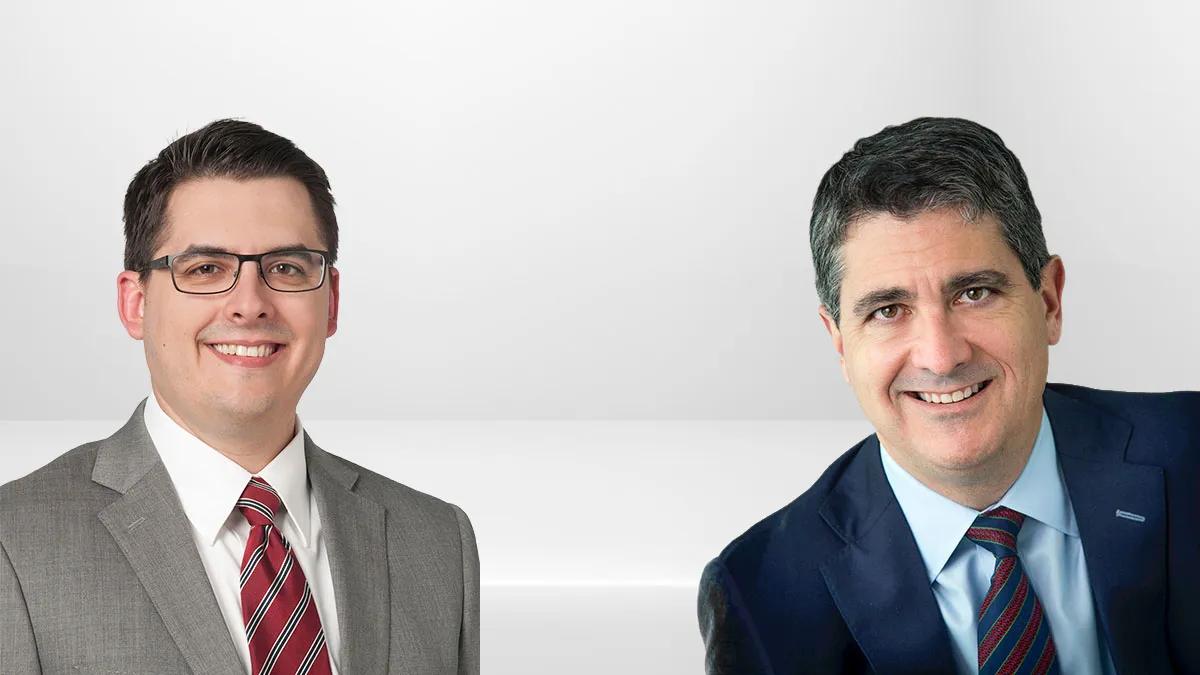
New Approaches to Treating Aortic Arch Disease
Eric Roselli, MD, and Patrick Vargo, MD, discuss aortic arch aneurysms and dissections, and explain why early diagnosis and ongoing monitoring are important. They explore how advances in surgery and less invasive endovascular techniques are expanding treatment options, tailoring care to each patient’s needs.
Schedule an appointment at Cleveland Clinic by calling 844.868.4339.
Advertisement
Cleveland Clinic is a non-profit academic medical center. Advertising on our site helps support our mission. We do not endorse non-Cleveland Clinic products or services. Policy
Recent Episodes
Encore: AFib After an Ablation
This is an encore episode of "AFib After an Ablation: What to Know", originally published in June 2025. Experiencing persistent or recurrin…
Understanding High-Risk Aortic Valve Endocarditis
Milind Desai, MD, and Per Wierup, MD, discuss high-risk aortic valve endocarditis, a serious infection that can affect heart valves and lead…
Robotic Heart Valve Surgery
Marc Gillinov, MD, and Per Wierup, MD, discuss how robotic heart valve surgery allows surgeons to repair or replace heart valves through sma…
Video content: This video is available to watch online.
View video online (https://cdnapisec.kaltura.com/p/2207941/sp/220794100/playManifest/entryId/1_yhjn669t/flavorId/1_5f3sgelj/format/url/protocol/https/a.mp4)
Transcript
Announcer:
Welcome to Love Your Heart, brought to you by Cleveland Clinic's Sydell and Arnold Miller Family Heart, Vascular & Thoracic Institute. This podcast will explore disease prevention, testing, medical and surgical treatments, new innovations and more. Enjoy.
Advertisement
Cleveland Clinic is a non-profit academic medical center. Advertising on our site helps support our mission. We do not endorse non-Cleveland Clinic products or services. Policy
Dr. Eric Roselli:
Hi, thanks for joining us for our podcast. I'm Eric Roselli.
Dr. Patrick Vargo:
I'm Patrick Vargo.
Dr. Eric Roselli:
We're both cardiothoracic surgeons here at Cleveland Clinic. Man, we've been working together for a long time now.
Dr. Patrick Vargo:
Yes. Yeah. We both specialize in the aorta, and that's why we have worked so closely together for so many years now.
Dr. Eric Roselli:
Yeah. It's an interesting sort of thing to specialize in, taking care of the aorta. It's now the fastest growing cardiac surgical operation that's performed. If you look at Cleveland Clinic, it represents over 20% of the operations that we do. Over 20% of the 6,000 operations are aorta. If you look at the STS database, just a couple of years ago, it was also on the rise, at 8%. Now, the latest numbers I saw, it was 9.5% of those numbers. Like usual, what happens at Cleveland Clinic sort of is a bit of a barometer for what happens in our field.
So, it being 20% here, now rising from 8% to 9% in the kind of national landscape, I think we're going to continue to see more and more patients with aortic disease that are undergoing operations. I don't know that it's because there's some epidemic of aortic disease.
Dr. Patrick Vargo:
I was going to say, I think a lot of this has to do, and we've seen it in our own practices, is that it was largely underappreciated or underdiagnosed for so long. A lot of that had to do with awareness because it's often an asymptomatic disease until it's an emergency. But also the technologies we have to image it and surveil it and monitor it and study it, including genetics and different family screening tools, have gotten better and better. It's largely a growing treatment area because we're learning so much more about it and how we can help these people.
Advertisement
Dr. Eric Roselli:
Well, absolutely. We're identifying disease sooner, which is great. We can provide elective, planned, safer operations, but we're also getting way better at treating it.
Dr. Patrick Vargo:
That's true.
Dr. Eric Roselli:
Today's focus is on really evolving strategies for treating the aortic arch. I think that point about evolving treatment strategies is as relevant as ever because that's a place that's been historically incredibly complex to operate on. Although we still use a lot of techniques that have been around for a long time, we've made a lot of iterative improvements over the last several years. Can you talk about that a little bit? Why is the aortic arch so hard to treat, Patrick?
Dr. Patrick Vargo:
The aortic arch is right in the middle of this aorta that's in the chest, the big blood vessel that travels out of the heart and through the body, the tree trunk, if you will, that then branches to bring blood everywhere. The aortic arch is a segment of this tube, at the top of your chest, that arches from the front to the back. One of the reasons why it's been often a challenge historically to treat is because this is also the location where the branches that come off that go to the brain, that go to the head, come off of the aorta.
So, anytime you're operating on this blood vessel, you have to be very careful to protect and maintain blood flow to the brain and to keep it oxygenated and to protect it from things like stroke or poor oxygenation. Also, anatomically, within the chest, during an open heart surgery, we're operating from the front. The beginning part of the arch is right there, but also as the arch travels away from us, it can be harder to get to from the front. It's a transition point from front to back where the aorta is traveling.
Dr. Eric Roselli:
Yeah, that's totally relevant. I still think it's also incredible that we stop a heart and start it every day, even after doing it thousands and thousands of times. But patients always ask, "Are you taking my heart out of my chest?" They ask these questions. Not really, but it's sitting right there. The arch is a little trickier to deal with, as you said, as it goes away from you. We always are incredibly focused on making sure we take care of the heart and the brain, but taking care of the brain becomes more complex as we do arch surgery. The way we do that is we cool patients, right?
Dr. Patrick Vargo:
Right.
Dr. Eric Roselli:
But nowadays, we not only cool the brain and cool the body to protect it while we're reconstructing things, we often are able to maintain blood flow to the brain the entire time we're sort of working around it. I think that some of those evolving strategies have really made a big difference, right? We've embraced endovascular techniques. We are using devices to help us make those connections to those vessels a lot quicker, so we can shorten that period of time and reduce that risk.
Dr. Patrick Vargo:
Yeah. I think here at Cleveland Clinic, we've been involved in a lot of it, partnering with different industry partners and being a part of a lot of big trials to help work on a lot of these devices that have made it more accessible to treat the arch as it goes away. I mean, as the evolution of arch surgery has gone through, it started out with just sewing further back and it was often a challenge to get to, to moving where we're actually sewing closer to our field and using things like stents and different devices to reach farther and to minimize bleeding and to make it a safe operation while we're protecting the brain and the heart.
Advertisement
Dr. Eric Roselli:
For sure. We've been instrumental. We've developed a bunch of that technology here and still study it when we use it in an off-label way and partner with industry to kind of bring new technology to our patients faster. Maybe backing up a step is what are some of the things we treat? Why would a patient need their aortic arch replaced?
Dr. Patrick Vargo:
Right. The most common aortic diseases we see are essentially aneurysm where an aorta dilates and becomes bigger than it ought to be. As it gets bigger, we know there's an increased risk for rupture or tear. That kind of is the second part of this. Many patients with aortic disease have experienced a tear at some point earlier in their life. It can also become a chronic problem that then also becomes an aneurysm. The big categories that I see almost on a daily basis are aortic aneurysms and aortic tears or dissections.
Dr. Eric Roselli:
Dissection. When the aorta tears, it dissects.
Dr. Patrick Vargo:
It dissects.
Dr. Eric Roselli:
Right? Like that's what happened to Lindsay Graham a couple of weeks ago.
Dr. Patrick Vargo:
It is.
Dr. Eric Roselli:
It's interesting. Every time something happens to someone who's famous, there's discussion about it. You probably got asked a lot of questions from friends and everything else to explain what it is. I think it's important for us to increase awareness amongst the lay public. Aortic dissection and rupture of aneurysms probably accounts for close to 10% of the sudden deaths that happen. It's definitely underappreciated, but we've done a really great job, I think, as a community and physicians, of also educating other physicians, like emergency medicine docs, emergency medical care people, to make those diagnoses.
Advertisement
It's a hard diagnosis to make because it's not as common as a heart attack or stroke, and sometimes can present in a lot of different ways. But it's not only the acute dissections that we treat when they come in. Helicopters are coming to Cleveland Clinic all the time and we manage this, but once we save a patient's life and we fix a segment of their aorta, or if they've had that done somewhere else, the tear that happened in their aorta extends through a lot of the aorta, right? Including the arch.
Dr. Patrick Vargo:
Including the arch. Many times, the life-saving operation that happens in an emergency surgery is just the front part of the aorta because that's where it starts, and that'll stabilize and save a patient. But, like you said, the tear often propagates or continues along the length of the aorta as the heart is beating when the tear happens. Those areas of the aorta, it's a very long blood vessel that goes through the lengths of the chest and the abdomen. You can't fix these, and nor should you fix them, all in one operation. It's too extensive of an operation.
So, many of the ways we've evolved to treat the aorta over the years have been staged procedures. Very often, we're seeing arch surgery or arch dissections come back that maybe they've been there for some years, but they've gotten bigger over time, and they're turning into an aneurysm. Those are some of the patients we're seeing, right? I know I'm seeing them. I'm sure you are.
Advertisement
Dr. Eric Roselli:
For sure. We treat acute dissections. At some centers like ours, during the emergency, you might get your arch replaced, but most places don't necessarily do that. We see chronic dissections. After you've survived that thing, you're still at risk for developing late problems like an aneurysm developing in it. Or we see degenerative aneurysms that people have that involve that area where it's complex to repair all of that and take care of the heart and the brain at the same time. You want to be in an aorta center that's very facile with it. We do probably 150 arch replacements a year. Our outcomes are outstanding.
How do you determine when you're making a staged plan when you intervene upon somebody? If it's chronic. If it's emergency, you take them.
Dr. Patrick Vargo:
The two big factors that we look at in a chronic situation where we're monitoring or watching an aorta are usually partially size-based. How big is the overall size of it? As it gets bigger, there is an increased risk for it rupturing or having internal bleeding. Then similarly, we don't always have this luxury, but we also want to see how it's changing over time. Many times, it's the first time a patient comes to see you or me or one of our partners here, and we just have a snapshot in time of the aorta. Is it dilated, and how much so?
But as we follow and surveil patients and keep an eye on the aorta, we also see a change sometimes. If it's changing quickly, even if it's not at a very large diameter, we may intervene because of that rapid change.
Dr. Eric Roselli:
Yeah. It's impossible to predict too. Some people, their aorta will grow quickly, and they'll have an emergency, and then they need another intervention within the same year. Some people, you can watch it for a decade or more. But once you have aortic disease, it's a chronic condition that needs to be managed and monitored by someone that understands the nuances about how to take care of it, when to take care of it, and how to take care of any segment in the best way, which as we kind of alluded to, can be done with open surgery. Certainly redo open surgery is something you want done in an experienced center and may be more durable with open operations. But we also have new endovascular technology.
Some of what we use in the operating room, we're combining stents with open surgery to facilitate the speed and the safety of it all. But some operations we're doing are purely endovascular, where we go from a puncture in the groin to connect to a previous repair and extend that out. Can you tell us what developments in aortic arch care excite you the most?
Dr. Patrick Vargo:
I think this is a very exciting time to be offering new solutions to patients because more and more technology is stent-based or endovascular based, and so it's less and less invasive. We're doing many of these through a small groin poke or in the arm as well. We feed stents that are constrained and made small and push them through under x-ray guidance and deploy them, and reline and seal off the damaged parts of the aorta. Many times it can be done without a big incision or an invasive operation.
As we work with these devices, we're coming up with new branch ones. We're seeing these come out into the market in different trials and even some commercially available that allow us to start to treat this area that has these important branches that go to the brain and to the arms. It's a time where we're offering less invasive surgery as well as reaching patients that maybe couldn't tolerate a more invasive surgery. There's a lot of options, but I think the most important thing, and I'm interested too, what you think about this, is really just making sure that the right patient gets the right operation. It takes a team to really plan that out a lot of times and decide when we want to intervene.
Dr. Eric Roselli:
Yeah, it's dynamic too. There was a while there where if someone was completely prohibitive of open surgery, but we still thought maybe an endovascular solution would work, we'd make our own device or even make it inside somebody, put them on pump and burn holes in the device. It was kind of wild. Now we have some commercially available stuff with branches. Right now, the one commercially available device we have, it has a single trunk on it, but there's still components to that that are investigational, like the ascending stent graft that plugs into it and hopefully we'll have that available commercially soon.
We have access to it in our trials. We're going to see more and more trials that have multiple branches, two and three that are really right around the corner, at least for some early trials. What's interesting is, as we get that new technology, how comfortable we are with using it in patients changes. It used to be, man, we're not putting that new device in anybody except the highest risk patient. We still do open surgery really, really well. Now we say, "Well, we could probably treat this open or endovascular. Now we have more trust in the endovascular solution, and you do have a couple of other medical problems. Let's go for the endovascular repair."
That's something that's evolving as our experience grows. We still don't understand the total durability of some of those totally endovascular operations, but we will. Again, it's a group discussion, and it's an ever-changing environment, but a really exciting one.
As a final message, you may have heard us already talk about this in detail. If you have aortic disease, especially if you have aortic disease extending into your aortic arch, find somebody. And when I say somebody, I mean a team. Find a place and a group of physicians, where they can provide you all the different options, the treatment options available, not just delivering a hammer to a nail. Talk to a team that has all the tools available and really has experience with them that can help you with the decision making process of how best to tailor the therapy to your disease right now, and with a lifelong plan for you and your family for screening your family members and managing it.
There are more and more aorta centers like ours if you can't make it to Cleveland, although we're always happy to see you here. Any other take-home messages for our patients?
Dr. Patrick Vargo:
That's very much what I was going to say. It's very much an aorta center to help take care of something that requires lifelong surveillance when a problem is found. And it often does reach out further than one person into the families. We're always happy to see you. I always say that. If there's anything we can do, don't hesitate to see us.
Dr. Eric Roselli:
Awesome. Thank you for listening to Love Your Heart.
Announcer:
Thank you for listening to Love Your Heart. We hope you enjoyed the podcast. For more information or to schedule an appointment at Cleveland Clinic, please call 844.868.4339. That's 844.868.4339. We welcome your comments and feedback. Please contact us at heart@ccf.org. Like what you heard? Subscribe wherever you get your podcasts, or listen at clevelandclinic.org/loveyourheartpodcast.
Recent Episodes
Encore: AFib After an Ablation
This is an encore episode of "AFib After an Ablation: What to Know", originally published in June 2025. Experiencing persistent or recurrin…
Understanding High-Risk Aortic Valve Endocarditis
Milind Desai, MD, and Per Wierup, MD, discuss high-risk aortic valve endocarditis, a serious infection that can affect heart valves and lead…
Robotic Heart Valve Surgery
Marc Gillinov, MD, and Per Wierup, MD, discuss how robotic heart valve surgery allows surgeons to repair or replace heart valves through sma…
Other Podcasts You May Love
Beyond Leadership
Hosts Jim Pae and Elizabeth Pugel escort you through a network of thought leaders, sharing world-cla…
Beyond the Pages: CCJM Podcast
Beyond the Pages: CCJM Podcast takes the listener more in-depth into Cleveland Clinic Journal of Med…
Butts & Guts
A Cleveland Clinic podcast exploring your digestive and surgical health from end to end. You’ll lear…
Cancer Advances
A Cleveland Clinic podcast for medical professionals exploring the latest innovative research and cl…