



Stenting, Surgery and Hybrid Strategies for Coronary Disease
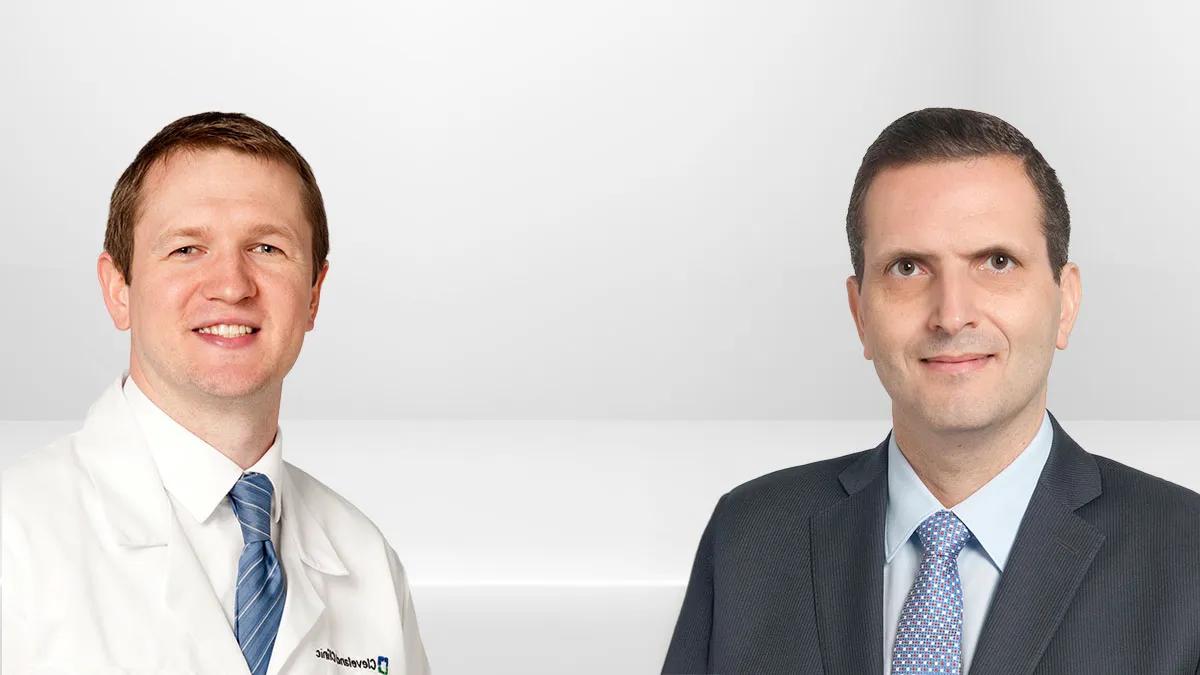
Faisal Bakaeen, MD, and Grant Reed, MD, discuss recent advances in the treatment of coronary artery disease, including drug-coated balloons, intravascular imaging, calcium modification and evolving PCI strategies. They also examine innovations in coronary artery bypass grafting, multi-arterial revascularization, minimally invasive and robotic techniques and the growing role of heart team collaboration in selecting surgical, percutaneous and hybrid treatment approaches.
Advertisement
Cleveland Clinic is a non-profit academic medical center. Advertising on our site helps support our mission. We do not endorse non-Cleveland Clinic products or services. Policy
Recent Episodes
Talking Tall Rounds®: Updates on Less Invasive Cardiac Surgery
In this excerpt from Tall Rounds®, Gianluca Torregrossa, MD, discusses minimally invasive and totally endoscopic coronary artery bypass graf…
CTX310 and the Future of Gene Editing for Lipid Disorders
Steven Nissen, MD, and Luke Laffin, MD, discuss one-year follow-up data for CTX310, a CRISPR-Cas9 gene-editing therapy targeting ANGPTL3 to…
Evaluating Kylo-11 for Long-Acting Lipoprotein(a) Suppression
Steven Nissen, MD, and Ashish Sarraju, MD, discuss early clinical data on Kylo-11, a novel therapy that produced substantial reductions in l…
Video content: This video is available to watch online.
View video online (https://cdnapisec.kaltura.com/p/2207941/sp/220794100/playManifest/entryId/1_nufysz26/flavorId/1_5f3sgelj/format/url/protocol/https/a.mp4)
Cardiac Surgery
Structural Heart Disease Cardiology, Interventional Cardiology
Transcript
Announcer:
Welcome to Cardiac Consult, brought to you by the Sydell and Arnold Miller Family Heart, Vascular & Thoracic Institute at Cleveland Clinic. This podcast will explore the latest innovations, medical and surgical treatments, diagnostic testing, research, technology and practice improvements.
Advertisement
Cleveland Clinic is a non-profit academic medical center. Advertising on our site helps support our mission. We do not endorse non-Cleveland Clinic products or services. Policy
Faisal Bakaeen, MD:
Hello. My name is Faisal Bakaeen. I'm the surgical director of the Coronary Center.
Grant Reed, MD:
And I'm Grant Reed. I'm an interventional cardiologist here at Cleveland Clinic.
Faisal Bakaeen, MD:
Well, today we're going to talk about coronary artery disease. We all know about the importance of medical management of coronary artery disease, but when the time comes to offer an intervention, there's a stenting option and the surgery option. We're going to start with the stenting option. I'll move it over to Dr. Reed, who's going to fill you in about the latest.
Grant Reed, MD:
Wonderful. What we'd like to do is talk about some of the latest research and advances in the field. As an interventional cardiologist, I'm really excited to practice in today's era. There have been some tremendous advances in the treatment of coronary artery disease, not only in the prevention, but also in treatment. We have several new drug-eluting stent platforms, which have recently or are coming to market, and also drug-coated balloons. This is really potentially revolutionary in the treatment of coronary artery disease. We now know from the AGENT IDE (investigational device exemption) trial that DCBs (drug-coated balloon) for in-stent re-stenosis can significantly reduce the rate of repeat revascularization over balloon angioplasty alone. That, in addition to advancements in intravascular lithotripsy or IVL (intravascular lithotripsy), a renewed and I think more, I think, appropriate interest in laser atherectomy and super high-pressure inflation balloons like OPN, that we can get better results from stents and treat ISR (in-stent restenosis) more effectively, thus reducing the risk of revascularization moving forward.
Advertisement
Applying DCBs to de novo lesions is an exciting area. In meta-analyses, most European data do suggest that you may achieve a stent-like result in some patients, especially with image guidance. DCB is being applied to de novo lesions, is something which we're very excited about and does require more study, but there are numerous studies ongoing, including AGENT STANCE and other studies which are hoping to further advance the field, hopefully towards a world where we can treat patients with complex coronary disease without even using stents.
But central to all of this is doing PCI (percutaneous coronary intervention) in the optimal fashion. That includes using IVUS (intravascular ultrasound) and OCT (optical coherence tomography). We now have good high-quality data, and it's embracing the guidelines that image guidance can reduce the rates of revascularization by maximizing MLA (minimum lumen area), by determining where it's appropriate to modify the patient's calcium, and ultimately getting the best possible result. I already mentioned IVL and all the advances there. Many patients that we used to do more involved atherectomy techniques, we're now able to do this with calcium modification using IVL, and this is pushing the field forward.
So, from an interventional standpoint, interest in coronary artery disease, there's never been a more exciting time to practice. Honestly, I feel like just over the last five years, we've made leaps and bounds just going forward. It almost seemed like for a while things were kind of moving slowly, but now, just in the last few years, things have really been catalyzed by the DCB era and the IVL and these data on imaging. We finally have some momentum in interventional cardiology and the coronary disease standpoint.
But I know there's been so many advances as well in the surgical side. Dr. Bakaeen, maybe you can fill us in on what you think is most exciting there.
Faisal Bakaeen, MD:
I'm really impressed by what's happening in the field of stenting and interventional cardiology, but I'm also impressed by what's happening in surgery. Now, everything that we offer our patients has to be something that's discussed by the heart team and taking into consideration the patient's preference. Obviously, stenting is less invasive and the preferred first-line approach for focal disease and maybe technically moderate complexity. But when you get into really heavy atherosclerotic burden, diffuse disease, complex disease, then you've got to start considering a surgical option. Now, on the flip side, if a patient is really frail, elderly, will not physiologically tolerate the surgery, then obviously surgery is not a preferred option. But let's say that the anatomy is there in terms of amenability to CABG (coronary artery bypass grafting). I can't think of any disease that won't be amenable to CABG unless it's absolutely horrible because CABG can bypass to the distal part of the vessel, which is usually spared from atherosclerosis. We try to use arterial conduits, most importantly, the left internal mammary artery, which in situ has patency rates that are almost perfect decades after the surgery. We focus on quality control.
Advertisement
If you leave the OR with an open mammary to the LAD (left anterior descending), that graft should stay open forever. In terms of other conduits, traditionally we've used veins, and there's nothing wrong with veins. They do a wonderful job, but they're not durable. With the advances that we've seen with stenting, maybe those veins shouldn't be used in some patients, especially if they're suboptimal. You could consider a hybrid approach where you do a less-invasive CABG that has the benefit of the mammary to the LAD and deploy stents in other vessels. That really allows us to do the procedure less invasively. The advances in CABG are using multi-arterial grafting. We believe strongly that the greater the myocardial mass that's supplied by ITAs (internal thoracic artery), the longer the survival of the patient, and we've proven that scientifically based on data from the clinic.
Radial arteries are also good arteries, but they're for select targets and select patients. We maximize multi-arterial grafting as a default for patients who are physiologically fit. You don't want to do this approach for somebody whose EF (Ejection Fraction) is 10% on a balloon pump. But let's say a patient who sees you in clinic, then the default approach is multi-arterial grafting. So now, we're going to go back and think about less invasive options. As I mentioned, the hybrid approach is a good approach in certain patients. Let's say a significant LAD lesion and focal disease is in the right and the circ, then through a mini left thoracotomy or robotic-assisted harvesting of a mammary, and then suturing the mammary to the LAD followed by stenting of the focal RCA (right coronary artery) and circ vessels is a very reasonable option.
Advertisement
Now, we do also have the capability of doing the entire thing robotically through keyholes. This is a super-specialized approach that's done by a handful of surgeons. We're fortunate to be offering this at the clinic. This totally robotic or TECAB (totally endoscopic coronary artery bypass) approach is particularly useful when other lesions are suboptimal for stenting. Let's say CTO (chronic total occlusion) of the RCA, diffuse disease of the circ, then that would be a patient that would benefit from a TECAB with a LIMA (left internal mammary artery) to LAD, RITA (right internal thoracic artery) to the OM (obtuse marginal), and maybe a vein or a radial to the CTO right. These are the big advances in CABG. That is, using multi-arterial, which is really not that new, but it's gaining popularity, and we certainly advocate for it at the clinic because that's where it all started, and secondly, the less invasive approaches.
Talking about the literature, the most recent trial, which by the way, is rare to find RCTs (randomized controlled trials) in surgery, certainly in coronary surgery, but we're excited by the MIST trial. The MIST trial that was just published in the Lancet showed that undergoing minimally invasive CABG had equivalent hard endpoint outcomes to a traditional sternotomy CABG. But what it also showed is what we knew, kind of, from observational studies and smaller studies, is that there's less hospital stay, less pain, less AFib (atrial fibrillation), less transfusion, and other quality of life indicators, at least in the short term, that align with the patient's preference. That tells you if you have a surgeon who is skilled enough to achieve just as good of an outcome through a total robotic or minimally invasive approach, then that's a very safe and effective approach that should be considered in patients whose anatomy, whose physiology is conducive to a less invasive approach.
Advertisement
Again, I have to go back to the advancement in stenting. If this approach is not optimal, but a LIMA to LAD is possible through a less invasive approach, then a hybrid approach is very reasonable.
Grant Reed, MD:
I couldn't agree more with that, and that's incredibly well said. We're also very fortunate to have Dr. Bakaeen here who's pioneered much of the research and the data behind many of the approaches that we use, including bilateral mammary artery grafting. Much of what we do has been pioneered here at the Cleveland Clinic. It's important for patients and providers, as you're referring patients, to really seek a center of expertise that is, I think, able to offer all of what we've discussed.
One of the most important things, and we just mentioned this in the earlier segment, was that having a multidisciplinary team approach to this is so important. A hybrid approach won't even be considered at many institutions because they don't have the mindset that there needs to be a close collaboration between interventional cardiologists and surgeons. That's one of the funnest parts of my job as a coronary and structural interventionalist: building close relationships with surgeons, to really push the envelope and to individualize treatment approach and to be able to offer patients a hybrid treatment.
Many facilities just really aren't equipped or they're not thinking like that because it's not in their treatment algorithm. To be able to offer someone a LIMA to LAD or perhaps bilateral IMA grafting and then treating the smaller OM or distal PDA (posterior descending artery) branches with stenting is something which we do here frequently. I think it's the most contemporary treatment approach. It can only be offered at a place that is technically skilled at all of these treatment approaches, but also has a very close-knit heart team. Such an important part of what we do here at Cleveland Clinic.
Faisal Bakaeen, MD:
Oh, I mean, well said. I totally agree with you. I have a family history of coronary artery disease. If they need treatment and if they're willing to travel – I have relatives all over the world –then this is the place to be because we have such skilled cardiologists and very skilled surgeons here that are high volume, that have documented excellent outcomes. We treat patients like family members, and we treat our colleagues, cardiology and surgical colleagues from all around the country, with tremendous respect because we're in it to do what's best for our patients.
Grant Reed, MD:
Absolutely. That's perfectly said that we all, one, respect our patients, but respect each other and we get to be close friends and I think that's when patient outcomes are the best.
Faisal Bakaeen, MD:
You could do my PCI.
Grant Reed, MD:
Hey, thanks. You can do my CABG.
Faisal Bakaeen, MD:
I hope you won't need it.
Thank you very much.
Announcer:
Thank you for listening to Cardiac Consult. We hope you enjoyed the podcast. For more information or to refer a patient to Cleveland Clinic, please call 855.751.2469, that's 855.751.2469. We welcome your comments and feedback. Please contact us at heart@ccf.org. Like what you heard? Subscribe wherever you get your podcasts or listen at clevelandclinic.org/cardiacconsultpodcast.
Recent Episodes
Talking Tall Rounds®: Updates on Less Invasive Cardiac Surgery
In this excerpt from Tall Rounds®, Gianluca Torregrossa, MD, discusses minimally invasive and totally endoscopic coronary artery bypass graf…
CTX310 and the Future of Gene Editing for Lipid Disorders
Steven Nissen, MD, and Luke Laffin, MD, discuss one-year follow-up data for CTX310, a CRISPR-Cas9 gene-editing therapy targeting ANGPTL3 to…
Evaluating Kylo-11 for Long-Acting Lipoprotein(a) Suppression
Steven Nissen, MD, and Ashish Sarraju, MD, discuss early clinical data on Kylo-11, a novel therapy that produced substantial reductions in l…
Other Podcasts You May Love
Beyond Leadership
Hosts Jim Pae and Elizabeth Pugel escort you through a network of thought leaders, sharing world-cla…
Beyond the Pages: CCJM Podcast
Beyond the Pages: CCJM Podcast takes the listener more in-depth into Cleveland Clinic Journal of Med…

Butts & Guts
A Cleveland Clinic podcast exploring your digestive and surgical health from end to end. You’ll lear…
Cancer Advances
A Cleveland Clinic podcast for medical professionals exploring the latest innovative research and cl…