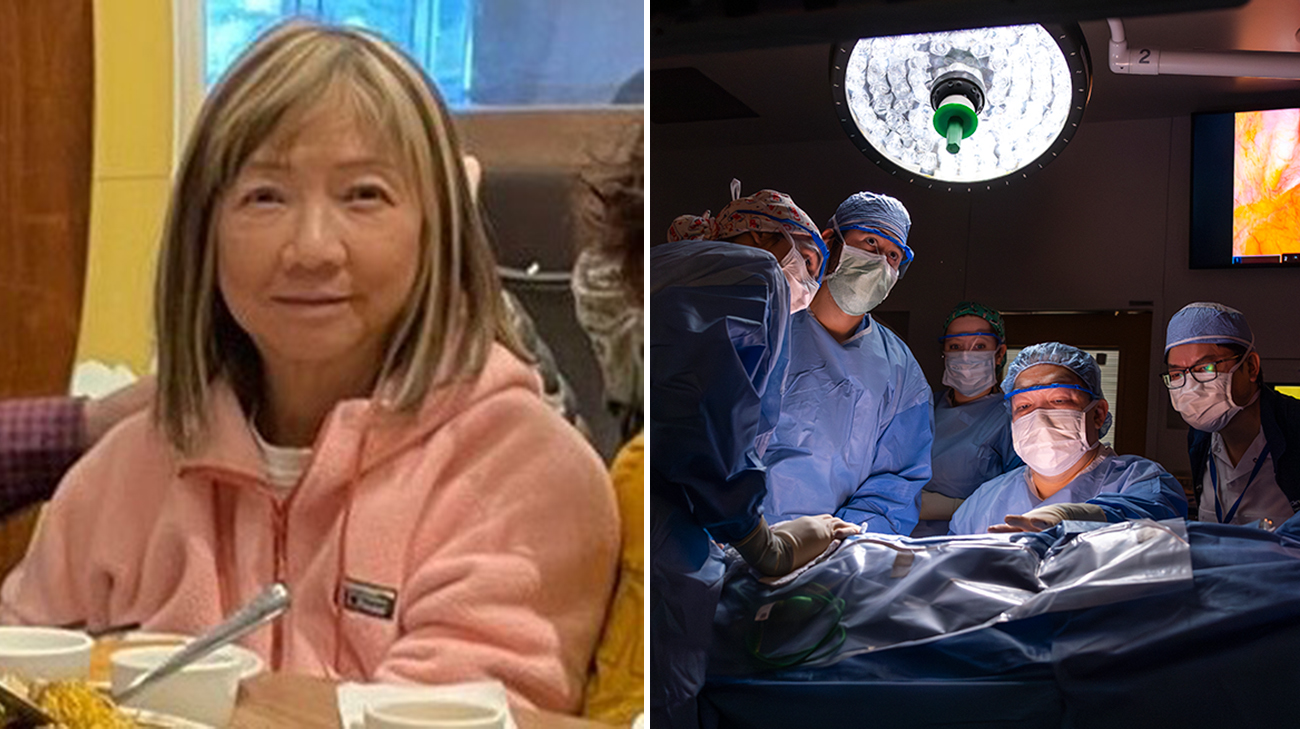
When 76-year-old Janet Yee woke up from her kidney transplant surgery, she was stunned—not by pain, but by the complete absence of it.
“I was very surprised,” says Janet, a retired restaurateur from Cleveland, Ohio. “After the surgery, there was no pain at all. Two months later, the tiny incisions have healed, and there’s just one small, flat red mark left.”
In June 2025, Janet became the first patient in the world to undergo a successful robotic-assisted, transvaginal ipsilateral dual kidney transplant. The procedure was performed by a multidisciplinary team that included Alvin Wee, MD, program director of Renal Transplantation at Cleveland Clinic, Mohamed Eltemamy, MD, lead robotic transplant surgeon, and Robert DeBernardo, MD, section head of gynecologic oncology.
Cleveland Clinic has been steadily advancing robotic kidney transplantation for years. In 2019, the kidney transplant team performed the world’s first successful robotic single-port kidney transplant. In 2024, they completed the first robotic-assisted dual kidney transplant (bilateral) in the U.S.
“We’ve built a program that allows us to continue refining the technique, keeping us at the forefront,” says Dr. Wee. “Because of our experience and volume, we can explore new approaches that improve outcomes and recovery for our patients.”
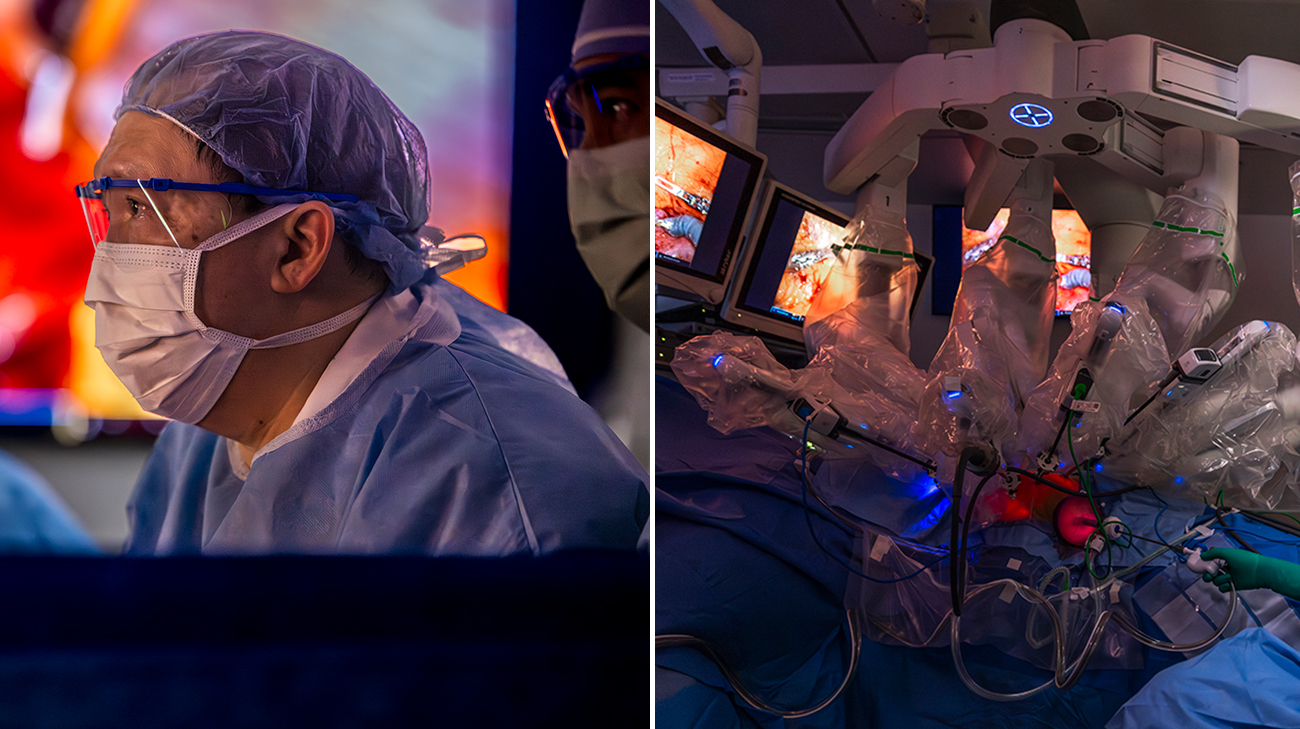
Dr. Wee and team during a robotic-assisted kidney transplant. (Courtesy: Cleveland Clinic)
The transvaginal approach—developed in collaboration with Dr. DeBernardo —offers several advantages. The vaginal wall is highly elastic and heals quickly, and the incision is made in the posterior fornix, an area with very few nerve endings.
Dr. Eltemamy explains, “Because the posterior fornix has little or no sensation, an incision there causes virtually no pain. It also reduces the risk of infection and speeds up recovery.”
The robotic system allows surgeons to make only a few small incisions in the abdomen to insert instruments and magnify the surgical field in 3D. The kidneys are then inserted through the vaginal incision, avoiding larger abdominal cuts and muscle disruption.
Janet received two kidneys from a deceased donor, an approach used when individual kidneys are too small to function effectively on their own. By placing both kidneys on one side of the body, surgeons preserve the other side in case a future transplant is needed. “It’s technically challenging—we’re connecting four blood vessels instead of two—but it allows us to use donor organs that might otherwise be unused,” says Dr. Eltemamy.
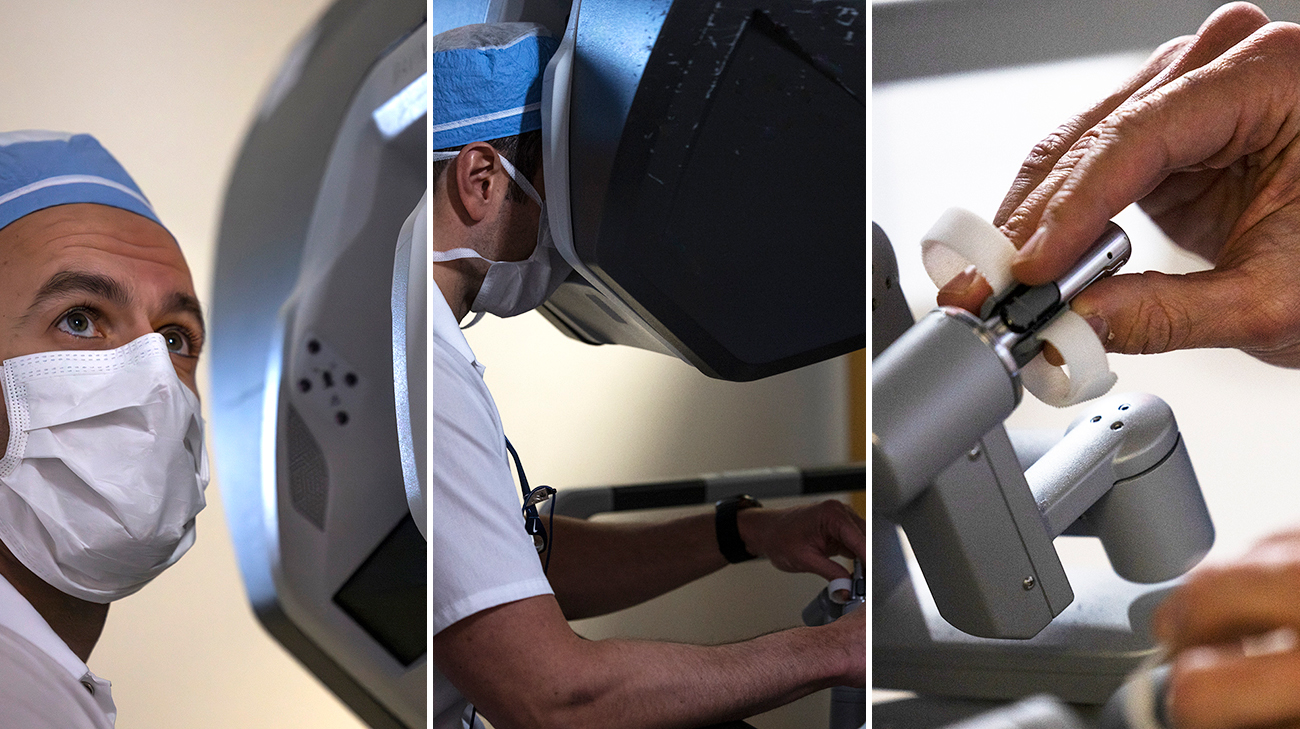
Dr. Eltemamy operates the robotic system during a robotic-assisted kidney transplant. (Courtesy: Cleveland Clinic)
Janet had been managing chronic kidney disease since 2022 but was hesitant about transplant surgery. Concerned her age might eventually disqualify her and motivated by her desire to spend more time with her granddaughter, she joined the national transplant waitlist in September 2024. In June 2025, she received the call saying not one, but two kidneys were available. “That day was like when a hurricane strikes,” she recalls. “You don’t have time to think—you just go. Everything was already arranged. The whole thing was like a dream.”
Cleveland Clinic’s transplant team continues to explore new frontiers in robotic surgery, including combining kidney transplants with other organ procedures. Their goal is to continue improving surgical outcomes, while making surgeries less painful, and more accessible for patients. “By making small incisions, with no muscle cutting but large enough for the kidneys to go in, it’s a real game changer,” says Dr. Wee. “For both the surgeons and the patients.”
“Someone gave me a second chance at life,” Janet shares. “I hope families know how meaningful and generous organ donation truly is.”
Related Institutes: Glickman Urological & Kidney Institute, Ob/Gyn & Women's Health InstitutePatient Stories
Cleveland Clinic Team Helps Florida Patient Breathe Easier After Complex Lung Surgery
Oct 21, 2026

Teen Athlete Returns to Sports After Two Head Injuries Trigger Yearlong Headache
Oct 19, 2026