When Andrea Missler experienced flare-ups of back pain, she didn’t think much of them.
Her focus was on her older sister, Jan Burton, who has been living with multiple sclerosis (MS) — an incurable autoimmune disease that affects the nervous system — for more than two decades. Over the years, Andrea has been her primary caregiver and steady source of support, helping Jan navigate the ups and downs of her often unpredictable condition.
But after having COVID-19 a few years ago, Andrea’s back pain became more frequent. At 46, she underwent testing to see whether a chronic issue had worsened.
It hadn’t. Instead, a brain MRI and additional tests revealed something unexpected: Andrea also had MS, the same diagnosis as her sister.
“I was shocked,” says Andrea, who lives minutes from Jan in Bellevue, Ohio. “It never crossed my mind I might have MS as well.”
“Because it isn’t common in siblings,” adds Jan. “I was sad because I didn’t want her to feel what I’ve been feeling.”
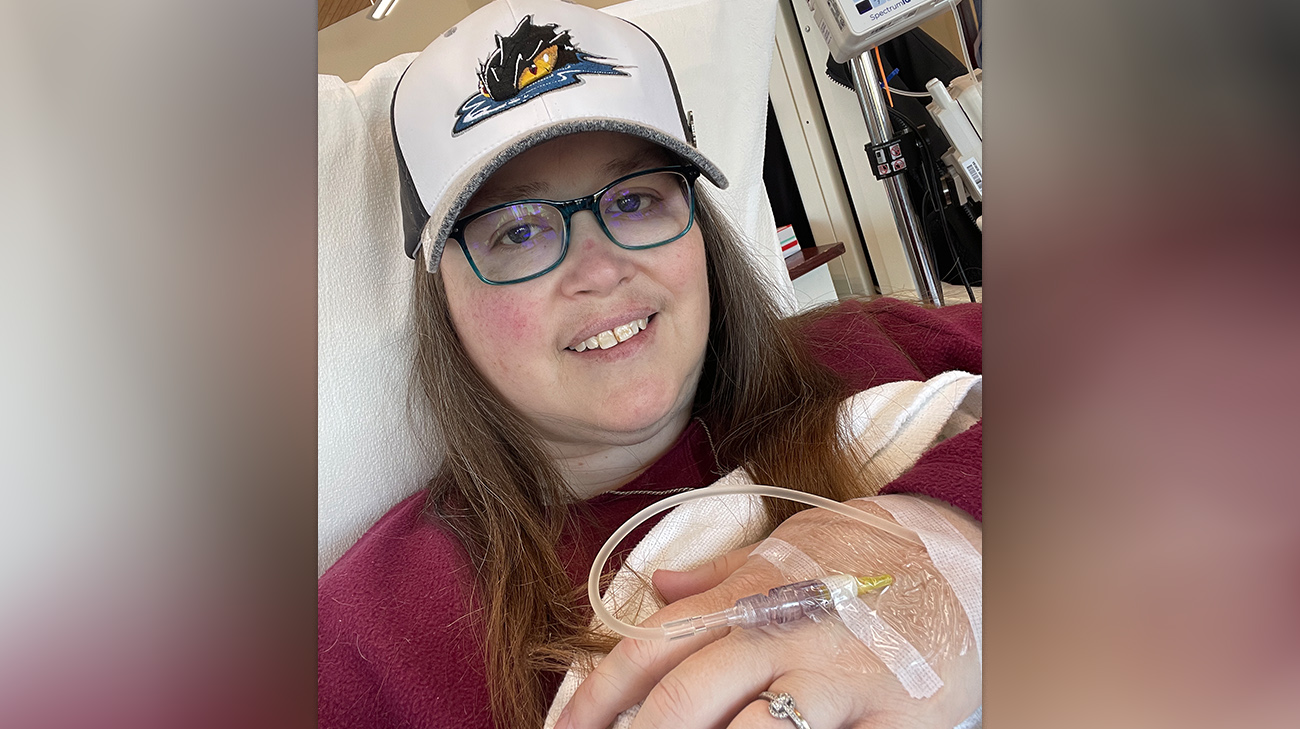
Andrea receiving an infusion at Cleveland Clinic Mellen Center for Multiple Sclerosis. (Courtesy: Andrea Missler)
Marisa McGinley, DO, a neuroimmunologist at Cleveland Clinic’s Mellen Center for Multiple Sclerosis who treats both sisters, says cases like theirs are uncommon. While MS is not considered a hereditary disease, people can inherit a genetic risk that makes them more susceptible to developing the condition. MS affects the brain and spinal cord, and its exact cause is still not fully understood.
“MS does not affect everyone the same way,” explains Dr. McGinley. “It doesn’t mean someone will inevitably lose mobility or be unable to do the things they enjoy.”
She says Jan and Andrea’s experiences reflect that range, with symptoms and disease course varying widely from person to person. At the Mellen Center, the focus is on early detection, preventing new symptoms and limiting progression over time.
Jan was in her twenties when she was diagnosed, a few months after giving birth to her son, Anthony, now 23. Her symptoms began suddenly and, at times, made it difficult to walk.
“It started with pain on my left side, followed by numbness and tingling that comes and goes,” Jan says. “Sometimes it affects my left side, sometimes my right.”
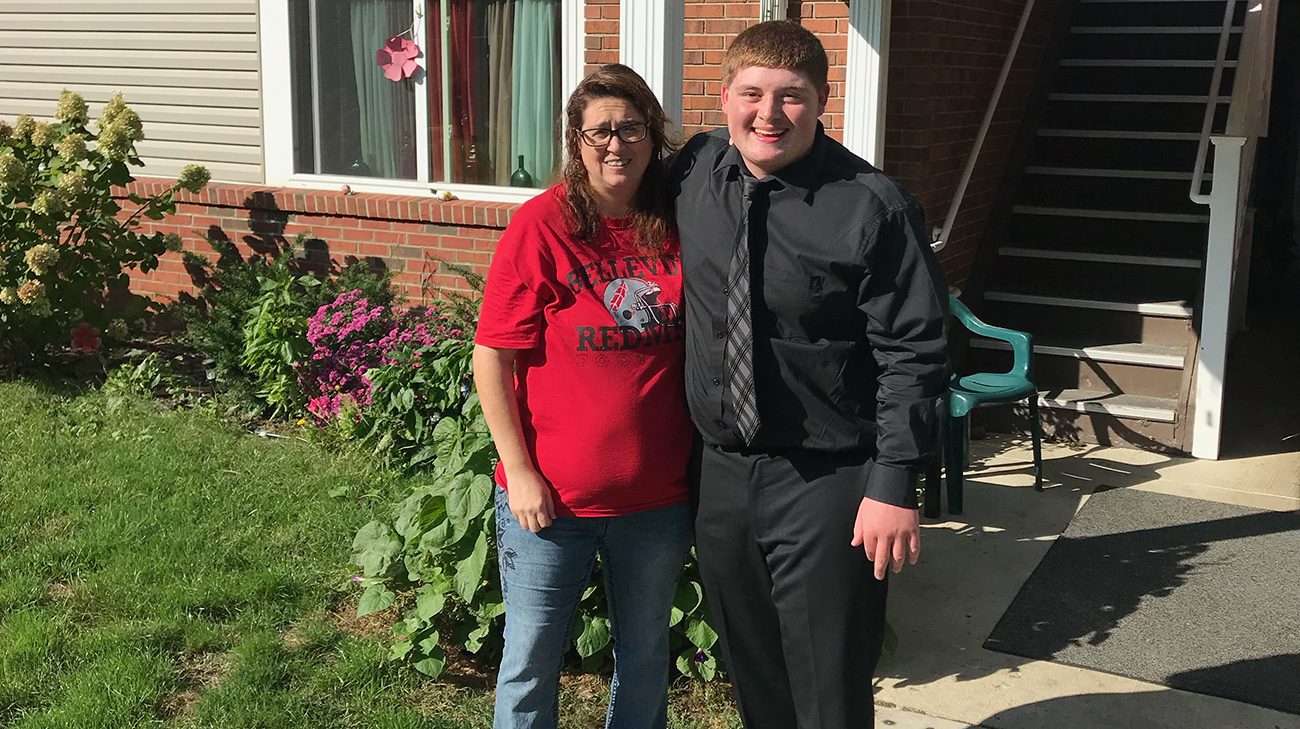
Jan with her son. She says she’s grateful for Andrea’s support after her MS diagnosis, including helping care for him in those early years. (Courtesy: Andrea Missler)
Andrea didn’t notice symptoms until her forties. She initially assumed the periodic weakness and fatigue, especially in her legs, were tied to previously diagnosed spinal stenosis and degenerative disc disease.
“I would get some numbness from time to time, but after COVID, my legs never fully recovered,” says Andrea, who has a 9-year-old son, Niko. “They just feel like noodles all the time.”
After receiving their diagnosis, both sisters turned to Cleveland Clinic. Andrea was already familiar with the team, having accompanied her sister to many appointments over the years.
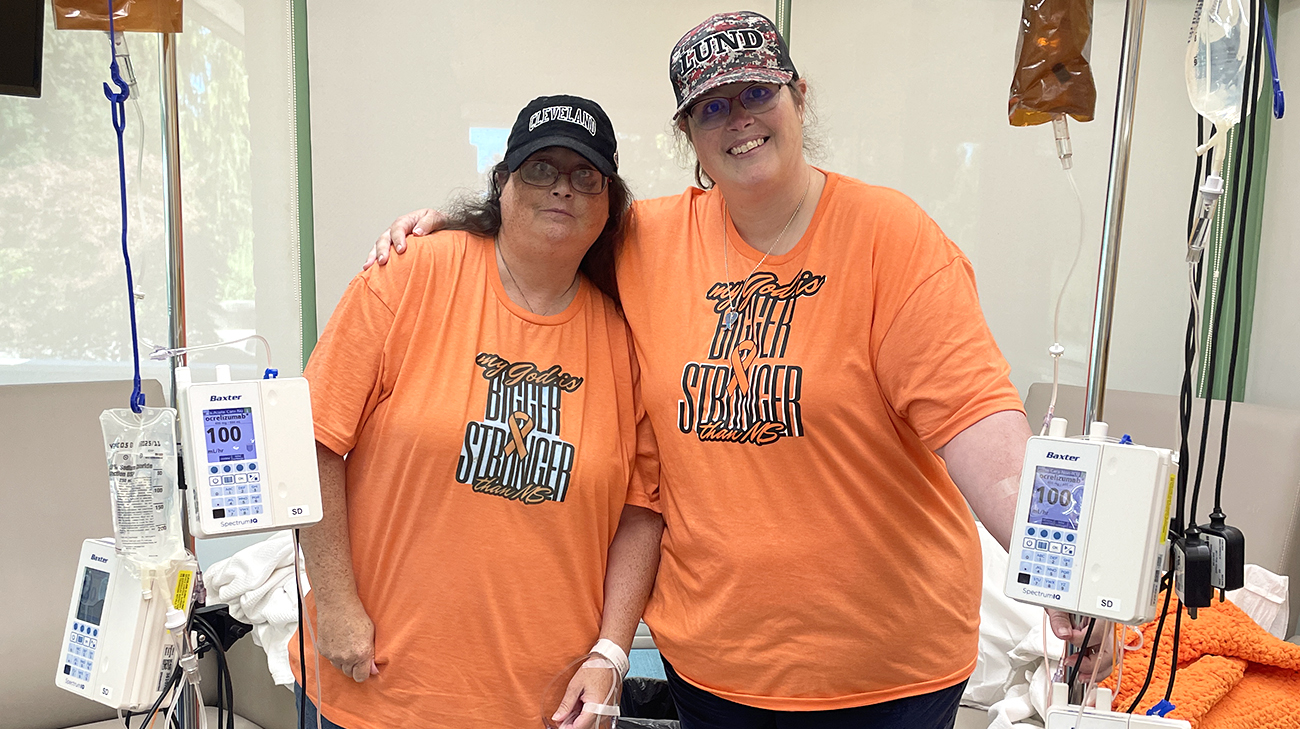
While the sisters have different manifestations of MS, they follow the same primary treatment: twice-yearly intravenous infusions of ocrelizumab. The six-hour treatment has been shown to slow disease activity, reduce relapses and limit the development of new brain lesions. Jan and Andrea also take oral medication as needed to manage inflammation, particularly during illness or periods of physical stress.
Andrea schedules their appointments so they can receive treatment at the same time, once in February and again in August, at a Cleveland Clinic facility in nearby Sandusky, Ohio. On more difficult days, they may arrive with the support of their walkers — Andrea’s burgundy, Jan’s blue.
“Some sisters have spa days, and we have Cleveland days,” Andrea says.
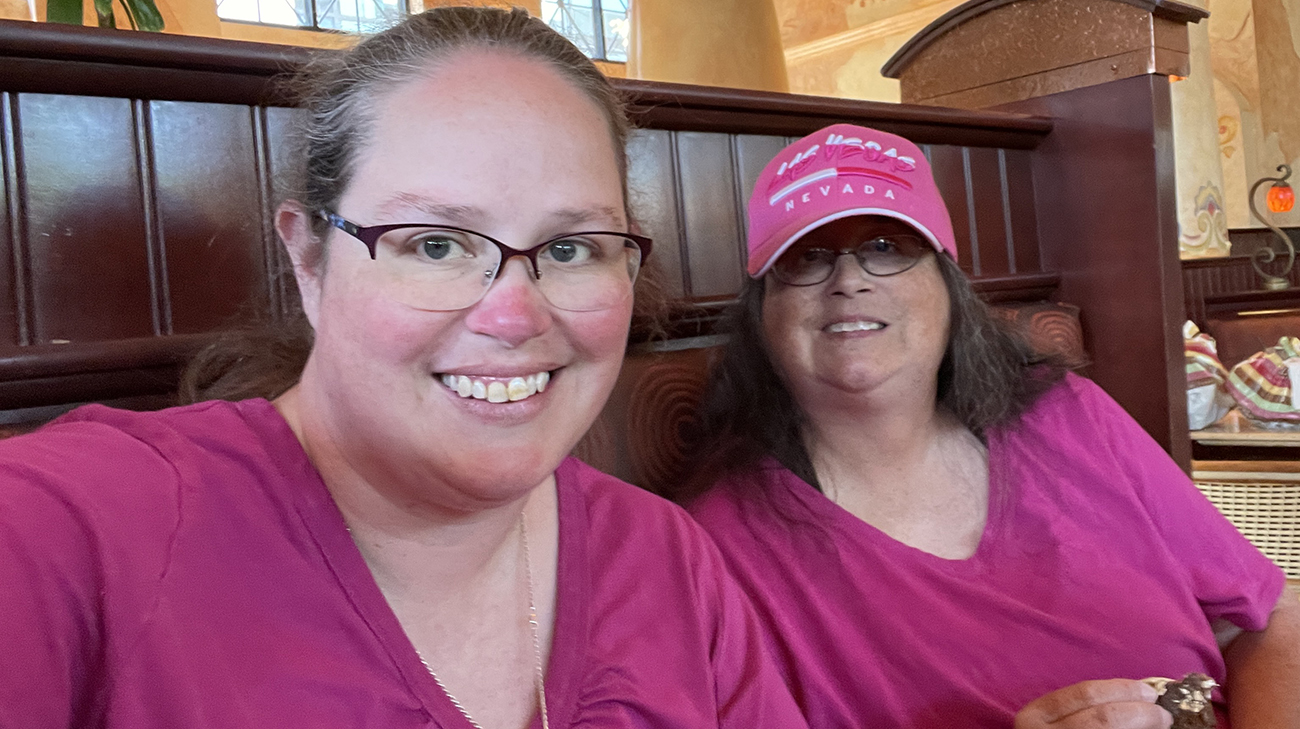
Often, Andrea and Jan schedule their infusions at the same time, turning the day into time together, with lunch after. (Courtesy: Andrea Missler)
Those days center on appointments where the sisters receive infusions side by side, followed by lunch together. More than once, they’ve even arrived in matching outfits without planning it. They pass the time talking or resting, together as they’ve always been.
Members of their care team say they’ve watched their bond grow.
Managing MS day to day can be challenging, but both sisters remain focused on the moments when they feel their best. Andrea, a former child-care worker who now works from home in sales, says one of the hardest parts has been not being as active with her young son as she would like.
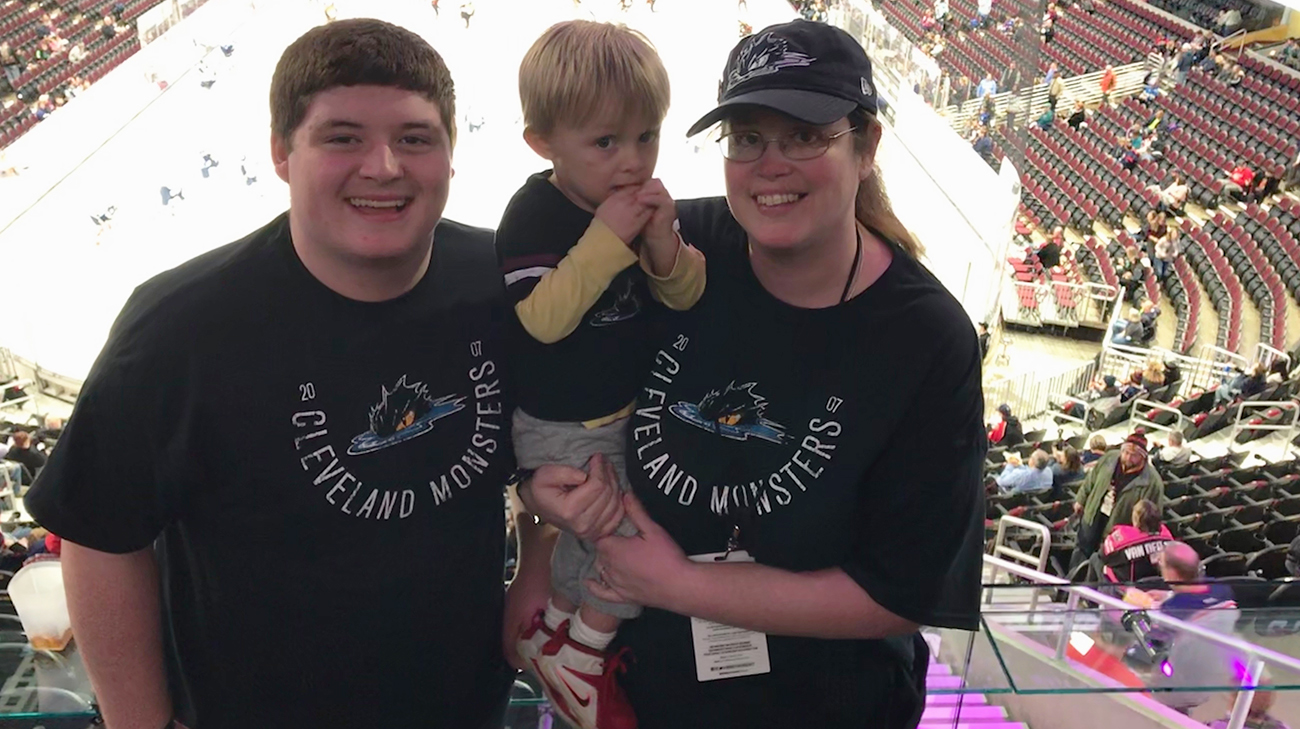
Jan, Andrea and their families try to continue doing things they love, including attending Cleveland Monsters hockey games. (Courtesy: Andrea Missler)
“I sometimes think of it like the movie Groundhog Day,” Andrea says. “You go to sleep feeling okay and then wake up and have to figure it out all over again. Life is different now, but you have to stay motivated. Some days, when your legs don’t want to cooperate, that can be tough.”
Dr. McGinley says careful monitoring allows her team to adjust treatment as needed — whether that’s the type of medication, the dose or how often it’s given. “It’s about understanding your body and recognizing what might trigger more difficult days,” she says. “From there, we work with patients to adapt how their symptoms are managed.”
Even with those challenges, the sisters make time to be together with their families. Jan and her boyfriend, Andrea and her husband, and their sons enjoy outings when they can, including trips to Cleveland Monsters hockey games.
“It’s important to stay positive. These are the cards we’ve been dealt,” Andrea says. “You can focus on what’s changed, or you can find ways to adjust and keep doing the things you enjoy.”
Related Institutes: Neurological InstitutePatient Stories
Cleveland Clinic Team Helps Florida Patient Breathe Easier After Complex Lung Surgery
Oct 21, 2026

Teen Athlete Returns to Sports After Two Head Injuries Trigger Yearlong Headache
Oct 19, 2026