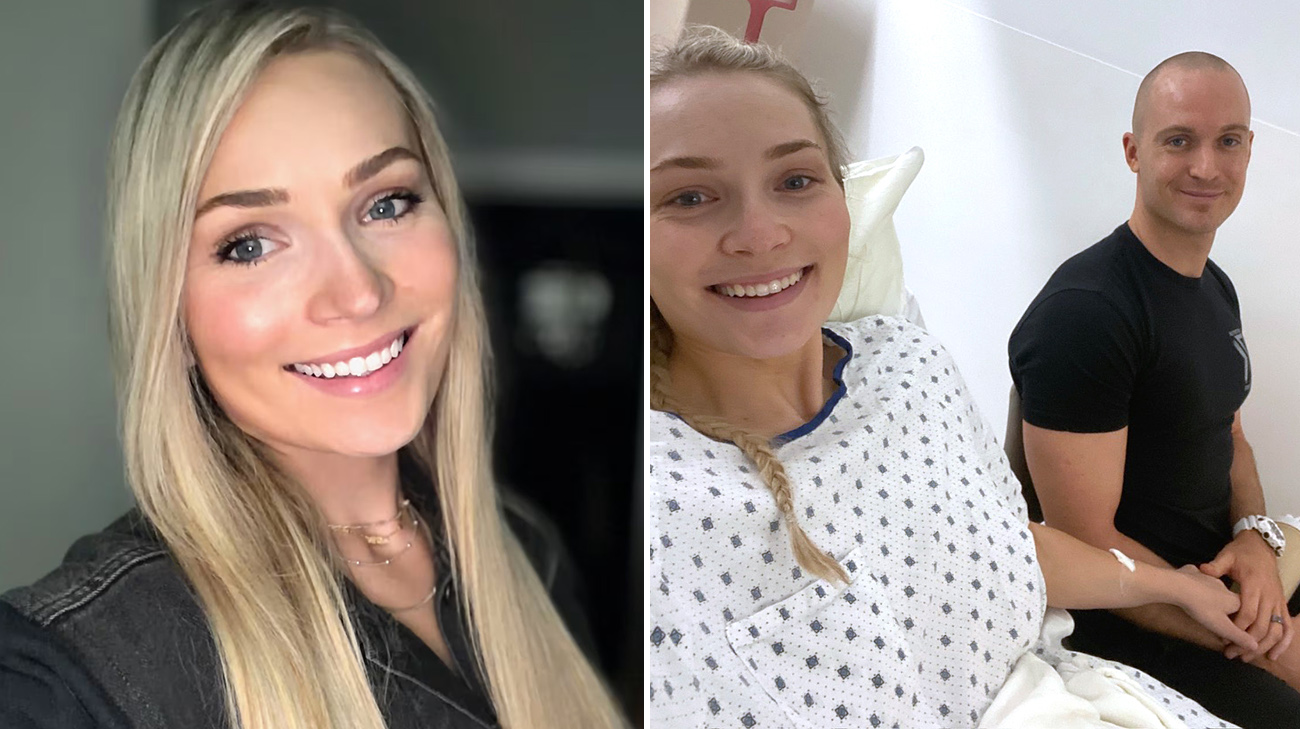
When Vogue Harrison was a teenager, a few things about her health didn’t quite add up.
An active track-and-field athlete, she carried weight differently than others her age. She also experienced multiple bone fractures, four in her fingers and one in her elbow, which she initially attributed to sports. Most concerning, though, was by age 16, she had not yet started her period.
After seeing several physicians, Vogue ultimately received an unexpected diagnosis: primary ovarian insufficiency, also known as premature ovarian insufficiency, and sometimes described as premature menopause. Without the hormones her body needed, her development had been affected, and her bones were more fragile.
“When you’re going through it, you don’t really understand what normal feels like,” she recalls. “You don’t have time to process or grieve what might be different, because you’re still trying to make sense of what’s happening.”
Growing up, Vogue had imagined a future that included marriage and children. This diagnosis forced her to reconsider what that might look like.
“When I learned that, the emotional part really set in,” Vogue says. “I wasn’t as worried about having kids as I was about whether someone would want to marry me.”
Vogue’s treatment journey began with hormone therapy in the form of birth control pills, which provided necessary estrogen support.

Vogue was always an active kid growing up. (Courtesy: Vogue Harrison)
During her senior year of high school, she grew four inches. The physical changes were noticeable — her bone health improved and she stopped experiencing frequent fractures. For the first time, she began to feel physical improvement.
But the standard approach did not fully explain what she was experiencing. Even as her bone health stabilized, she continued to have persistent symptoms, including headaches and brain fog, and her body still did not feel well. Over time, it became clear her treatment needed to be reassessed.
In her 20s, Vogue sought answers from several physicians before learning the importance of seeing a specialist with expertise in menopause-related conditions. That search ultimately led her to Pelin Batur, MD, a menopause specialist and medical director of the Cleveland Clinic Women’s Comprehensive Health and Research Center.
Dr. Batur says finding experienced care is critical for patients with less common presentations of premature menopause, where symptoms and treatment responses don’t always follow a typical path.
“When treating these patients, our goal is to make sure their body has adequate doses of the hormones a woman of reproductive age typically has in her system so they can be healthy,” Dr. Batur says. “The small doses we give postmenopausal women will not be enough for younger patients to protect their bones and their heart and help them feel well.”
Dr. Batur says primary ovarian insufficiency remains relatively uncommon. In the United States, about 1 in 100 women experience a low-estrogen state like Vogue’s before age 40. For those under 30, it is closer to 1 in 1,000. “Experiencing it in your teens is particularly rare,” she says.
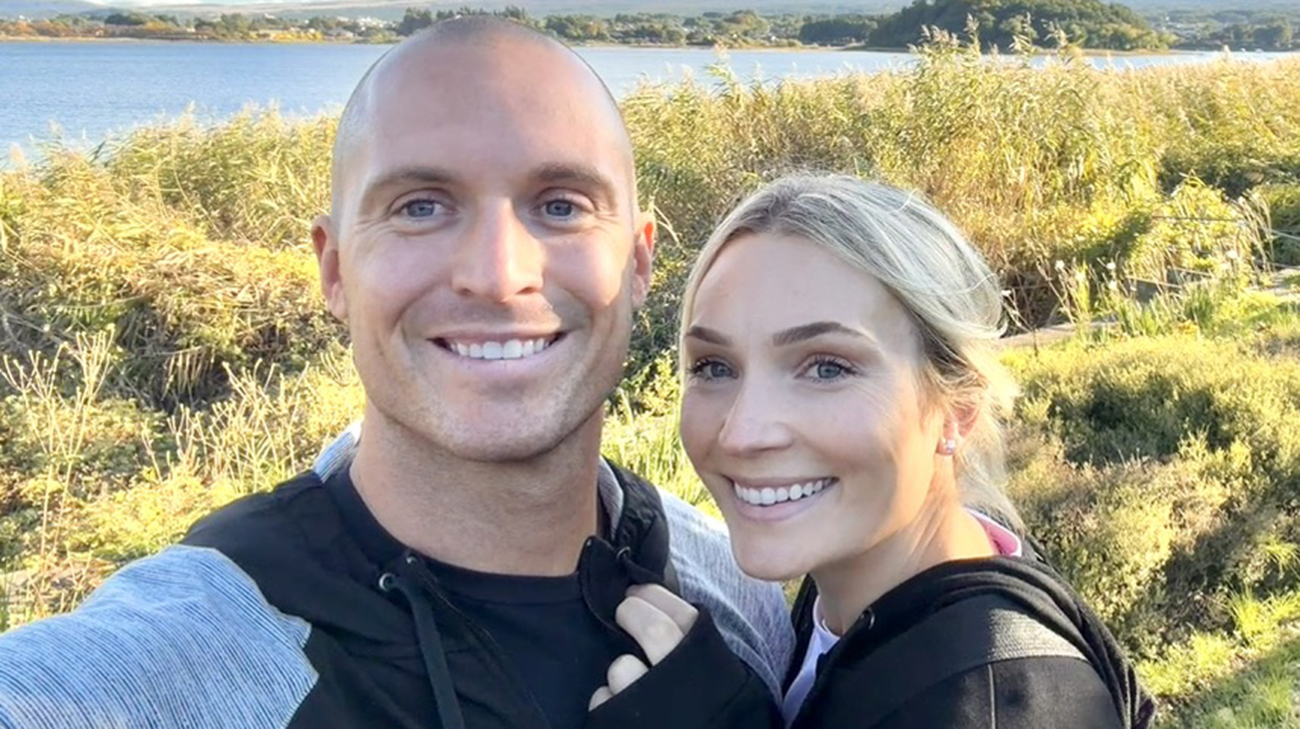
Vogue and her husband, Austen Harrison. (Courtesy: Vogue Harrison)
Diagnosis often begins with menstrual changes before age 40, including missed periods or no periods for three months or more. Blood tests can help rule out other conditions, such as polyendocrine metabolic ovarian syndrome (formerly known as polycystic ovary syndrome), and identify patterns in hormone levels.
For Vogue, finding specialized care was a turning point — the first time she felt truly heard and supported by a physician deeply knowledgeable about POI and menopause care. Even then, optimizing hormones required time, patience and trial and error.
While hormone therapy was effective for Vogue in significant ways over the years, one part of treatment remained especially challenging: progesterone. Her body was unable to tolerate progesterone therapy, and she experienced frequent — often prolonged — bleeding and bloating. Importantly, this bleeding was not a typical menstrual cycle. It was an adverse reaction associated with progesterone intolerance that significantly affected her day-to-day life.
Because pregnancy was already unlikely, and options such as IVF and egg donation were not paths she personally wanted to pursue, she began considering surgical options.
After discussing with her care team, she chose to undergo a hysterectomy at age 30 in 2024. The procedure, performed by Megan Billow, DO, at Cleveland Clinic Medina Hospital, led to significant improvements in her health.
“I am now in the best shape of my life. I don’t bleed constantly. I’m not bloated. I don’t have brain fog. I truly feel like my life has fully begun,” she says.

Vogue and Austen with their cat, Jade, and dog, Zelda. (Courtesy: Vogue Harrison)
Along the way, Vogue’s life also took a different turn. She met Austen Harrison, who became a steady source of support throughout her diagnosis and treatment. The couple got married in 2020.
Today, they live in the Columbus, Ohio, area with their cat, Jade, and dog, Zelda, — a life that feels full and steady in its own way. They are also active in their local church, which has become an important part of their life.
She has built a career in cybersecurity and is more physically active than ever, spending time lifting weights, running and biking. “There's nothing that stops me,” she says.
Now 32, Vogue shares her story to encourage others to speak up when something doesn’t feel right. “You know your body best,” she says. “You have access to so much information now. It can help you better understand what you’re experiencing and find doctors who will really listen.”
She also encourages others to find connection in shared experiences. “You’re not alone,” she says. “Connecting with people going through something similar can give you hope and remind you things can get better. For me, those conversations have brought a sense of purpose and helped me make sense of everything I’ve been through.”
Related Institutes: Ob/Gyn & Women's Health InstitutePatient Stories
Exercise Medicine Program Helps Man Prepare for Surgery and Reclaim an Active Life
Oct 9, 2026

‘Cornstarch Keeps My Son Alive’: Boy Eats Raw Cornstarch Daily To Manage Rare Metabolic Disorder
Oct 8, 2026