



When someone’s unconscious, keeping them breathing can save their life. If you give someone who’s passed out first aid, putting them in the recovery position can make a huge difference. That position can prevent serious or even deadly complications like choking from happening while you wait for first responders.
Advertisement
Cleveland Clinic is a non-profit academic medical center. Advertising on our site helps support our mission. We do not endorse non-Cleveland Clinic products or services. Policy
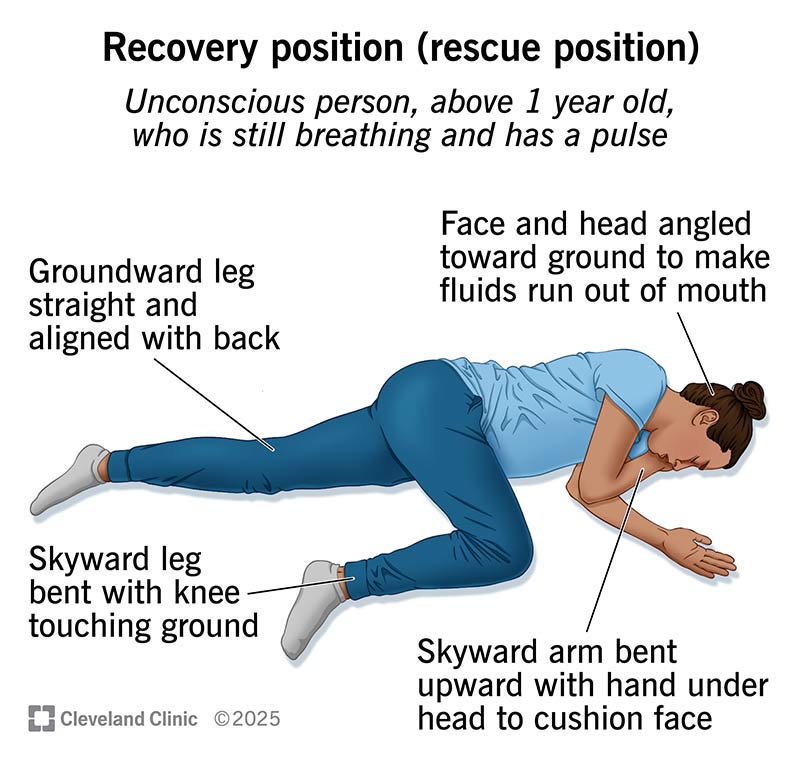
Image content: This image is available to view online.
View image online (https://my.clevelandclinic.org/-/scassets/images/org/health/articles/recovery-position.jpg)
The recovery position is a first aid technique that makes sure your airway stays open if you’re unconscious. It’s also known as the rescue position.
Advertisement
Cleveland Clinic is a non-profit academic medical center. Advertising on our site helps support our mission. We do not endorse non-Cleveland Clinic products or services. Policy
When you’re awake, you have a cough reflex. That reflex keeps things that don’t belong out of your lungs. It’s why you start coughing if you inhale dust or if something you eat or drink goes down the wrong way.
But when you’re unconscious, you don’t have a cough reflex. That means you’re at risk for serious or life-threatening problems like choking or aspiration. Blood, vomit or even the mucus your respiratory system makes can all cause those problems.
The recovery position is for medical emergencies. If someone is unexpectedly unconscious or for unknown reasons, don’t hesitate to get help. Call 911 or your local emergency services number as quickly as possible.
The recovery position is for someone who’s unconscious, but they’re still breathing well and have a pulse. Emergency first aid on someone who’s passed out starts with checking their ABCs: Airway, breathing and circulation.
You check them in that order for a reason. Having a clear airway means you can breathe, and your body can get oxygen for your blood to circulate. If someone’s airway is clear, you want to keep it that way.
That’s where the recovery position comes in. Putting someone in this position lets fluids like mucus, blood or vomit run out of their mouth. That ensures they can keep breathing until they either wake up or get medical care. The recovery position also keeps them from lying fully on their chest, which can make it harder to breathe.
Advertisement
To check someone’s airway and breathing, do the following:
If you get any reaction to those efforts, they’re responsive, which means they’re likely conscious, breathing and their heart is beating. If they’re breathing and have a pulse, you can put them in the recovery position.
If they don’t respond, feel for breathing with the back of your hand in front of their mouth. You’ll also need to feel for their pulse on their wrist or neck. Look and listen for normal breathing for no more than 10 seconds. If they aren’t breathing or don’t have a pulse, you need to start CPR immediately.
Some examples of injuries or illnesses where the recovery position might be necessary include:
There are a few forms of the recovery position. The one you use depends on the person’s age and the situation. Once they’re positioned, you also need to keep close tabs on their pulse and breathing. If either stops, you need to move them onto their back and start CPR immediately.
The variants of the recovery position are:
If you’re helping someone who’s pregnant, they MUST go on their left side. Putting them on their other side can put too much pressure on their vena cava, a major vein inside their body.
The recovery position has a person lying on their side. The position works like so:
Their groundward arm is typically lying against the ground in an L-shape. Their hand is about even with their head, and their palm is turned upward. But its position isn’t as important for the standard recovery position.
Advertisement
For the infant recovery position, you’ll hold the infant in your arms with their head supported. They should be:
While holding them, keep the back of your hand in front of their mouth. That way, you can feel if they’re breathing. (Their breath is easier to feel if the back of your hand is wet.)
Starting from flat on their back, you can put someone in the standard recovery position using the following steps:
Advertisement
Once they’re in position, you can cover them with a blanket or jacket if you’re worried about them being cold or going into shock. You should also keep constant tabs on their breathing. If they stop breathing, you’ll need to put them on their back and start CPR.
If someone you’re with passes out unexpectedly, don’t panic. Take a deep breath and focus on helping them. The recovery position is a quick, easy way to help ensure that someone who’s passed out can keep breathing and doesn’t choke. This can save their life while you wait for first responders.
Advertisement



Sign up for our Health Essentials emails for expert guidance on nutrition, fitness, sleep, skin care and more.
Learn more about the Health Library and our editorial process.
Cleveland Clinic’s health articles are based on evidence-backed information and review by medical professionals to ensure accuracy, reliability and up-to-date clinical standards.
Cleveland Clinic’s health articles are based on evidence-backed information and review by medical professionals to ensure accuracy, reliability and up-to-date clinical standards.
Whether you need stitches, a broken bone set or think your appendix might be causing your abdominal pain, Cleveland Clinic’s emergency medicine team is here to help.
