



LASIK is a type of eye surgery that improves your vision by correcting common refractive errors. Your surgeon will use a laser to reshape your cornea so it bends light correctly. The surgery is fast (half an hour or less) and you should notice clear vision almost immediately. It can take a few weeks for your eyes to heal completely.
Advertisement
Cleveland Clinic is a non-profit academic medical center. Advertising on our site helps support our mission. We do not endorse non-Cleveland Clinic products or services. Policy
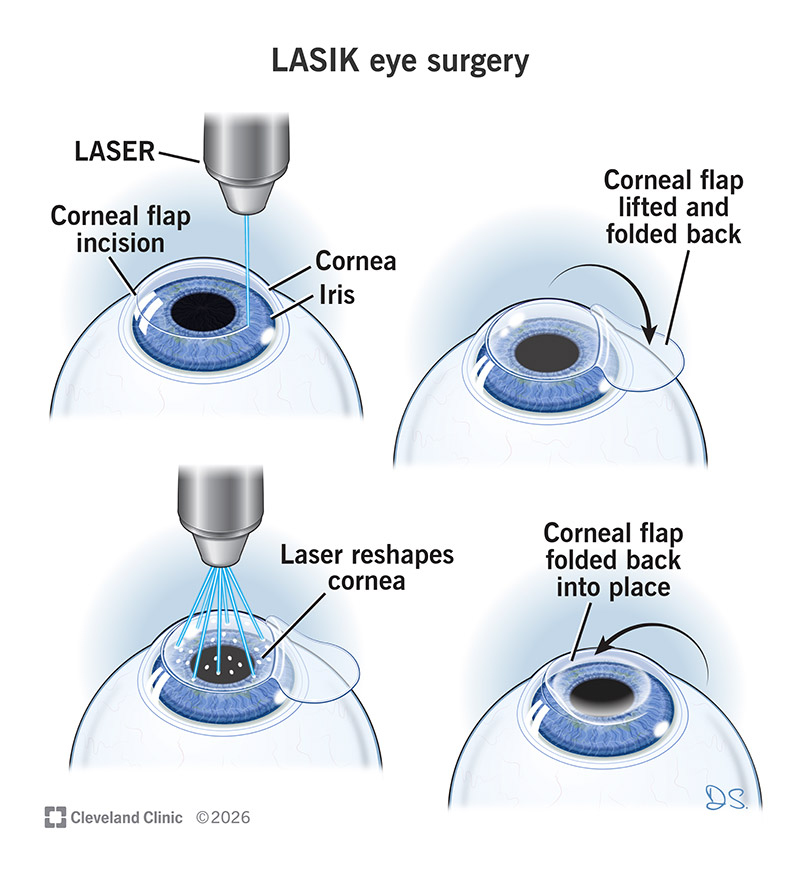
Image content: This image is available to view online.
View image online (https://my.clevelandclinic.org/-/scassets/images/org/health/articles/LASIK-eye-surgery)
LASIK is eye surgery that uses lasers to correct your vision. You might want to consider LASIK if you don’t want to wear glasses or contacts to see clearly.
Advertisement
Cleveland Clinic is a non-profit academic medical center. Advertising on our site helps support our mission. We do not endorse non-Cleveland Clinic products or services. Policy
The name LASIK stands for: laser-assisted in situ keratomileusis. It means your surgeon uses a laser to reshape your cornea. This improves your vision so you can see clearly without glasses or contacts.
LASIK treats common refractive errors that make your vision blurry because your eyes can’t bend light as they should, including:
LASIK is only for adults over 18. You can usually get it only if your eyes have stopped developing and your vision prescription hasn’t changed much in a year or so.
Talk to an ophthalmologist if you’re interested in LASIK. They’ll explain everything you need to know and what you can expect.
LASIK is a safe, effective way to correct your vision. Some of the main benefits are:
Advertisement
Like all surgeries, LASIK has a risk of complications. Severe issues are rare, but can include:
Your eye doctor will do a full eye exam before you have LASIK. This will make sure your eyes are healthy enough for surgery. Don’t wear lotion, makeup, perfume or any cosmetic products on your face the day of your surgery. Plan ahead for someone to drive you to and from your appointment. You won’t be able to drive right after surgery.
You’ll be awake during LASIK, but you won’t feel any pain. Your surgeon may give you a mild sedative to help you relax.
During LASIK, your surgeon will:
LASIK is a fast surgery. It usually takes half an hour or less. You’ll look at the light from the laser for fewer than 30 seconds.
You can go home soon after surgery. Your care team will monitor you for a few minutes to make sure you’re safe before they tell you it’s OK to leave. When you go home, you’ll need to wear an eye shield for a day or two to protect your eyes while the surgery flap heals. Your care team will also give you a few types of eye drops, including:
They’ll tell you how often to put drops in your eyes and how long to use them.
LASIK recovery time is very fast. It usually only takes a few days for your vision to clear up and improve. But it can take up to a few weeks for your eyes to heal completely. Don’t resume driving before your eye doctor says it’s safe.
Your surgery care team will give you a more specific recovery timeline, but in general, you should:
Advertisement
You’ll probably have some side effects after LASIK surgery. These are usually mild and should get better on their own. Some of the most common LASIK side effects include:
Most side effects will clear up in a week or less. Dry eye is the most common issue. Your surgery team will give you eye drops to help manage it. It’s rare, but some people have dry eyes for up to a year after LASIK.
You’ll have a follow-up visit with your surgeon a day or two after surgery. They’ll examine your eyes, check your vision and make sure everything is healing correctly. They’ll tell you how often you’ll need eye exams after that.
Contact your surgery care team if it feels like side effects are getting worse, not better. Visit a doctor right away if you have severe eye pain.
Using a laser to correct your vision might sound like something out of a science fiction movie. But LASIK is very safe. And very effective. It can be a good option to almost instantly improve your vision if you can’t or don’t want to wear glasses or contacts.
Advertisement
Even though it’s quick and successful, you should still talk to an eye ophthalmologist before deciding on LASIK eye surgery. They’ll help you understand the benefits, risks and if you’re a good candidate for it. They’ll also let you know what you can expect and if you’ll ever need glasses again.
Advertisement



Sign up for our Health Essentials emails for expert guidance on nutrition, fitness, sleep, skin care and more.
Learn more about the Health Library and our editorial process.
Cleveland Clinic’s health articles are based on evidence-backed information and review by medical professionals to ensure accuracy, reliability and up-to-date clinical standards.
Cleveland Clinic’s health articles are based on evidence-backed information and review by medical professionals to ensure accuracy, reliability and up-to-date clinical standards.
Tired of wearing glasses or contacts? At Cleveland Clinic, we offer every laser vision correction option, including LASIK, PRK and SMILE.
