Toxoplasmosis is an infection caused by the parasite Toxoplasma gondii. You get it after contact with contaminated cat poop or eating contaminated food. If you have a weakened immune system, you can develop life-threatening complications. If you get it while pregnant, it could cause miscarriage or health issues in your child.
Advertisement
Cleveland Clinic is a non-profit academic medical center. Advertising on our site helps support our mission. We do not endorse non-Cleveland Clinic products or services. Policy
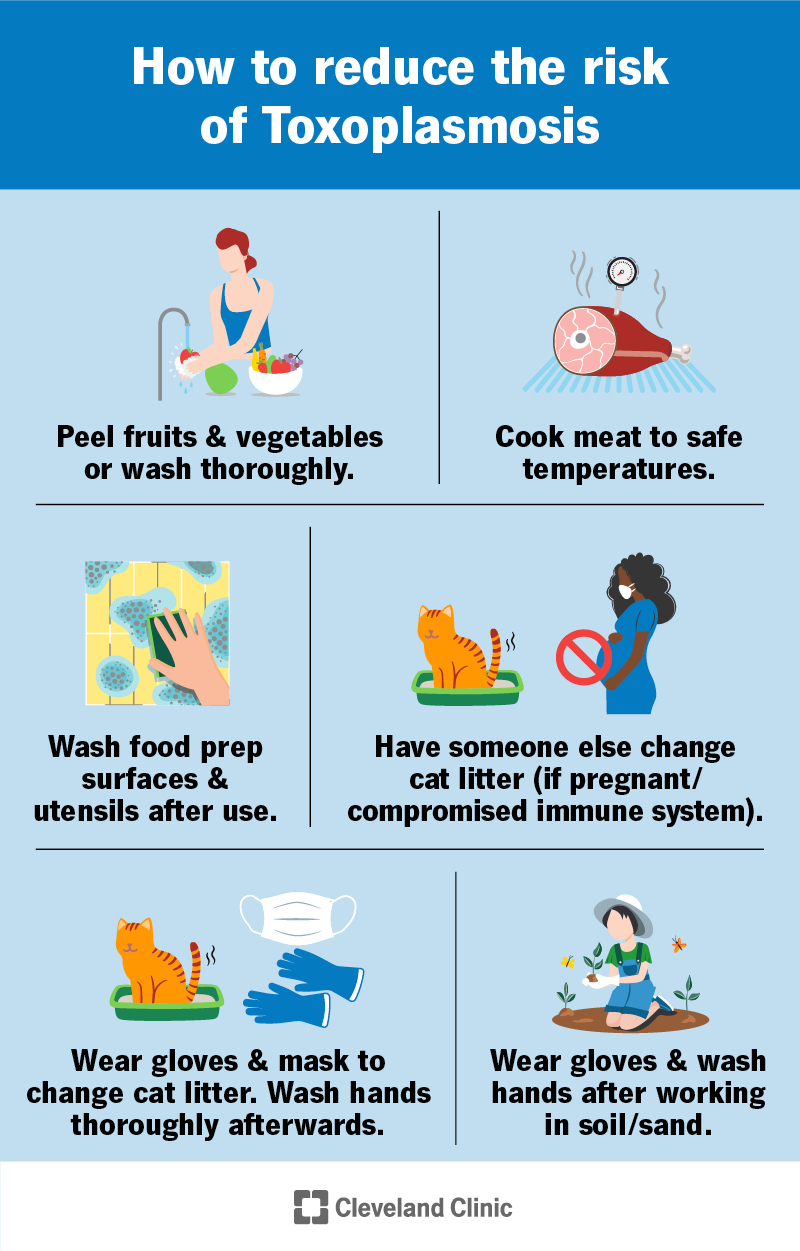
Image content: This image is available to view online.
View image online (https://my.clevelandclinic.org/-/scassets/images/org/health/articles/9756-toxoplasmosis)
Toxoplasmosis is an illness you can get from contact with contaminated cat poop or by eating undercooked meat. The parasite Toxoplasma gondii (T. gondii) causes it.
Advertisement
Cleveland Clinic is a non-profit academic medical center. Advertising on our site helps support our mission. We do not endorse non-Cleveland Clinic products or services. Policy
Most people don’t have symptoms when they first get toxoplasmosis (“tok-soh-plaz-MOH-sis”). Your body usually fights off the parasite without you knowing it was there. About 10% to 20% of people have mild symptoms that resolve on their own.
But the parasite can remain in your body as cysts, which can reactivate later. This can cause serious complications if you have a compromised immune system.
If you get toxoplasmosis while pregnant, it can cause pregnancy loss or serious health problems for your child. Toxoplasmosis is why certain people should avoid cleaning cats’ litter boxes.
Types of toxoplasmosis include:
Advertisement
The symptoms of toxoplasmosis depend on the type. Most people don’t have symptoms when first infected. But you might have flu-like symptoms, including:
These usually resolve on their own in several weeks.
If a previous infection reactivates, symptoms could include:
Some signs and symptoms of congenital toxoplasmosis are present at birth. Some develop later in childhood. They could include:
The parasite T. gondii causes toxoplasmosis. T. gondii reproduces in a cat’s intestines and ends up in its poop. Humans get toxoplasmosis after accidentally eating (ingesting) something contaminated with poop. It might be hard to imagine this happening. But it can happen if you eat undercooked meat, clean litter boxes or garden.
Because of the way the parasite forms cysts in your body, it can make you sick in various ways. When the parasite initially enters your body, some people get flu-like symptoms. But in most cases, your immune system can get rid of the initial infection without causing any symptoms.
While your immune cells are fighting it off, T. gondii makes small sacs (cysts) in your body. It can live in these cysts, inactive (dormant), for long periods of time. Research suggests that the cysts break open periodically, and your body fights off the infection. Like the initial infection, this usually causes no symptoms.
If your immune system is weakened, though, these ruptured cysts can cause a new case of toxoplasmosis (reactivation).
You usually get toxoplasmosis from ingesting something contaminated with cat poop that contains the parasite. Cat poop can contaminate soil, water, plant material and the food we eat.
You can accidentally ingest T. gondii after coming in contact with something that’s contaminated. For example:
Advertisement
Toxoplasmosis isn’t contagious. But if you’re pregnant, the fetus can get infected with the parasite. Rarely, you can get toxoplasmosis after receiving an infected organ transplant or blood transfusion.
Toxoplasmosis is most dangerous if you’re pregnant or have a weakened immune system. Even though T. gondii reproduces in cats, having a cat on its own doesn’t seem to increase your risk of infection very much.
If you’ve had toxoplasmosis in the past, T. gondii lives in cysts in your body. When your immune system is weakened, it can reactivate and make you sick.
If you get toxoplasmosis during pregnancy or shortly before getting pregnant, you can pass the parasite through the placenta to the fetus. This increases the risk of pregnancy loss or serious health problems for your child.
You’re at a higher risk for complications from toxoplasmosis if you have a weakened immune system. Some complications can be fatal. Complications include:
Advertisement
Infections during pregnancy can cause miscarriage or stillbirth. Complications of being born with toxoplasmosis include:
To diagnose toxoplasmosis, your healthcare provider will examine you and ask about your symptoms. They may recommend:
If you have symptoms of toxoplasmosis in your brain, your provider may recommend:
If you’re pregnant and have toxoplasmosis, your provider may recommend:
Advertisement
Healthcare providers treat toxoplasmosis with a combination of antiparasitic medicines and antibiotics. These stop T. gondii from growing and reproducing in your body. You also might get folinic acid to reduce the side effects of the antiparasitic medications.
Treatment only works when parasites are active. It can’t get rid of the cysts they leave in your body. You might not need treatment if you don’t have a compromised immune system and don’t have any symptoms.
Common medications that treat toxoplasmosis include:
Treatment can last two to six weeks, but you may start to feel better in only a few days. It may take three weeks to six months for symptoms of brain injuries to fully resolve. Some symptoms may be permanent.
Even if you feel better, you may have to stay on treatment for a long time to make sure the active parasites are destroyed. If you have a weakened immune system, there’s no set timeframe for how long you’ll need to take antiparasitic medications.
If you’re pregnant and have toxoplasmosis, you’ll probably have to take medication for the rest of the pregnancy. Treatment for congenital toxoplasmosis can last up to a year.
Talk to your healthcare provider about steps you can take to prevent toxoplasmosis if you:
If you have symptoms of toxoplasmosis, especially if you have a compromised immune system, contact your provider right away.
The outlook for toxoplasmosis varies. Most people don’t develop serious complications. But if you have a weakened immune system, toxoplasmosis could cause serious health issues, including brain inflammation. Without treatment, it can be fatal.
Babies born with toxoplasmosis are less likely to develop complications later in childhood if diagnosed and treated early.
Because of the cysts left behind by T. gondii, toxoplasmosis may never be fully cured. Medication can treat an active infection, but it doesn’t destroy the cysts. Some damage the infection causes can be permanent.
If you have a weakened immune system or congenital toxoplasmosis, the parasite can reactivate and make you sick in the future.
Safe food preparation and handwashing are the most important things you can do to help prevent toxoplasmosis:
Here are some precautions to take if you’re pregnant or have a compromised immune system:
Toxoplasmosis isn’t usually serious. But if you’re pregnant or have a weakened immune system, it’s important to take extra precautions. There are many ways to help prevent an infection. Talk to your healthcare provider about how to reduce your risk based on your specific circumstances.



Sign up for our Health Essentials emails for expert guidance on nutrition, fitness, sleep, skin care and more.
Learn more about the Health Library and our editorial process.
Cleveland Clinic’s health articles are based on evidence-backed information and review by medical professionals to ensure accuracy, reliability and up-to-date clinical standards.
Cleveland Clinic’s health articles are based on evidence-backed information and review by medical professionals to ensure accuracy, reliability and up-to-date clinical standards.
Need care fast? Cleveland Clinic’s Express Care and Urgent Care locations treat everything from sprains to sinus infections — no appointment needed.