



Broken fibulas rarely happen on their own. It’s much more common to break your calf bone along with your tibia (shin bone). If you do have an isolated fibula fracture, you probably won’t need surgery. Your healthcare provider will tell you which type of fracture you have and what you’ll need to do to help your bone heal.
Advertisement
Cleveland Clinic is a non-profit academic medical center. Advertising on our site helps support our mission. We do not endorse non-Cleveland Clinic products or services. Policy
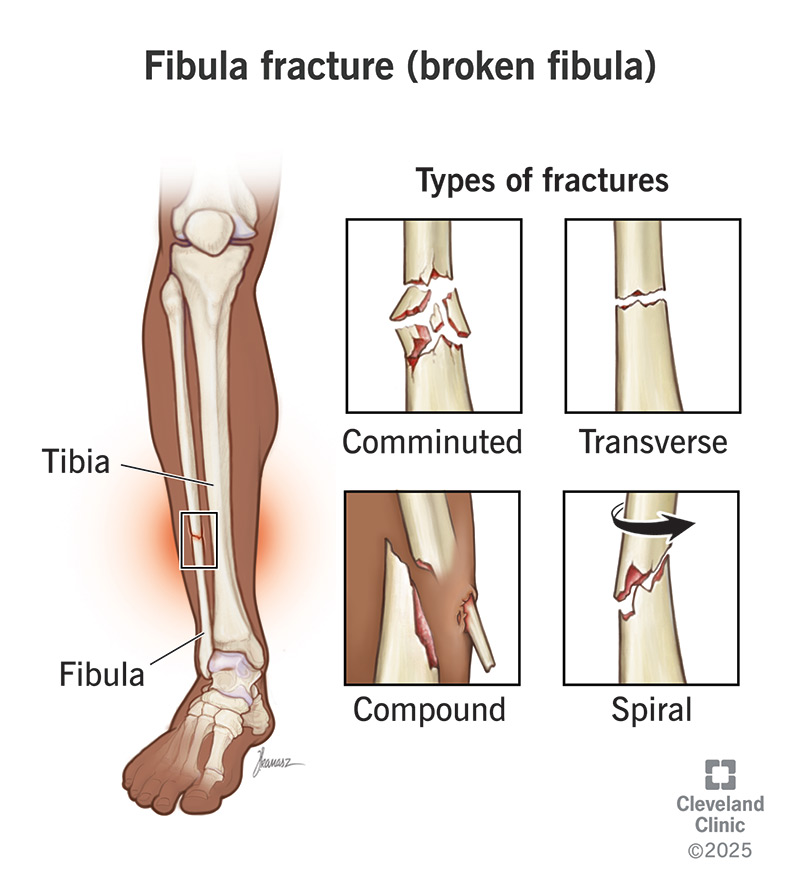
Image content: This image is available to view online.
View image online (https://my.clevelandclinic.org/-/scassets/images/org/health/articles/fibula-fracture)
A fibula fracture is the medical name for breaking your calf bone. The fibula is one of two bones in your lower leg, along with your shin bone (tibia).
Advertisement
Cleveland Clinic is a non-profit academic medical center. Advertising on our site helps support our mission. We do not endorse non-Cleveland Clinic products or services. Policy
Fibula fractures usually happen along with other broken bones in your leg or ankle. They usually happen from a serious fall or car accident.
You might be able to put weight on your injured leg if you have a broken fibula. That’s because it doesn’t support your weight like your shin bone. But don’t force yourself to use or move your leg. Fibula breaks need diagnosis and treatment right away. Go to the emergency room if you think you might have any type of broken leg.
Symptoms of a broken fibula can include:
Traumas almost always cause fibula breaks, including
A healthcare provider will diagnose a fibula fracture with imaging tests and a physical exam. This might be done in the emergency room. If you’re taken to the ER, a team of providers will stabilize you and treat your injuries. They’ll treat any life-threatening injuries before diagnosing the broken fibula.
Your provider will take pictures of your leg using a few tests. These will confirm that your fibula is broken. They’ll also let your provider check for other injuries. You may need:
Advertisement
Healthcare providers classify broken calf bones in a few ways. They classify some fractures by the shape or pattern of the break line:
Providers classify some fractures by how they happen:
Your provider might describe the fracture with some other terms, including:
A healthcare provider will recommend treatments make sure your calf bone heals back into one piece correctly. Broken fibula treatments include:
Most fibula fractures heal completely in six to eight weeks. There are lots of factors that can affect your recovery time. More severe fractures can take longer. Talk to your provider or surgeon about a timeline that fits your specific situation.
See a healthcare provider right away if you think you have a broken bone in your leg. Go to the emergency room if you experience any of the following:
Advertisement
Fibula fractures don’t usually cause any long-term complications. You should be able to resume all your usual activities once your bone heals. Your healthcare provider will tell you how to manage pain during your recovery.
Fibula breaks usually heal faster than other leg fractures. That’s because your fibula doesn’t support your weight when you stand and move.
There’s no such thing as a “good” broken bone. But fibula fractures usually heal faster than other broken leg bones. Still, it can be scary to break any bone, especially if it happens in a sudden accident you can’t plan for.
Your healthcare provider will tell you when it’s safe to start using your leg again. Ask them about managing pain while you recover. They’ll help you find a combination of medications to relieve pain and other symptoms safely.
Advertisement



Sign up for our Health Essentials emails for expert guidance on nutrition, fitness, sleep, skin care and more.
Learn more about the Health Library and our editorial process.
Cleveland Clinic’s health articles are based on evidence-backed information and review by medical professionals to ensure accuracy, reliability and up-to-date clinical standards.
Cleveland Clinic’s health articles are based on evidence-backed information and review by medical professionals to ensure accuracy, reliability and up-to-date clinical standards.
Don’t let a bone fracture keep you from the things you love. Cleveland Clinic orthopaedic experts are here to help you recover.
