



Hypoxemia is low levels of oxygen in your blood. Some of the first symptoms you might notice include headache, shortness of breath, and bluish or grayish skin. Many heart and lung conditions can increase your risk. It can also happen at high altitudes. Hypoxemia can be life-threatening. If you’re experiencing symptoms, call 911 or go to the ER.
Advertisement
Cleveland Clinic is a non-profit academic medical center. Advertising on our site helps support our mission. We do not endorse non-Cleveland Clinic products or services. Policy
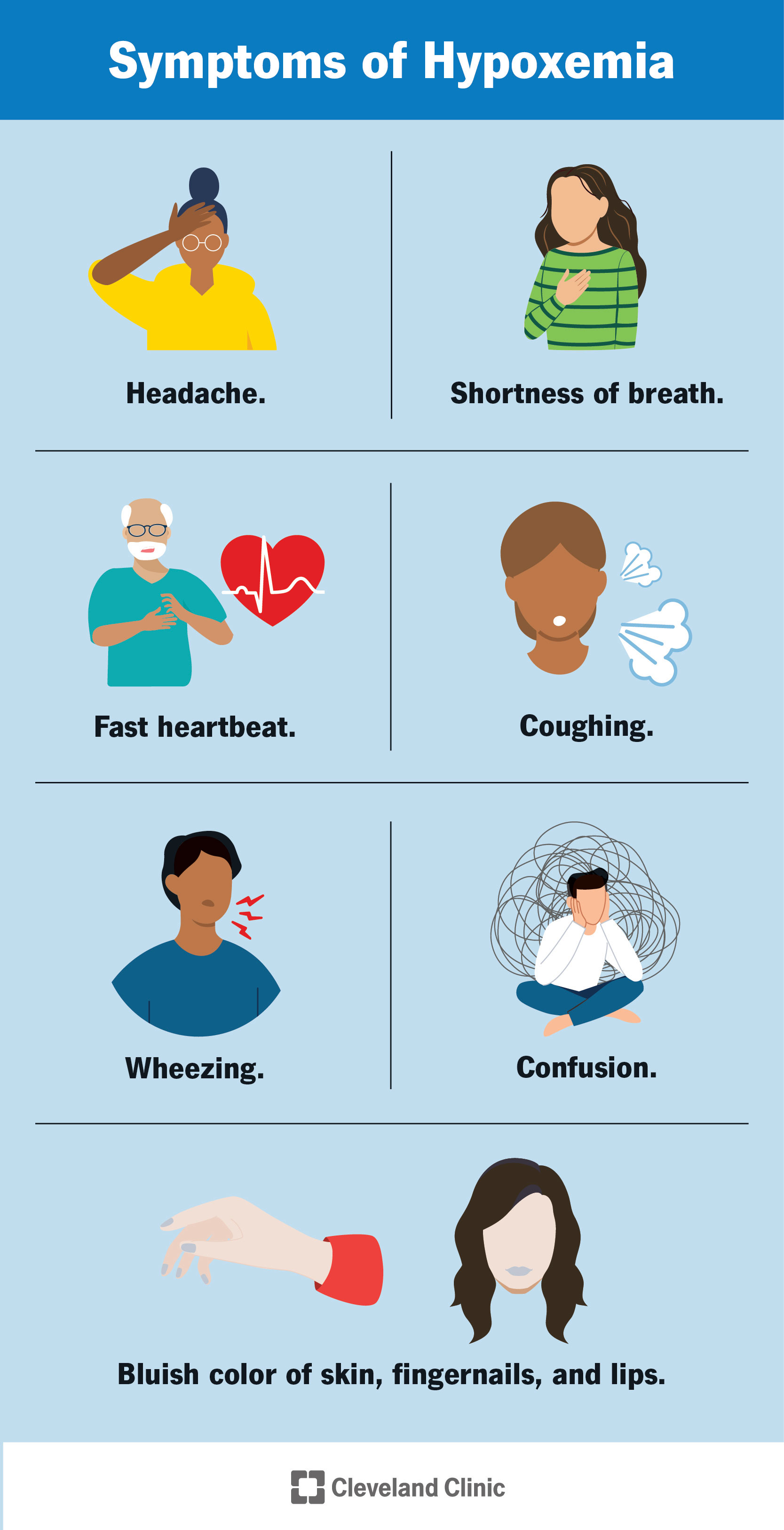
Image content: This image is available to view online.
View image online (https://my.clevelandclinic.org/-/scassets/images/org/health/articles/17727-hypoxemia)
Hypoxemia is when oxygen levels in your blood are lower than normal. If oxygen levels are too low, your body may not work properly.
Advertisement
Cleveland Clinic is a non-profit academic medical center. Advertising on our site helps support our mission. We do not endorse non-Cleveland Clinic products or services. Policy
When you breathe in, oxygen from the air travels through your lungs into small air sacs (alveoli). Small blood vessels travel close to the alveoli and pick up the oxygen. Finally, oxygen travels through your blood to your tissues and organs, giving them energy.
Hypoxemia can happen if you can’t breathe in enough oxygen or if the oxygen you breathe in can’t get to your blood. Air and blood flow are both important for having enough oxygen in your blood. This means both heart and lung issues can lead to hypoxemia.
Hypoxemia can happen suddenly and for a short period of time (acute). It can also be long-term — over months or years. In this case, you may hear it called chronic respiratory failure. If you have symptoms of hypoxemia — like shortness of breath or bluish or grayish skin, lips or nails — call 911 (or your local emergency service number) or go to the emergency room.
Hypoxemia symptoms vary depending on the severity and underlying cause. Some hypoxemia symptoms include:
The most common cause of hypoxemia is an underlying illness that affects blood flow or breathing (like heart or lung conditions). Medical conditions that can lead to hypoxemia include:
Advertisement
Other causes include:
Five categories of conditions usually cause hypoxemia:
For oxygen to get to your blood, you need both airflow into your lungs (ventilation) and blood flow to your lungs (perfusion) to pick it up. If one of these isn’t working, you’ll end up with plenty of oxygen in your lungs but too little blood flow to pick it up, or vice versa. This is called ventilation-perfusion, or V/Q, mismatch. A heart or lung condition usually causes it.
Even if you have good airflow and good blood flow, sometimes it’s difficult for the oxygen to pass — or diffuse — from your lungs to your blood vessels (diffusion impairment). Emphysema, lung scarring, or diseases that make it more difficult for the blood to flow between your heart and lungs can cause diffusion impairment.
Hypoventilation is when you don’t breathe deeply enough or breathe too slowly. This means not enough oxygen is getting into your lungs. Lung conditions, severe muscle weakness, certain medications and some diseases that affect your brain can cause hypoventilation.
If there’s not enough oxygen in the air around you to breathe in, your blood can’t get the oxygen it needs to keep your body working. Locations at high altitudes have less oxygen available in the air than those at lower altitudes. This is why traveling to higher altitudes or flying can cause minor breathlessness to severe altitude sickness.
Deoxygenated blood flows into your heart from the right side. It gets pumped out to your lungs to get oxygen. Then, it comes back in from the left side and gets pumped out to your tissues. Sometimes, deoxygenated blood can get pushed over to the left side of your heart and go out to your tissues without getting oxygen in your lungs first (right-to-left shunting). It’s usually caused by an abnormality in your heart.
Any condition that reduces the amount of oxygen in your blood or restricts blood flow can cause hypoxemia. People living with heart or lung diseases — like congestive heart failure, COPD or asthma — are at an increased risk. Some contagious illnesses, like the flu, pneumonia and COVID-19, can also increase your risk of hypoxemia.
Advertisement
If your blood has low levels of oxygen, it can’t deliver enough to your organs and tissues that need it to keep working (hypoxia). This can damage your heart or brain if it goes on for a long time (for instance, with nocturnal hypoxemia caused by sleep apnea). If it happens suddenly and severely, hypoxemia can be fatal.
To diagnose hypoxemia, your healthcare provider will listen to your heart and lungs. They may also check to see if your skin, lips or fingernails look bluish or grayish.
Tests to check blood oxygen levels include:
To help raise oxygen levels, your provider might use supplemental oxygen. You might need supplemental oxygen all the time or only with exertion or while sleeping. If you have severe hypoxemia, you might need a machine that breathes for you (ventilator).
Advertisement
Depending on the underlying cause of hypoxemia, medications or other treatments can help raise your blood oxygen levels. Your provider might recommend:
COPD, sleep apnea and other medical conditions may cause chronic or intermittent hypoxemia with less severe or no symptoms. If you have a lung or heart condition, talk to your healthcare provider about your concerns and specific ways to lower your risk. Your provider might recommend monitoring your oxygen levels at home.
Even for those without heart or lung conditions, certain medications and situations — like traveling to a higher altitude — can increase your risk of hypoxemia. Ask your provider about any special precautions you need to take while traveling or taking medication. Allow time to safely adjust to higher altitudes when you travel.
Severe hypoxemia can be fatal within minutes if left untreated. Call 911 (or your local emergency service number) or go to the emergency room if:
Advertisement
Depending on the cause, you might need a one-time treatment or ongoing treatments. Your healthcare provider will work with you to manage it.
Managing any underlying conditions is the best way to keep your blood oxygen at safe levels and lower your risk of hypoxemia:
When you plan for high altitude travel, know what you’ll do ahead of time if you should need medical attention. Give yourself plenty of time to adjust, if necessary, and bring any extra equipment or medication you might need.
Hypoxemia can happen suddenly or over time. You might suddenly feel short of breath and notice that your skin looks gray or blue. Or you might start to feel more tired or have trouble thinking over a longer period of time. In both cases, low oxygen levels need quick treatment.
If you have a condition that can lead to hypoxemia, talk to your healthcare provider. They can let you know how to reduce your risk and which symptoms to look out for.



Sign up for our Health Essentials emails for expert guidance on nutrition, fitness, sleep, skin care and more.
Learn more about the Health Library and our editorial process.
Cleveland Clinic’s health articles are based on evidence-backed information and review by medical professionals to ensure accuracy, reliability and up-to-date clinical standards.
Cleveland Clinic’s health articles are based on evidence-backed information and review by medical professionals to ensure accuracy, reliability and up-to-date clinical standards.
Breathing issues can affect your life in many ways. Cleveland Clinic’s respiratory therapy program treats your symptoms so you can feel better day to day.
