



Kidney failure is when both of your kidneys no longer work on their own. Diabetes and high blood pressure are the most common causes. Symptoms include fatigue, nausea, vomiting, swelling, not peeing as much and brain fog. Treatment includes dialysis or a kidney transplant.
Advertisement
Cleveland Clinic is a non-profit academic medical center. Advertising on our site helps support our mission. We do not endorse non-Cleveland Clinic products or services. Policy
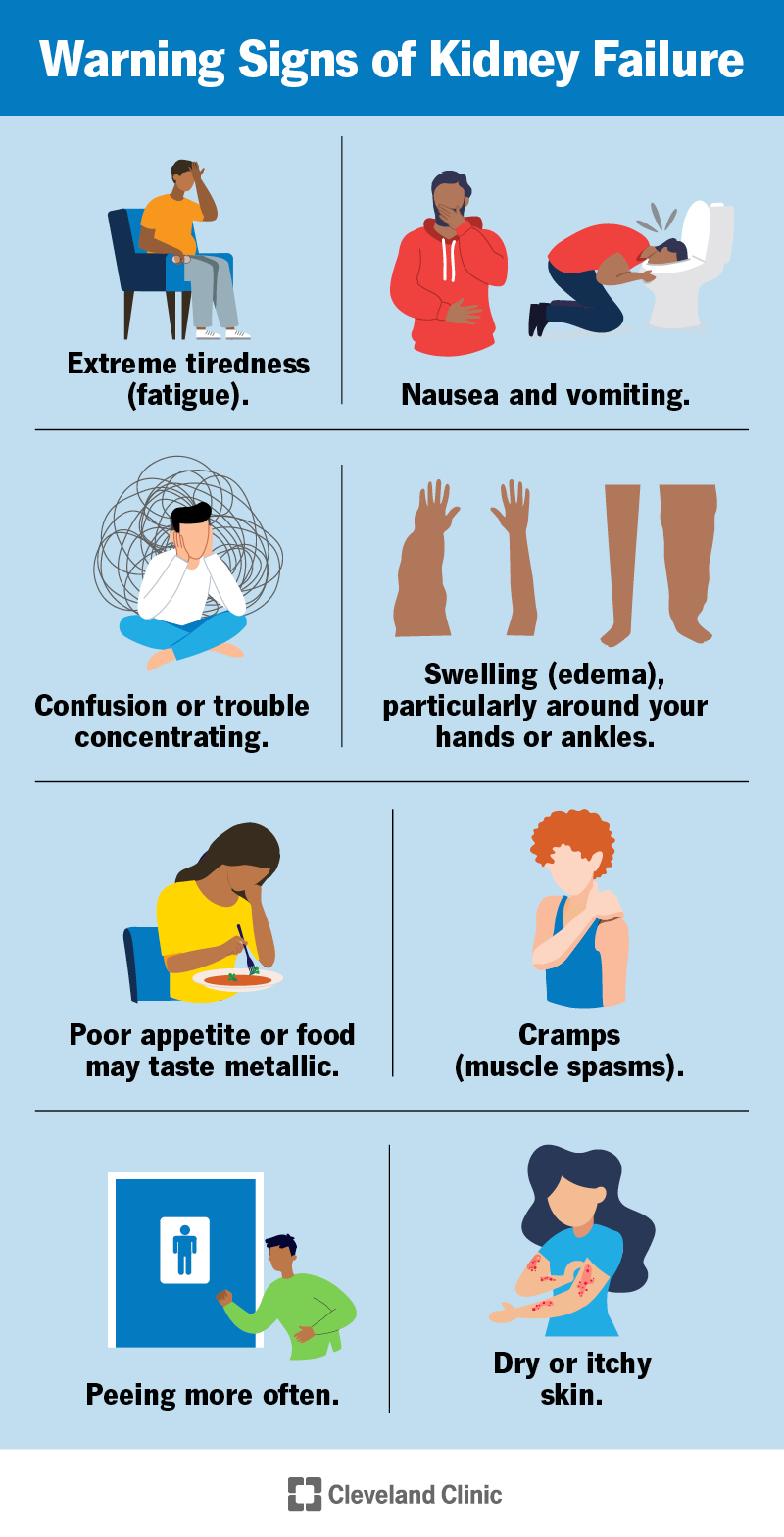
Image content: This image is available to view online.
View image online (https://my.clevelandclinic.org/-/scassets/images/org/health/articles/17689-kidney-failure)
Kidney failure means both of your kidneys no longer function well on their own to keep you alive. It’s sometimes temporary and develops quickly (acute kidney failure). Other times, it’s a result of long-term chronic kidney disease (CKD). CKD slowly gets worse and progresses to chronic kidney failure. Another name for chronic kidney failure is end-stage kidney disease (ESKD). You may hear healthcare providers call it renal failure. “Renal” is another word for kidney.
Advertisement
Cleveland Clinic is a non-profit academic medical center. Advertising on our site helps support our mission. We do not endorse non-Cleveland Clinic products or services. Policy
Chronic kidney failure is deadly without treatment. If you have it, you may survive a few days or weeks without treatment. But with proper life-sustaining treatment, you can live with kidney failure.
About 750,000 people in the U.S. have kidney failure. It affects around 2 million people worldwide. Experts predict it may affect more than 1 million people in the U.S. by 2030.
There are five stages of chronic kidney disease, according to your estimated glomerular filtration rate (eGFR). Your eGFR is a calculation of how well your kidneys work. A normal eGFR is above 60. But even with a normal eGFR, your provider may still diagnose you with CKD according to additional kidney tests. The lowest eGFR is 0, which means your kidney doesn’t function at all.
The five stages of CKD include:
Advertisement
Many people don’t experience symptoms during the early stages of kidney disease. Symptoms usually start when you have kidney failure, and they may vary. They may include:
Diabetes and high blood pressure are the most common causes of chronic kidney disease (CKD) and kidney failure.
Unmanaged diabetes can lead to high blood sugar levels. If your blood sugar levels are usually high, it can damage blood vessels in your kidneys and other organs.
High blood pressure means blood travels forcefully through your body’s blood vessels. Without treatment, the extra force can damage your kidneys over time.
Other causes that may lead to kidney failure include:
Kidney failure can also happen quickly because of an unexpected cause. Acute kidney failure is when your kidneys suddenly stop functioning. It may develop within hours or days. It’s often temporary. Common AKI causes include:
Kidney failure can affect anyone. But you may be at a higher risk of developing kidney failure if you:
Your kidneys have many different functions in your body. When you have kidney failure, you may develop complications like:
Healthcare providers may use many different kidney function tests to check on your kidneys and diagnose kidney failure. If your provider thinks you’re at risk of kidney failure, they may recommend:
Advertisement
No, you can’t repair or reverse kidney damage once you develop CKD. But proper treatment can slow it down and keep your kidneys working as long as possible.
Healthcare providers can’t cure kidney failure. If you have end-stage kidney disease, you need treatment to keep you alive. The two main treatments for kidney failure are:
In some cases, you may choose not to do dialysis or seek a kidney transplant. You may opt for conservative treatment. It focuses on managing your symptoms and quality of life rather than adding more time.
If your kidneys gradually decline, providers may use a few different methods to track your health and keep your kidneys working as long as possible. These include:
There are no medications that can treat kidney failure. But they can help slow down the progression of CKD or manage symptoms of kidney disease. Depending on the cause of your kidney disease, your healthcare provider may prescribe one or more of the following medications:
Advertisement
You can’t reverse kidney disease or kidney failure. But with proper treatment, many people continue to live fulfilling lives. However, you’ll need treatment for the rest of your life.
For most people, you should get annual kidney function testing with your primary care provider. But you may need testing more often according to your medical history. Your provider will let you know whether your kidney numbers are normal based on your blood test results.
You should see a provider if you have any symptoms of kidney disease. Let them know if:
If they diagnose you with kidney disease, schedule an appointment with a kidney specialist (nephrologist). They can recommend the best treatment for you.
During your appointment, you may wish to ask:
There’s no cure for kidney failure. But with proper diagnosis and timely treatment, you may still live a good life.
Advertisement
Yes, kidney failure is fatal because kidneys are essential organs. But with proper, timely treatment, most people can live with kidney failure.
Your life expectancy depends on many different factors, including:
Many people on dialysis live for several years. Nearly 9 out of 10 people are still alive five years after a kidney transplant. Your healthcare provider will give you a better idea of what to expect according to your unique situation.
Scheduling regular appointments with your healthcare provider can help prevent kidney disease that may lead to kidney failure. You can help keep your kidneys healthy by:
There are also steps you can take to help preserve kidney function if you have kidney disease. Good habits and routines may help delay how quickly your kidneys lose their ability to work.
If you have CKD or kidney failure, it’s a good idea to:
Receiving a kidney failure diagnosis can cause a wide range of emotions. You might feel frustrated, angry or sad. You might feel determined. You might not feel anything. Learning about your treatment options and what to expect can help. Your healthcare providers can answer any questions or concerns you have. They can also recommend support groups.



Sign up for our Health Essentials emails for expert guidance on nutrition, fitness, sleep, skin care and more.
Learn more about the Health Library and our editorial process.
Cleveland Clinic’s health articles are based on evidence-backed information and review by medical professionals to ensure accuracy, reliability and up-to-date clinical standards.
Cleveland Clinic’s health articles are based on evidence-backed information and review by medical professionals to ensure accuracy, reliability and up-to-date clinical standards.
If you have a condition that’s affecting your kidneys, you want experts by your side. At Cleveland Clinic, we’ll work with you to craft a personalized treatment plan.
