



Atrial fibrillation (AFib) is an irregular heart rhythm that begins in your heart’s upper chambers (atria). Symptoms include fatigue, heart palpitations, trouble breathing and dizziness. Risk factors include high blood pressure, coronary artery disease and having obesity. Medications and procedures, like ablation, can lower your risk of a stroke.
Advertisement
Cleveland Clinic is a non-profit academic medical center. Advertising on our site helps support our mission. We do not endorse non-Cleveland Clinic products or services. Policy
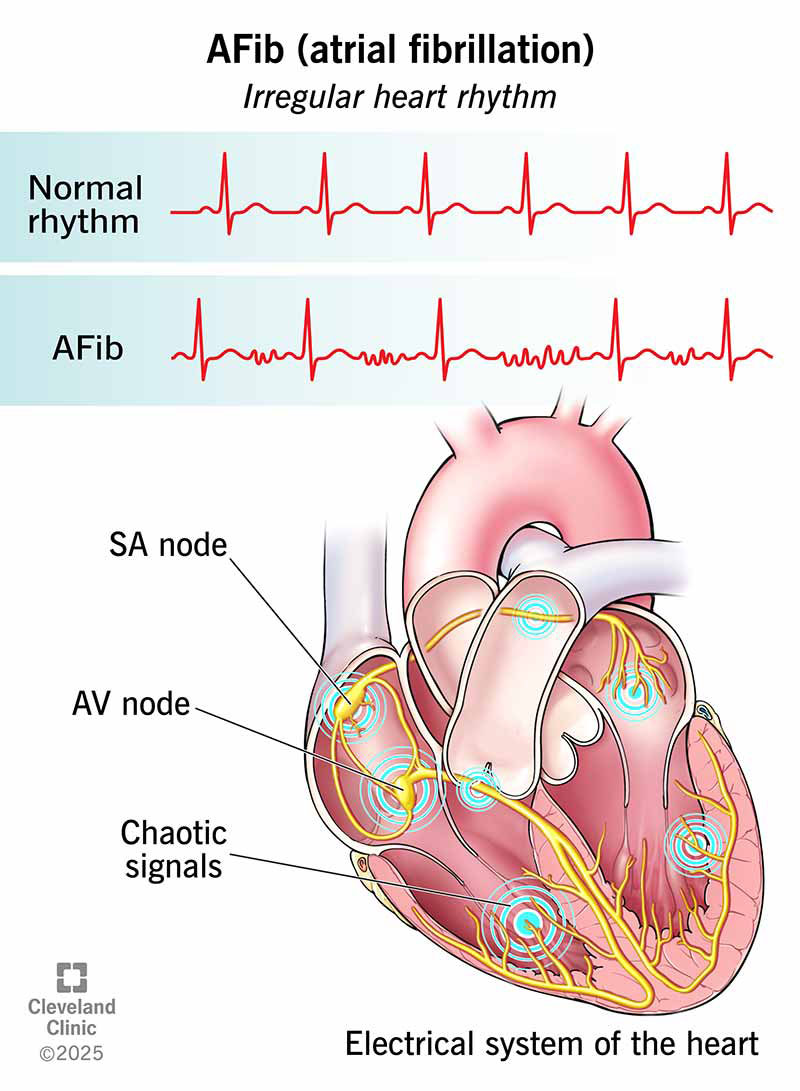
Image content: This image is available to view online.
View image online (https://my.clevelandclinic.org/-/scassets/images/org/health/articles/16765-afib-illustration)
AFib (atrial fibrillation) is an irregular heart rhythm that begins in the upper chambers of your heart. With this common disorder, your heart’s electrical system doesn’t work as it should. Instead of sending electrical signals in a steady pattern, it sends many different signals at the same time.
Advertisement
Cleveland Clinic is a non-profit academic medical center. Advertising on our site helps support our mission. We do not endorse non-Cleveland Clinic products or services. Policy
This causes a fast, chaotic rhythm in your upper chambers (atria). As a result, your atria can’t do a good job of contracting or pumping blood into your lower chambers (ventricles). Your ventricles, which respond to your atria, also contract irregularly. This causes a fast, irregular heartbeat. The heartbeat that you feel comes from your ventricles’ contractions.
You can think of AFib like several conductors directing an orchestra instead of just one. The musicians wouldn’t know who to follow or what to do. The music would lose its rhythm.
Atrial fibrillation can lead to serious complications, like a stroke or heart failure. That’s why it’s important to learn the symptoms and talk with a healthcare provider about your risk factors.
Estimates predict that 12 million people in the U.S. will have AFib by 2030.
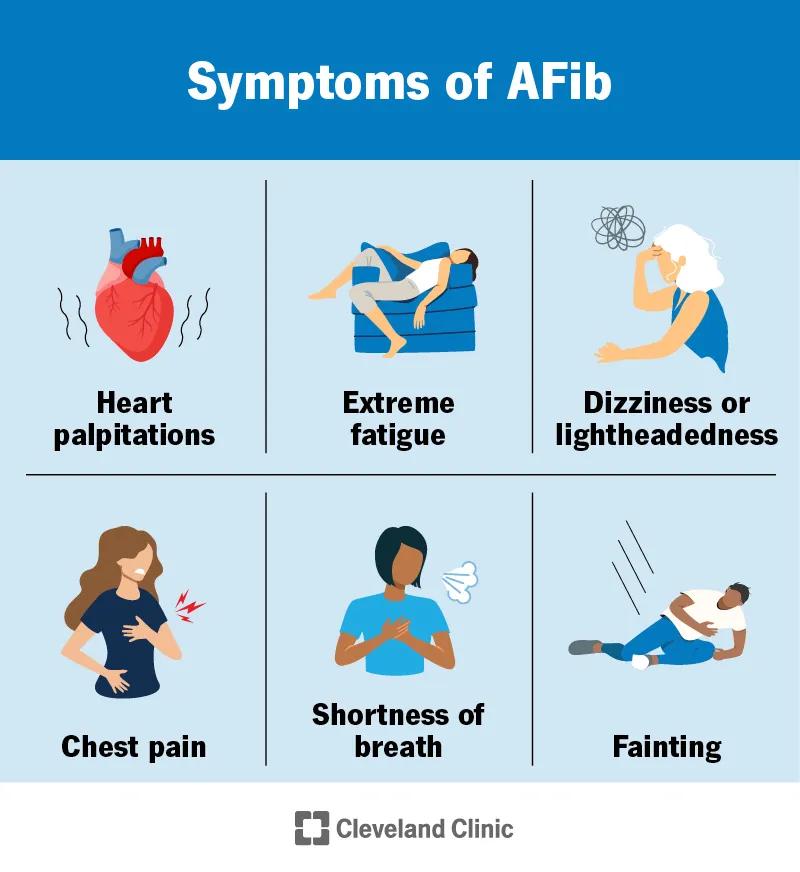
Image content: This image is available to view online.
View image online (https://assets.clevelandclinic.org/transform/fe03a0a7-e17a-460e-a73c-81eb97781c4d/hl-26-HVI-8999758-afib-cv)
You may not have symptoms. How often you have symptoms depends on whether you have paroxysmal, persistent, long-standing persistent or permanent AFib.
Advertisement
Contact your healthcare provider right away if you have AFib symptoms like:
Call 911 or your local emergency number if you:
Changes to your heart’s tissue and electrical system cause atrial fibrillation. Here’s what can cause these changes:
Having any of the medical conditions listed above raises your risk for atrial fibrillation. Other risk factors include:
You can reduce your risk of atrial fibrillation by being physically active, managing related conditions, and avoiding tobacco products and alcohol.
You may also want to avoid triggers like:
Atrial fibrillation increases your risk of having a stroke. When your heart isn’t beating normally, you have a higher risk of dangerous blood clots forming in your heart and going to vital organs. A blood clot that travels to your brain can cause a stroke. AFib can also lead to heart failure or heart disease.
An electrocardiogram (EKG/ECG) diagnoses atrial fibrillation. This test creates a graph of the electrical signals moving through your heart. The results can show if you have AFib or other types of abnormal heart rhythms.
Your provider will also:
Advertisement
Healthcare providers use these stages when diagnosing and treating atrial fibrillation:
AFib may stop after a surgery or a catheter-based procedure. Atrial fibrillation treatment may involve one or more ways to manage your heart rhythm and rate and prevent blood clots.
These are things you can do from day to day to help keep atrial fibrillation from getting worse. Lifestyle changes are important across all the stages of AFib — even before you have any symptoms. Your provider will help you:
Advertisement
The medications you need to manage AFib may change over time. Your provider may prescribe medications to control your heart rate and/or heart rhythm. These medications can prevent damage to your heart and help reduce symptoms that make you feel uncomfortable or anxious.
Your provider may also prescribe blood thinners (anticoagulants) that lower your risk of blood clots that could lead to a stroke. Providers typically prescribe direct-acting oral anticoagulants (DOACs). Sometimes, they prescribe warfarin.
Ablation for atrial fibrillation is a broad term for procedures that create scar tissue in your heart. The scars block the abnormal electrical signals to help your heart beat in a normal rhythm.
You might have these procedures for AFib:
Advertisement
Other procedures that treat atrial fibrillation include:
There’s no single schedule to follow. It all depends on your symptoms and treatment plan, and whether you need follow-ups after a procedure. So, it’s important to talk with your provider and make a plan together.
Make sure you go to all your scheduled visits. Keep track of the medications you’re taking and bring a list of your prescriptions to every visit. It’s also a good idea to keep the list in your wallet so it’s with you in emergencies.
At each visit, share any new symptoms or problems you’re having, like side effects from medication. Be sure to ask your provider before taking over-the-counter (OTC) medicines, like those for cold and flu, and supplements. Sometimes, these products can affect your heart rate or interact with your prescriptions.
Atrial fibrillation develops in stages and can get worse over time. Once you have AFib, you have it for life. Your provider will help you manage the condition. Treatment can lower your risk of a stroke and help you have fewer symptoms.
A study published in 2024 found that people with AFib had a shorter life expectancy than those without AFib. The number of years lost from their life expectancy varied by their age at diagnosis. The younger you are at diagnosis, the shorter your life expectancy, and the more years you lose compared to others your age without AFib.
But remember that numbers just tell part of the story. Working closely with your healthcare team to manage atrial fibrillation and any other medical conditions can give you the best chance at a long life. Many people with managed AFib have a normal life expectancy.
The same habits that lower your risk of AFib help you feel better when you have it. Eating healthy foods and getting 30 minutes of physical activity five days a week can help your heart. Cutting out tobacco products and alcohol is good for your heart, too.
An AFib diagnosis can feel like a heavy load to carry. But you’re not alone. You’re one of the millions of people learning new strategies for managing AFib while still enjoying life. Your healthcare provider can tell you more about treatment options, resources and support groups.



Sign up for our Health Essentials emails for expert guidance on nutrition, fitness, sleep, skin care and more.
Learn more about the Health Library and our editorial process.
Cleveland Clinic’s health articles are based on evidence-backed information and review by medical professionals to ensure accuracy, reliability and up-to-date clinical standards.
Cleveland Clinic’s health articles are based on evidence-backed information and review by medical professionals to ensure accuracy, reliability and up-to-date clinical standards.
When your heart rhythm is out of sync, the experts at Cleveland Clinic can find out why. We offer personalized care for all types of arrhythmias.
