Diarrhea means having loose, watery poop. Most adults have it about once a year, while children typically have it more often. Diarrhea usually goes away on its own within a few days. If it doesn’t improve or you’re experiencing other symptoms like a fever or bloody poop, reach out to a healthcare provider to get the treatment (and relief) you need.
Advertisement
Cleveland Clinic is a non-profit academic medical center. Advertising on our site helps support our mission. We do not endorse non-Cleveland Clinic products or services. Policy
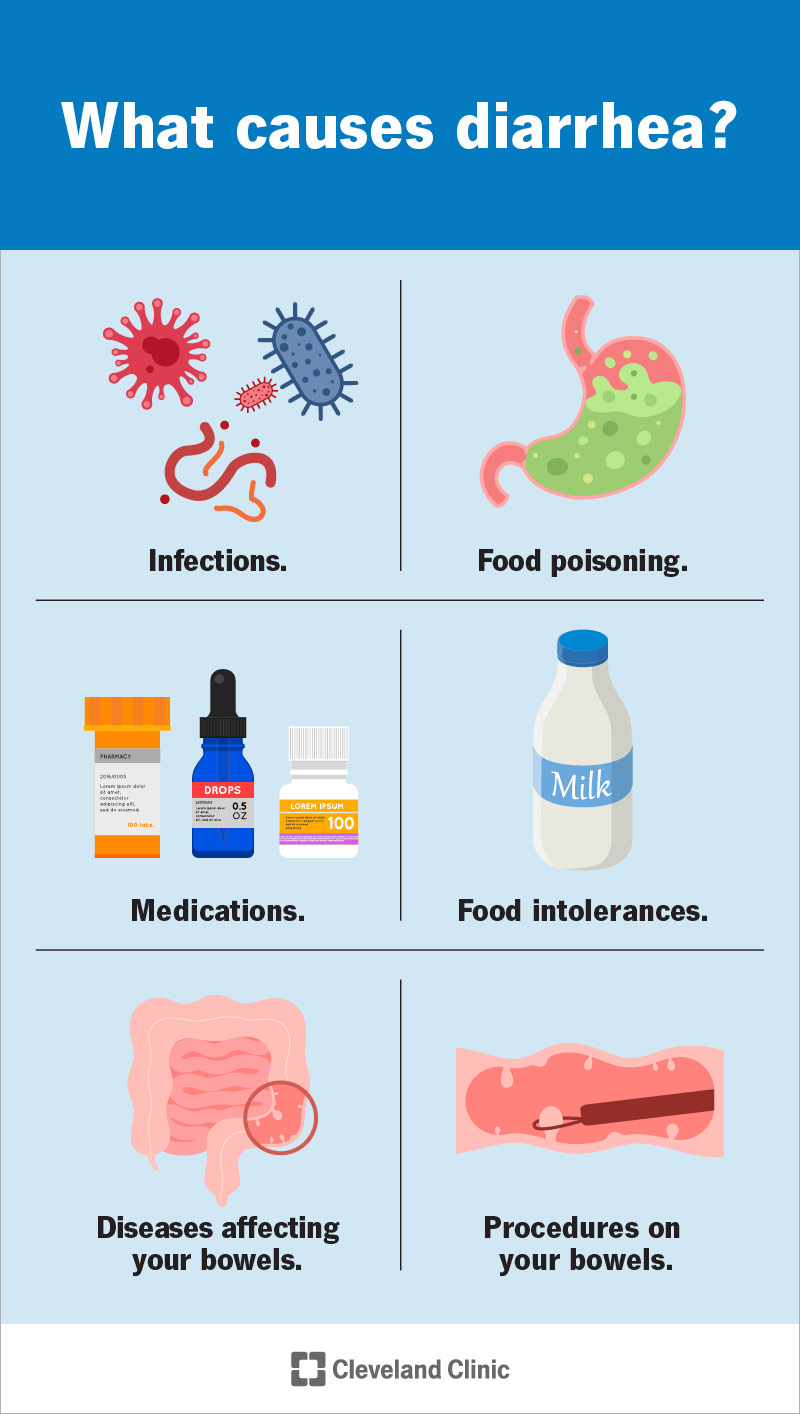
Image content: This image is available to view online.
View image online (https://my.clevelandclinic.org/-/scassets/images/org/health/articles/4108-diarrhea)
Diarrhea is when you have loose, watery poop more often than normal. Almost everyone gets it from time to time. Most cases are mild. It usually passes within a few days.
Advertisement
Cleveland Clinic is a non-profit academic medical center. Advertising on our site helps support our mission. We do not endorse non-Cleveland Clinic products or services. Policy
Even though diarrhea is common, it can sometimes become serious. Frequent watery diarrhea causes your body to lose water and electrolytes, which can lead to dehydration. This is especially dangerous for certain groups, including:
Most people can manage mild diarrhea at home. You need to stay hydrated and get plenty of rest. But you may need medical treatment if it lasts longer than expected or keeps coming back. It’s also important to see a healthcare provider if you have diarrhea along with symptoms like severe pain, fever or bloody poop.
Healthcare providers describe diarrhea based on how long it lasts:
The main symptom of diarrhea is loose or watery poop. You may also have:
Most diarrhea symptoms improve within a few days. But severe pain, bloody poop or signs of dehydration can mean you need medical care.
Many things can cause diarrhea. The most common cause is viral gastroenteritis (more commonly known as a stomach bug). Other diarrhea causes include:
Advertisement
If diarrhea starts after taking antibiotics, talk with your healthcare provider before stopping your medication.
If your symptoms begin while traveling, you may have traveler’s diarrhea.
Sometimes. Diarrhea caused by viruses, bacteria or parasites can spread from person to person through contaminated food, water or surfaces. Washing your hands often and handling food safely can help reduce the spread.
Diarrhea caused by medications, food intolerances or chronic digestive conditions isn’t contagious.
Anyone can get diarrhea, but your risk is higher if you:
You may be able to lower your risk by:
The biggest potential complication is dehydration. Your body loses water and electrolytes with every loose bowel movement. This makes it harder to replace what you’ve lost.
Without treatment, severe dehydration can become life-threatening.
Most cases of diarrhea don’t require testing. If it’s severe, lasts longer than expected or keeps coming back, see a healthcare provider. They’ll ask you about your symptoms, medications, recent travel and medical history. This information often helps them figure out the cause.
Depending on your symptoms, your provider may do:
The most important diarrhea treatment is replacing the fluids your body is losing. Drink plenty of water and fluids that contain electrolytes, like oral rehydration solutions or broth. If plain water upsets your stomach, try taking small sips throughout the day.
Eat small, frequent meals if you feel hungry. Foods to eat when you have diarrhea include bananas, rice, applesauce and toast. These bland foods are easier to tolerate while your digestive system recovers. It also helps to avoid foods and drinks that make symptoms worse. These can include caffeine, alcohol and greasy foods.
Advertisement
If your symptoms don’t improve, your provider may recommend medication.
Diarrhea treatment depends on what’s causing it. Medications may include:
Don’t take over-the-counter diarrhea medicine if you have bloody diarrhea or a high fever unless your provider tells you it’s safe.
Most cases of acute diarrhea gets better within a few days. Persistent diarrhea lasts between two and four weeks. Chronic diarrhea lasts longer than four weeks.
Most cases improve without medical treatment. But there are times when you should seek care for diarrhea. Don’t ignore it if it lasts longer than a few days.
It’s also important to see your provider if diarrhea happens along with symptoms like:
Most people recover completely from acute diarrhea within a few days.
If diarrhea lasts for weeks, keeps coming back or is caused by an underlying condition, your outlook depends on the cause. Treating the underlying condition can often help improve or prevent diarrhea.
Advertisement
While you’re recovering:
Poop comes in all different colors. If you have yellow diarrhea, you may have eaten something with a yellowish hue to it. But if it lasts more than a few days, talk to a healthcare provider. It could be a sign of a more serious condition.
Babies and young children can become dehydrated much faster than adults. Contact your child’s pediatrician if your baby has severe diarrhea or signs of dehydration.
Diarrhea is uncomfortable, inconvenient and something nearly everyone experiences at some point. Fortunately, most cases are short-lived and usually get better with rest, fluids and time.
If your symptoms are severe or don’t improve, or you’re worried about dehydration, a healthcare provider can help figure out the cause and recommend the right treatment.
Advertisement



Sign up for our Health Essentials emails for expert guidance on nutrition, fitness, sleep, skin care and more.
Learn more about the Health Library and our editorial process.
Cleveland Clinic’s health articles are based on evidence-backed information and review by medical professionals to ensure accuracy, reliability and up-to-date clinical standards.
Cleveland Clinic’s health articles are based on evidence-backed information and review by medical professionals to ensure accuracy, reliability and up-to-date clinical standards.
Need care fast? Cleveland Clinic’s Express Care and Urgent Care locations treat everything from sprains to sinus infections — no appointment needed.