



Emphysema is a type of COPD that involves damage to the small air sacs (alveoli) in your lungs. It often gets worse over time and can make breathing difficult. Symptoms include shortness of breath, cough and fatigue. Smoking is the most common cause.
Advertisement
Cleveland Clinic is a non-profit academic medical center. Advertising on our site helps support our mission. We do not endorse non-Cleveland Clinic products or services. Policy
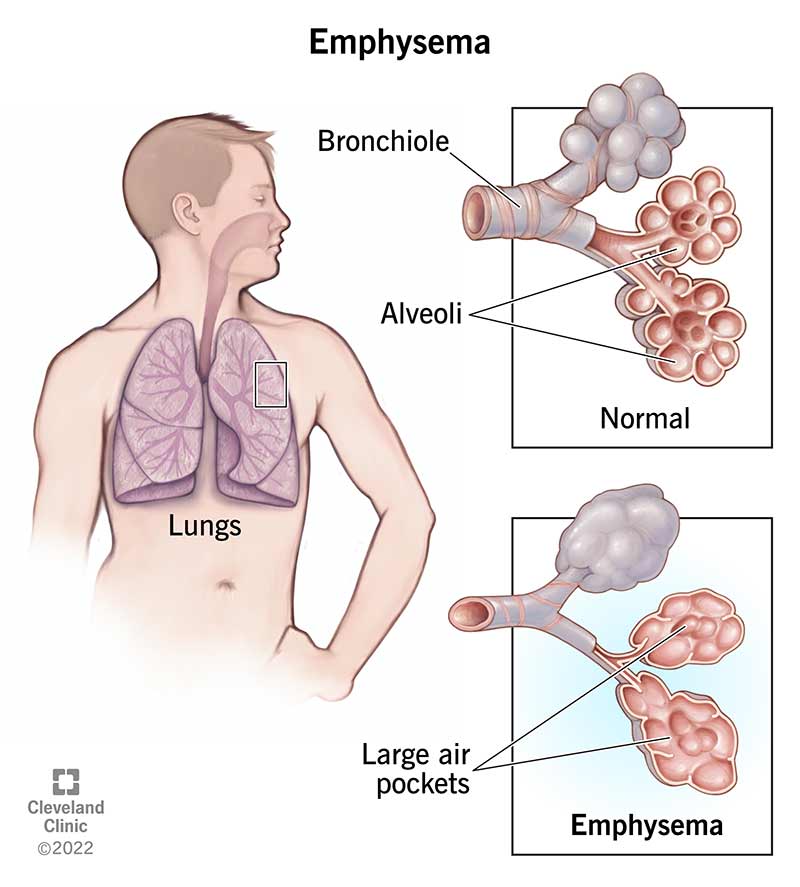
Image content: This image is available to view online.
View image online (https://my.clevelandclinic.org/-/scassets/images/org/health/articles/9370-emphysema)
Emphysema is a lung disease where there’s damage to the walls of the small air sacs in your lungs (alveoli). It’s a form of COPD (chronic obstructive pulmonary disease).
Advertisement
Cleveland Clinic is a non-profit academic medical center. Advertising on our site helps support our mission. We do not endorse non-Cleveland Clinic products or services. Policy
Your alveoli are stretchy sacs at the ends of your airways. They hold oxygen for your blood to pick up as it passes in nearby blood vessels. Long-term inflammation damages alveoli, causing them to lose their stretchiness and become floppy. Air doesn’t flow out of them like it should and gets trapped.
Also, the walls between individual air sacs are destroyed, creating larger areas filled with air. This leaves blood vessels with a smaller area of tissue to pick up oxygen from.
This means:
Smoking is the most common cause of emphysema. But anything that causes long-term inflammation in your lungs can lead to it. Early symptoms include tiredness and worsening shortness of breath.
Emphysema symptoms could include:
Advertisement
Complications of emphysema include:
Smoking is the main cause of emphysema. Cigarette smoke leads to long-term (chronic) inflammation that damages the lung tissue between your alveoli.
But anything that causes inflammation over a long period of time can lead to emphysema. People who smoke cigarettes are at the highest risk. Other risk factors include exposure to:
You’re also at a higher risk if you have long-term or recurrent lung infections or Alpha-1 antitrypsin deficiency (Alpha-1). Alpha-1 is a genetic condition that causes low levels of protective proteins in your lungs.
Your healthcare provider will ask you about your symptoms and listen to your heart and lungs. They may tap on your chest to listen for hollow sounds, which can mean your lungs are trapping air.
To confirm a diagnosis, your provider may recommend:
You can’t reverse damage from emphysema. Treatment focuses on slowing tissue damage and improving lung function. If you smoke, your provider will recommend quitting to help prevent further damage.
You should also take steps to avoid respiratory infections, which could lead to pneumonia. This includes getting recommended vaccinations, washing your hands frequently and wearing a mask when you’re around others who could be sick.
Other treatment options could include:
Advertisement
If you have severe disease and other treatments don’t help, you might be eligible for a lung transplant.
If you think you could have emphysema, don’t wait to see a healthcare provider. Early diagnosis and treatment can reduce the risk of your symptoms progressing.
Call 911 or your local emergency number if you have chest pain or severe shortness of breath.
Talk to your healthcare provider if you:
What to expect depends on the severity of the disease when you’re diagnosed. People who are diagnosed earlier tend to have better outcomes.
If you quit smoking and avoid other lung irritants, you can slow down the progression of emphysema and reduce your risk of new damage. The existing damage is permanent and can get worse over time. But with treatment, many people manage their symptoms and improve their quality of life.
Advertisement
Life expectancy depends on:
For example, if you have limited damage and it’s not progressing, you may have a normal life expectancy. If emphysema is in the later stages at diagnosis, it can shorten your life by six to nine years.
The best way to reduce your risk of developing emphysema is to avoid smoking. If you currently smoke, ask a healthcare provider for resources to help you quit. You should also avoid secondhand smoke, chemical fumes, and dust and toxins in the air. Wear a respirator mask if you need to be around things that can irritate your lungs.
Getting an emphysema diagnosis can be overwhelming. But there are steps you can take to manage the symptoms and protect your lungs from further damage. Your healthcare team will work with you to create a treatment plan based on your specific situation. Don’t hesitate to ask them about any concerns you have.
Advertisement



Sign up for our Health Essentials emails for expert guidance on nutrition, fitness, sleep, skin care and more.
Learn more about the Health Library and our editorial process.
Cleveland Clinic’s health articles are based on evidence-backed information and review by medical professionals to ensure accuracy, reliability and up-to-date clinical standards.
Cleveland Clinic’s health articles are based on evidence-backed information and review by medical professionals to ensure accuracy, reliability and up-to-date clinical standards.
Emphysema can leave you gasping for breath. The experts at Cleveland Clinic can treat emphysema and help you manage it so you can breathe easier.
