



Warts are skin growths that develop due to strains of the human papillomavirus (HPV). There are several types, like plantar warts, common warts and flat warts. Warts can be stubborn, but many treatment options can help get rid of them.
Advertisement
Cleveland Clinic is a non-profit academic medical center. Advertising on our site helps support our mission. We do not endorse non-Cleveland Clinic products or services. Policy
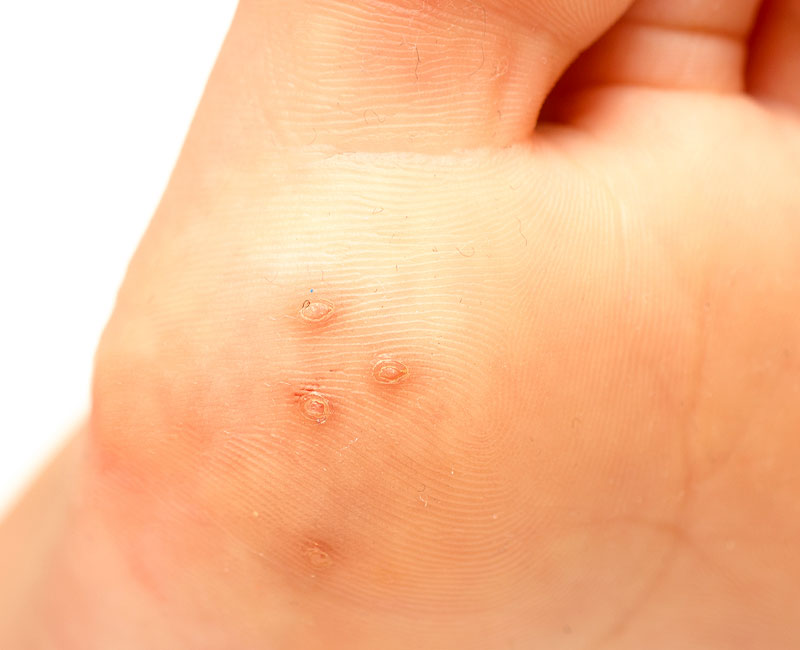
Image content: This image is available to view online.
View image online (https://my.clevelandclinic.org/-/scassets/images/org/health/articles/warts.jpg)
Warts are benign (noncancerous) growths that can develop on your skin and mucosa (like inside your mouth). The human papillomavirus (HPV) causes warts. There are over 100 subtypes (strains) of HPV, but only a few types can cause warts on certain parts of your body.
Advertisement
Cleveland Clinic is a non-profit academic medical center. Advertising on our site helps support our mission. We do not endorse non-Cleveland Clinic products or services. Policy
Warts are generally harmless, but they can be bothersome and sometimes painful.
Healthcare providers classify warts based on how they look, the HPV strain (type) that causes them, and/or what parts of your body they affect:
Advertisement
Warts, in general, are benign (noncancerous). But they can become bothersome when they affect your self-esteem or make it difficult to do everyday things like walking or wearing shoes.
Warts are common. They affect approximately 10% of the worldwide population.
They’re even more common in school-aged children, affecting 10% to 20% of this age group. Warts are also more likely to affect people who are immunocompromised and people who handle raw meat regularly (like butchers).
Warts vary in appearance based on the type. They may look:
They range in size from 1 millimeter to a couple of centimeters. You may have just one wart or several in the same area.
You may be able to identify a wart by yourself. But if you’re unsure about a new skin growth, you should see your healthcare provider.
Certain strains of the human papillomavirus (HPV) cause warts. The virus can enter your skin through small cuts and cause extra cell growth. The outer layer of your skin turns thicker and harder, forming a wart. Warts are more likely to infect moist and soft skin or injured skin.
All warts come from HPV, but not all forms of HPV cause warts. The type of HPV that can progress to cancer (like cervical cancer) doesn’t cause warts.
Yes, warts are contagious because HPV is contagious.
Warts can spread through direct or indirect contact. Direct contact would be touching someone else’s wart or skin-to-skin contact. An example of indirect contact is using objects like towels or razors that have come into contact with a wart or HPV.
Healthcare providers can typically diagnose warts by looking at the skin growths. In rare cases, your provider may need to do a skin biopsy to confirm that it’s a wart.
Warts often go away on their own, but this can take up to two years. Because warts can spread, cause pain and affect your day-to-day life, your healthcare provider may recommend treatment. Options include:
Advertisement
If the wart hasn’t cleared up with conservative treatments, your provider may recommend more invasive treatments, like:
Certain at-home remedies may help you get rid of warts, like covering the wart with duct tape and over-the-counter products. Never try to cut or rip a wart by yourself. This can lead to infection and other health issues. Only healthcare providers should surgically remove warts.
Yes, about 65% of warts go away on their own after two years. This mainly applies to people who have healthy immune systems. If you’re immunocompromised, warts probably won’t go away on their own.
Advertisement
Once you have a strain of HPV that causes warts, there’s no sure way to keep warts from returning. After treatment, warts can reappear at the same location or a different part of your body. But some people get rid of warts and never have one again.
Most warts go away without any significant problems. Sometimes, warts cause issues, like:
There’s no surefire way to prevent warts. But you can lower your risk of picking up the virus that causes them by taking these steps:
Advertisement
If you have a wart, do the following to help keep it from spreading:
If over-the-counter treatments haven’t helped to give your wart the boot, talk to your healthcare provider, especially if the wart is affecting your life.
You should always see your provider if you:
While warts are ultimately harmless, they may make you feel embarrassed or disrupt your day-to-day. The good news is that there’s a variety of treatments. And many warts go away on their own — though it can take time. If you have a stubborn wart or any other concerns, talk to your healthcare provider. They’re available to help.



Sign up for our Health Essentials emails for expert guidance on nutrition, fitness, sleep, skin care and more.
Learn more about the Health Library and our editorial process.
Cleveland Clinic’s health articles are based on evidence-backed information and review by medical professionals to ensure accuracy, reliability and up-to-date clinical standards.
Cleveland Clinic’s health articles are based on evidence-backed information and review by medical professionals to ensure accuracy, reliability and up-to-date clinical standards.
Cleveland Clinic’s primary care providers offer lifelong medical care. From sinus infections and high blood pressure to preventive screening, we’re here for you.
