



Vitiligo causes your skin to lose color or pigmentation. Smooth white or light areas called macules or patches appear on your skin. It generally starts on your hands, forearms, feet and face. Globally, about 1% of the population has vitiligo. Treatment isn’t necessary, but it’s available if you don’t like the changes to your skin tone.
Advertisement
Cleveland Clinic is a non-profit academic medical center. Advertising on our site helps support our mission. We do not endorse non-Cleveland Clinic products or services. Policy
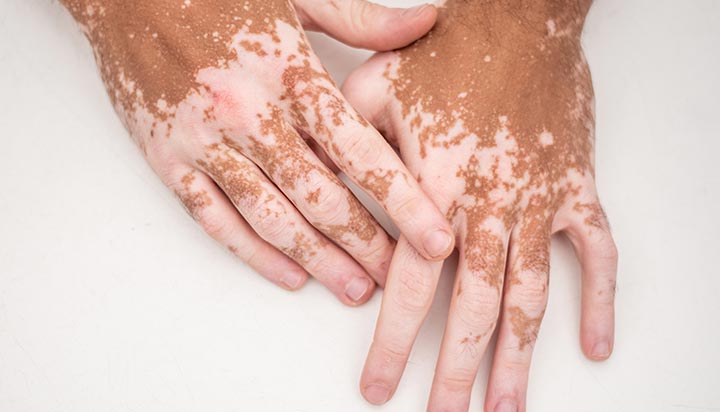
Image content: This image is available to view online.
View image online (https://my.clevelandclinic.org/-/scassets/images/org/health/articles/12419-vitiligo)
Vitiligo (pronounced “vit-il-EYE-go”) is a skin condition that causes your skin to lose its color or pigment. This causes your skin to appear lighter than your natural skin tone or turn white. Areas of your skin that lose their pigment are called macules if they’re less than 1 centimeter wide, or patches if they’re larger than 1 centimeter. If you have vitiligo on a part of your body that has hair, your hair may turn white or silver.
Advertisement
Cleveland Clinic is a non-profit academic medical center. Advertising on our site helps support our mission. We do not endorse non-Cleveland Clinic products or services. Policy
The condition occurs when your body’s immune system destroys melanocytes. Melanocytes are skin cells that produce melanin, the chemical that gives skin its color, or pigmentation.
Vitiligo affects all races and sexes equally. It’s more visible in people with darker skin tones. Although vitiligo can develop in anyone at any age, macules or patches usually become apparent before age 30.
You might be at a higher risk of developing vitiligo if you have certain autoimmune conditions like:
Vitiligo occurs in over 1% of the population throughout the world.
Vitiligo usually starts with a few small white macules or patches that may gradually spread over your body. Vitiligo typically begins on your hands, forearms, feet and face, but can develop on any part of your body, including your mucous membranes (the moist lining of your mouth, nose, genital and rectal areas), your eyes and inner ears.
Sometimes, larger patches continue to widen and spread, but they usually stay in the same place for years. The location of smaller macules shifts and changes over time, as certain areas of skin lose and regain their pigment.
Advertisement
The amount of affected skin varies for each person diagnosed with vitiligo. Some people experience a few depigmented areas, while others have a widespread loss of skin color.
Types of vitiligo include:
Signs and symptoms of vitiligo include:
Symptoms can be mild and only affect a small area of your body or severe and affect a large area of your skin. Some people with vitiligo experience itchy skin before depigmentation starts.
Symptoms of vitiligo can appear anywhere on the skin of your body. The most common places to have symptoms of vitiligo include on your:
A lack of pigment in your skin (melanin) causes vitiligo. The reason why this happens is unknown. Research suggests vitiligo could be the result of:
While research is ongoing to learn more about the causes of vitiligo, studies indicate that about 30% of vitiligo cases are genetic. This means that the condition is hereditary and you could potentially inherit vitiligo from your biological family. Several possible genetic mutations affect how melanocyte cells function. If a genetic mutation targets the cells that give your skin pigment, you’ll experience symptoms of vitiligo.
Advertisement
No, vitiligo isn’t painful. However, you can get painful sunburns on lighter patches of skin affected by vitiligo. It’s important to protect yourself against the sun with measures like using sunscreen, staying out of the sun during the hours that it’s strongest and wearing protective clothing.
Although vitiligo is mainly a cosmetic condition, vitiligo may cause:
Advertisement
A visual examination by a healthcare provider usually leads to an accurate diagnosis of vitiligo. Your provider may use a Wood’s lamp to look at your skin. This lamp uses an ultraviolet (UV) light that shines onto your skin to help your provider differentiate vitiligo from other skin conditions. In addition, your provider may ask you questions about your medical history and family medical history.
There are other conditions that make your skin change or lose pigmentation, including:
Treatment for vitiligo isn’t necessary, as the condition isn’t harmful to your body and is only cosmetic. If you have widespread vitiligo or your physical symptoms affect your emotional well-being, your healthcare provider can help you find a treatment option to create a uniform skin tone by either restoring color (repigmentation) or eliminating the remaining color (depigmentation) in your skin. Common treatments for vitiligo include:
Advertisement
There isn’t a specific medication to stop vitiligo from affecting your skin but there are certain drugs that can slow the speed of pigmentation loss, help melanocytes regrow or bring color back to your skin. Medications to treat vitiligo could include:
Light therapy or phototherapy is the treatment to help return color to your skin. Your provider will use light boxes, ultraviolet B (UVB) lights or medical-grade lasers directed at your skin for a short amount of time. It can take several light therapy sessions to see results on your skin.
Combining oral psoralen medication and ultraviolet A light (PUVA) treats large areas of skin with vitiligo. This treatment is effective for people with vitiligo on their head, neck, trunk, upper arms and legs.
Depigmentation therapy removes the color of your natural skin tone to match areas of your skin affected with vitiligo. Depigmentation therapy uses the drug monobenzone. You can apply this medication to pigmented patches of your skin. This will turn your skin white to match the areas of your skin with vitiligo.
Surgery is a treatment option for people diagnosed with vitiligo. Surgical treatment could include:
Your healthcare provider might not recommend surgery if you:
Some people diagnosed with vitiligo find counseling or visiting a mental health professional beneficial to help improve their self-esteem, anxiety or depression that can be associated with changes to their skin. Vitiligo can cause psychological distress and can affect a person’s outlook and social interactions. If this happens, your caregiver may suggest that you meet with a counselor or attend a support group.
Vitiligo affects your appearance and can affect how you feel about your skin in social situations. Many people find comfort in speaking with a mental health professional to help them feel more confident and build their self-esteem.
There’s no cure for vitiligo but if you’d like to get treatment, your healthcare provider will help you choose the treatment that’s right for you and your skin.
About 10% to 20% of people who have vitiligo fully regain their skin color. This is most common among people who:
It’s less likely that you’ll regain your pigment if you:
If you’re uncomfortable with how vitiligo looks on your skin, you can hide macules or patches at home by:
No. Vitiligo isn’t contagious. It doesn’t spread from person to person through physical contact.
As there could be several causes of vitiligo, there’s no known way to prevent it. You can reduce your risk of developing vitiligo by:
Contact your healthcare provider if:
Tinea versicolor and vitiligo are different conditions that affect the pigment of your skin. Tinea versicolor is a fungal infection that causes your skin to develop white, yellow, red, pink or brown spots. Vitiligo is an autoimmune condition where you lose pigment. It causes your skin to turn lighter than your natural skin tone or white.
No. Both conditions cause white or light patches of skin or hair. Piebaldism occurs when a portion of your skin doesn’t have melanocytes, which are cells that produce pigment (melanin). You’re born with piebaldism. Vitiligo occurs when your body has melanocytes, but they’re destroyed. You develop vitiligo during your lifetime.
Vitiligo is a condition that causes cosmetic changes to your skin. It doesn’t need treatment because it isn’t dangerous. But it’s common for vitiligo skin changes to affect self-esteem and make people feel insecure or uncomfortable. Reach out to your healthcare provider to discuss how your physical appearance affects your mental health. There’s no cure for vitiligo, but treatment is available to help you feel more comfortable.



Sign up for our Health Essentials emails for expert guidance on nutrition, fitness, sleep, skin care and more.
Learn more about the Health Library and our editorial process.
Cleveland Clinic’s health articles are based on evidence-backed information and review by medical professionals to ensure accuracy, reliability and up-to-date clinical standards.
Cleveland Clinic’s health articles are based on evidence-backed information and review by medical professionals to ensure accuracy, reliability and up-to-date clinical standards.
Every day, people see your skin, hair and nails. At Cleveland Clinic, our expert and caring dermatology team will make sure they’re healthy and strong.
