



Encephalitis is brain inflammation (swelling). Causes include viral infections, infections from insect bites or an autoimmune reaction that affects your brain. It can be life-threatening or cause long-term complications. Treatment varies, but most people require hospitalization so they can receive intensive treatment, including life support.
Advertisement
Cleveland Clinic is a non-profit academic medical center. Advertising on our site helps support our mission. We do not endorse non-Cleveland Clinic products or services. Policy
Encephalitis is a rare, serious condition that causes inflammation in your brain so that it swells. It can occur as a result of an infection or an autoimmune process. Encephalitis can be life-threatening, regardless of the cause, and can cause long-term complications and medical issues. Treatment varies depending on the cause, but most people with encephalitis require hospitalization so they can receive intensive treatment, including life support measures.
Advertisement
Cleveland Clinic is a non-profit academic medical center. Advertising on our site helps support our mission. We do not endorse non-Cleveland Clinic products or services. Policy
Condition types include infective encephalitis and autoimmune encephalitis. Infective encephalitis includes:
In autoimmune encephalitis, your immune system mistakenly attacks your brain, causing inflammation that may affect how your brain works. This sometimes happens to people with cancer. Healthcare providers call this paraneoplastic syndrome.
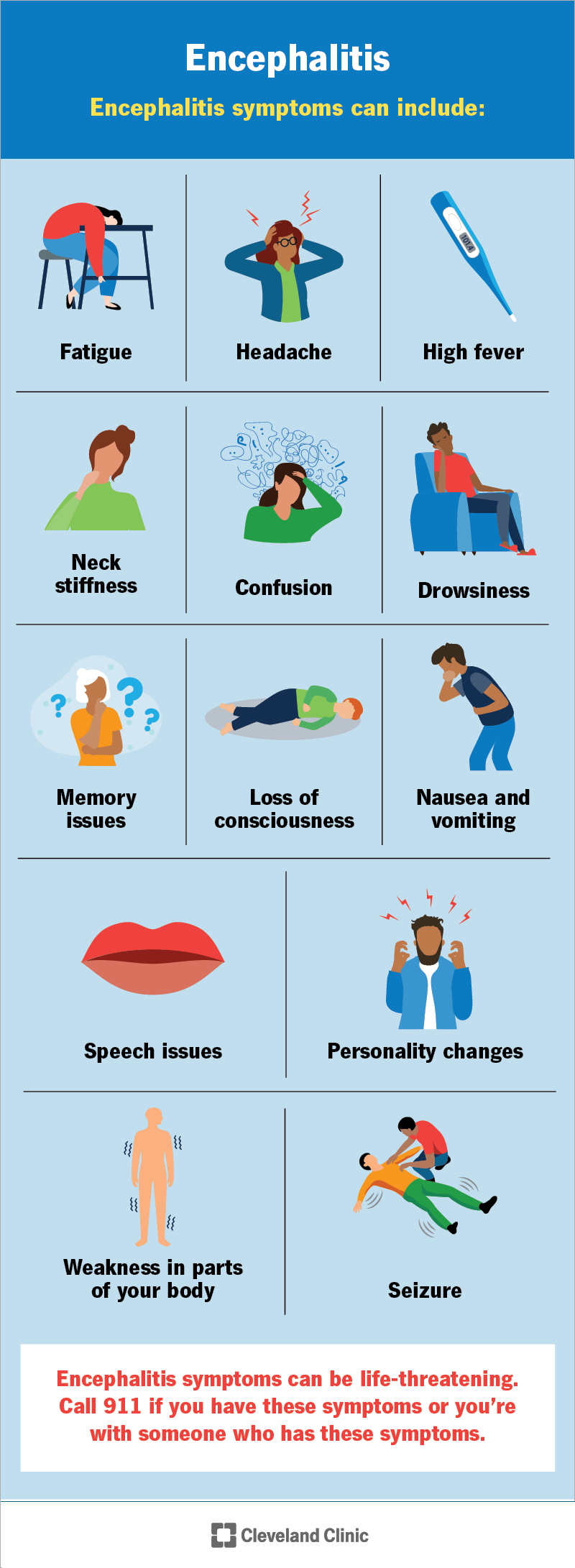
Image content: This image is available to view online.
View image online (https://my.clevelandclinic.org/-/scassets/images/org/health/articles/encephalitis)
Symptoms vary depending on the type of encephalitis. Encephalitis from infections typically develop more quickly than autoimmune encephalitis. Early warning signs of infective encephalitis include:
Autoimmune encephalitis develops more slowly. It can cause some of the same symptoms as infective encephalitis. But it also causes neurological symptoms like:
Advertisement
Infective and autoimmune encephalitis may be life-threatening. CALL 911 IF YOU HAVE THESE SYMPTOMS OR ARE WITH SOMEONE WHO HAS THESE SYMPTOMS.
Healthcare providers will do a physical examination. They’ll ask about your symptoms, including how long you’ve had them. They may do the following tests:
Healthcare providers treat the condition’s underlying cause and symptoms. Most people with encephalitis are treated in the hospital so providers can monitor their symptoms and move quickly if symptoms get worse. Treatments include:
You may have encephalitis symptoms for a few days up to two or three months. It can take an additional two or three months to completely recover from the condition.
Medication to treat underlying conditions, like viruses, may cure encephalitis. In some cases, however, encephalitis may cause long-term issues that require ongoing medical care. For example, people may have ongoing issues with behavior, memory loss or speech.
That depends on their situation. While most people with encephalitis recover, the condition can be life-threatening. One study showed 5% of people died while in the hospital for encephalitis treatment. In general, how long you live after recovering from encephalitis depends on factors like:
Advertisement
If you have encephalitis or care for someone who does, ask a healthcare provider what to expect.
Viral infections and viruses carried by insects are common encephalitis causes. You can reduce your risk by keeping vaccinations up to date. Ask your provider which ones they recommend. You can also protect yourself from mosquito bites by:
It takes time for your brain to heal from encephalitis, so recovery is more of a marathon than a sprint. Here are some suggestions that may help you along the road to recovery:
Advertisement
If you have encephalitis, ask your provider about changes that may mean your condition is getting worse. And go to the emergency room anytime you have symptoms like confusion, noticeable personality changes, speech issues or weakness, or you can’t move your arms or legs.
Encephalitis is a serious disease that can have long-term consequences. It can take months or years for you to fully recover from the condition. Unlike injuries or illnesses that affect your body, you can’t see or feel your brain beginning to heal. People may assume you’re completely recovered when you’re still working through issues, from ongoing fatigue to neurological challenges. If that’s your situation, take time to explain how encephalitis continues to affect you.
Advertisement



Sign up for our Health Essentials emails for expert guidance on nutrition, fitness, sleep, skin care and more.
Learn more about the Health Library and our editorial process.
Cleveland Clinic’s health articles are based on evidence-backed information and review by medical professionals to ensure accuracy, reliability and up-to-date clinical standards.
Cleveland Clinic’s health articles are based on evidence-backed information and review by medical professionals to ensure accuracy, reliability and up-to-date clinical standards.
If you have a neurological condition, you want expert advice. At Cleveland Clinic, we’ll work to create a treatment plan that’s right for you.
