



Antidepressants are a commonly prescribed medication to treat depression and other mental health conditions. They ease symptoms like low mood and fatigue, but they don’t treat the direct cause. That’s why providers recommend therapy with them. There are several types. You may notice improvements in four to eight weeks.
Advertisement
Cleveland Clinic is a non-profit academic medical center. Advertising on our site helps support our mission. We do not endorse non-Cleveland Clinic products or services. Policy
Antidepressants are medications that treat mental health conditions like depression, anxiety, PTSD and some eating disorders. They can also help with long-term pain and trouble sleeping.
Advertisement
Cleveland Clinic is a non-profit academic medical center. Advertising on our site helps support our mission. We do not endorse non-Cleveland Clinic products or services. Policy
Depression is the main reason people take antidepressants. This is a mental health condition that goes beyond feeling sad. It’s lasting and can affect your mood, thoughts, energy and motivation. It can cause you to lose interest in things you used to enjoy. It can also make it hard to remember things, eat well and sleep.
These medications may reduce symptoms, like emotional changes or fatigue. But they don’t fix the root cause. That’s why providers often suggest talking with a therapist (called talk therapy), too.
Antidepressant drugs are one of the most commonly prescribed medicines in the U.S.
The U.S. Food and Drug Administration (FDA) approved antidepressant drugs for the following conditions in adults:
Providers may also prescribe antidepressants for other health concerns. This is called off-label use. It means it isn’t officially approved by the FDA for that purpose. For example, some providers use tricyclic antidepressants to help with insomnia or migraines.
Advertisement
There are different types or classes of antidepressant drugs, including:
There are also several kinds of medications (and brands) within each class.
SSRIs are the most commonly prescribed type of antidepressant. Fluoxetine (Prozac®) is probably the most well-known SSRI.
SSRIs are often the first treatment providers choose for many mental health conditions. They work well to manage symptoms and have milder side effects, so providers usually start with them before trying other options.
Video content: This video is available to watch online.
View video online (https://cdnapisec.kaltura.com/p/2207941/sp/220794100/playManifest/entryId/1_fodp2r8i/flavorId/1_5f3sgelj/format/url/protocol/https/a.mp4)
Learn the difference between SSRIs and SNRIs.
Antidepressants change the way your brain uses certain chemicals (called neurotransmitters) to better regulate your mood and behavior.
They can also rewire your brain through a process called neuroplasticity. This means your brain can form new connections between nerve cells. It improves how various parts of your brain interact. This leads to improvements in your mood over time.
Antidepressants usually come as pills you swallow with water. When you first start, your provider will likely prescribe the lowest dose they think will help. Your provider will check in regularly and adjust your dose if needed.
It may take a few weeks before you start to feel better. Even after you feel better, keep taking the medication as directed. Stopping suddenly can cause uncomfortable symptoms.
Most people stay on this medication for at least six months after they start feeling better. If depression is long-term, comes back often or is very severe, your provider may recommend taking the medication longer.
With so many options, choosing a depression medication can feel overwhelming. Your healthcare provider will help you decide which one is most likely to work based on factors like:
Advertisement
It’s also important to talk to your doctor about your plans. For example, some antidepressants are safe to take during pregnancy. Your provider can help you choose the safest option as you start your family.
It can take time to find the right antidepressant. Be patient with the process. Tell your provider if you have side effects that bother you or if your symptoms don’t improve after a few weeks. They may adjust your dose, switch your medication or suggest taking more than one type.
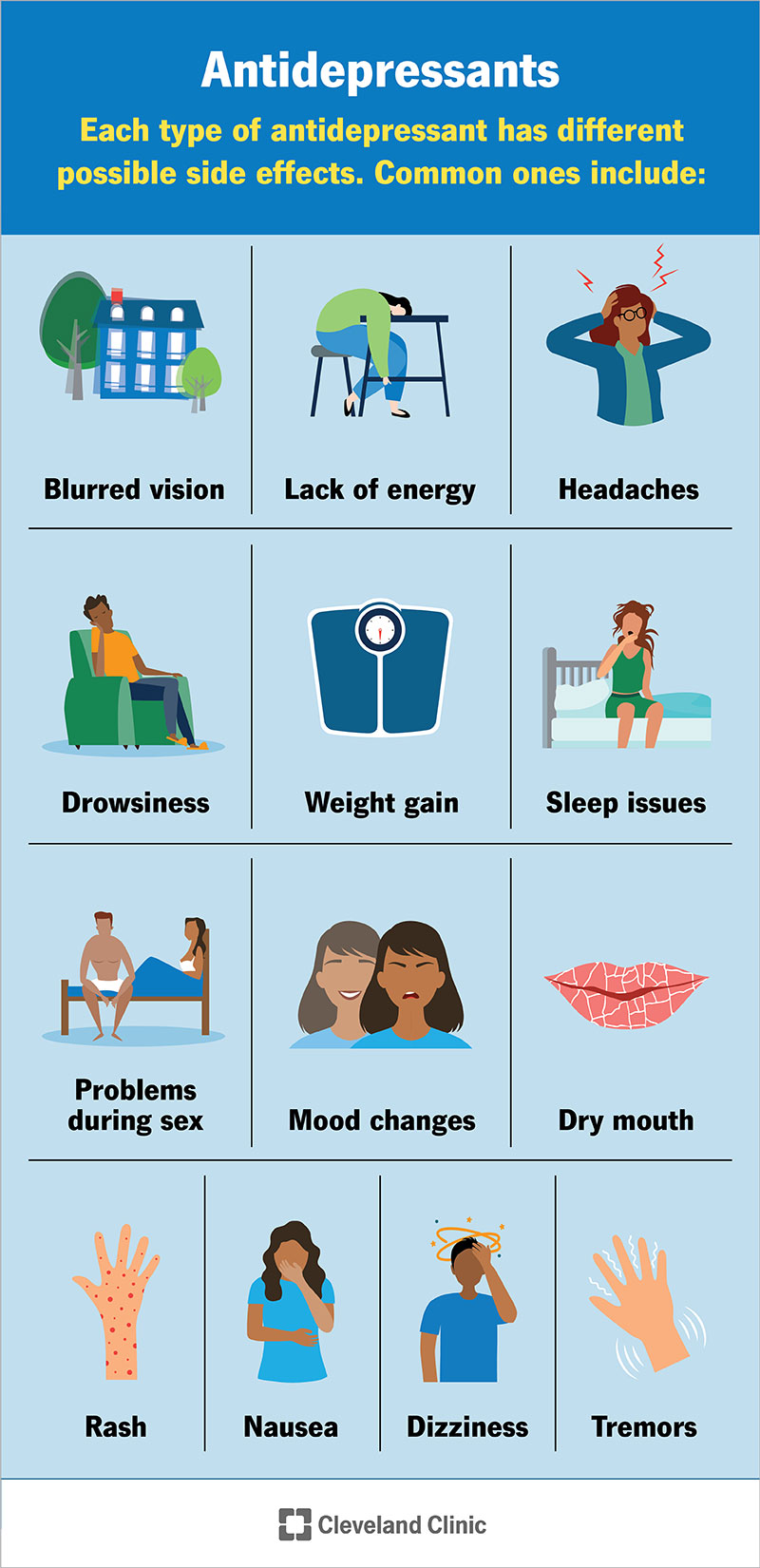
Image content: This image is available to view online.
View image online (https://my.clevelandclinic.org/-/scassets/images/org/health/articles/antidepressants)
Each type (class) of antidepressant drug has different possible side effects. Common side effects include:
Before starting a medication, talk with your doctor or pharmacist about the possible side effects.
Most side effects are mild and may get better over time. If you notice any that bother you, let your provider know. They might change your dose or suggest a different medicine.
There’s currently a black box warning (the strongest safety warning the FDA gives for medicines) on antidepressants about an increased risk of suicidal thoughts and behaviors in people 24 years old or younger. This isn’t considered a typical side effect, but it’s a debated adverse effect with mixed evidence in the medical field.
Advertisement
Most people tolerate antidepressants well. But like any medication, they can cause problems in some cases. It’s generally safe to take an antidepressant under your provider’s supervision. But there are certain complications you should be aware of. Let your provider know right away if you notice any of the following:
Advertisement
No, antidepressant medicines aren’t addictive.
Antidepressants can help you feel better by managing symptoms of depression and other conditions. Some of the benefits include:
Your provider can explain how this medication might help you and the specific benefits you can expect.
It can take four to eight weeks for the medication to work and for your symptoms to ease. You might notice changes in appetite, energy, focus or sleep before your mood improves. The delay happens because the medication needs time to change the connections in your brain.
Be sure to follow your provider’s instructions and take the medicine for the full recommended time. If you stop too soon, you might not feel the full benefits. And it could have unwanted side effects.
You should have regular check-ins with your provider while taking an antidepressant to see how well it’s working. Also, let your provider know if:
If you have symptoms of serotonin syndrome or overdose, call 911 (or your local emergency service number) or go to the nearest emergency room.
If you’re having suicidal thoughts, you can call or text 988 (U.S.). This is the Suicide and Crisis Lifeline. Someone is available to talk to you 24/7. If you’re in immediate danger, contact emergency services.
Antidepressants can bring real relief from symptoms that make life feel heavy or hopeless. But they don’t work right away. It takes time for your brain to find its balance.
Be patient as your provider helps you get the antidepressant medication that works best for you. It’s a process, and it may need some adjusting along the way. If you have any side effects or something doesn’t feel right, speak up. Your provider can help you make changes to get the best results.
Antidepressants often work best when combined with talk therapy. Therapy can help you understand the cause of your symptoms and build long-term skills for feeling better. With support, time and the right treatment plan, you can take steps toward feeling better and looking forward to the future.



Sign up for our Health Essentials emails for expert guidance on nutrition, fitness, sleep, skin care and more.
Learn more about the Health Library and our editorial process.
Cleveland Clinic’s health articles are based on evidence-backed information and review by medical professionals to ensure accuracy, reliability and up-to-date clinical standards.
Cleveland Clinic’s health articles are based on evidence-backed information and review by medical professionals to ensure accuracy, reliability and up-to-date clinical standards.
Depression can hamper every aspect of your life. Cleveland Clinic experts are here to help manage your mental health so you can do the things you want.
