



Mumps is an infection that causes painful swelling around your jaw and neck when it infects your salivary glands. Severe complications are rare but include brain swelling (encephalitis). The MMR vaccine reduces your risk of mumps.
Advertisement
Cleveland Clinic is a non-profit academic medical center. Advertising on our site helps support our mission. We do not endorse non-Cleveland Clinic products or services. Policy
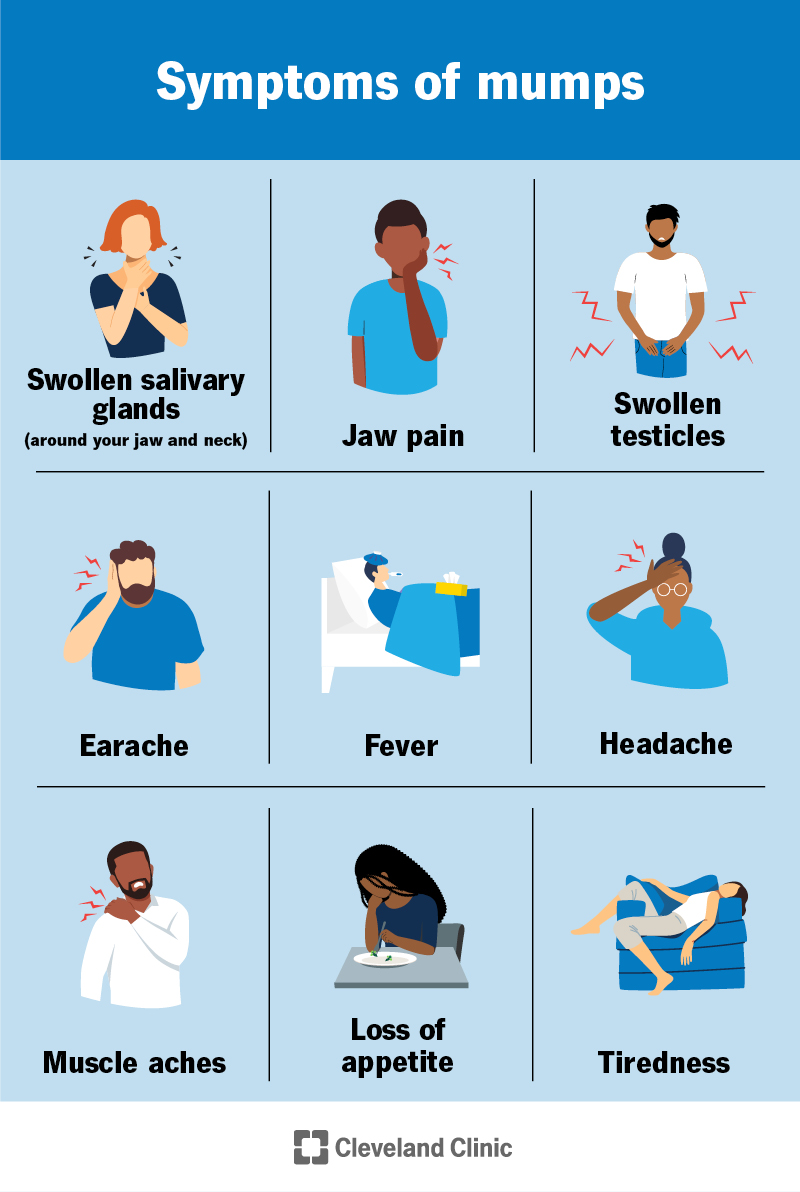
Image content: This image is available to view online.
View image online (https://my.clevelandclinic.org/-/scassets/images/org/health/articles/15007-mumps.jpg)
Mumps is a viral illness that causes your salivary glands to swell painfully. This can make it hard to eat and talk. You might also have flu-like symptoms. It spreads through sneezing, coughing, talking or close contact with someone who’s infected.
Advertisement
Cleveland Clinic is a non-profit academic medical center. Advertising on our site helps support our mission. We do not endorse non-Cleveland Clinic products or services. Policy
Mumps is uncommon today, thanks to an effective vaccine. But outbreaks still happen sometimes.
The main symptom of mumps is painful swelling of your neck and cheeks around the back part of your jaw. It can make it hard to chew, swallow and talk. It can also give you an earache or jaw pain.
Other symptoms include:
If you have testicles, they may become swollen and painful. Some people have no symptoms but can still infect others.
A virus from the genus Rubulavirus causes mumps. It infects your parotid glands. These glands make saliva and sit between the back of your jaw and your ear on each side of your face. Mumps makes them swell painfully (parotitis).
Mumps spreads through respiratory droplets. This means you get it through:
People who live closely with others, like in dorms or correctional facilities, are at a higher risk for mumps outbreaks. During outbreaks, many people get sick around the same time.
Mumps can lead to dehydration if you’re not able to eat or drink enough. It can also cause inflammation in other parts of your body. This includes your:
Advertisement
This can lead to additional health issues, including:
Complications are usually more severe in adults than in children.
Healthcare providers usually diagnose mumps by testing a sample of your saliva (spit) for signs of the virus. They get a sample by swabbing the inside of your cheek. First, they might massage the swollen area of your neck for several seconds to release more of the virus into your spit.
They might also test a sample of your pee (urine), blood or spinal fluid.
Like many viral infections, there’s no specific treatment for mumps. It usually gets better on its own in a week to 10 days. Your provider might recommend using a warm or cold compress on swollen areas to relieve pain.
Talk to your provider if you or your child has symptoms of mumps or if you think you may have been exposed. They can recommend the best way to take care of yourself and let you know about any serious symptoms to look out for.
Go to the emergency room or call 911 (or your local emergency number) if you experience:
Mumps usually goes away on its own in a few days. It might help to have easy-to-eat foods on hand that don’t require a lot of chewing (like soup or applesauce). Drink plenty of fluids to prevent dehydration.
Stay away from others while you’re sick to avoid spreading the virus. You’re usually most contagious from a few days before swelling begins to five days after it starts.
Sometimes, mumps symptoms can come back a few weeks or months after recovery.
Mumps spreads easily. The best way to prevent it is with two doses of the MMR or MMRV vaccine. Many people are vaccinated in childhood. Talk to your provider if you’re not sure whether you’ve been vaccinated.
Other ways to reduce your risk include:
Mumps usually doesn’t cause severe complications. But it can be painful and make it difficult to eat and talk for several days. It also spreads easily, so if you have it, take care to avoid others until you feel better. Ask your provider if you have concerns about mumps or questions about vaccination.
Advertisement



Sign up for our Health Essentials emails for expert guidance on nutrition, fitness, sleep, skin care and more.
Learn more about the Health Library and our editorial process.
Cleveland Clinic’s health articles are based on evidence-backed information and review by medical professionals to ensure accuracy, reliability and up-to-date clinical standards.
Cleveland Clinic’s health articles are based on evidence-backed information and review by medical professionals to ensure accuracy, reliability and up-to-date clinical standards.
As your child grows, you need healthcare providers by your side to guide you through each step. Cleveland Clinic Children’s is there with care you can trust.
