



Chickenpox, also called varicella-zoster, produces a red rash that blisters, then scabs over. It’s very contagious and spreads through bodily fluids and bodily contact. You can prevent chickenpox with a vaccine.
Advertisement
Cleveland Clinic is a non-profit academic medical center. Advertising on our site helps support our mission. We do not endorse non-Cleveland Clinic products or services. Policy
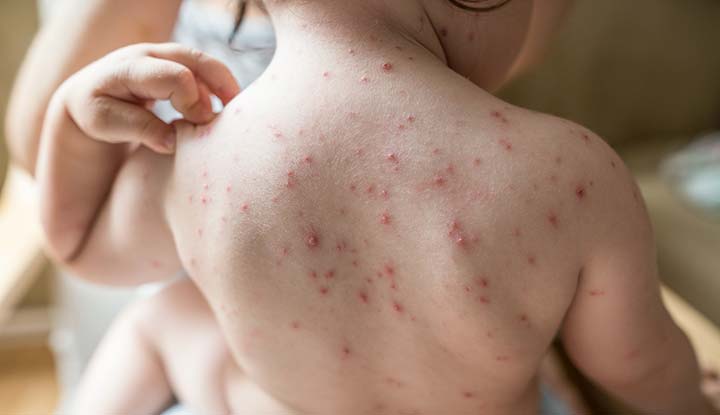
Image content: This image is available to view online.
View image online (https://my.clevelandclinic.org/-/scassets/images/org/health/articles/chickenpox)
Chickenpox is an infection that causes an itchy, blister-like skin rash. A virus called varicella-zoster causes it. Chickenpox is highly contagious. But it’s much less common today because there’s a vaccine that protects you from it. Children are the most susceptible to getting chickenpox, although you can get it as an adult, too.
Advertisement
Cleveland Clinic is a non-profit academic medical center. Advertising on our site helps support our mission. We do not endorse non-Cleveland Clinic products or services. Policy
Before the availability of the first vaccine against chickenpox in 1995, almost everyone got chickenpox as a toddler or young child. But since the late 1990s, the rate of chickenpox has declined by nearly 90%. Today, most children receive a vaccine against chickenpox as part of their routine immunization schedule.
Once you’ve had chickenpox, you won’t catch it again from another person. If you’re not vaccinated, you can get chickenpox at any age. Adults who get chickenpox may become very sick, so it’s better to have chickenpox when you’re a child or prevent getting it by receiving the vaccine.
The three stages of chickenpox usually refer to the way the rash looks:
Even though the rash goes through three stages, you could have all types of bumps at the same time. This means some bumps can be forming while others are already breaking open. The entire rash can last up to about 10 days.
You usually start getting chickenpox on your face and trunk (your chest and your back). From there, it spreads to the rest of your body all the way to your fingers and toes.
Advertisement
Now that there’s a vaccine to prevent chickenpox, most children in the U.S. don’t get chickenpox. But in those who aren’t vaccinated, it’s more common to get it between the ages of 3 and 6.
Chickenpox isn’t as common as it once was because the chickenpox vaccine has greatly reduced the number of cases.
Chickenpox symptoms are easy to see. Healthcare providers often can look at your child’s skin and know if they have chickenpox. Symptoms of chickenpox usually happen in the following order:
Children who’ve been vaccinated against chickenpox are usually protected against getting chicken pox. But the vaccine isn’t 100% effective, and some children will have a “breakthrough” infection despite being vaccinated. The good news is that these “breakthrough” infections are usually very mild.
A virus causes chickenpox. Viruses spread when a person with the virus gives it to another person either through bodily fluid (coughing, sneezing, etc.) or bodily contact (touching the rash).
Children can get chickenpox at any age. After exposure to chickenpox, your child may appear to be fine for one to three weeks before feeling sick. Children can spread the virus from one to two days before they show any signs of illness until all the blisters have crusted over or scabbed.
Chickenpox spreads by:
You’re at risk for getting chickenpox if you didn’t receive the vaccine and haven’t ever had it. Your risk is even higher if you’re around children or work in a school or daycare facility.
Complications from chickenpox are unlikely but possible. They may include:
Even when chickenpox was prevalent, healthy children generally had mild cases of chickenpox. But chickenpox can cause more serious symptoms in adults over 18.
Healthy children who get chickenpox don’t usually have serious complications. However, having a severe case of chickenpox could be more dangerous for:
Advertisement
It’s very unlikely that you’ll die from chickenpox. Most people recover without complications. Of those who die from chickenpox, most people are adults. In 2022, there were fewer than 30 deaths from chickenpox in the U.S. and fewer than 1,400 hospitalizations.
Signs of chickenpox are easy to see. Healthcare providers often can look at your child’s skin and know if they have chickenpox.
Make sure your child gets plenty of rest and fluids. Chickenpox will go away on its own in a week or two. To help your child feel less itchy, you can:
Advertisement
Don't give your child aspirin. Aspirin can harm children who have fevers. If your child needs a pain reliever, use acetaminophen (such as Tylenol®). If you’re not sure what product to use, ask your child’s healthcare provider.
If your baby (up to age 3 months) gets chickenpox, let your child’s healthcare provider know right away. Chickenpox is more dangerous to newborns than to other healthy people.
The treatment for adults is the same as for children. But your healthcare provider may recommend an antiviral medication. Adults who are at risk for severe symptoms or who have certain medical conditions may benefit from antiviral drugs.
Chickenpox is contagious until all bumps on your body are scabs. If you have any fluid-filled blisters that haven’t broken or scabbed over, you’re still able to spread the virus.
Chickenpox usually goes away after 10 to 14 days.
When children get chickenpox, their bodies fight the illness by making a substance called antibodies. The antibodies fight the virus and help their body get well. These antibodies stay in your body throughout your life. So, if you come in contact with the virus as an adult, the antibodies are there to fight the virus off.
It’s rare for anyone to get chickenpox twice, but it can happen.
Advertisement
There really isn’t an age limit to when you can still get chickenpox. Adults who didn’t have chickenpox as a child and who haven’t had a vaccine can still get chickenpox in their 80s or 90s.
Your child can go back to school about seven to 10 days after the rash appears. You don’t need to wait for the scabs to go away completely, but you do need to wait until all the blisters have scabbed over. You’re contagious while the blisters have fluid.
Yes, there’s a vaccine for chickenpox. Your child’s pediatrician will give it in two doses.
When your child is under the age of 13, they should get one dose between ages 12 months and 15 months. The second dose happens between the ages of 4 and 6. Most children receive the chickenpox vaccine as a combination vaccine that also protects against measles, mumps and rubella (called MMRV). It can also be a standalone vaccine.
Adults who haven’t had chickenpox should also get the vaccine. If you’re 13 or older and never got the vaccine, you should get two doses at least 28 days apart.
Vaccination is over 90% effective at preventing chickenpox. Since 1995, the vaccine has prevented at least 91 million cases of chickenpox.
There are people who shouldn’t get the chickenpox vaccine. You shouldn't get the chickenpox vaccine if you:
Call your healthcare provider if your child has any of the following symptoms:
Chickenpox can be more serious in adults. You should contact a healthcare provider right away if you believe you have chickenpox, especially if you or someone in your house is pregnant or if you live with someone who has a suppressed immune system.
In adults, the chickenpox virus can become active again. When that happens, it causes an illness caused by shingles. People “catch” shingles from their own chickenpox virus. People who have shingles can spread chickenpox to people who haven’t had chickenpox. However, you can’t get shingles unless you’ve had chickenpox.
Before there was a vaccine for chickenpox in 1995, the infection led to thousands of hospitalizations and deaths each year. The chickenpox vaccine is over 90% effective at preventing this once-common childhood illness. You can still get chickenpox if you don’t get the vaccine — even as an adult. Talk to your healthcare provider about getting vaccinated if you never had chickenpox. While most cases aren’t serious, you can reduce the risk of getting the virus by receiving a vaccine. Most children receive the chickenpox vaccine as part of their childhood immunizations.



Sign up for our Health Essentials emails for expert guidance on nutrition, fitness, sleep, skin care and more.
Learn more about the Health Library and our editorial process.
Cleveland Clinic’s health articles are based on evidence-backed information and review by medical professionals to ensure accuracy, reliability and up-to-date clinical standards.
Cleveland Clinic’s health articles are based on evidence-backed information and review by medical professionals to ensure accuracy, reliability and up-to-date clinical standards.
Cleveland Clinic’s primary care providers offer lifelong medical care. From sinus infections and high blood pressure to preventive screening, we’re here for you.
