



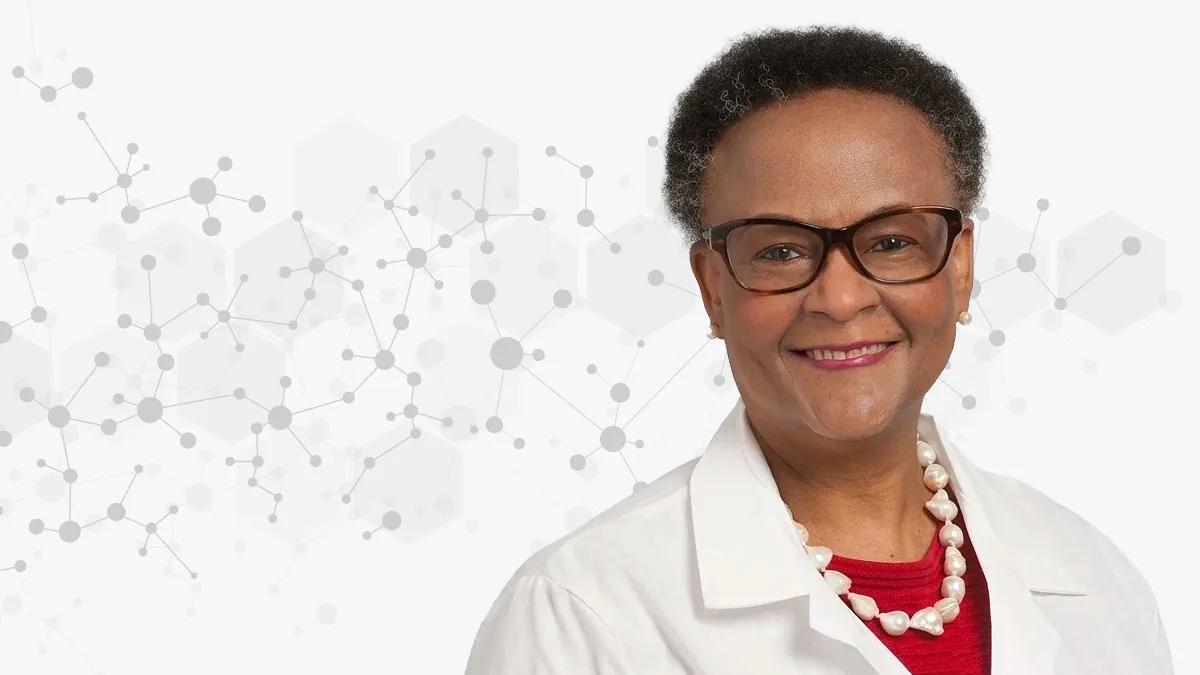
Developmental and Epileptic Encephalopathy
Elia Pestana Knight, MD, discusses advances in genetic testing, precision medicine and multidisciplinary care for developmental and epileptic encephalopathies.
Advertisement
Cleveland Clinic is a non-profit academic medical center. Advertising on our site helps support our mission. We do not endorse non-Cleveland Clinic products or services. Policy
Recent Episodes
Connecting Rehabilitation, Research and Innovation
Susan Linder, PT, DPT, PhD, and Karen Green, PT, DPT, highlight how research and innovation are transforming approaches to neurological reha…
Advancing Recovery Through Early Mobilization in Neuro Care
Adam Barron, MD, and Natalie Lilly, PT, DPT, explore the evolving evidence behind early mobilization in neurocritical care.
The Impact of Embedded Psychiatry in Neurological Care
Drew Cumming, MD, reviews the impact of embedded psychiatry in neurology and the benefits of integrating behavioral health expertise into th…
Video content: This video is available to watch online.
View video online (https://cdnapisec.kaltura.com/p/2207941/sp/220794100/playManifest/entryId/1_5337aehq/flavorId/1_5f3sgelj/format/url/protocol/https/a.mp4)
Transcript
Neuro Pathways Podcast Series
Advertisement
Cleveland Clinic is a non-profit academic medical center. Advertising on our site helps support our mission. We do not endorse non-Cleveland Clinic products or services. Policy
Release Date: November 15, 2026
Expiration Date: November 14, 2027
Estimated Time of Completion: 30 minutes
DEE (Developmental and Epileptic Encephalopathy)
Elia Pestana-Knight, MD
Description
Each podcast in the Neurological Institute series provides a brief, review of management strategies related to the topic.
Learning Objectives
- Review up to date and clinically pertinent topics related to neurological disease
- Discuss advances in the field of neurological diseases
- Describe options for the treatment and care of various neurological disease
Target Audience
Physicians and Advanced Practice providers in Family Practice, Internal Medicine & Subspecialties, Neurology, Nursing, Pediatrics, Psychology/Psychiatry, Radiology as well as Professors, Researchers, and Students.
Accreditation
In support of improving patient care, Cleveland Clinic Center for Continuing Education is jointly accredited by the Accreditation Council for Continuing Medical Education (ACCME), the Accreditation Council for Pharmacy Education (ACPE), and the American Nurses Credentialing Center (ANCC), to provide continuing education for the healthcare team.
CREDIT DESIGNATION
- American Medical Association (AMA)
Cleveland Clinic Center for Continuing Education designates this enduring material for a maximum of 0.50 AMA PRA Category 1 Credits™. Physicians should claim only the credit commensurate with the extent of their participation in the activity.
Participants claiming CME credit from this activity may submit the credit hours to the American Osteopathic Association for Category 2 credit. - American Nurses Credentialing Center (ANCC)
Cleveland Clinic Center for Continuing Education designates this enduring material for a maximum of 0.50 ANCC contact hours. - Certificate of Participation
A certificate of participation will be provided to other health care professionals for requesting credits in accordance with their professional boards and/or associations. - American Board of Surgery (ABS)
Successful completion of this CME activity enables the learner to earn credit toward the CME requirements of the American Board of Surgery’s Continuous Certification program. It is the CME activity provider's responsibility to submit learner completion information to ACCME for the purpose of granting ABS credit.
Advertisement
Credit will be reported within 30 days of claiming credit.
Podcast Series Director
Andreas Alexopoulos, MD, MPH
Epilepsy Center
Additional Planner/Reviewer
Ari Newman, BSN
Faculty
Elia Pestana Knight, MD
Epilepsy Center
Host
Glen Stevens, DO, PhD
Cleveland Clinic Brain Tumor and Neuro-Oncology Center
Agenda
DEE (Developmental and Epileptic Encephalopathy)
Elia Pestana Knight, MD
Disclosures
In accordance with the Standards for Integrity and Independence issued by the Accreditation Council for Continuing Medical Education (ACCME), The Cleveland Clinic Center for Continuing Education mitigates all relevant conflicts of interest to ensure CME activities are free of commercial bias.
The following faculty have indicated that they may have a relationship, which in the context of their presentation(s), could be perceived as a potential conflict of interest:
Glen Stevens, DO, PhD
| Company | Relationship |
|---|---|
| DynaMed | Consulting |
| Company | |
| DynaMed | |
| Relationship | |
| Consulting |
Elia M Pestana Knight, MD
| Company | Relationship |
|---|---|
| Lundbeck | Consulting (Ended: 09/01/2026) |
| Tenacia Biothech | Consulting (Ended: 05/01/2025) |
| UCB, Inc. | Advisor or review panel participant |
| Company | |
| Lundbeck | |
| Relationship | |
| Consulting (Ended: 09/01/2026) | |
| Tenacia Biothech | |
| Relationship | |
| Consulting (Ended: 05/01/2025) | |
| UCB, Inc. | |
| Relationship | |
| Advisor or review panel participant |
All other individuals have indicated no relationship which, in the context of their involvement, could be perceived as a potential conflict of interest.
CME Disclaimer
The information in this educational activity is provided for general medical education purposes only and is not meant to substitute for the independent medical judgment of a physician relative to diagnostic and treatment options of a specific patient's medical condition. The viewpoints expressed in this CME activity are those of the authors/faculty. They do not represent an endorsement by The Cleveland Clinic Foundation. In no event will The Cleveland Clinic Foundation be liable for any decision made or action taken in reliance upon the information provided through this CME activity.
HOW TO OBTAIN AMA PRA Category 1 Credits™, ANCC Contact Hours, OR CERTIFICATE OF PARTICIPATION:
Go to: Neuro Pathways Podcast November 15, 2026 to log into myCME and begin the activity evaluation and print your certificate If you need assistance, contact the CME office at myCME@ccf.org.
Copyright ©2026 The Cleveland Clinic Foundation. All Rights Reserved.
Introduction:
Neuro Pathways, a Cleveland Clinic podcast exploring the latest research discoveries and clinical advances in the fields of neurology, neurosurgery, neuro rehab, and psychiatry.
Dr. Glen Stevens, DO, PhD:
Developmental and epileptic encephalopathies or DEEs or DEEs are among the most complex and challenging disorders in pediatric epilepsy. Advances in genetics, precision medicine and multidisciplinary care are reshaping how we understand and treat developmental and epileptic encephalopathy, while new research is revealing that improving outcomes requires looking beyond seizures alone.
I'm your host, Glen Stevens, neurologist and neuro-oncologist in Cleveland Clinic's Neurological Institute. Today I'm joined by Dr. Elia Pestana Knight. Dr. Pestana Knight is a pediatric epileptologist in Cleveland Clinic's Epilepsy Center at the Cleveland Clinic Neurologic Institute. Elia, welcome to Neuro Pathways.
Advertisement
Elia Pestana Knight, MD:
Thank you, Glen, for having me.
Dr. Glen Stevens, DO, PhD:
We're going to start by you first telling us a little bit about your background, your training, how you got here. You and I met many years ago, and we haven't seen each other for a long time, but we met many years ago when your friend Daisy came and spent some time with me, a neuro-oncologist from Cuba that came and spent some time with us, and then we got to know each other a little bit. But for our audience out there, tell them who you are, what you're doing, and all the things you're up to.
Elia Pestana Knight, MD:
Well, I have a career that is typical for international medical graduates. I first became a pediatric neurologist in Cuba, where I was born and I attended medical school, and that's really where my interest for the diseases that belong to the category that we are discus today developed, in Cuba. The long story short is that I met my husband, and then he convinced me to move with him to Cleveland, he's in Cleveland.
Dr. Glen Stevens, DO, PhD:
What a good decision.
Elia Pestana Knight, MD:
And then my career began again at the Cleveland Clinic where I did the fellowship. And after I passed the famous USMLE test that all the medical graduates, the international medical graduates had to take, then I came back to the field that I loved so much of pediatric neurology.
Advertisement
Now the pathway to that field here in United States is a little bit different from what we did back in Cuba. So I completed my training in pediatrics at Rainbow Babies and Children's Hospital, and then I completed my residency in pediatric neurology at the University of Michigan Ann Arbor. And yet, I already have done an epilepsy research fellowship earlier on at the Cleveland Clinic, so it was only natural that I will start working here after I finish all my training, and here I am.
Dr. Glen Stevens, DO, PhD:
Well, it is a pleasure to have you. So, tell us what developmental and epileptic encephalopathy or DEE is, and how it's different from other epilepsy syndromes.
Elia Pestana Knight, MD:
Well, so that's a very good question, Glen, because the developmental and epileptic encephalopathy is just a modern, redefining of a term that was already being used years ago. We were refer it now to these epilepsies as generalized symptomatic epilepsies, meaning that they have seizures that were generalized and that was the main symptom but we really didn't understood the cause.
Out of that group, that we call epileptic encephalopathy, which what that term meant was that the frequency of the spikes, the epileptic spikes or a normal electricity in the brain, along with the frequent seizures, were the direct cause of the neurological, cognitive, and developmental symptoms that the patients were having, regardless of etiology. That was the old concept.
Advertisement
And today, the concept have been redefined to acknowledge that the etiology also plays an important role in the development of the epileptic discharges, the development of the seizures, and also on the neurocognitive and behavioral problems that these patients have.
Dr. Glen Stevens, DO, PhD:
So, we'll get into some of the specific disorders here in a little bit. But has the definition changed much over time? I guess we just understand it better or the causes, right?
Elia Pestana Knight, MD:
I think that it is true that the frequent spikes and frequent seizures cause problems in the neurodevelopment of the immature brain. That's true. It's true also that even in the situations when we can eliminate those seizures and the spikes, we won't change the developmental course because the etiology is the driver of that.
So to make the diagnosis, we need three pieces. We need the frequent spikes, the frequent seizures, and the etiology impacting on the symptoms that the patients are going to have. And these symptoms, I have been using the phrase neurological, cognitive and behavioral symptoms, but think of these patients will have problems such as difficulties with mobilities. Many of them won't be able to walk. These patients are going to have movement disorders of a great variety from ticks to frank dystonia or dyskinesia. They're going to have developmental delay. They're going to have intellectual disability, autism, attention deficit disorder, OCD, you name it. And along with that also, which is not part of the definition, they have a lot of systemic problems like frequent infections, constipation, musculoskeletal problems, including scoliosis, etc.
Dr. Glen Stevens, DO, PhD:
So it sounds like a difficult, multidisciplinary involvement with these patients. So when I see a patient that's had seizures, I can chat with them, but you deal with all ages as a pediatric, a lot of very young that cannot tell you, "Hey, I think I had a seizure, or what I felt, or was there a prodrome?" How do patients present to you? I suspect the parents are concerned by something, but in the very young children, how do they present?
Elia Pestana Knight, MD:
Well, this is a very interesting question, because there are hallmarks to this definition. And the number one is the early onset of seizures. The seizures will present within the first year of life with a severity that is really unexpected. The seizures are frequent, they are daily, and they do not respond to traditional anti-seizure medications. That is the key of the diagnosis. This seizure can present on a child that at birth from day one of life. It can present on a child who already is having difficulties on gaining developmental milestones. And it also can present and change all the development that the patient have acquired so far, what we call regression of the symptoms.
So this is the typical presentation. So immediately, we know when we have a child or an infant or a newborn presenting with an explosive onset of seizures, what the course is going to be. And we know already that this is going to be a developmental and epileptic encephalopathy. The question is then to define the etiology.
Dr. Glen Stevens, DO, PhD:
Yeah. I remember doing peds many, many years ago and always being told that when the mother's really concerned, because sometimes they can be subtle, that you should take it seriously. Right? They're not there wasting your time, they're there because they're seeing something and they're very concerned, so you should really work it up.
So then I guess we move to the, what is the cause or what's the underlying thing. I understand genetics, a lot of genetic abnormalities. Can you talk about the role of genetic testing with these patients? Of course, we got to image them. They're having seizures, we do an EEG, we image them.
Elia Pestana Knight, MD:
So the etiological diagnostic of this patient comes down to the clinical history in the first place, because developmental and epileptic encephalopathy is true, there is a concept that we refine at par with the development of the epilepsy genetics, but there are patients who have developmental and epileptic encephalopathy that the etiology is clear defined by a perinatal injury like severe hypoxia-ischemia or intraventricular hemorrhage that we see in patient with prematurity or perinatal stroke, brain malformations, can present also early on with symptoms of developmental and epileptic encephalopathy. And these are diagnosis that by the history and by the imaging is going to be clear.
The patient, the group that is genetics, well, the MRI is going to be negative. The clinical exam is not going to tell you this is a neurocutaneous syndrome or anything of that sort. So if the MRI is negative and there is an explosion of seizures early in life, the next thing to do is genetic testing. And I think that the ability of having the genetic testing has changed really the landscape today, because 15 years ago we were doing a single gene testing for this patient and there were a handful of them.
Today I can tell you, I saw a patient that she's now 18, we diagnosed her when she was eight. But this was after she was diagnosed for Dravet syndrome. SCM1A was negative. She was diagnosed. She was studied for all kind of neurocutaneous syndromes. She went to ophthalmology looking for the traditional findings in the retina that we look at that. And the MRI from the get-go and serial MRIs were negative in different periods of life. And finally, there was a test developed for the CDKL5 deficiency disorder, and then that's what she had. But she went through a series of causality tests back then to get to the diagnosis.
Today, we get those diagnoses at three or four months of age because we have the opportunity to do an epilepsy panel in which there is a bundle of genes that already are known to be associated with epilepsy and there are over 700 of them in those panels. Knowing that there are today 1,000 different genes that can cause epilepsy and developmental disorders. So the more we look, the list is getting bigger and bigger. And all this started back in the late 1990s. By now, there are 1,000 of these genes.
Dr. Glen Stevens, DO, PhD:
Yeah. I was doing a bird of reading on it and I was quite shocked actually how many single abnormal gene mutations there are. How many does the standard panel check, do you know?
Elia Pestana Knight, MD:
The current panels are checking around 700 of them. And of course, then now we have other techniques that the whole exome and whole genome sequencing that have been more used in clinical practices around 2011, 2012, that period. And they're using more and more instead of going straight for a panel, or using when the panel is today really inexpensive, so it's very easy to obtain. But also, the whole genome and the whole sequence add to clarity because sometimes you get abnormality in a panel and if you don't do testing of the panels, you don't know what it means.
And I wish that that would be all the story, it's not enough to get the name of the gene anymore either. You also need to know the function of the gene because they are genes that if they are led to activation of channels, you get a phenotype and you need a treatment, and you need to avoid a treatment. And if you have a loss of function or a gain on function, the phenotype are going to be different and the treatments are going to be different.
Dr. Glen Stevens, DO, PhD:
And insurance wise, insurance companies will cover the costing for genetic testing or it's a hassle, or?
Elia Pestana Knight, MD:
Yeah, we work in close relationship with the geneticists also. They are a big help to get us to get the right test for the child, because sometimes the answer is not on those panels either. Sometimes the answer is going to be in a micro array, particularly in case you are seeing some dysmorphic fissures or other systemic abnormalities, because sometimes the cause is a copy number variant, not a single gene mutation. So, the whole field is expanding rapidly.
Dr. Glen Stevens, DO, PhD:
My understanding is that some of the genes can cause structural changes, so you can get cortical migration abnormalities. I was even reading that they can affect neurotransmitter activity, sensitivity to neurotransmitters. I mean, it's quite unbelievable, really, that you can affect cortical, subcortical signaling. I mean, these things are, you just imagine the problems that it would cause.
Elia Pestana Knight, MD:
Yeah. One thing that is very interesting about the genes that we are learning today, and this is all process, that there are genes that we know very well by now, and there are genes that still we are learning about them. And it's very interesting how all these patients were lumped together and now you see that they are so different from one another one.
Dr. Glen Stevens, DO, PhD:
It's amazing how much smarter we get as our understanding improves, isn't it?
Elia Pestana Knight, MD:
Yes, as our diagnostic tools increase.
Dr. Glen Stevens, DO, PhD:
Yeah. And it's the same in brain tumor, right? We would call everything a certain tumor and now every time there's a classification, it subsets everything even more because we know this molecular test, it's a different path. And again, we'll all be smarter as time, which is good.
Elia Pestana Knight, MD:
Yeah. I think in epilepsy we are following the field of oncology. I think that really, you pioneer, you're a field pioneer where we are today in epilepsy, and we really pay attention to what you are doing.
Dr. Glen Stevens, DO, PhD:
Well, I'm glad to hear that. So of course the problem, as you know, because you deal with it every day is seizures, seizures, seizures. It's hard to get everything right. Are the cognitive and developmental problems, I guess some of it could be structurally based if they've got migration problems. Is it mostly seizure related why they have the developmental problems and the encephalopathy?
Elia Pestana Knight, MD:
I think that the children who have early onset epilepsy, they also have many systemic problems that they have to deal with. And to answer that question, it comes a little bit to the chicken and the egg history, right? We don't know if these patients are also having constipation and difficulty swallowing and gastroesophageal reflux because they have abnormalities of the muscle tone, or because you already are treating it with two or three anti-seizure medication that are already slowing down everything because those therapies are not specific. There are therapies that are a aid to treat the symptom seizures or the excesses of spikes, but they are not specific. They will slow the whole central nervous system and peripheral nervous system. So these patients often have hypotonia, we don't know if they're not swallowing because of the degree of hypotonia that they have or they have a swallowing deficiency because the number of medication, or they have a swallowing deficiency, because their brain is not working well in the first place.
So to get into the why is difficult, but the truth is that we need to balance how we treat them with anti-seizure medication, because too many can lead to a poor outcome that could be similar as if you are not using none. So it's a balance, and it's a very individualized treatment. I have patients with the same gene mutation that some responds to one medications and some don't at all. So, there is a lot that we don't understand there. Yeah, so hopefully the precision medicine will change that.
Dr. Glen Stevens, DO, PhD:
If you order a gene panel, how long does it take you to get it back?
Elia Pestana Knight, MD:
I think in a couple of weeks you can get a result.
Dr. Glen Stevens, DO, PhD:
Okay. So, a reasonable period of time?
Elia Pestana Knight, MD:
Yes.
Dr. Glen Stevens, DO, PhD:
And at what age can you do an MRI on a child without sedation?
Elia Pestana Knight, MD:
Well that-
Dr. Glen Stevens, DO, PhD:
Or if they're really little, do you need to sedate them or you don't, or?
Elia Pestana Knight, MD:
Well, that's a very interesting question. So in very young kids, you can feed and bundle them and they will not move, right? And you can get an MRI at that age without the need of anesthesia.
And then to answer your question, then there is a period past that that they move so much that you need to sedate them. But then what happen to these patients when they become adults? Right? Once they get to be teenagers, it's very difficult to get an EEG because the behavioral problems of this patient is very serious.
Right now, I'm dealing with a 26-year-old who needs a updated brain MRI because of the neuropsychiatry symptoms that she's having. The psychiatry team who is helping with the care, they need to see what the brains look like before they go to a specific therapy. And we are going to need to sedate her under anesthesia like we do with younger kids, because her behavior won't let her cooperate. So this comes to the problem of the intellectual disability that will be along the life of these patients even into adulthood.
Dr. Glen Stevens, DO, PhD:
So one of the things that your group does, which I love, which our group does, I'm not going to say that you borrowed it from us because I think you've been doing it for a long time, but you do multidisciplinary conference where you'll present these difficult epilepsy cases. And you'll show the EEG monitoring, the neuroradiologist will go over the MRI, you'll discuss the clinical case, and as a group, you'll make a decision as to the treatment. How frequently with these DEEs is surgery an option? Or is it usually too broad a thing that surgery is generally not an option in these cases? Or are there certain types of surgeries that are helpful?
Elia Pestana Knight, MD:
Well, absolutely. So surgery is an option for some of the patients with DEEs, particularly those that have a structural abnormalities. And I can tell you that the therapies go from anti-seizure medications. Okay? When that is not enough or there is an option because there is a structural lesion, we can do epilepsy surgery, resective epileptic surgery or lesionectomy, hemispherectomy. There is a variety of surgical procedures.
When that is not possible, we could do callosotomy for those who are having seizures with significant falls and injuries. And this particular are the ones that have evolved to the well-known Lennox-Gastaut syndrome. Right? Those patients will benefit from that. And then there is a field of neuromodulation also, that you can do the bowel neurostimulation or the deep brain stimulation or the NeuroPace is another option that is offering for these patients.
And for those who have genetic causes, the genetic diagnosis don't preclude them from using neurostimulation techniques. Right? We shied away from the epilepsy surgery because we know, for example, those patients who have a problem with channelopathies, the genetic mutation lead to channel malfunction, they don't do as well with epilepsy surgery. These are groups in which we are very focused on precision medicine, other types of therapies that goes from drug repurposing, drugs that have other use are coming now for the management of epilepsy. And of course, we have the gene therapy and we all have our hopes on the development of gene therapy.
Dr. Glen Stevens, DO, PhD:
So people that have gene-based abnormalities, are they generalized epilepsies or focal epilepsies, or a little bit of both?
Elia Pestana Knight, MD:
I am both, yeah. They can be generalized. They can have focal, predominantly focal, but they can have both. And if they present with another one across the lifespan, they may develop another seizure type too, so they can start generalized and then develop some focals or focal generalized or start from the get-go with the mix of epilepsy phenotypes.
Dr. Glen Stevens, DO, PhD:
Use of ketogenic diet or non-traditional medications in these patients, helpful, not helpful?
Elia Pestana Knight, MD:
It's a preferred therapy, particularly early in life. Patients who have DEEs that are not responding to treatment and we are not receiving an answer yet of why they're having seizure, we don't know the etiology. Take it to any diet is a very good option and also for many genetic epilepsies is being used today.
Dr. Glen Stevens, DO, PhD:
Use of steroids? I know if I recall, was it West syndrome, or... which I think they've renamed now, but-
Elia Pestana Knight, MD:
Yeah. So they are within the category or the umbrella of developmental epileptic encephalopathies are some very well-defined epileptic syndromes that are historically named like the syndrome of West that is now known as the infantile epileptic spasms syndrome.
Dr. Glen Stevens, DO, PhD:
A lot easier for me to say West.
Elia Pestana Knight, MD:
Well, but that's a very interesting one. The reason of the change of the name is because Dr. West described his son who have infantile spasms, developmental regression, that was what he described in the 1800s. Then with the development of the electroencephalogram, there was clarified that the EEG have arrhythmia, and that complete the triad. But today what we know is that these patients don't necessarily have the three things. What they need to have to fall within that syndrome is the epileptic spasm or the infantile spasm. Basically, if it happens under age two, you call it infantile spasms. If it's happening later, it's called epileptic spasms. But there are patients who have spasms that don't have arrhythmia, and there are patients that don't have regression, they already are coming with a lack of development when the symptoms start. So the phenotypes are expanding.
The other well-known syndrome is the Lennox-Gastaut syndrome. It's also under the umbrella of these syndromes. The other one is the Dravet syndrome, which is monogenic epilepsy due to a mutation in the sodium channel blockers, 1A specifically is another well-recognized syndrome. And then as the patient get older, we have the famous electrical status epilepticus in sleep that have been renamed today as developmental epileptic encephalopathy with a spike and wave activation during a sleep, which I can see how people think that these long names are just confusing and long, but there is a reasoning also for them.
Dr. Glen Stevens, DO, PhD:
Well, I'm fascinated by how some drugs that were used for completely different reasons are repurposed and used and how somebody ever figured out that this drug should be used.
So the one is the use of fenfluramine in Dravet syndrome. I remember this drug as a weight loss drug and it was going to make... Before GLP-1s became the rage, back in the old days, this was the drug that was going to make us all thin. And then if my recollection is right, there were cardiac related concerns or something to do with cardiac, so it went away. And then now it's showed up in some of these DEEs, and it's a serotonergic antagonist drug. But how somebody figured this out, I don't know if you know the story, but it's just fascinating, right? And maybe a lot of it's just serendipity where someone got put on it for some other reason and their seizures got better and someone just was the detective and went, "Oh, this is the new drug. Maybe this is doing it." It's crazy, right? Some of this stuff.
Elia Pestana Knight, MD:
It's very interesting. I think that we always have been operating in the intersection of what the anti-seizure epileptic drugs can do for other fields in neurology, right? So we have the topiramate, it helps with headache and help with weight loss. And then the lamotrigine helps to regulate mood, so it's used for bipolar disorders too, etc. There is a list, yes, yes. And that's probably the history of the fenfluramine is very interesting, because at the same time that it was used with another compound for weight loss in United States, it was used for photosensitive epilepsies by Dr. Aicardi in Europe.
Dr. Glen Stevens, DO, PhD:
Aicardi syndrome?
Elia Pestana Knight, MD:
Yes. The same doctor of the Aicardi syndrome.
Dr. Glen Stevens, DO, PhD:
Corpus Callosum Agenesis.
Elia Pestana Knight, MD:
And then it was used for Dravet syndrome. At the time that the syndrome was being described by Dr. Charlotte Dravet, these patients were being treated with fenfluramine. And when the medication came out of the market in United States, they continue to use it. So they have the longest exposure for this drug with really a very low risk for heart disease, that's the data that they have. And of course, the studies were done here in United States because the historical risk, the requirement for the monitoring of the heart and the health of the heart have continued over the years. But the signal is that there is a very low risk for heart disease. So, let's see what we learn in the post-clinical trial.
Dr. Glen Stevens, DO, PhD:
And maybe because it's so many children, right? The risk factors. Well, I'm shocked that we're running out of time, but I'm going to ask you just a couple quick questions. Risk of sudden unexplained death of epilepsy, higher in the DEEs population or no?
Elia Pestana Knight, MD:
Higher on the DEEs that are due to monogenic epilepsies, certainly. There are well-known etiologies like the channelopathies in which the sudden unexpected death is very important, and it's important that we discuss with the families that.
Now, one of the things that happened as the field start focusing on discussing sudden unexpected deaths in patient with epilepsy, I started noticing that many of my patients who have developmental and epileptic encephalopathies were not dying from SUDEP, which is the term that we use to describe the sudden unexpected death. And so last year, I look at that information with one of my pediatric neurology residents, Dr. Annette Cremean, and we looked at the data together and we learn that in all institution, when we look at these and not just genetic DEEs, all the developmental epileptic encephalopathy, whether this is due to a perinatal injury, a stroke, etc, or a genetic cause, or an infection, post-infectious cause or post-traumatic cause, all the cause. So when we looked at them as a group, there was a significant number, around 75% of the patient, they did not die from SUDEP. They die from chronic lung disease, complications of chronic lung disease was the significant cause of death for them. Yes.
So I think we are still learning what is the right thing to do, but I think certainly it's something that we want to let the community know that is of importance. A number of these patients already have enteral feeding, so they were not aspirating because they were eating by mouth. But this is going to bring to the forefront the issue of the micro aspiration because these patients, many of them have excessive drooling. They don't eat by mouth, but they have excessive drooling. So it's possible then that macro aspiration is an element that is contributed to this. We'll know more soon and we'll let you know about it.
Dr. Glen Stevens, DO, PhD:
It's fascinating. We could probably talk for an hour here, but I appreciate your coming by. We'll have to get you back to discuss some things in the future. It sounds like all these patients should be looked at at a specialty center. I mean, these are complicated.
Elia Pestana Knight, MD:
Absolutely, absolutely.
Dr. Glen Stevens, DO, PhD:
Complicated cases that really probably should be going somewhere to a major center.
Elia Pestana Knight, MD:
Yeah. We have a great team here that goes from complex care pediatricians to a great team of pediatric pulmonologists, pediatric gastroenterologists, orthopedic surgeon, physical medicine and rehabilitation, and of course our colleagues in pediatric neurology are part of the team too. So, it really takes a village to take care of these patients.
Dr. Glen Stevens, DO, PhD:
Well, thank you for coming by today. We really appreciate it.
Elia Pestana Knight, MD:
Thank you for inviting me.
Closing:
This concludes this episode of Neuro Pathways. You can find additional podcast episodes on our website, clevelandclinic.org/neuropodcast, or subscribe to the podcast on iTunes, Google Play, Spotify, or wherever you get your podcasts. And don't forget, you can access real-time updates from experts in Cleveland Clinic's Neurological Institute on our Consult QD website. That's consultqd.clevelandclinic.org/neuro, or follow us on Twitter @CleClinicMD , all one word. And thank you for listening.
Recent Episodes
Connecting Rehabilitation, Research and Innovation
Susan Linder, PT, DPT, PhD, and Karen Green, PT, DPT, highlight how research and innovation are transforming approaches to neurological reha…
Advancing Recovery Through Early Mobilization in Neuro Care
Adam Barron, MD, and Natalie Lilly, PT, DPT, explore the evolving evidence behind early mobilization in neurocritical care.
The Impact of Embedded Psychiatry in Neurological Care
Drew Cumming, MD, reviews the impact of embedded psychiatry in neurology and the benefits of integrating behavioral health expertise into th…
Never miss a moment - subscribe now.
Listen to the Health Essentials Podcast on your favorite streaming platform.
Other Podcasts You May Love
Beyond Leadership
Hosts Jim Pae and Elizabeth Pugel escort you through a network of thought leaders, sharing world-cla…
Beyond the Pages: CCJM Podcast
Beyond the Pages: CCJM Podcast takes the listener more in-depth into Cleveland Clinic Journal of Med…
Butts & Guts
A Cleveland Clinic podcast exploring your digestive and surgical health from end to end. You’ll lear…
Cancer Advances
A Cleveland Clinic podcast for medical professionals exploring the latest innovative research and cl…