



Multidisciplinary Management of Cardiogenic Shock
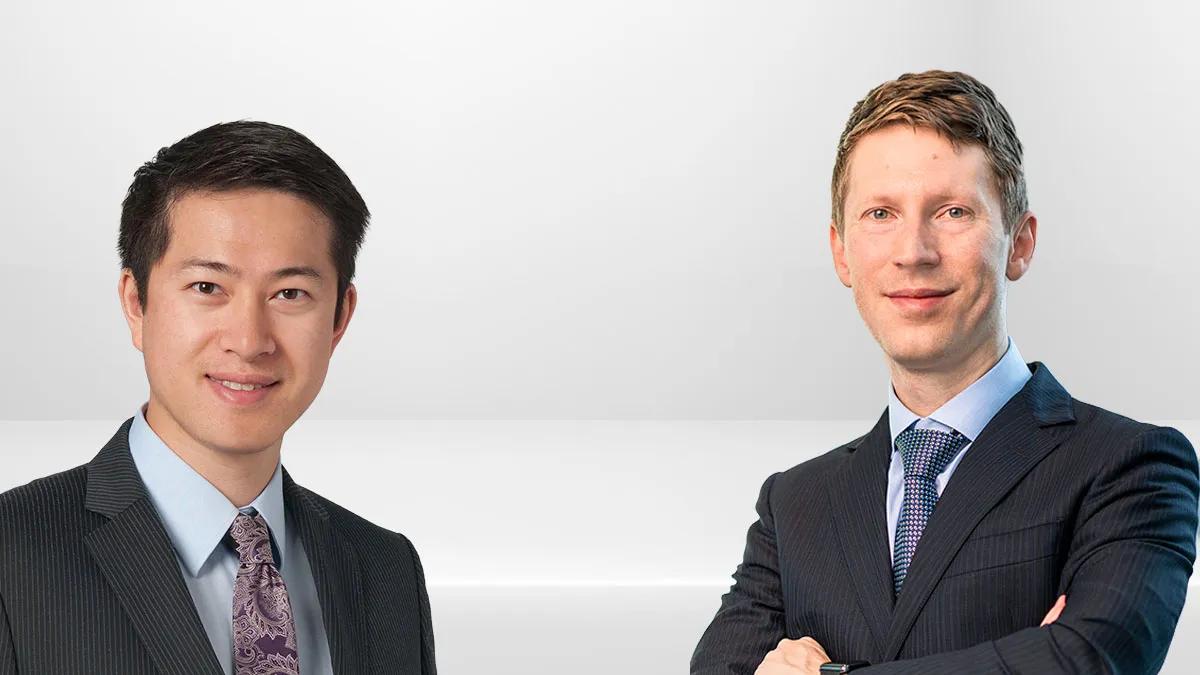
Michael Tong, MD, and Andrew Higgins, MD, discuss the management of cardiogenic shock, including early recognition, multidisciplinary Shock Team activation and the role of temporary mechanical circulatory support. They examine patient selection, transfer considerations and how collaborative decision-making can guide pathways to recovery, LVAD therapy or heart transplantation.
Looking to refer a patient? Please reach out to our Physician Referral team Mon. - Fri., 8 a.m. - 5 p.m. (ET) at 855.751.2469.
Advertisement
Cleveland Clinic is a non-profit academic medical center. Advertising on our site helps support our mission. We do not endorse non-Cleveland Clinic products or services. Policy
Recent Episodes
Managing Travel Risks for Patients With Heart Disease
Ashish Sarraju, MD, and Abhayjit Singh, MD, discuss approaches to assessing travel readiness in patients with cardiovascular disease. They r…
Twenty Years of Innovation in Robotic Cardiac Surgery
Twenty years after launching one of the nation’s earliest robotic cardiac surgery programs, Marc Gillinov, MD, Marijan Koprivanac, MD, and G…
Advancing Cardiovascular Care Through Genetic Testing
Krishna Aragam, MD, Michael Hill, MD, and Christina Rigelsky, MS, CGC, discuss how cardiovascular genomics is transforming the evaluation an…
Video content: This video is available to watch online.
View video online (https://cdnapisec.kaltura.com/p/2207941/sp/220794100/playManifest/entryId/1_3lpklyz9/flavorId/1_5f3sgelj/format/url/protocol/https/a.mp4)
Transcript
Announcer:
Welcome to Cardiac Consult, brought to you by the Sydell & Arnold Miller Family Heart, Vascular & Thoracic Institute at Cleveland Clinic. This podcast will explore the latest innovations, medical and surgical treatments, diagnostic testing, research, technology and practice improvements.
Advertisement
Cleveland Clinic is a non-profit academic medical center. Advertising on our site helps support our mission. We do not endorse non-Cleveland Clinic products or services. Policy
Dr. Michael Zhen-Yu Tong:
Hi, welcome to our podcast. My name is Michael Tong. I'm the surgical director of heart transplantation and mechanical circulatory support here at Cleveland Clinic. With me today, we have Dr. Andrew Higgins. Tell us about yourself.
Dr. Andrew Higgins:
I'm Andrew Higgins. I'm the associate director of our Cardiac ICU here. I do a little bit of everything. I'm in critical care cardiology, as well as heart failure and transplant cardiology. I work in both our heart failure ICU as well as our cardiac ICU.
Dr. Michael Zhen-Yu Tong:
Today, we're going to be talking about cardiogenic shock. Now, for patients that have cardiogenic shock, they are at the highest risk of mortality or not surviving their injuries. Cardiogenic shock basically means your heart is so weak that your heart is no longer able to pump enough blood to meet the basic demands of your body. With that, the organs will start to shut down, and very quickly, we can lose the patient without proper intervention. Over the past few years, probably eight years now, Andrew, we've instituted what we call the Shock Team. This is a multidisciplinary team to help patients, not only here, but around the area and even across state lines to help patients with cardiogenic shock. Dr. Higgins, let me start by asking you: who are the most at risk of developing cardiogenic shock?
Advertisement
Dr. Andrew Higgins:
I think it's an excellent question. I think along those lines, I think one of the questions I get most commonly is what's the difference between cardiogenic shock, a heart attack, a cardiac arrest, and things like that, because all of these things kind of go hand in hand. Certainly, patients who have sustained a cardiac arrest and have come back from it, and patients who have sustained a heart attack and have taken a lot of injury to their heart, those are some of the patients who are most at risk for cardiogenic shock. But there are a few other populations that we see as well: patients who have longstanding issues with heart failure, and so either issues because their heart doesn't squeeze as well or other forms of heart failure that see progression over time, or sometimes when they get sick for other reasons.
If they have longstanding heart failure and then develop a new insult, like they get infected, they have a major procedure or something like that that puts too much of a toll on the body, something goes wrong with their medications, those can be sort of the tipping point that pushes somebody from chronic heart failure into an episode of acute heart failure and then from there, into our worst form, which is cardiogenic shock.
Advertisement
Dr. Michael Zhen-Yu Tong:
Yeah. You described the two, probably the most common types: those patients who are having a major heart attack, or those patients who have cardiogenic shock secondary to having longstanding heart failure that just suddenly worsens. But I think in the patients that I see in surgery, we also see a lot of patients with valve disease that have deterioration in the valve condition that can also lead to cardiogenic shock. We also know that there are viruses that can cause patients' hearts to get weakened. Also, patients who can have pulmonary embolus, which is a blood clot that travels to their lungs, that can put a lot of pressure on the right side of the heart. I think this is such a vast catch-all type of disease. Essentially, it's anything. Any underlying cause that can cause the heart to get weak can cause cardiogenic shock.
Tell us, if we may, what are some of the warning signs that patients and their families should watch for, and when should they seek medical attention?
Dr. Andrew Higgins:
Yeah, it's an excellent question. I think the fundamental definition of cardiogenic shock, to go back to that, is that it's a lack of adequate forward cardiac output to meet your body's demands, but that can take a lot of different forms. I wish that everybody read the textbook and everybody looked the same because again, that classic form, like we were talking about, is you have a big heart attack that hits the anterior wall of the heart, your blood pressure drops, your lungs start to develop fluid, and that becomes very easy to recognize in that context. But, as you alluded to, there are so many different things that can kick you over. We didn't talk about arrhythmia, there are certain forms of heart infection that can do this as well. Ultimately, as a result, it can be very hard to picture exactly how that is going to take shape as shock progresses. The classic example is a fall in blood pressure, and most patients will have a significant drop in their blood pressure in that context, but not every patient.
Advertisement
The other things that we look for are evidence that the body isn't getting the blood flow that it needs. Cold extremities, fluid building up in the lungs, as we said, fluid developing down in the legs, and things like what we call, in medical terms, poor capillary refill. When you give a little gentle pressure on the nail bed, it takes a really long time for the blood to come back into the fingers. All of these are signs, but one of the challenges of our field is that there's no single thing that we can hang our hat on that's easy to watch for. This is why a lot of this is about early consideration of this and having a high suspicion that when you have the setup for heart failure, anything that leads to you getting worse and starting to develop problems with your end-organ function or evidence of cool extremities and things like that should prompt somebody to ask, could this be early cardiogenic shock.
Dr. Michael Zhen-Yu Tong:
Throughout the United States and throughout the world, of course, we have hospitals of different sizes. Some are smaller hospitals; some are large multidisciplinary hospitals like ours. The amount of support that we can offer for patients is going to be different depending on the infrastructure of the hospital. There are a lot of patients who, at the first point of contact, may be in a smaller hospital. At what point should these patients, once they develop cardiogenic shock, should they consider getting transferred to a larger hospital that may have more options to treat them?
Advertisement
Dr. Andrew Higgins:
It's an excellent question and one that I wish I had an easy answer for. I think that one of my favorite parts of my job is that I direct our cardiogenic shock outreach. As you all know, I'm on the phone at 2:00 AM frequently with you and with our referring centers and things like that to discuss exactly this kind of patient all the time. It's very variable from case to case, patient to patient, and even within the same patient from admission to admission. I have plenty of heart failure patients that come in that live very far away from Cleveland Clinic, but see me long term, that come in locally with a little extra fluid on board, get tuned up locally, never need to even discuss transfer.
The times when transfer becomes really important are when their treatment team there is starting to reach the limits of their capability to stabilize them, or having stabilized them, they realize that they don't have a road forward off of those forms of support, and then they're going to need somebody like you to bail them out with something more advanced from our surgical support techniques or something definitive like a long-term heart pump insertion or LVAD or heart transplantation.
Dr. Michael Zhen-Yu Tong:
Okay. We'll certainly talk more about that as the podcast goes on.
Advertisement
So, we know that these patients are very different from one patient to the next. We know that the treatment could be very different from one patient to the next. We know that time is of the essence here because when the patient's heart is so weak, and the body's needs just are not being met by the heart, this is something that is very, very deadly. This is why we instituted the Shock Team. Not only for our patients here at Cleveland Clinic, but also for patients from other institutions who are considering transferring these patients to us. Tell us a little bit about our team, about the Shock Team, what it is, who are the members of it, and how we work.
Dr. Andrew Higgins:
The Shock Team is one of my favorite parts of this job. I'm not old yet, I'm getting there, but I'm old enough to remember an era before the Shock Team when somebody came in and needed support and you just basically played telephone. It was in the eyes of the treating medical intensivist or critical care cardiologist at the time to say, "Hey, this is the situation that I'm in. I think that I need a balloon pump.” This is a form of support that goes in most commonly through the leg and provides a little bit of support for the heart. There are also much bigger guns that we can reach for. There are things like temporary heart pumps, like Dr. Tong puts in through the arm, that offer a lot more support, but are also a lot harder to put in and need a little bit more warning time. For a long time, it was just incumbent on that initial treating team to say, "This is what I think I need," and then reach out to you as a set of hands to accomplish that.
Beginning, as you said, in the late 2010s and built on work from a couple of other centers, there was this push towards let's do things with an earlier conversation in a multidisciplinary fashion. Get our cardiology team and our cardiac surgical teams on the phone, yes, but also our interventional cardiology teams, our heart failure cardiology teams, our critical care and anesthesia teams. The teams that take care of patients upstairs in our post-cardiac ICUs. Increasingly, we've acknowledged that it takes a village, and so it's not just the MD specialties.
It's all well and good to pontificate and discuss how we're going to get somebody onto treatment. But if I can't get them onto treatment because we live in Northeast Ohio and it's snowing at the time, then it doesn't really do them any good. So, we bring our critical care transport teams on board, our perfusion teams on board, and we have a big powwow about what's the best option for this patient. Sometimes it's easy. They're in my ICU already, you're in-house, we can do it in the next few minutes. Sometimes they're a 60-minute flight away by helicopter and it's snowing, and we have to talk about, on the ground there at the referring center, what can we do to buy time, what's our strategy going to be when they get here. I'd say that it's really been a landmark shift in how we deliver shock care that this isn't something that we sort of come up with on-the-fly once the patient hits us. We are really putting our heads together long before the patient even touches the ground here and have a plan in place.
Dr. Michael Zhen-Yu Tong:
Okay, great. Let's say we have a patient at a hospital somewhere two hours away, and they have a patient who's in shock, and they don't have the more advanced treatment options for them, and they want to transfer the patient. They will call our transfer number, which is 216.448.7000, and they will speak with our operator, and they will say, "I would like to activate the Cleveland Clinic Shock Team." Tell us what they can expect to hear in the next few minutes after that initial chat.
Dr. Andrew Higgins:
Excellent. They'll usually make an initial contact. Most of the patients, not all of the patients, but the majority of the patients that are going to come through the Shock Team from an outside center come through my ICU, the J31 Cardiac ICU. Some will pass through the J32 Heart Failure ICU, and some will go directly to you guys upstairs on the cardiac surgical side on the fifth and sixth floors. Whichever ICU you're going to reach, usually you'll be connected to them first, and you'll hear from them. They'll get the initial story, a broad descriptor, and then, if you haven't already asked to activate the Shock Team, but it sounds like it's appropriate, they'll trigger it.
We've also empowered our critical care transport partners over the years to activate unilaterally and say, "Gosh, this sounds like a patient that's best served by the Shock Team." They will then trigger the page that goes out, and then that goes out to all those team members that I outlined before. We call in separately and then they'll connect through and then you're on with us, the referring physician is on with us to tell the whole team, "Hey, I have Mr. or Mrs. So-and-so, this is their story."
We'll ask the questions as we get the lay of the land. Then, they become sort of an informal part of our Shock Team as well because they're taking care of that patient now, and we certainly aren't there yet, so what can we do together to get them to where they need to be.
Dr. Michael Zhen-Yu Tong:
Yeah. I think that's probably one of the most important services that we are able to offer to our neighboring hospitals. Within minutes of you calling us, you're going to have all the specialists involved in shock get on the phone call with you and help you make the decision of what to do for this patient and whether or not this patient can be safely transferred to us in a timely manner. If the answer is yes, then we will do everything we can to come and get the patient, bring the patient to us, and offer the next levels of treatment.
As these patients reach us, initially, at first, when patients are in shock, usually we're reaching for medicines to try to stabilize them. Sometimes that works, sometimes it doesn't. When it doesn't work, then we have to reach for mechanical devices. What are some of the mechanical devices that are commonly used for patients in cardiogenic shock?
Dr. Andrew Higgins:
Yeah, that's an excellent question. We lump these into a bucket of things called tMCS or temporary mechanical circulatory support: devices that stay in for a little while, that are mechanical, that support the circulation and buy the heart time, help protect the ability of the body to get blood flow to where it needs to go, making sure that your brain, your liver, your kidneys are all seeing the support that they need.
We've got a few tools in our toolkit, more every year. Among those, I'd say that the sort of most well-studied and oldest tool that we have is called the intra-aortic balloon pump, or IABP. This is an older device dating back to the '60s, but it's a device that goes in and relies off of helium. Basically, it's most commonly inserted through the leg. We put it in the femoral artery, and it goes up and does its job of inflating when the heart relaxes, deflating when the heart squeezes, and shifts work from the heart onto the pump itself, and we get a little bit of flow with that.
We have some more invasive tools. As they get more invasive and larger, they offer progressively more support, but also with that, a little bit higher risk. The Impella family of devices, those are most commonly put in through the leg by our interventional cardiologists or, as you well know, in the axillary artery by our cardiac surgical team, including you. The smaller CP device that goes in the leg versus the larger 5.5 that goes in the arm, each has its pluses and minuses. The situations in which we use it are a little bit different, but similar principles that they support the left side of the heart.
Then, sort of the most invasive form of support we can do is ECMO, or extracorporeal membrane oxygenation. That's most commonly delivered again via the leg. We place a cannula down in the leg, pull blood from the right side of the heart, oxygenate it, spin it up, and accelerate it back to the body to replace the function of both the left and right side of the heart. Incredible tool, but it also has its own downsides. We reserve it for select circumstances, and this is one of the frequent topics of conversation on those shock calls.
Dr. Michael Zhen-Yu Tong:
Yeah. In my mind, when we have a patient in shock, there are a lot of things that we're trying to achieve, but they come in order of priority. I think the first thing we all want to achieve when somebody's blood pressure is 60/30, for example, the first thing is we want to normalize that blood pressure. We want to make sure that we're not just squeezing the blood vessels to get the blood pressure up, but we're also increasing the flow of blood through the body, so that all the organs, the brain, the kidneys, the liver, the gut, all the organs of the body are getting enough blood flow. Once we have accomplished that, the next level is that we have to make sure that if the heart has the potential to recover, we've got to make sure that the heart is in the best situation for it to recover.
Finally, we want to make sure that the patient can be safely transitioned to the next level of care, either they recover from their shock, or they need a heart transplant, or they need something called a left ventricular assist device, or an LVAD. To be able to do that, we have to make sure that the patient is in the best physical shape. Ideally, we want the patient not to have a breathing tube in anymore. We want the patient to be walking. We want the patient to be breathing on their own and speaking and eating and have their nutrition optimized. Various devices that we have, some will be able to achieve step one very quickly, some will be able to achieve step one, step two, step three, and some will only be able to achieve the later steps.
How we choose the device depends on how bad their shock is, whether they're in a bit of shock or they're in severe shock, how quickly we need to get them on the device, whether we need to do it immediately at the bedside or if we have time to go to the operating room, whether they need left-sided support, right heart support, or if they need heart and lung support, because sometimes the lungs can be failing. All these elements of shock go into determining what type of device we decide to use. Sometimes we may start with a device to stabilize the patient, but then to get them to the point where they can have their breathing tube taken out and start walking, we may need to transition them to another device.
So now, once a patient is on these mechanical supports, once they're stable, tell us a little bit about what are the possible outcomes.
Dr. Andrew Higgins:
I fully agree with the way you've structured it. It's first about establishing that stability, and then, from stability, it's how do I get them better and how do I get them home. Those are each different battles that we fight. Once we've gotten that initial stabilization and my organs are well perfused, it becomes: is this going to be a bridge to recovery and getting my heart stronger? Is this going to be a bridge to decision? We just need time to figure it out. Sometimes this is a patient that hasn't followed very closely within our system, or maybe even with any system, and we don't know immediately what kicked all of this off. To go back to our prior conversation, there are so many different things that can make a heart sick acutely that it's hard to tell immediately sometimes which one of those things happened. As we sort that out, we're getting more information, then figuring out which of these pathways we're going to go down.
If it looks unlikely that we're going to be able to go down that bridge to recovery pathway, that's when we're talking about, as we were speaking earlier, a bridge to long-term heart pump with an LVAD or, in our most severe cases, transplantation of the heart completely.
Dr. Michael Zhen-Yu Tong:
Good. Over the past few years, tell us how the Shock Team has evolved, both here and across the nation, and maybe give us a hint about what is some of the evidence across the country on how well Shock Teams have worked.
Dr. Andrew Higgins:
It's a very interesting question, and it's a frequent topic of debate nationally. I remember a few years ago when you asked how many people had Shock Teams, only a few hands in any given room would go up at the big meetings nationally. Now, every hand is up. Everybody has a Shock Team. It's one of those things that everybody has tailored to their institutions over time.
I wish I could tell you, I wish anyone could tell you what works about Shock Teams. There are a couple of great publications that drill down and say what are the common features across different Shock Teams. But there isn't really a clear signal to say doing it this way works and doing it this way works.
I think that's going to be one of the great research questions of my generation. We've decided that transitioning from a single decision maker to making decisions as a team and speaking early works, but we don't know why, and we don't know which components of that we can add or take off to make things more efficient. Because certainly even under perfect circumstances, it adds a little bit more time to have that discussion.
It's like that old saying, “If you want to go fast, go alone and if you want to go far, go together”. I think there's a component of that for Shock Teams too. How do we make them leaner, efficient, and still give excellent care? I think that is going to be one of the generational challenges that we have to jump over.
Dr. Michael Zhen-Yu Tong:
I've been at Cleveland Clinic for almost 15 years now, and I remember the days before the Shock Team, as you were describing. It was literally a cardiologist calling me or an emergency room calling me and asking me whether or not I have time or availability in the operating room to put somebody on a pump. You can imagine how inefficient that whole system was. If I happen to be in the operating room already and it's going to be two hours before I'm available, then they've got to call the next person and call the next person and call the next person. Sometimes what we decide to do is going to be completely different depending on who you ask.
I think what the Shock Team has accomplished for us is the speed at which we're able to get all the important people in the same room, or at least on the same call, at the same time, so we can make a common decision on what's the best approach going forward for the patient.
We all have our blinders, so to speak, and sometimes it takes the opinion and the perspective of multiple team members to make the best decision. I think this has been one of the most satisfying parts of my job, taking care of these really sick patients and taking it in a very, very efficient manner.
So, final words maybe for our audience. What is the most important message that you want to tell to our audience, to our referring physicians around the country on cardiogenic shock and what we can offer them?
Dr. Andrew Higgins:
Absolutely. Again, cardiogenic shock is my passion here. I think we're in an interesting place as a field. I think that the closest analog to this is septic shock, right? For our audience, there was a huge push about two decades ago to make people more aware of the concept of sepsis, that when you get sick and it starts as a small infection, it's one thing, but when it spreads to the whole body and you start to get this big systemic response, that's sepsis and we have very good treatment to help lower mortality and help people survive sepsis. That became the Surviving Sepsis Campaign.
We don't have a surviving cardiogenic shock campaign as a national specialty yet, and I think we probably need one. I think that it's something that if you don't consider early and you miss the boat, then it can be much harder to pull a patient out of that sort of gradual decline, it can be even too late. Thinking about the diagnosis early and getting to the appropriate center early, I think, is crucial. But if you're not considering it as one of your top diagnoses, I think it's very easy to miss. To go back to the start of our discussion, we don't have the equivalent in the EKG world. When somebody has a big heart attack, it's called a STEMI or an ST elevation myocardial infarction. It's written in plain tracings across the electrocardiogram, this person's having a big heart attack. We don't have our STEMI equivalent yet for cardiogenic shock. I hope that we do in the next 5 to 10 years, but every day we get a little bit better.
Dr. Michael Zhen-Yu Tong:
Yeah. Terrific. Well, I hope you enjoyed our podcast and I hope you're able to take away some useful information. Again, if you have a patient who needs a referral, call our transfer center 216.448.7000.
My name is Michael Tong, and with Andrew Higgins, thank you again.
Announcer:
Thank you for listening to Cardiac Consult. We hope you enjoyed the podcast. For more information or to refer a patient to Cleveland Clinic, please call 855.751.2469. That's 855.751.2469.
We welcome your comments and feedback. Please contact us at heart@ccf.org.
Like what you heard, subscribe wherever you get your podcasts or listen at clevelandclinic.org/cardiacconsultpodcast.
Recent Episodes
Managing Travel Risks for Patients With Heart Disease
Ashish Sarraju, MD, and Abhayjit Singh, MD, discuss approaches to assessing travel readiness in patients with cardiovascular disease. They r…
Twenty Years of Innovation in Robotic Cardiac Surgery
Twenty years after launching one of the nation’s earliest robotic cardiac surgery programs, Marc Gillinov, MD, Marijan Koprivanac, MD, and G…
Advancing Cardiovascular Care Through Genetic Testing
Krishna Aragam, MD, Michael Hill, MD, and Christina Rigelsky, MS, CGC, discuss how cardiovascular genomics is transforming the evaluation an…
Other Podcasts You May Love
Beyond Leadership
Hosts Jim Pae and Elizabeth Pugel escort you through a network of thought leaders, sharing world-cla…
Beyond the Pages: CCJM Podcast
Beyond the Pages: CCJM Podcast takes the listener more in-depth into Cleveland Clinic Journal of Med…
Butts & Guts
A Cleveland Clinic podcast exploring your digestive and surgical health from end to end. You’ll lear…
Cancer Advances
A Cleveland Clinic podcast for medical professionals exploring the latest innovative research and cl…