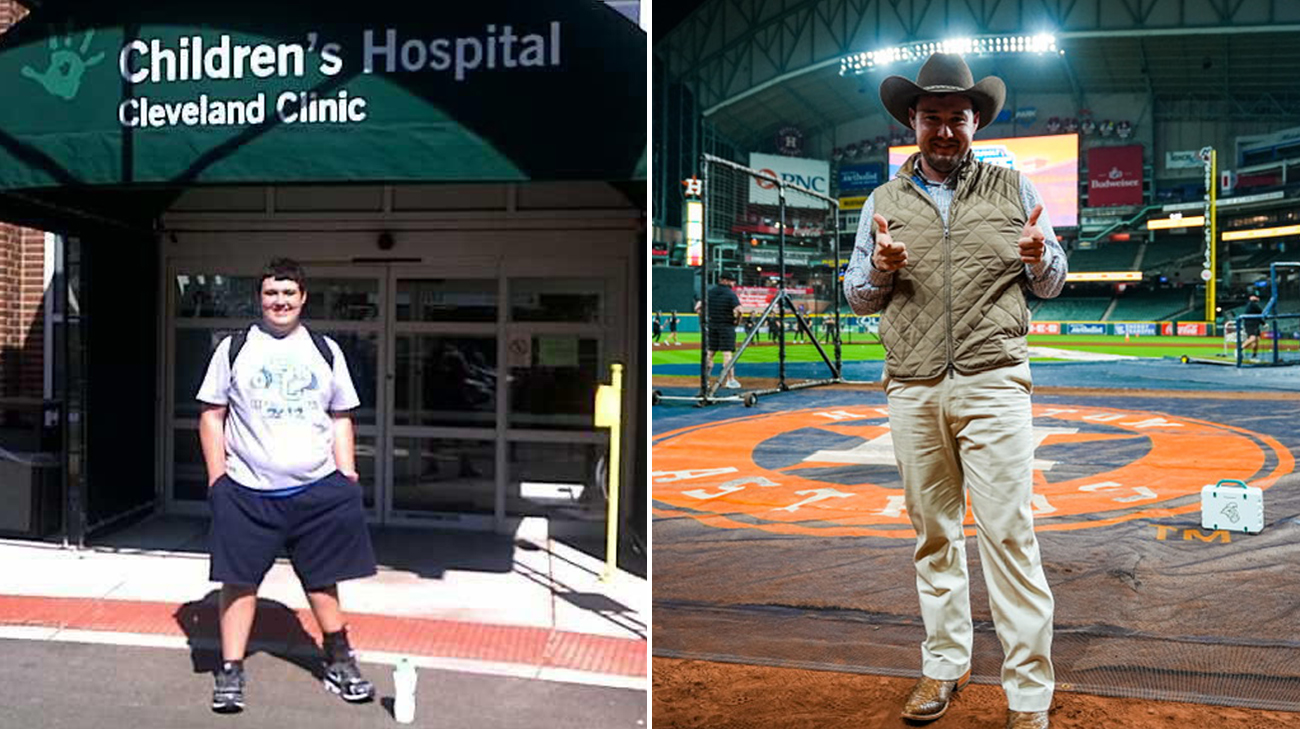
In Tennessee, high school and college athletics is a way of life for many young people. Wyatt Hopper was one of them. At age 15, he and other members of his high school football team were practicing for the upcoming season.
“September 5, 2011, is a date I’ll never forget. There were thunderstorms in the area, so practice was moved into the gym. Another player, who was wearing a helmet, tripped and fell, and his helmet made direct contact with my left knee, forcing it into the hardwood floor,” recalls Wyatt.
The pain was excruciating. Doctors thought it might be a torn ACL. They tried nerve blocks, pain medications, epidurals, steroid injections and more. Nothing worked.
A physical therapist thought it might have something to do with Wyatt’s nerves, specifically Reflex Sympathetic Dystrophy (RSD) which is now called Complex Regional Pain Syndrome (CRPS). CRPS is a chronic, severe neuro-inflammatory disorder that causes intense burning pain, swelling, and changes in skin temperature, color and texture. All symptoms Wyatt was experiencing.
“I couldn’t walk, and I was missing my sophomore year of high school. I could only wear shorts because the simple touch of fabric on my knee was unbearable. What would feel like the brush of a feather to anyone else felt like a razor blade to me,” says Wyatt.
His care team in Tennessee was in communication with other health care institutions, seeking input on Wyatt’s case. After several months of escalating pain, unsuccessful treatment and a continued inability to walk, that team said there was nothing more they could do and connected Wyatt and his parents with Cleveland Clinic Children’s Hospital for Rehabilitation where he was admitted to the Pediatric Pain Rehabilitation Program on April 1, 2012.
The physical therapist had been right all along – Wyatt had developed CRPS following the injury to his knee. “CRPS is not a disease that is directly addressed by a medication or a surgical procedure alone, it is a problem with the nervous system and how it is communicating with the body,” says Ethan Benore, PhD, pediatric psychologist and clinical director of the program.
During what is typically a two-week inpatient stay (Wyatt was an inpatient for three weeks), members of the pain rehabilitation program work with patients on the connection between physical and mental recovery via physical, occupational, aquatic and recreational therapy, and psychology during daily individual and group sessions. Parents are also a larger part of the process, attending separate group sessions to learn how to adjust to their child’s condition and support their functional independence.
“It’s not about what has happened, but what you do moving forward.”
Upon completion of the inpatient portion of the program, participants then step down to a day treatment program, completing intensive therapy during the day and gradually increasing activity at home and in the community. A partnership with the Cleveland Metropolitan School District provides a teacher in a modified education program to support both academic process and application of skills learned, culminating into team recommendations and guided school reentry.
“The skills we teach kids and parents here transfer to their home and community very, very well,” says Dr. Benore. “While not available when Wyatt was here, the program now includes up to three monthly follow-up appointments to reinforce the skills taught and problem solve any issues that come up after going home.”
Wyatt credits his parents, his care team and his faith with helping him return home and get back to school, and shares that he still uses much of what he learned during his time in the pain rehabilitation program today.
That’s not to say it was easy for him to return to his home and school. “I struggled with not being able to play football. My dad saw that, and talked to the coach, who approached me about helping to coach the freshman football team,” says Wyatt. “If that hadn’t happened, I’m not sure what I’d be doing now.”
Wyatt went on to attend the University of Tennessee, where he majored in sports management and minored in business administration, while continuing to coach high school football, and working as a student manager for the university’s acclaimed Lady Vols basketball team.
“It’s not surprising that Wyatt continues to apply the skills he learned here,” says Dr. Benore. “While there is no cure for CRPS, our team helps kids learn improved methods of using their body, focusing on their mental health, modifying their activity and increasing their functional independence. These are lifelong skills and I’m thrilled Wyatt is still using and benefiting from them.”
Wyatt, now age 29, works in professional collegiate athletic fundraising, a job that recently brought him back to Cleveland where he stopped in to visit some of his care team from years back at Cleveland Clinic Children’s Hospital for Rehabilitation. He wanted to thank them for giving him the tools to manage his condition and deal with the difficult reality of leaving competitive sports behind.
“I learned that the mind is a powerful thing, and that we all have a story. And it’s up to you to write the future chapters because when you do that, it’s not about what has happened, but what you do moving forward,” says Wyatt.
Related Institutes: Cleveland Clinic Children'sPatient Stories

Young Girl Overcomes Rare Cancer That Spread to Her Lungs and Spine
Sep 30, 2026
Football Player Lewis Cine Recovers After Successful Leg Surgery
Sep 29, 2026