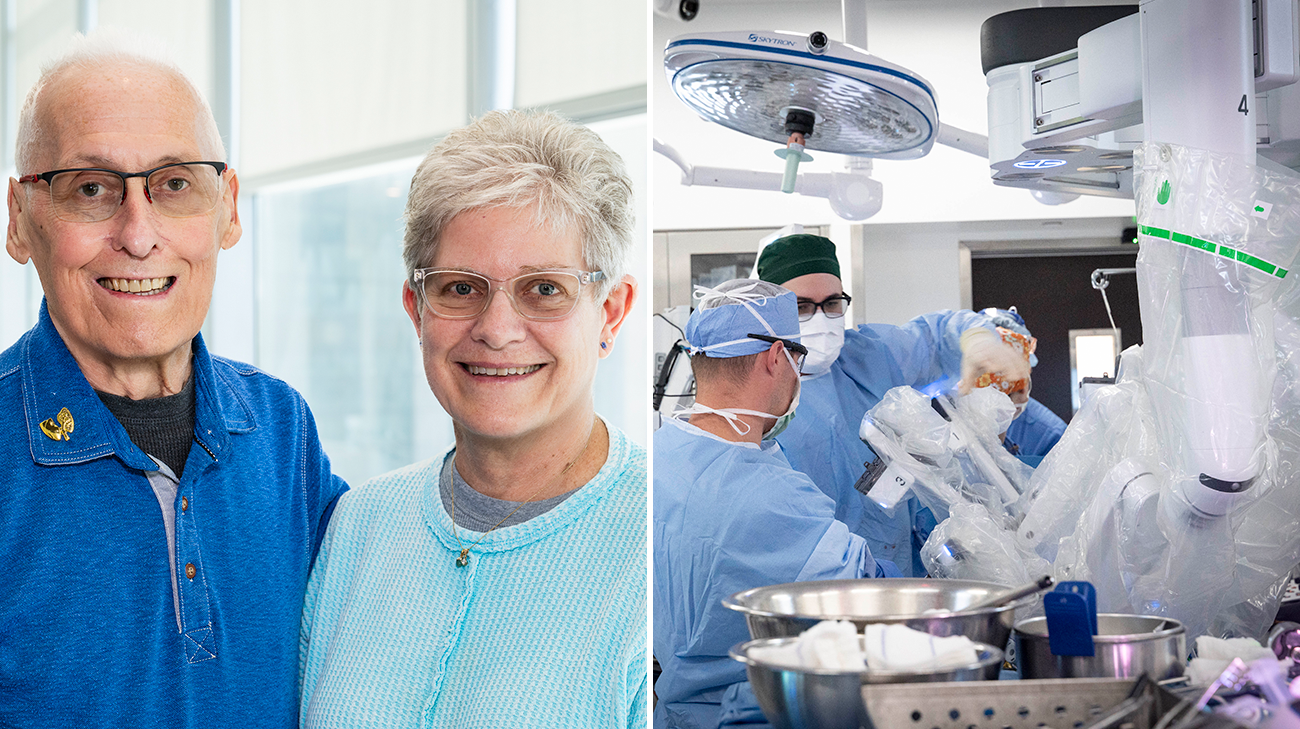
“I can finally breathe again,” says 75-year-old John Hanley as he reflects on how he feels after undergoing a robotic lung transplant. Following his diagnosis of pulmonary fibrosis, the grandfather of Corry, Pennsylvania, underwent Cleveland Clinic’s first robotic lung transplant in the United States in May 2026.
“I was very lucky to get a good lung, and I don’t have to be on oxygen anymore,” says John.
Leading up to his diagnosis in 2024, John says he began experiencing a lingering cough. He also noticed bouts of dizziness, and he was unable to catch his breath at times. John eventually went to the emergency department to get checked out.
“The doctors said he had pneumonia at first, and then more testing showed pulmonary fibrosis,” says Peggy Hanley, John’s wife. “After more follow-ups, we were told we needed to go to Cleveland Clinic.”
“John has something called idiopathic pulmonary fibrosis, and the idiopathic portion means we don't understand what caused him to develop it. Idiopathic pulmonary fibrosis is the most common and most severe form of interstitial lung disease, which is a group of diseases that cause scarring in the lungs, making them stiff and less able to function,” says Cleveland Clinic thoracic surgeon Gregory Jones, MD.
The diagnosis came as a shock to John and his family, and he soon required oxygen support 24/7. His condition worsened to the point where a lung transplant would be his best treatment option. Since his right lung was mostly impacted, his care team moved forward with planning a single lung transplant.
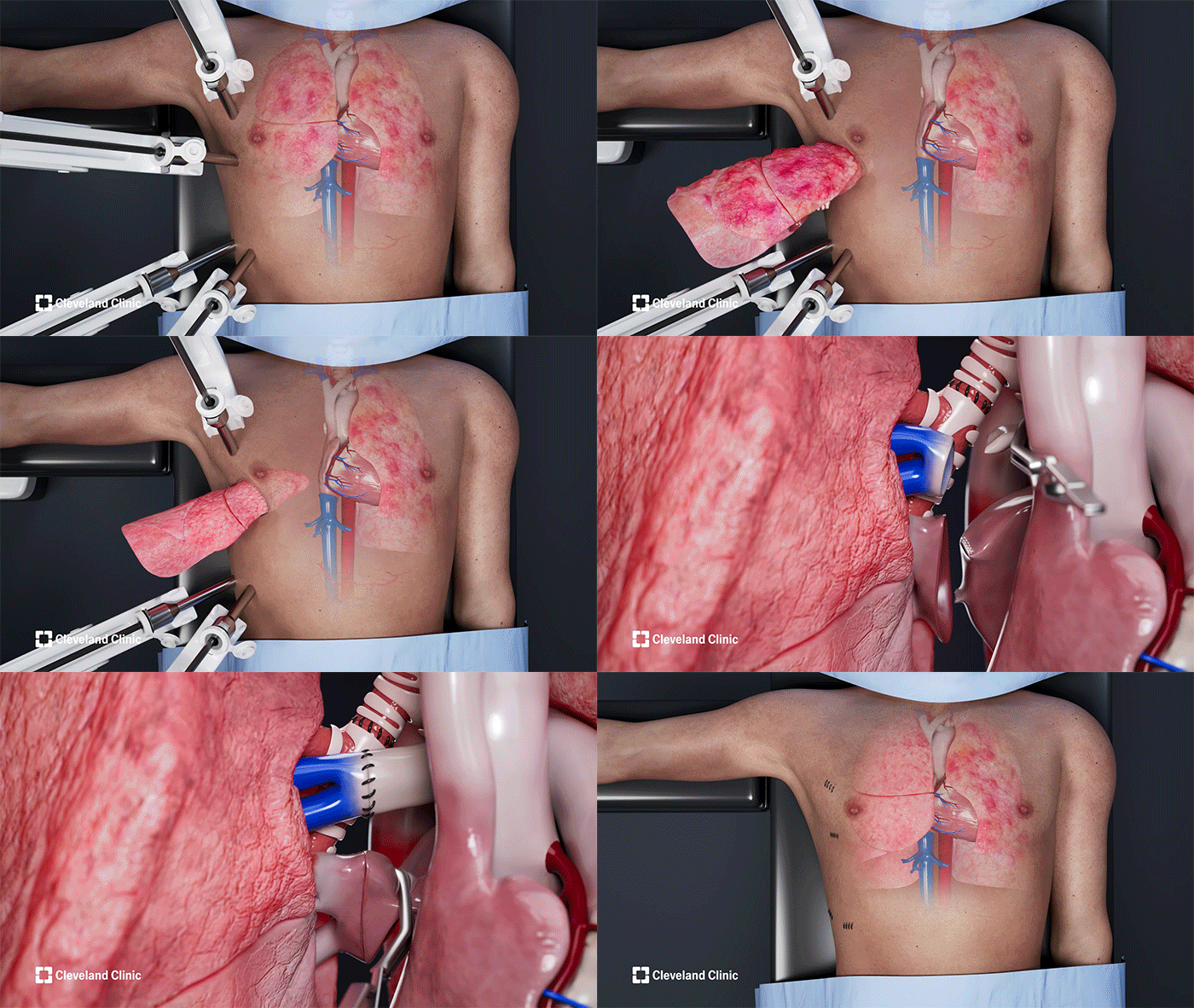
In a robotic lung transplant, surgeons use a few small incisions to remove the affected lung and implant the donor lung. (Courtesy: Cleveland Clinic)
“We determined John would be an ideal candidate for a robotic transplant because his larger chest size provided the space needed to safely and effectively perform the procedure. His excellent physical fitness coming into transplant was also an important factor in making him a good candidate,” says Dr. Jones.
In a traditional lung transplant, surgeons usually have to open up the chest by cutting through the breastbone or ribs to access the lungs. This approach is often associated with more scarring and significant pain, which can make recovery longer. In a robotic transplant, surgeons only need to make a few small incisions – often leading to a quicker recovery and less pain for the patient.
“The robotic arms, with surgical instruments attached, are placed through these small incisions in the chest. The surgeon then controls the robotic arms from a console inside the operating room. The console also provides enhanced, magnified, 3D views of the surgical area via a high-definition camera. From a surgeon’s perspective, one of the biggest advantages is excellent visualization. The robotic instruments also give us greater dexterity than human hands alone, which is especially helpful when operating in small or delicate spaces,” says Dr. Jones.
After discussing the transplant with his family, John, who was confident in his care team, decided to move forward with the treatment option.
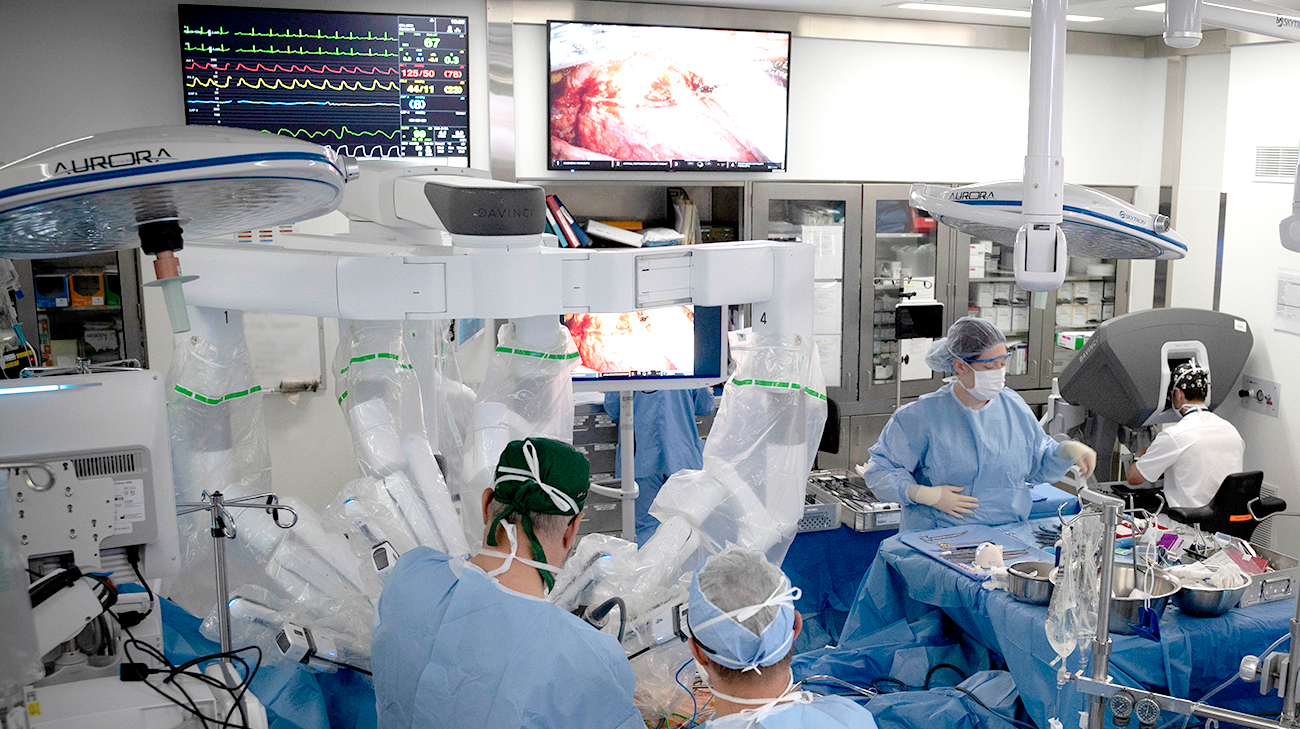
In May 2026, John underwent Cleveland Clinic’s first robotic lung transplant in the United States. (Courtesy: Cleveland Clinic)
“The doctors told me my condition was only going to get worse if I didn't do anything, and I wanted to be able to see my grandkids grow up. And if there was any chance I wouldn’t have to carry around oxygen anymore, I was going to take it,” says John.
John was placed on the transplant waiting list in February 2026, and in preparation of the surgery, Dr. Jones teamed up with a vast surgical team, including Kenneth McCurry, MD, a cardiothoracic surgeon and surgical director of lung transplantation and enterprise director of transplantation at Cleveland Clinic.
“The first step was developing a protocol for the robotic approach, which included collaborating with other centers that had experience with this procedure. We then spent many hours in the simulation lab, where the team could practice every step to make sure our process was efficient, streamlined and as smooth as possible before bringing it to the operating room,” says Dr. Jones.
In May 2026, John received the call a donor lung was available. With a plan in place, Dr. Jones and team performed the 7-hour robotic lung transplant, completing the health system’s first robotic lung transplant in the U.S. Cleveland Clinic is among only a small number of centers worldwide to offer this surgical approach and the first in Ohio to complete this type of operation.
“This achievement reflects the collaboration and innovation across our transplant and surgical teams. As these technologies continue to evolve, they will play an increasingly important role in improving patient outcomes and advancing the future of transplantation,” says Dr. McCurry.
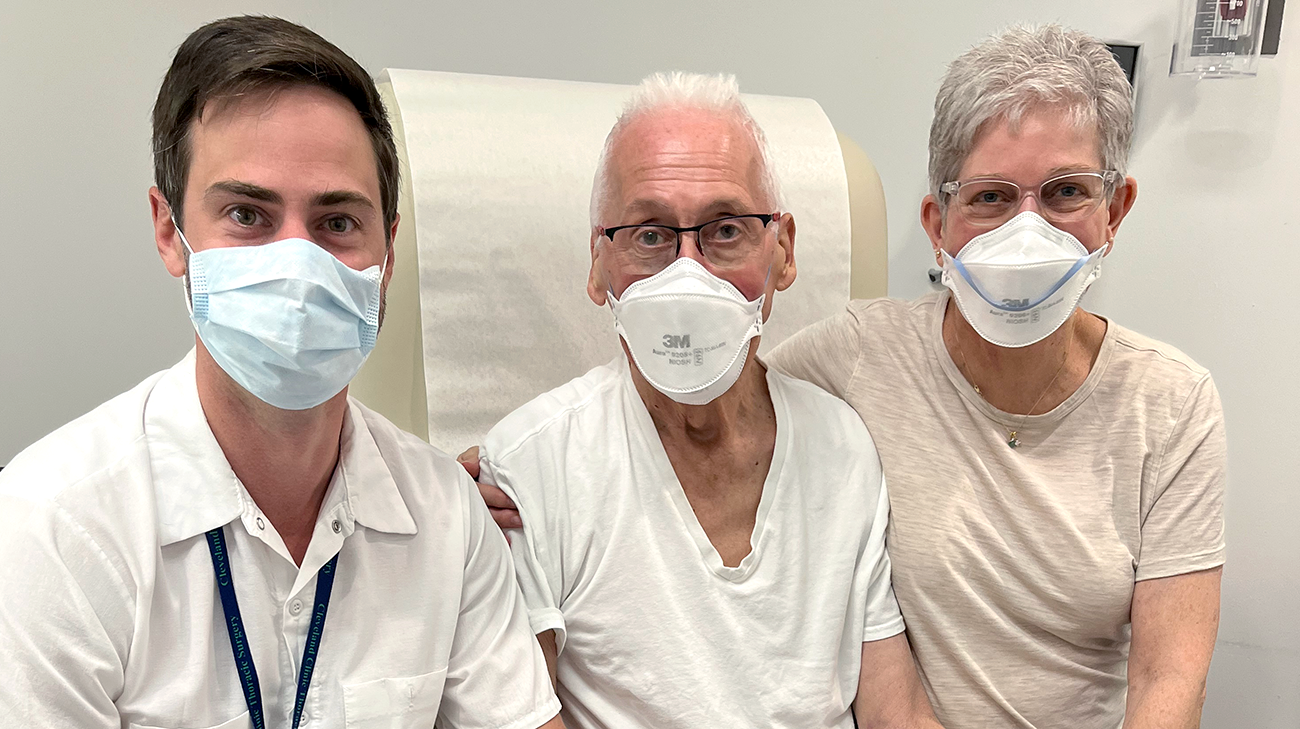
John and wife, Peggy, with Dr. Gregory Jones at an appointment. (Courtesy: Cleveland Clinic)
John recalls a quick recovery after the procedure – he was off oxygen within 24 hours, out of the ICU within 48 hours and discharged from the hospital in two weeks.
“I had a few small incisions, and my biggest one was maybe two to three inches – these all healed up quickly. I really didn’t have any pain at all after the surgery,” says John.
“We did a lot of pain control maneuvers and techniques in the surgery to make sure John was as comfortable as possible. It was really encouraging to see how the robotic approach can transform the recovery and post-operative pain,” says Dr. Jones.
After the surgery, John’s breathing improved dramatically. He no longer needs to carry around equipment for oxygen, and follow-up testing shows his new lung is working well. John and his family are thankful for his care team and the organ donor who made this possible.
“We extend our deepest gratitude to Dr. Jones, Dr. Sameep Sehgal, Dr. Alice Goyanes, Dr. Joshua Veith and team for their exceptional care and support. They're some of the nicest people I’ve ever met, and they were always there when I needed them,” says John. “We’re also grateful to the donor and their family – we hope they know the difference they’ve made in our lives.”
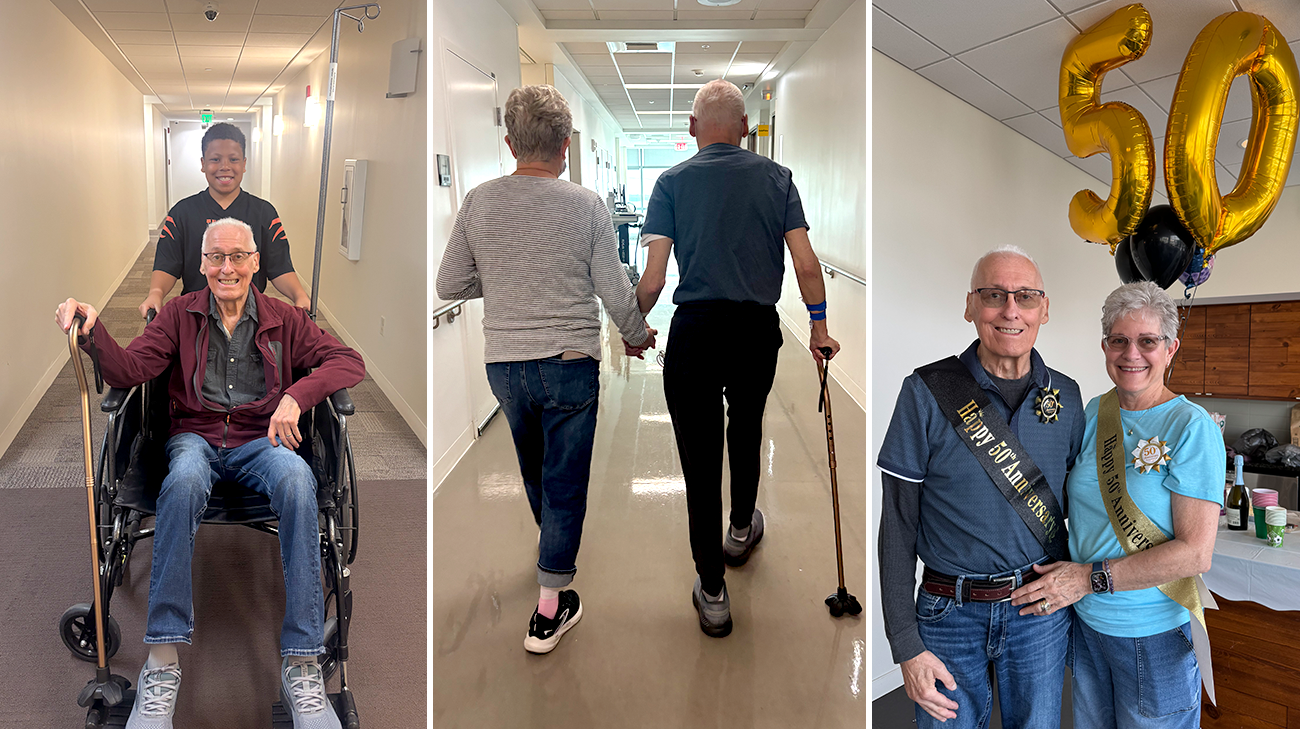
John is excited to make new memories with his wife, two kids and three grandchildren. (Courtesy: Peggy Hanley)
As he continues recovering, John is looking forward to more breakfast outings with friends and traveling with his wife, two children and three grandchildren.
Robotic surgery is one of several approaches to lung transplantation. While many patients may not be candidates for robotic lung transplantation, John and the Cleveland Clinic lung transplant team hope sharing his story will help raise awareness about the potential benefits of this innovative technique.
“This milestone reflects an important step forward and builds on our team’s experience with both robotic surgery and transplant care. It’s exciting to be at the forefront of innovation in lung transplantation, and we look forward to helping more patients benefit from these advances,” says Dr. Jones.
“I hope my story helps other people see what’s possible with robotic surgery. For me, it meant less pain, a faster recovery and getting back to my life sooner,” says John.
Related Institutes: Respiratory Institute, Heart, Vascular & Thoracic Institute (Miller Family)Patient Stories
Exercise Medicine Program Helps Man Prepare for Surgery and Reclaim an Active Life
Oct 9, 2026

‘Cornstarch Keeps My Son Alive’: Boy Eats Raw Cornstarch Daily To Manage Rare Metabolic Disorder
Oct 8, 2026